
Riding is freedom — but keeping that freedom alive means staying on top of your bike’s health. If you want a complete picture of what it takes to keep your machine in peak shape, start with this guide on maintenance on a motorcycle — it’s the resource I come back to season after season.
One of the most impactful — and most satisfying — things you can do yourself is change your own oil. It saves money, keeps you connected to your bike, and honestly, once you do it the first time, you’ll wonder why you ever paid someone else to do it.
TL;DR
- Warm up your bike for 2–3 minutes before draining the old oil — it flows out faster and cleaner.
- You’ll need: a drain pan, the right socket wrench, an oil filter wrench, funnel, fresh oil, and a new filter and drain plug washer.
- Check your owner’s manual for the exact oil specification (viscosity + API rating) and capacity — don’t guess.
- Torque matters: over-tightening the drain plug is one of the most common and costly mistakes riders make.
- Change intervals: most modern bikes call for an oil change every 3,000–5,000 miles, but always verify with your manual.
- Dispose of old oil responsibly — most auto parts stores accept used motor oil for free.
Why I Started Doing My Own Oil Changes
I’ll be honest with you: the first time I changed my own oil, I was nervous. I had a 2009 Kawasaki Z750, a YouTube video on my phone propped against a milk crate, and absolutely zero confidence. It took me nearly two hours, I made a mess, and I cross-threaded the drain plug.
But you know what? I also saved $85, learned something real about my bike, and felt like an actual mechanic for the rest of the day. Now — over fifteen years and more bikes than I’d like to admit later — an oil change takes me about twenty minutes, and I do it with my morning coffee cooling on the workbench.
This guide is everything I wish someone had handed me that first day. No fluff, no jargon for the sake of it — just the real process, the real mistakes to avoid, and the reasoning behind every step.
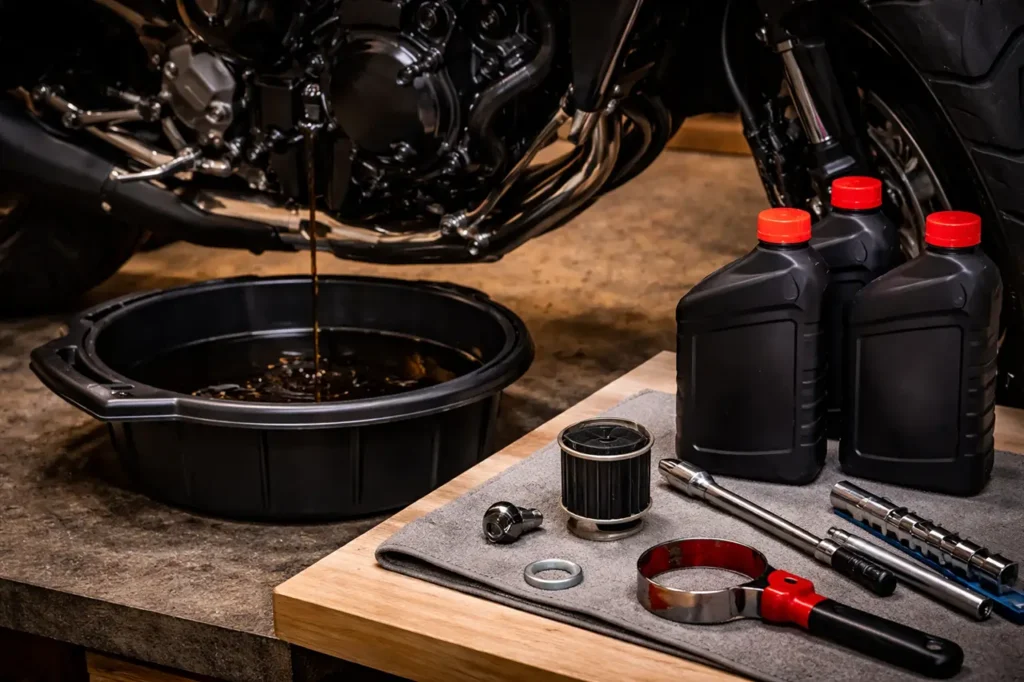
Motorcycle oil change setup in a home garage
A close-up photo of a motorcycle engine bay being serviced in a home garage, with tools laid out neatly on a workbench beside it, including a drain pan, oil filter wrench, and fresh oil bottles.
What You’ll Need Before You Start
Showing up to this job half-prepared is how you end up at the auto parts store with oil-stained hands. Get everything together first.
Tools
- Socket wrench set — most drain plugs take a 17mm or 19mm socket, but check yours
- Oil filter wrench — a strap-style or cup-style wrench designed for your filter diameter
- Drain pan — at least 3-quart capacity; I use a low-profile one that slides under easily
- Funnel — a flexible-neck funnel is worth every penny
- Torque wrench — non-negotiable if you care about your threads
- Rubber gloves — hot oil is no joke
- Rags or shop towels — plan for a mess even when there isn’t one
- Bike stand or paddock stand — you need the bike level and stable; a center stand works perfectly if your bike has one
Supplies
- Fresh engine oil — the correct viscosity and API rating for your bike (more on this below)
- New oil filter — always replace it; never reuse an old filter
- New drain plug washer/gasket — most bikes use a crush washer; reusing the old one risks a slow leak
- Zip-lock bag or small container — to keep the old filter from dripping oil everywhere as you carry it to the drain pan
How to Pick the Right Oil
This is where a lot of newer riders overthink things. Your owner’s manual has the answer. It will tell you exactly what viscosity (like 10W-40 or 20W-50), what API service rating (like API SJ or SL), and whether your bike requires JASO MA or MA2 certification.
JASO MA/MA2 — if you have a wet clutch motorcycle (which most bikes do), this certification matters. It confirms the oil won’t cause your clutch to slip. Regular car oil often has friction modifiers that will absolutely destroy your wet clutch over time. Don’t use it.
Mineral vs. Synthetic vs. Semi-Synthetic: For older, high-mileage bikes, mineral or semi-synthetic is often the right call. For modern performance bikes, full synthetic is typically recommended and often worth the extra cost in terms of protection and extended change intervals. But again — your manual wins this debate.
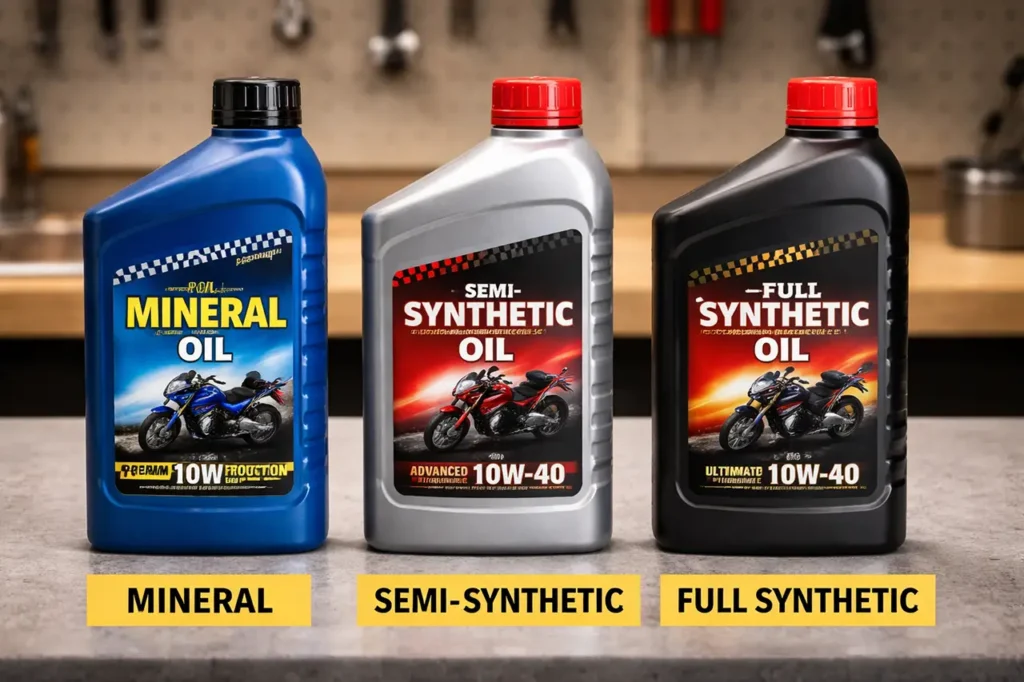
Comparison of mineral, semi-synthetic, and full synthetic motorcycle oils
Three different motorcycle oil bottles displayed side by side — one mineral oil, one semi-synthetic, one full synthetic — on a clean workshop bench.
Step-by-Step: How to Change Your Motorcycle Oil at Home
Step 1: Warm Up the Engine (2–3 Minutes)
Park your bike on level ground, put it on the center stand or a paddock stand, and let it idle for two to three minutes. Don’t ride it hard and then immediately drain — you want warm oil, not scalding oil. Warm oil flows freely and carries more of the old contaminants with it. Cold oil is thick, sluggish, and leaves more gunk behind.
After idling, shut the engine off and wait about five minutes. This lets the oil drain back down into the sump and cools it just enough that you won’t burn yourself when things inevitably drip.
Step 2: Position Your Drain Pan
Slide your drain pan under the engine sump — directly beneath the drain plug. Don’t guess at the angle; oil will follow the least convenient path when it starts flowing. Position the pan to catch a stream angled slightly forward, not straight down.
Step 3: Remove the Oil Filler Cap
Before you loosen the drain plug, remove the oil filler cap on top of the engine. This relieves pressure and helps the oil drain faster and more completely. Set the cap somewhere clean where it won’t roll away. (I can’t tell you how many times I’ve found a filler cap kicked under the bike after the job was done.)
Step 4: Remove the Drain Plug
Using the appropriate socket, loosen the drain plug counter-clockwise. Once it’s nearly out, switch to your fingers — hold the plug snugly as you unscrew the last few threads so it doesn’t drop into the drain pan. Let the oil flow.
Important: As soon as the drain plug is out, you’ll feel the oil temperature on your fingers. If it’s uncomfortably hot, you’ve rushed the cool-down. Be careful — this is also the step where first-timers reflexively yank their hand away and send the drain plug clattering into the pan.
Set the drain plug somewhere clean and safe. This is also the moment to inspect it. Look for metal shavings or debris stuck to a magnetic drain plug — a few tiny specks of fine metal dust is normal wear, but chunks or significant metallic debris is a warning sign worth investigating.
Step 5: Remove the Old Oil Filter
While the oil is draining, tackle the oil filter. Position a rag beneath it — the filter holds oil inside, and when you break the seal, it will run. Use your oil filter wrench to loosen it counter-clockwise. Once it’s loose enough to spin by hand, I slide a zip-lock bag over it and unscrew it the rest of the way inside the bag. Zero mess.
Compare the old filter to the new one. Physically look at the gasket on the old filter and confirm it came off with the filter, not stuck to the engine. A stuck old gasket with a new filter creates a double-gasket situation — which means an oil leak, and in the worst case, a seal failure at speed. Always double-check this.
Step 6: Let It Drain Completely
Give the oil a full five minutes to drain. Don’t rush this. Old oil that stays in the engine mixes with and contaminates your fresh oil immediately. While you’re waiting, take a look around the engine — any cracks, weeping seals, or signs of leaks you might have been ignoring? Now’s a good time to notice them.
Step 7: Install the New Oil Filter
Take your new oil filter and dip your finger in the fresh oil. Run a light coat of oil around the rubber gasket on the new filter. This helps it seat evenly and makes it easier to remove at the next service.
Thread the filter on by hand until you feel the gasket contact the engine, then tighten it an additional three-quarter turn by hand. Most manufacturers specifically say “do not use a wrench to tighten” for the install — hand-tight plus three-quarters is the industry standard. Over-tightening deforms the gasket and makes the next removal a nightmare.
Step 8: Reinstall the Drain Plug
Before reinstalling, inspect the drain plug threads and the threads in the sump. Any cross-threading or stripped metal is a serious problem — stop and sort that out before adding new oil.
If your drain plug uses a crush washer (most do), fit a new one. These are designed to deform slightly on installation to create a seal, and once used, they don’t seal as reliably the second time.
Thread the drain plug in by hand until snug, then torque it to spec with your torque wrench. Your manual will give you the spec — typically somewhere between 14–30 ft-lbs depending on the bike. Don’t skip the torque wrench. This is the step I see bypassed most often, and it’s how people strip their sumps — one of the most expensive, avoidable repair jobs in motorcycling.
Step 9: Add Fresh Oil
Reposition your drain pan out from under the engine (or just slide it aside). Place your funnel in the oil filler opening and pour in the recommended amount of fresh oil. Your manual specifies capacity — common figures range from 2.5 to 4.5 quarts depending on your engine.
My rule of thumb: add about 90% of the specified amount, then check the sight glass or dipstick, and top off from there. It’s much easier to add a little more than to deal with an overfilled engine.
Step 10: Check the Oil Level and Inspect for Leaks
With the oil added and the filler cap replaced, start the engine and let it run for about a minute. Watch the oil pressure light — it should go out within a couple of seconds of starting. If it stays on, shut the engine off immediately.
While the engine is running, crouch down and visually inspect the area around the drain plug and oil filter for any drips. Shut the engine off after a minute, wait two minutes for the oil to settle, and check the level again. Top off if needed. You’re looking for the level to sit between the min and max marks.
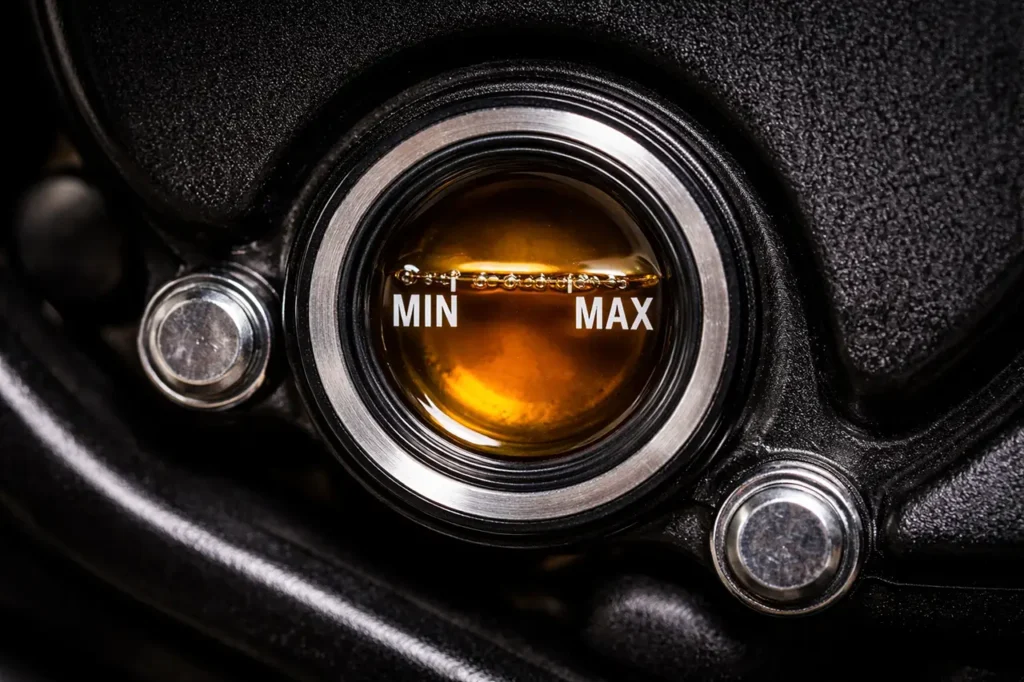
Motorcycle oil sight glass showing correct oil level
Common Mistakes (And How to Avoid Them)
I’ve made most of these myself at some point. Learn from my pain.
Over-tightening the drain plug. I already mentioned it, but it bears repeating: a torque wrench is not optional. Stripped oil pan threads mean a helicoil repair or a new sump — neither is cheap or fun.
Forgetting the old oil filter gasket. Always verify the old gasket came off with the filter. This is the number-one cause of post-oil-change leaks.
Not warming the engine first. Cold oil drains slowly and incompletely. You’ll leave a meaningful amount of old, contaminated oil behind.
Reusing the crush washer. They’re a dollar. Buy new ones every time. A weeping drain plug leak will ruin your garage floor, your peace of mind, and potentially your engine if you miss it.
Overfilling. Too much oil is genuinely bad for your engine. It can cause aeration (foaming) of the oil, which dramatically reduces its lubricating ability. Fill to spec, check the level, and stop there.
Using car oil in a wet-clutch bike. I’ve said it, but it’s worth repeating: friction modifiers in car-grade oil will cause clutch slip. Stick to oils with the JASO MA or MA2 certification.
Skipping the post-start leak check. You just have to do this. Five minutes of watching is worth it.

Rider inspecting motorcycle for oil leaks post-service
How Often Should You Change Your Motorcycle Oil?
This depends on three things: the type of oil you’re using, your riding conditions, and what your manufacturer specifies.
General guidelines:
- Mineral oil: every 2,000–3,000 miles
- Semi-synthetic: every 4,000–5,000 miles
- Full synthetic: every 5,000–7,000 miles (some manufacturers approve up to 10,000 with specific synthetics)
These figures compress significantly if you do a lot of short trips, ride in extreme heat or cold, or spend a lot of time idling in traffic. Short trips are particularly hard on oil because the engine doesn’t fully reach operating temperature, which means more moisture and fuel contamination builds up over time.
If you’re unsure, default to more frequent changes. Oil is cheap compared to an engine.
One more thing: even if you don’t hit the mileage interval, change your oil at least once a year if the bike has been sitting. Oil degrades over time regardless of use — acids build up, additives break down, and moisture accumulates.
Disposing of Old Oil the Right Way
Please don’t pour used motor oil down a drain, into the yard, or into the trash. A single quart of motor oil can contaminate 250,000 gallons of drinking water.
The easiest option: take it back to any auto parts store. AutoZone, O’Reilly, Advance Auto Parts, and most independent shops accept used motor oil at no charge. I store mine in the old oil bottle (using a funnel) and drop it off the next time I’m in the area.
Some municipalities also have hazardous waste collection days — a quick search for your local area will tell you what’s available.
Building Your Oil Change Habit
The first oil change is always the slowest. The second one is half as long. By the third or fourth, you’ll have your own rhythm — the order you do things, where you set each part, how you check for leaks.
I now do my oil changes at the start of each season and mid-season for my more heavily ridden bikes. It takes me less time than a trip to the dealer takes to even check me in, and I know exactly what went into my engine and how it was torqued. There’s a confidence that comes from that kind of relationship with your machine.
If you want to keep going further with your own maintenance, start building a proper service log — date, mileage, what oil you used, what you observed. Over time that log becomes an invaluable record of your bike’s health, and it’s genuinely useful if you ever sell the bike.

Rider completing motorcycle oil change in home garage
Final Checklist Before You Ride
Before you take the bike out after an oil change, run through this mentally or on paper:
- ✅ Drain plug installed and torqued to spec
- ✅ New crush washer installed
- ✅ Oil filter tightened correctly (hand-tight + ¾ turn)
- ✅ Old oil filter gasket confirmed removed from engine
- ✅ Oil filler cap installed and secured
- ✅ Correct amount of fresh oil added
- ✅ Oil level confirmed between min and max
- ✅ Engine started, oil pressure light extinguished promptly
- ✅ No leaks visible around drain plug or filter
- ✅ Old oil stored for responsible disposal
That’s it. Go ride.
Frequently Asked Questions
Can I change my motorcycle oil without a torque wrench?
Technically yes, but I strongly recommend against it. Over-tightening is the most common cause of stripped oil sumps, and the cost of a torque wrench is a fraction of a sump repair. A basic click-style torque wrench runs about $20–$30 and will last you years.
What happens if I put too much oil in my motorcycle?
Excess oil can foam up in the crankcase, and foamy oil doesn’t lubricate well. It can also pressurize the crankcase and push oil past seals that were perfectly fine before. If you overfill, remove the excess using a hand pump syringe through the dipstick or filler opening.
Do I have to change the oil filter every time?
Yes. The filter contains the accumulated contaminants from your old oil. Pouring fresh oil through a dirty filter immediately begins contaminating it. Filters are inexpensive — there’s no good reason to reuse one.
My bike doesn’t have a sight glass — how do I check the oil level?
Use the dipstick. Wipe it clean, re-insert without threading it in, pull it out, and read the level on the wetted portion. Your manual will show you exactly how to read your specific dipstick.
Is synthetic oil worth it for an older bike?
For most older bikes (pre-2000, high mileage), I’d lean toward mineral or semi-synthetic. Older seals can sometimes react to the detergent properties of full synthetic oils and begin to seep. It’s not universal, but it’s a known consideration. Check with your specific make and model community.
Have a question about your specific bike’s oil change process? Drop it in the comments — I read every one and do my best to respond.
Ride safe, and keep wrenching.