
12 Best GPS Location Trackers for Motorcycle Touring (Rider Tested)
 Jake Miller
11 min read
Jake Miller
11 min read
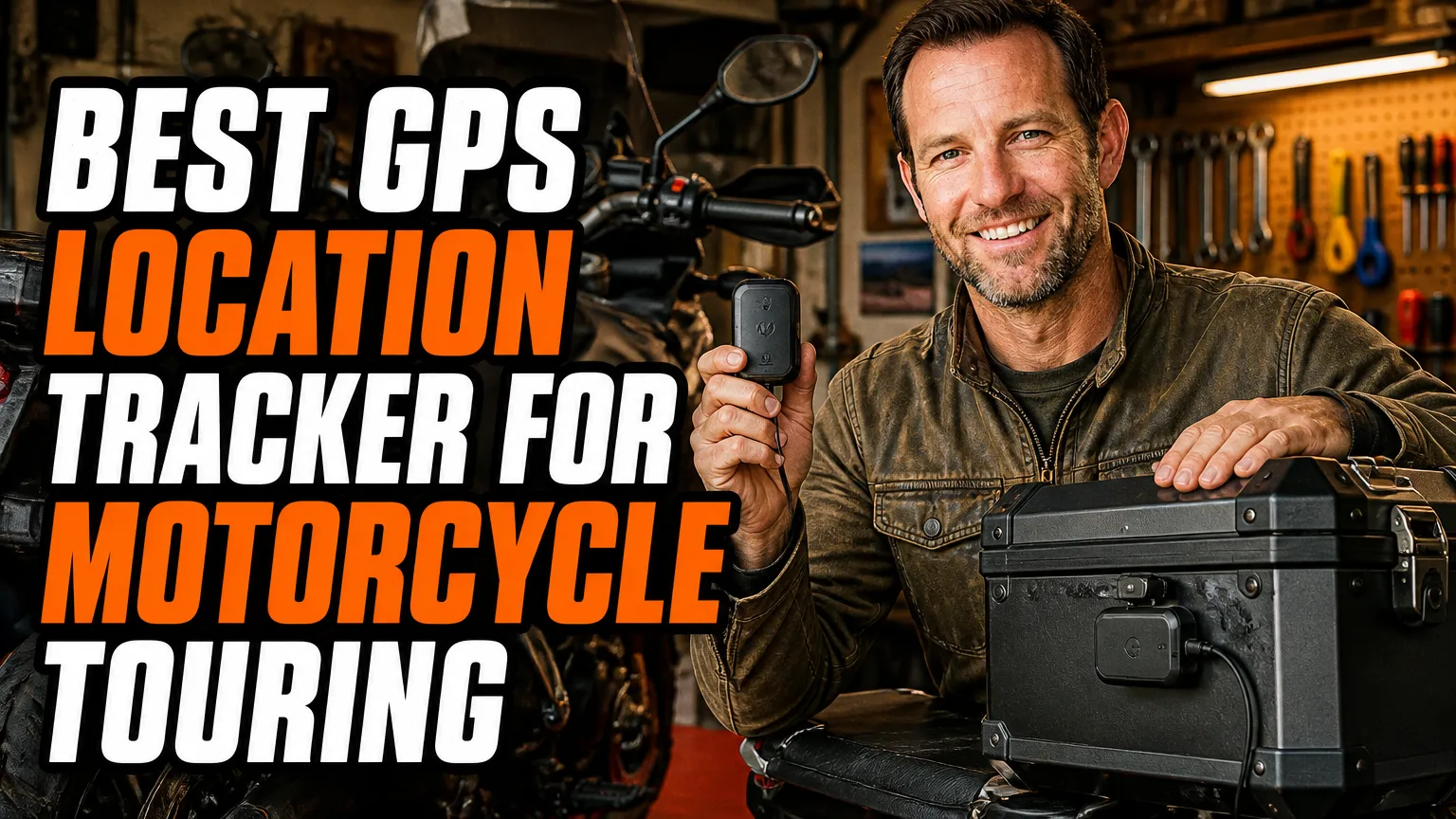
I have spent the last several seasons riding long-distance tours across mountain passes, coastal highways and a fair amount of gravel, and somewhere along the way I became mildly obsessed with one question: if my bike vanished from a hotel car park at 2 a.m., would I actually know where it went?
That question pushed me through a lot of gear. I have mounted dedicated navigators, hidden cellular trackers under seats, clipped satellite communicators to my jacket and yes, I have even taped an AirTag inside a tail section to see how it performed. Some of it was brilliant. Some of it was a waste of money.
This list is what I would actually buy again. Every item below is a real, currently available product, with the real specs and the real subscription costs I ran into. I have split them roughly by what they are good at, because “GPS tracker” means three very different things in the motorcycle world: navigation, theft recovery and emergency rescue.
- My overall pick is the Garmin zumo XT2 for live navigation and group tracking, backed by a hidden Monimoto 9 for theft.
- For remote touring with zero cell signal, the Garmin inReach Mini 2 and SPOT Gen4 are the two names that matter.
- Budget-conscious riders can start with the Tracki or LandAirSea 54 for a few dollars a month.
- Almost every tracker here needs a subscription; only the standalone navigators work fee-free.
- An Apple AirTag is a $29 backup, not a replacement for a real GPS unit.
1. Garmin zumo XT2 — Best All-Round Motorcycle GPS for Touring
If I could only bolt one device to my bars, this would be it. The zumo XT2 has a 6.95-inch glove-friendly touchscreen that stays readable in direct sun, an IPX7 rating, and a battery that ran roughly six hours for me before I needed to plug in.
The tracking feature that sold me is Group Ride Radio. With the accessory, I could see up to 20 riding buddies live on the map, which completely removed the “where did everyone go?” panic on unfamiliar roads. It also pairs with the Garmin Tread app for trip sharing and route syncing over Wi-Fi.
Price is around $600 depending on where you buy, and there is no subscription. That is the part people miss. For navigation and live group tracking on tour, the zumo XT2 is genuinely the cleanest experience I have had.
2. Garmin Montana 700i — Best Rugged Handheld With Satellite SOS
The Montana 700i is what I reach for when the route leaves pavement behind. It has a 5-inch display, MIL-STD-810 toughness, IPX7 sealing and around 18 hours of battery, and I have dropped mine on rocks without drama.
What makes it a tracker rather than just a navigator is built-in inReach technology. That gives you two-way satellite messaging, an SOS button and a MapShare page so family can follow your dot in real time. On a remote tour, that is a serious safety net.
It costs around $700 plus an inReach plan starting near $15 per month. It is heavy and expensive, but for mixed on-road and off-road touring I have not found anything as capable.
3. Garmin inReach Mini 2 — Best Satellite Tracker for Remote Tours
This is the one I clip to my jacket and forget about. At roughly 100 grams, the inReach Mini 2 disappears in a pocket, yet it runs on the Iridium satellite network, which is the same network that works over oceans and deserts.
Battery life is the headline: about 14 days in normal use, or up to 30 days with tracking set to 10-minute intervals. That meant I could leave it on for an entire multi-day trip without hunting for a charger.
The device is around $399, and plans start around $15 per month. If your touring involves alpine passes, remote coastlines or anywhere you would not want to break down without signal, this is my top safety pick.
4. Garmin inReach Messenger — Best Compact Two-Way Satellite Communicator
Think of the inReach Messenger as the cheaper, friendlier sibling. It has a small 1.5-inch screen, weighs very little and delivers the same core satellite messaging, tracking and SOS capability as the Mini 2.
Battery life is the standout: Garmin rates it at up to about 28 days in normal use, and I found that realistic on a two-week trip with light messaging. It also acts as a satellite hotspot for your phone, which is handy when you want to type on a real keyboard.
At roughly $299 plus a plan, it is the least expensive way I know to get genuine satellite tracking and rescue capability onto a motorcycle tour.
5. SPOT Gen4 — Best Budget Satellite Tracker
SPOT has been the budget satellite option for years, and the Gen4 still earns its place. It runs on the Globalstar network, is IP67 rated, and lets you set tracking intervals anywhere from 2.5 to 60 minutes.
I used it on a week-long trip through areas with no cell coverage and the tracking page updated reliably. The SOS button contacts an emergency coordination centre, and there is a separate “help” button for non-emergency assistance.
The hardware is around $149, with service plans starting near $12 per month. It is less polished than the Garmin inReach family and the messaging is one-way, but for pure location breadcrumbs it is hard to beat on price.
6. Monimoto 9 — Best Concealed Anti-Theft GPS Tracker
This is the device I wish I had bought three years earlier. The Monimoto 9 hides under a seat or inside a tail section, uses LTE-M plus GPS, and stays armed automatically once you walk away with the key fob.
The behaviour is what makes it good. It does not constantly ping and drain itself. When the bike moves without the fob nearby, it calls your phone and starts sending location updates. I got a test alert within seconds of rolling my bike forward in the driveway.
It costs around $170 with a subscription near $49 per year, and battery life runs about a year. For hotel car parks and city stops, nothing on this list has given me more peace of mind.
7. SizzApp Moto GPS Tracker — Best for Ride Logging and Crash Alerts
SizzApp is the tracker I recommend to riders who want data as much as security. It uses LTE and GPS, installs discreetly, and feeds everything into a clean app: live location, trip history, lean angle, speed and route playback.
Two features stand out for touring. First, crash detection, which can notify your emergency contact automatically. Second, ride statistics that I genuinely enjoyed reviewing after a long day in the mountains.
Pricing sits around $120 to $150 for the unit plus a modest annual plan. If you like the idea of your bike being tracked and your rides being logged, this is a smart middle ground.
8. Invoxia GPS Tracker — Best Long-Battery Cellular Tracker
Invoxia built its name on a tracker that sips power. The motorbike version uses LTE-M and low-power positioning, and it can run for several months between charges, which means you can hide it and genuinely forget about it.
It has a built-in alarm that triggers when the bike is moved, plus geofencing so you get a notification if your bike leaves a zone you defined. I set a fence around my hotel and it worked exactly as advertised.
Expect roughly $130 for the hardware and a subscription in the $3 to $5 per month range on annual plans. It is not a navigator and it will not save you in the wilderness, but as a quiet theft watchdog it is excellent.
9. Trail Tech Voyager Pro — Best GPS for Dual-Sport and Off-Road Touring
If your “touring” involves knobby tyres and forest roads, the Voyager Pro is built for exactly that. It is a rugged colour touchscreen GPS that also reads engine data like RPM, coolant temperature and speed directly from your bike.
It supports buddy tracking, so you can see other Voyager Pro users on the map, and it logs your ride tracks for later review. I found the trail maps genuinely usable where mainstream navigators get confused by unmarked gravel.
It runs about $400 with no subscription required. It is a niche tool, but for adventure riders doing remote dirt routes it is a brilliant one.
10. LandAirSea 54 — Best Simple Self-Contained Tracker
The LandAirSea 54 is the least fussy tracker I have used. It is a small waterproof puck with a strong magnet, a rechargeable battery, and a web dashboard that updates as frequently as every few seconds.
I threw one in a tank bag on a test ride and the location history was accurate and easy to read. There is no wiring, no installation and no app-learning curve, which makes it ideal as a loaner or a backup unit.
The device is around $40, but the subscription is where the cost lives, typically $20 to $30 per month on month-to-month terms. Cheap to try, less cheap to keep.
11. Tracki — Best Tiny Budget GPS Tracker
Tracki is the tracker I hand to friends who want to experiment without spending much. It is genuinely tiny, uses GPS plus LTE and Wi-Fi positioning for better indoor accuracy, and has a small built-in battery plus optional magnetic mount.
It supports geofencing, movement alerts and history playback. I have used one as a luggage tracker on a fly-and-ride trip, then moved it onto the bike for a week, and it performed reliably both times.
Hardware is roughly $20 to $30, with plans starting around $10 per month. It is not as robust as a Monimoto for permanent motorcycle concealment, but as an inexpensive entry point it is hard to argue with.
12. Apple AirTag — Best Cheap Backup, With Big Caveats
I want to be honest about this one because I see it recommended constantly. An AirTag costs $29, uses a replaceable CR2032 battery that lasts about a year, and hides almost anywhere on a motorcycle.
But it is not a GPS tracker. It has no GPS chip and no cellular radio. It only reports a location when a nearby iPhone in the Find My network detects its Bluetooth signal, which in a remote touring area could be hours or days.
Where it shines is as a second layer. Tucked inside a tail section alongside a real tracker, it is a cheap redundancy. As your only plan, I would not trust it on a long tour.
How I Choose a Tracker for a Long Tour
Satellite, Cellular or Find My Network?
This is the first decision, and it changes everything else. Satellite devices like the inReach Mini 2 and SPOT Gen4 work where there is no signal at all, which is why I carry one on any remote route.
Cellular trackers like the Monimoto 9, SizzApp and Invoxia are cheaper, smaller and better at theft recovery in populated areas. The Find My network is a bonus layer, not a primary system.
Battery Life and Hardwiring
Concealed trackers either run on their own battery or tap into the bike. Hardwiring gives you unlimited runtime but draws from your motorcycle battery and takes an afternoon to install properly.
Self-contained units are easier and safer for warranty, but you have to remember to charge them. I check mine every couple of months, which is a small habit that has saved me twice.
Subscription Costs Add Up Fast
I always calculate two years of subscription before buying, not just the hardware price. A $40 tracker on a $25 monthly plan costs more over two years than a $600 navigator with no fees.
Annual plans are almost always cheaper than monthly. If you tour seasonally, check whether the provider offers a pause or seasonal plan.
Mounting and Concealment
For theft tracking, concealment beats specs. A brilliant tracker with a blinking LED visible through a fairing gap is worse than a modest one hidden inside the tail.
For navigation and group riding, I want the device visible, glove-friendly and powered from the bike. That is why I run two devices rather than trying to make one do everything.
The Two-Tracker Setup I Actually Run
After all this testing, my honest answer is that no single product covers everything. I run a Garmin zumo XT2 on the bars for navigation and group tracking, and a Monimoto 9 hidden in the tail for theft recovery.
When the route goes properly remote, the inReach Mini 2 comes along in my jacket pocket. That combination covers navigation, theft and emergency rescue, and it has never let me down.
If you are building this up gradually, start with the concealed tracker. Knowing where your bike is at 3 a.m. is the problem that will actually ruin a trip. The satellite communicator can wait until your routes get genuinely wild.
Frequently Asked Questions
What is the best GPS location tracker for motorcycle touring overall?
For most riders I recommend the Garmin zumo XT2 for live on-bike navigation and group tracking, paired with a hidden Monimoto 9 for theft recovery. If you ride far off-grid, add a Garmin inReach Mini 2 for satellite SOS.
Do I need a satellite tracker, or is cellular good enough?
Cellular trackers like the Monimoto 9 and SizzApp are perfect anywhere you have cell coverage and cost far less per month. Satellite devices such as the inReach Mini 2 and SPOT Gen4 work where there is no signal at all, which matters on remote passes, deserts and wilderness routes.
Do these GPS trackers require a monthly subscription?
Yes, almost all of them do. Standalone navigators like the Garmin zumo XT2 work with no fee, but satellite communicators, cellular trackers and concealed theft units all run on data plans that typically cost between $5 and $40 per month.
Can I just hide an Apple AirTag on my bike instead?
An AirTag is a cheap backup, but it is not a real GPS tracker. It has no GPS chip and no cellular radio, so it only reports a location when a nearby iPhone picks up its Bluetooth signal. In remote touring areas that can mean hours or days of silence.

Related Articles

6 Best Motorcycle Phone Mounts That Keep Your Phone Charged on the Road
Compare six dependable motorcycle phone mounts with wireless or USB charging, including fit, power wiring, vibration protection, weather resistance, and…
Jake Miller
10 min read

5 Best Motorcycle Phone Mounts for Naked Bikes and Open-Cockpit Riding
I compare secure, vibration-conscious phone mounts for naked and touring bikes, with fit notes, real trade-offs, and setup tips for…
Jake Miller
11 min read

7 Best Phone Mounts for Sport Bikes: Secure, Vibration-Smart Picks
Compare secure phone mounts for sport bikes, including clip-on fit, vibration control, case systems, prices, and my practical picks for…
Jake Miller
12 min read