
10 Best Hidden GPS Trackers for Motorcycles That Actually Stay Hidden
 Jake Miller
12 min read
Jake Miller
12 min read
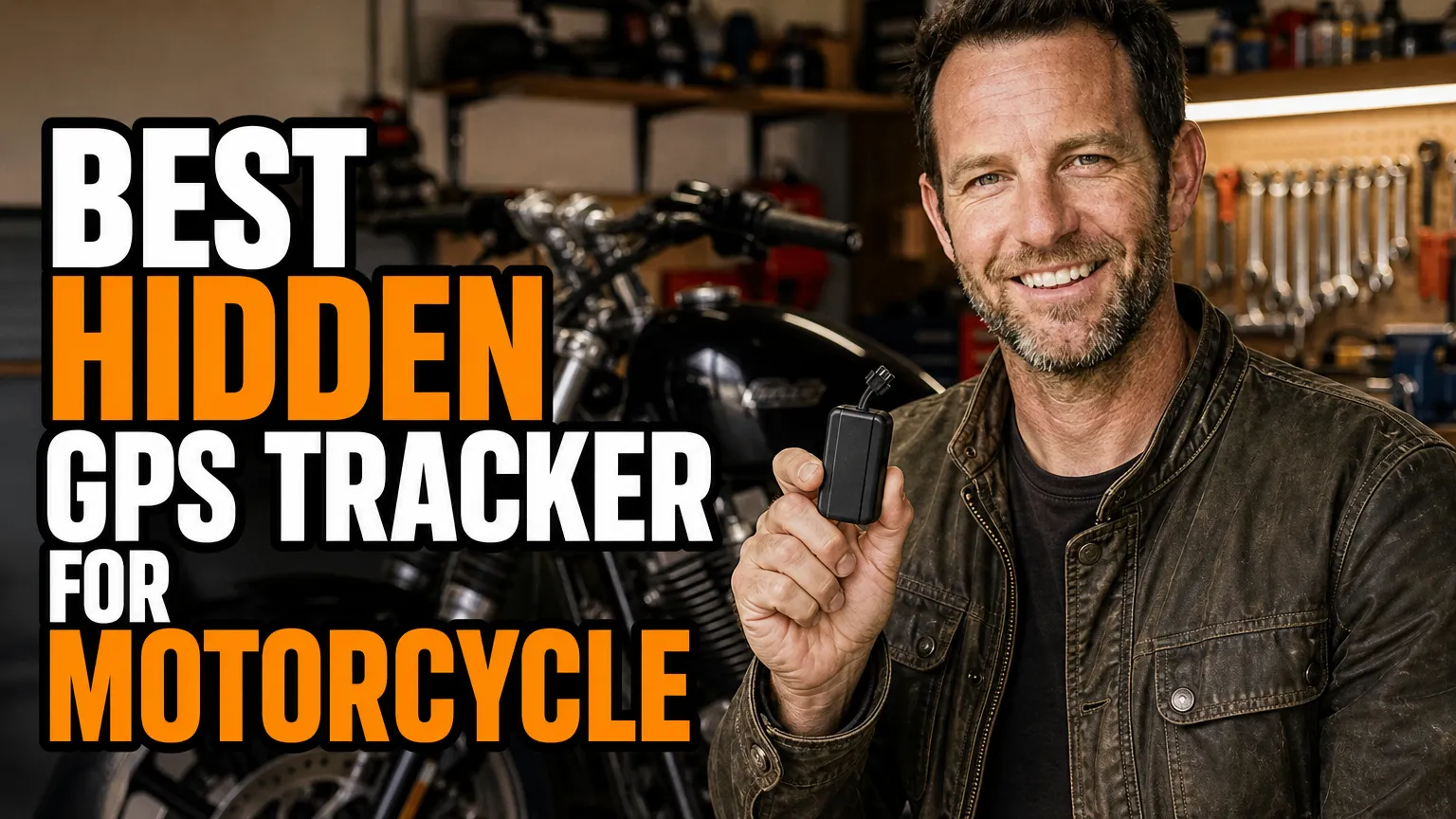
I have had a bike moved without my permission exactly once, and that was enough. It was a Tuesday night in a supermarket car park, and by the time I walked back out, my bike had been rolled twenty metres into a dark corner with the steering lock forced. Nothing was stolen, but I spent the next month obsessing over trackers.
Since then I have run five different hidden GPS trackers on my own motorcycles, from a $29 AirTag taped under a seat to a professionally installed Thatcham unit that cost more than my exhaust. I have also watched friends lose bikes that had trackers fitted badly, in obvious places, with dead batteries.
This list is what I would actually buy again. Every entry is a real, currently available product, and I have listed the hardware price, the realistic battery life, and the subscription cost, because that is where most riders get surprised.
- Best overall: Monimoto 7, no wiring, battery powered, calls your phone when the bike moves.
- Best for UK insurance: Datatool Stealth S5 or BikeTrac, both professionally installed and Thatcham approved.
- Best cheap DIY: Optimus Tracker 2.0 and Tracki 4G cost very little and hide easily.
- Budget reality check: an Apple AirTag is a backup layer, not a GPS tracker, and thieves with iPhones get alerted to it.
- Always budget the subscription. Most good trackers cost $3 to $15 per month on top of the hardware.
1. Monimoto 7 — Best Overall Hidden Tracker
If you only read one entry in this list, make it this one. The Monimoto 7 is the tracker I recommend to almost every rider I know, and it is the one still fitted to my own bike today.
What makes it brilliant is what it does not need. There is no wiring to the bike loom, no fuse tap, and no professional install. It runs on its own batteries, so a thief who rips out your battery or cuts your loom has not disabled it.
The Monimoto 7 pairs with a small key fob. Walk away with the fob and the tracker arms itself. Move the bike without the fob and the motion sensor wakes the GPS, which then places a call to your phone and pushes an alert with a live map link. In my experience the first call arrives within about 30 to 60 seconds.
Specs that actually matter
It uses LTE-M cellular connectivity with GPS and a motion sensor, and it is IP67 rated, so rain and pressure washing have not bothered mine. Battery life is claimed at up to 12 months, and realistically I get around 8 to 10 months of normal use before it asks for new cells.
Hardware is roughly $149 to $189, and the subscription runs about $49 per year. That is far cheaper than most insurance-approved systems, and the app is genuinely pleasant to use.
The only real downside is that it is not Thatcham approved, so some UK insurers will not discount your premium for it. For pure theft detection, though, it is my number one pick.
2. Invoxia Bike Tracker — Best Battery Life
Invoxia is a French company that has been making low-power trackers for years, and the Bike Tracker is their motorcycle-focused unit. I ran one for a full season on a bike that lives outside, and the battery endurance genuinely surprised me.
It is thin and card-like, roughly the size of a thick credit card, which makes it easy to tuck behind a side panel or inside a frame void. There is no wiring, so installation is a five minute job with a couple of zip ties.
Alerts cover movement, geofence exit and low battery. The app is clean, and I found the geofence notifications reliable once I stopped setting the radius too tight.
Where it falls short
It is not the fastest to react. If you want an instant phone call the second your bike twitches, Monimoto beats it. Invoxia is more of a “tell me something is wrong” device than a live chase tool.
Expect to pay around $99 to $129 for the hardware and a modest monthly or annual subscription on top. Battery life is measured in months rather than weeks, which is the whole point of the design.
3. Optimus Tracker 2.0 — Best Value Self-Install
The Optimus Tracker 2.0 is the tracker I recommend when someone wants proper 4G tracking without spending Monimoto money. It is a small black box, and it has become genuinely popular in motorcycle communities.
It uses 4G LTE, has an IP67 waterproof rating, and ships with a strong magnetic mount plus a wiring option if you want to hardwire it later. I have used the magnet alone on a metal bracket under the tail, and it never shifted.
Battery life is the compromise. I get roughly two to four weeks between charges depending on how often it reports, which means this is a tracker you plug in regularly rather than forget about.
Running costs and app
Hardware sits around $60 to $80, and the subscription is typically $5 to $8 per month with discounts for annual plans. The app supports live tracking, history playback and geofencing.
For the money, the feature set is excellent. Just do not expect Thatcham approval or a year of battery life.
4. SIZZAPP GPS Tracker — Best Smart Tracker for Riders
SIZZAPP is the tracker for riders who like data. It is a European, motorcycle-specific unit that hardwires to the bike and also keeps an internal backup battery, so cutting the main power does not kill it immediately.
Beyond theft alerts, it logs your rides, speed, trip history and even lean angle. I found the ride logging genuinely useful for planning routes, and the crash detection is a nice safety net if you ride alone.
Alerts include movement, geofence breach, tow detection and low voltage. The app is polished and clearly built by people who actually ride.
Pricing and install
Hardware is roughly €129 to €199 depending on the bundle, with a subscription on top. Installation needs basic wiring skills or a shop, since it connects to a switched live and a ground.
If you want a tracker that doubles as a ride computer, this is the one I would choose. If you only care about theft recovery, it is more than you need.
5. Datatool Stealth S5 — Best for UK Insurance
If your insurer demands a Thatcham approved tracker, the Datatool Stealth S5 is one of the two names that comes up again and again. It is professionally installed, which means it cannot be fitted badly by you at 11pm in a cold garage.
It is a Thatcham Category S5 approved system, monitored 24/7, with movement alerts and a dedicated response process. Several UK insurers recognise it for premium discounts, which softens the cost considerably.
Installation is dealer-only and typically runs £300 to £400 including fitting, with an annual subscription after the first year. That is real money, but so is replacing a bike.
Who this is for
This is for riders in the UK with expensive or theft-prone machines, especially in cities. The professional install means the tracker is buried somewhere you would never find it yourself, which is exactly the point.
For everyone else, it is overkill. For a financed Panigale in London, it is close to essential.
6. BikeTrac — Best Professionally Installed Motorcycle Tracker
BikeTrac is built specifically for motorcycles rather than adapted from car telematics, and it shows. It is another Thatcham approved, professionally installed option, and it has a strong reputation in the UK for actual recoveries.
The system runs its own monitoring centre, so alerts go to real people as well as your phone. If the bike moves, you get contacted, and the unit keeps reporting even if the bike’s battery is disconnected.
It also logs journeys and gives you a ride history, which is handy if you ever need evidence after an incident.
The honest downsides
Cost. Expect roughly £300 or more for installation plus an annual subscription, and you need a dealer or approved fitter to do the work.
You also cannot move it between bikes easily. But for a single high-value bike that lives in a risky area, I would happily pay it.
7. Rewire Security SpyTrack DB2 — Best Hardwired Covert Unit
Rewire Security is a UK company that sells a range of wired trackers, and the SpyTrack DB2 is the one I have seen fitted covertly on several bikes. It is small, black, and easy to bury.
It is hardwired to a permanent live with its own backup battery, so unplugging the bike battery does not silence it. It reports position, movement and ignition state, and supports geofencing and alerts through a web dashboard and app.
Pricing is friendly. Hardware is typically £40 to £80, and subscriptions start around £5 per month. There are Thatcham-approved variants if your insurer insists.
Install notes
Because it is wired, installation quality decides everything. I have seen one fitted inside a tail unit with the antenna buried against metal, which killed GPS reception entirely. Mount it with the antenna facing open sky.
If you are comfortable with a multimeter and a soldering iron, this is one of the best value covert setups going.
8. Tracki 4G GPS Tracker — Best Cheap Generic Option
Tracki is not a motorcycle product, but it is one of the smallest and cheapest 4G trackers you can buy, and riders hide them all the time. I have used one as a secondary unit and it performed fine.
It is roughly the size of a large matchbox, works worldwide on 4G LTE with 2G fallback, and offers live tracking, geofencing, movement alerts and history. An optional magnetic waterproof case makes it viable on a bike.
Battery life is the trade-off. The standard battery lasts only a few days in heavy use, and I got closer to two to five days in normal tracking mode. There is an extended battery kit that stretches this considerably.
Costs
Hardware is often under $30, and subscriptions start around $9.95 per month, dropping a lot if you pay annually. That is a genuinely low entry point.
Just remember it is not waterproof out of the box, so the case is not optional on a motorcycle.
9. PAJ GPS Allround Finder — Best for European Riders
PAJ GPS is a German brand with a solid reputation in Europe, and the Allround Finder is the model I would pick for a bike. It is compact, battery powered and simple to hide.
It uses GPS with cellular reporting, offers geofencing and movement alerts, and ships with a magnetic mount and a protective case. Battery life is quoted around 20 days, and my real-world results were in that ballpark with moderate reporting intervals.
The app supports multiple trackers on one account, which is useful if you have a garage full of bikes. Subscriptions start around €2.99 per month, which is among the cheapest I have seen from a reputable brand.
What to watch
Coverage and band support vary by region, so check the version sold in your country before ordering. Also, the magnetic mount is convenient but a determined thief can find a tracker that is simply stuck to a metal surface.
Use it as a starting point, then add a zip tie and a bit of camouflage tape.
10. Apple AirTag — Best Ultra-Budget Backup Layer
I want to be honest here, because a lot of riders treat AirTags as trackers and they are not. An AirTag has no GPS and no cellular radio. It reports its position only when a nearby iPhone in the Find My network sees it.
That said, in a city with heavy iPhone density, an AirTag hidden inside seat foam or taped into a tail section can genuinely help you find a stolen bike. It costs about $29, there is no subscription, and it hides anywhere.
My approach is layered. I run a proper GPS tracker as the primary system and keep an AirTag as a cheap second chance.
The caveats you must know
Anti-stalking features mean a thief with an iPhone may get an alert that an unknown AirTag is travelling with them, and the tag will start beeping after a while. That can lead them straight to it.
It also does nothing in rural areas with no iPhones around. Treat it as a bonus, never as your only protection.
How I Choose a Hidden Motorcycle Tracker
After five trackers and one very annoying theft attempt, my checklist has become pretty short and fairly ruthless.
Battery powered or hardwired?
Battery powered units like the Monimoto 7 survive a cut loom, which is exactly what a professional thief does first. Hardwired units like the SpyTrack DB2 report more often but depend on installation quality.
My honest preference is a battery unit as the primary, with a hardwired one as a bonus if you have the budget.
Subscription costs add up fast
A $60 tracker with a $10 monthly plan costs $180 in the first year. Always compare the three year total, not the sticker price.
Annual plans usually knock 30 to 50 percent off the monthly rate, so pay yearly if you are keeping the bike.
Where to actually hide it
Under the tail section, inside a side panel, behind the airbox cover or pressed into the seat foam are the spots I trust. Avoid the battery box, the tool kit and anywhere obvious.
Also test reception after fitting. A tracker buried against metal will fail exactly when you need it, and you will not know until it is too late.
Insurance approval matters more than specs
If your policy requires a Thatcham approved device, no amount of clever DIY tracking will satisfy the insurer. Check your policy wording before you buy anything.
And remember, a tracker is a recovery tool, not an anti-theft device. A quality lock and chain still does more work than any electronics.
My Final Take
If I had to buy one tracker tomorrow with my own money, it would be the Monimoto 7. It hides easily, survives a cut loom, needs no installer, and calls me within a minute of someone touching my bike.
If I lived in the UK and my insurer demanded certification, I would go with the Datatool Stealth S5 or BikeTrac and accept the cost. If I wanted cheap and cheerful, the Optimus Tracker 2.0 is the best value pick on this list.
Whatever you choose, fit it properly, test it monthly, and keep the subscription active. A hidden tracker with a dead battery is just an expensive piece of plastic bolted to your subframe.
Frequently Asked Questions
What is the best hidden GPS tracker for a motorcycle?
For most riders, the Monimoto 7 is the best all-round pick because it needs no wiring, hides almost anywhere on the frame, and calls your phone the moment the bike moves without its key fob nearby.
Do hidden GPS trackers work without a subscription?
Almost none do. Cellular trackers need a data plan to send you location alerts, so expect roughly $3 to $15 per month. AirTag style trackers avoid the fee but rely on nearby iPhones, not real GPS.
Where should I hide a tracker on a motorcycle?
Under the tail section, inside the airbox cover, behind a side panel, or zipped into the seat foam are the spots I trust most. Avoid the battery box and anywhere a thief would look first, like under the seat itself.
Are cheap GPS trackers worth it on a bike?
Sometimes. Budget units like the Tracki 4G work well if you accept shorter battery life and a weaker app. If your insurer demands a Thatcham approved unit, a cheap tracker will not satisfy them.

Related Articles

6 Best Motorcycle Phone Mounts That Keep Your Phone Charged on the Road
Compare six dependable motorcycle phone mounts with wireless or USB charging, including fit, power wiring, vibration protection, weather resistance, and…
Jake Miller
10 min read

5 Best Motorcycle Phone Mounts for Naked Bikes and Open-Cockpit Riding
I compare secure, vibration-conscious phone mounts for naked and touring bikes, with fit notes, real trade-offs, and setup tips for…
Jake Miller
11 min read

7 Best Phone Mounts for Sport Bikes: Secure, Vibration-Smart Picks
Compare secure phone mounts for sport bikes, including clip-on fit, vibration control, case systems, prices, and my practical picks for…
Jake Miller
12 min read