
7 Roomy Cruiser Motorcycles That Make Long Rides More Comfortable
 Jake Miller
11 min read
Jake Miller
11 min read
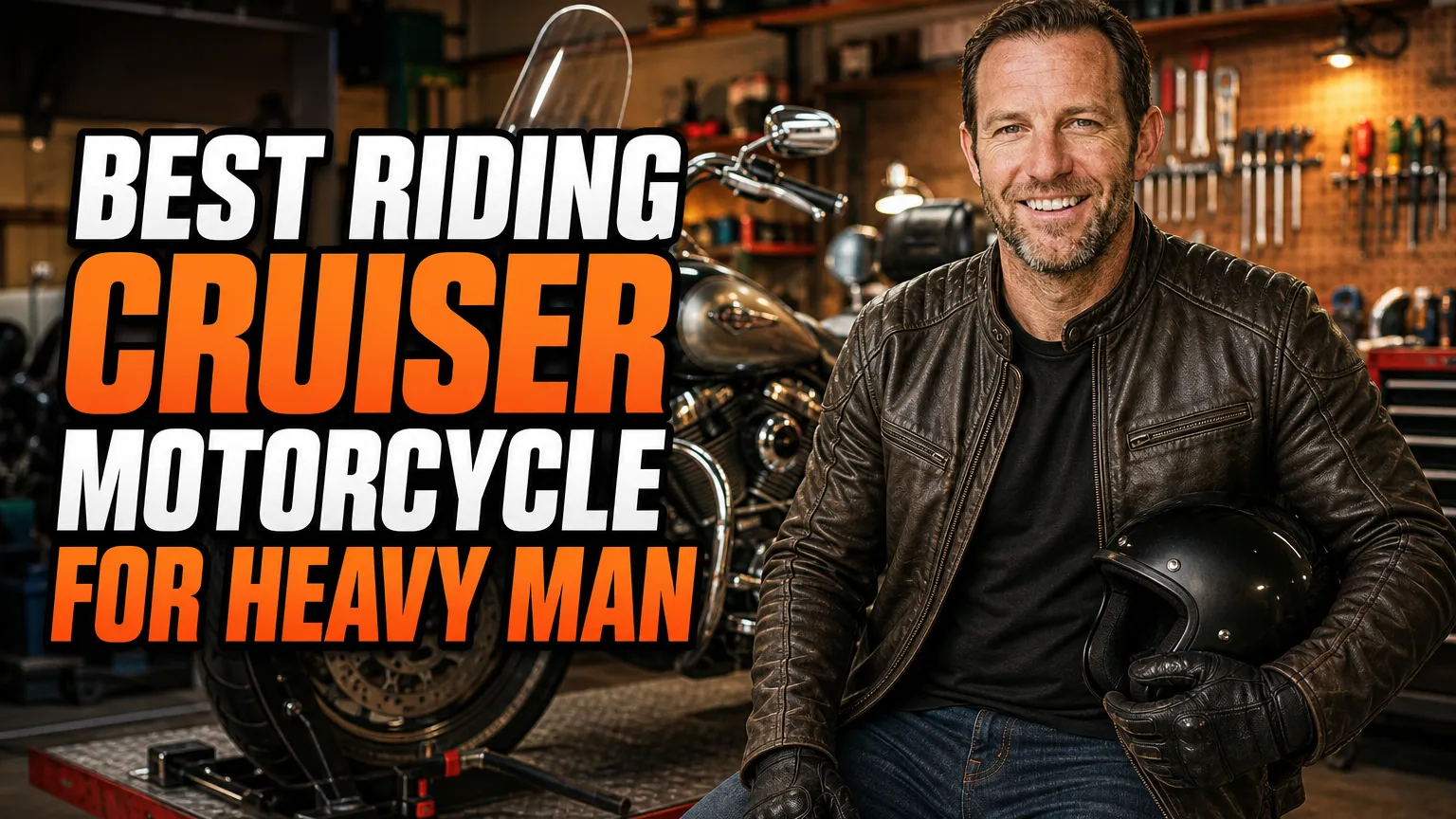
When someone asks me to recommend the best riding cruiser motorcycle for a heavy man, I start with fit and load limits, not engine size or looks. A supportive seat, relaxed leg position and suspension that can be set up for the rider can make a much bigger difference on a long day in the saddle.
I’ve put together this list around real, named cruiser models with different strengths, from touring-friendly floorboards to lighter machines that are easier to maneuver. No motorcycle automatically fits every bigger rider, so I’d check the owner’s manual for payload limits and arrange a proper test ride before choosing.
- I’d begin with fit, comfort and the bike’s published payload limit, not just its engine size.
- The Harley-Davidson Heritage Classic and Indian Springfield are my touring-focused picks.
- The Honda Rebel 1100 is lighter and approachable, but its compact cockpit needs a careful test ride.
- Set tire pressure and suspension to the manufacturer’s guidance, and never exceed the bike’s GVWR.
How I choose a cruiser for a bigger rider
I pay close attention to how the seat supports my weight and whether the riding position leaves enough room to move. A low seat can make it easier to reach the ground, but a narrow seat, cramped knee position or bars that force me to lean forward can spoil a ride quickly.
I also check the motorcycle’s GVWR, or gross vehicle weight rating, and compare it with its ready-to-ride weight. The remaining allowance is the payload for the rider, passenger, luggage and accessories. I confirm the figures in the owner’s manual or on the motorcycle’s certification label because they can vary by year, trim and market.
Finally, I consider suspension setup and the kind of riding I actually do. If most of my miles are in town, nimble handling matters; for longer highway trips, I want stable behavior, wind protection and a comfortable seat. For a broader look at different riding styles, I also compare guides to the best motorcycle for street riding and the best motorcycle for town riding.
1. Harley-Davidson Heritage Classic: My all-around comfort pick
The Harley-Davidson Heritage Classic is where I’d start if I wanted classic cruiser styling with practical touring equipment. Its floorboards give my legs room to settle into a relaxed position, while the detachable windshield and saddlebags make it more useful for longer rides than a stripped-down cruiser.
Recent versions use Harley-Davidson’s Milwaukee-Eight 117 V-twin and a six-speed transmission. Exact equipment, specifications and pricing depend on model year and trim, so I’d check the current manufacturer listing before shopping. The windshield is especially useful when I want to reduce wind pressure on an open-road ride, and I like being able to remove it for a cleaner look on shorter trips.
Why I’d consider it
I like the Heritage Classic’s blend of touring practicality and traditional cruiser ergonomics. It gives me floorboards, passenger provisions and storage without the full-size touring-bike feel of a bagger. For a rider who wants weekend trips and everyday rides from one motorcycle, that balance is a strong point.
My main caution is weight: a well-equipped cruiser can be demanding to move around in a parking lot. I’d also check the exact payload rating and sit on the seat for more than a minute. If I planned to carry a passenger and luggage regularly, I’d calculate that combined load before deciding.
2. Indian Springfield: My choice for relaxed, long-distance cruising
The Indian Springfield is a substantial touring cruiser that I’d shortlist for open-road comfort. Its Thunderstroke V-twin, floorboards, passenger accommodations and touring-oriented equipment make it a natural fit for riders who value a roomy, steady ride over a lightweight feel.
Depending on the year and version, the Springfield has included features such as hard saddlebags, a windshield and cruise control. I’d confirm what comes on the particular bike I’m considering, since equipment and pricing can change. Its size and equipment are appealing for long stretches, but they also make a test ride and low-speed handling check essential.
What stands out to me
I’d choose the Springfield when I wanted a more touring-focused setup than a basic cruiser offers. Floorboards can feel easier on my legs than pegs on a long ride, and luggage capacity is useful when I’m packing for a weekend away. The broad, substantial design also feels purpose-built for distance.
I wouldn’t assume that a big motorcycle automatically offers more payload. Before adding a passenger or loaded bags, I’d check the specific Springfield’s GVWR and curb weight in its documentation. I’d also practice slow turns and parking maneuvers before heading into congested traffic.
3. Harley-Davidson Low Rider S: My pick for a more athletic ride
The Harley-Davidson Low Rider S appeals to me when I want cruiser character with a sportier, more forward-focused riding position. Its Milwaukee-Eight 117 engine delivers strong V-twin torque, while the model’s styling and chassis give it a more aggressive personality than the Heritage Classic.
That character is a plus for riders who enjoy a responsive feel on open roads, but the riding position may not suit everyone. I’d pay particular attention to the handlebar reach, seat support and footpeg position. A rider with a longer torso or limited hip flexibility may prefer a more upright cruiser with floorboards.
Who I think it suits
I’d look at the Low Rider S if I wanted a muscular cruiser that felt engaging rather than purely relaxed. The large engine has ample power for highway riding, but power alone doesn’t make a bike comfortable. For my decision, a test ride matters more than the spec sheet, especially if I expect to spend hours in the saddle.
As with every model here, I’d verify the payload for the exact model year and account for riding gear, luggage and any passenger. I’d also ask a dealer about suspension adjustment for my load and have tire pressures set according to Harley-Davidson’s manual.
4. Indian Chief Bobber Dark Horse: My minimalist V-twin option
The Indian Chief Bobber Dark Horse brings a clean, stripped-back look and a large Thunderstroke V-twin to the cruiser category. I like its low-slung stance and direct, uncomplicated design, especially for riders who want a powerful solo cruiser without the extra touring equipment of a Springfield.
Its low seat can make stops feel approachable, but I wouldn’t mistake low seat height for generous room. The bobber-style setup may offer less flexibility for passengers and luggage than a touring model, and the riding position needs to work for my own proportions. I’d sit on one and check legroom, seat width and reach before falling for its styling.
My practical take
I’d choose the Chief Bobber Dark Horse for shorter rides, local cruising and a distinctive V-twin experience. It has a very different purpose from a luggage-ready touring cruiser, so I’d be realistic about how often I carry a passenger or pack for a trip.
I’d confirm the exact engine specification, equipment and payload for the model year I’m shopping for. Indian’s model details can change between years, and accessories add weight. If I needed regular two-up capability, I’d compare it with a more touring-oriented alternative instead of assuming a bobber is the best match.
5. Honda Rebel 1100: My lighter, more approachable choice
The Honda Rebel 1100 stands out to me because it combines a large-capacity parallel-twin engine with a relatively manageable cruiser format. Honda offers manual and Dual Clutch Transmission versions in many markets, giving riders a choice between conventional shifting and the convenience of an automatic-style transmission.
Compared with the large touring cruisers on this list, the Rebel 1100 is lighter and easier to handle at low speeds. That can be welcome when I’m maneuvering in a driveway or dealing with stop-and-go traffic. At the same time, its compact proportions mean I’d pay extra attention to seat comfort, knee room and handlebar reach if I’m a larger rider.
Where I see the trade-off
I’d consider the Rebel 1100 if I wanted a modern, versatile cruiser that felt less intimidating to push around. Its parallel twin offers plenty of usable performance for everyday riding, and the DCT option may suit riders who prefer not to operate a clutch lever in traffic.
For longer rides, I’d assess seat support and wind protection in person, then check the bike’s payload in the manual. A lighter motorcycle is not automatically the best fit for every bigger rider. I’d choose it only if the cockpit feels comfortable and the official load limit works for my riding needs.
6. Kawasaki Vulcan 900 Classic: My traditional, approachable cruiser
The Kawasaki Vulcan 900 Classic has a 903cc V-twin and familiar cruiser styling, including a low seat and floorboards. I like that it offers a classic look and a relaxed layout without the scale and price of a full touring motorcycle.
Its modest engine size can be enough for local riding and moderate-speed cruising, but I’d think carefully about how I plan to ride. If I regularly travel at highway speeds, carry a passenger or pack a lot of gear, I’d compare its performance and load specifications with larger options on this list.
What I’d check before buying
I’d sit on the Vulcan 900 Classic and see whether the seat gives me enough support across a longer ride. The low seat height is helpful when coming to a stop, but I’d still check the distance to the floorboards and whether my knees feel cramped.
Because equipment and specifications vary by model year, I’d verify the particular bike’s curb weight, GVWR and payload rather than relying on a general estimate. For town errands, I’d also weigh its turning circle and low-speed feel against a smaller or lighter motorcycle. My guide to the best motorcycle for urban riding can help me think through that kind of daily use.
7. BMW R 18 Classic: My distinctive choice for touring style
The BMW R 18 Classic is a large, distinctive cruiser powered by an 1,802cc air-and-oil-cooled boxer engine. Its horizontally opposed cylinders, classic styling, touring windshield and saddlebags set it apart from the American V-twins in this roundup.
I’d consider the R 18 Classic if I wanted a comfortable, characterful machine for scenic rides and touring. Its broad engine and substantial build give it a different feel from a lighter cruiser, so I’d make sure I was comfortable handling it when stationary as well as on the road.
My fit and ownership notes
The R 18 Classic’s seat and riding position deserve a personal test ride. A model can look roomy but still put pressure in the wrong place after an hour. I’d check how naturally my feet meet the controls, whether I can steer comfortably at low speed and how the bike feels when I’m backing it up.
I’d also verify its exact payload and equipment for the model year under consideration. The windshield and luggage help make it more touring-ready, but accessories and cargo count toward the bike’s total load. For mixed-weather plans, I’d research tire suitability and riding conditions rather than assuming any cruiser is safe for every surface; my guide to the best motorcycle for riding in snow offers more context on that specialized topic.
How I’d make the final choice
I’d narrow the list by matching each motorcycle to my actual rides. For touring comfort and luggage, I’d start with the Heritage Classic or Springfield. For a more athletic feel, I’d try the Low Rider S, while the Rebel 1100 and Vulcan 900 Classic are worth considering if manageable size and everyday use are priorities.
Before buying, I’d take a test ride long enough to notice pressure points and check whether I can comfortably turn, stop and maneuver the bike. I’d ask the dealer for the owner’s manual, find the GVWR, and calculate the available payload after accounting for accessories, passenger and luggage.
I’d also have the suspension and tire pressures set according to the manufacturer’s instructions for the load I’m carrying. A suspension upgrade may improve how a motorcycle handles, but it does not increase the bike’s legal or manufacturer-rated payload. For a second opinion on smaller bikes and passenger use, I’d compare the best 300cc motorcycle for 2 up riding guide, then verify that any candidate suits my own size and intended trips.
My best advice is to choose the cruiser that fits your body, load and riding plans, not the one with the biggest engine or the lowest seat. With a careful test ride and a proper payload check, I can find a motorcycle that feels comfortable and confidence-inspiring mile after mile.
Frequently Asked Questions
What should a heavier rider check before buying a cruiser?
I recommend checking the motorcycle’s GVWR and payload in its owner’s manual, then test-riding it for seat, bar, footpeg and suspension fit.
Is a low seat height enough to make a cruiser comfortable?
No. I also look at seat width, legroom, handlebar reach, suspension adjustment and how the bike feels at low speed.
Can I increase a cruiser’s load capacity with stronger suspension?
Suspension upgrades may improve ride control, but they do not raise the manufacturer’s GVWR or payload limit.
Which cruiser is a good starting point for a heavier rider?
I’d start by comparing the Harley-Davidson Heritage Classic, Indian Springfield and Honda Rebel 1100, then choose based on fit, payload and intended riding.

Related Articles

7 Best Cruisers for Comfortable Two-Up Motorcycle Trips
Compare seven comfortable cruisers for two-up rides, with real-world notes on passenger comfort, power, luggage, pricing, and how to choose…
Jake Miller
12 min read

8 Comfortable Cruisers That Make Two-Up Riding More Enjoyable
Find a cruiser you and your passenger can enjoy together. I compare eight comfortable motorcycles, with real-world strengths, trade-offs, and…
Jake Miller
11 min read

7 Luxury Cruisers That Make Long-Distance Riding Feel First-Class
I compare seven luxurious cruisers for long-distance comfort, power, weather protection, luggage, technology, and value to help you choose the…
Jake Miller
13 min read