
7 Best BMW Motorcycles for Women Riders, From Low-Seat Roadsters to Adventure Tourers
 Jake Miller
11 min read
Jake Miller
11 min read
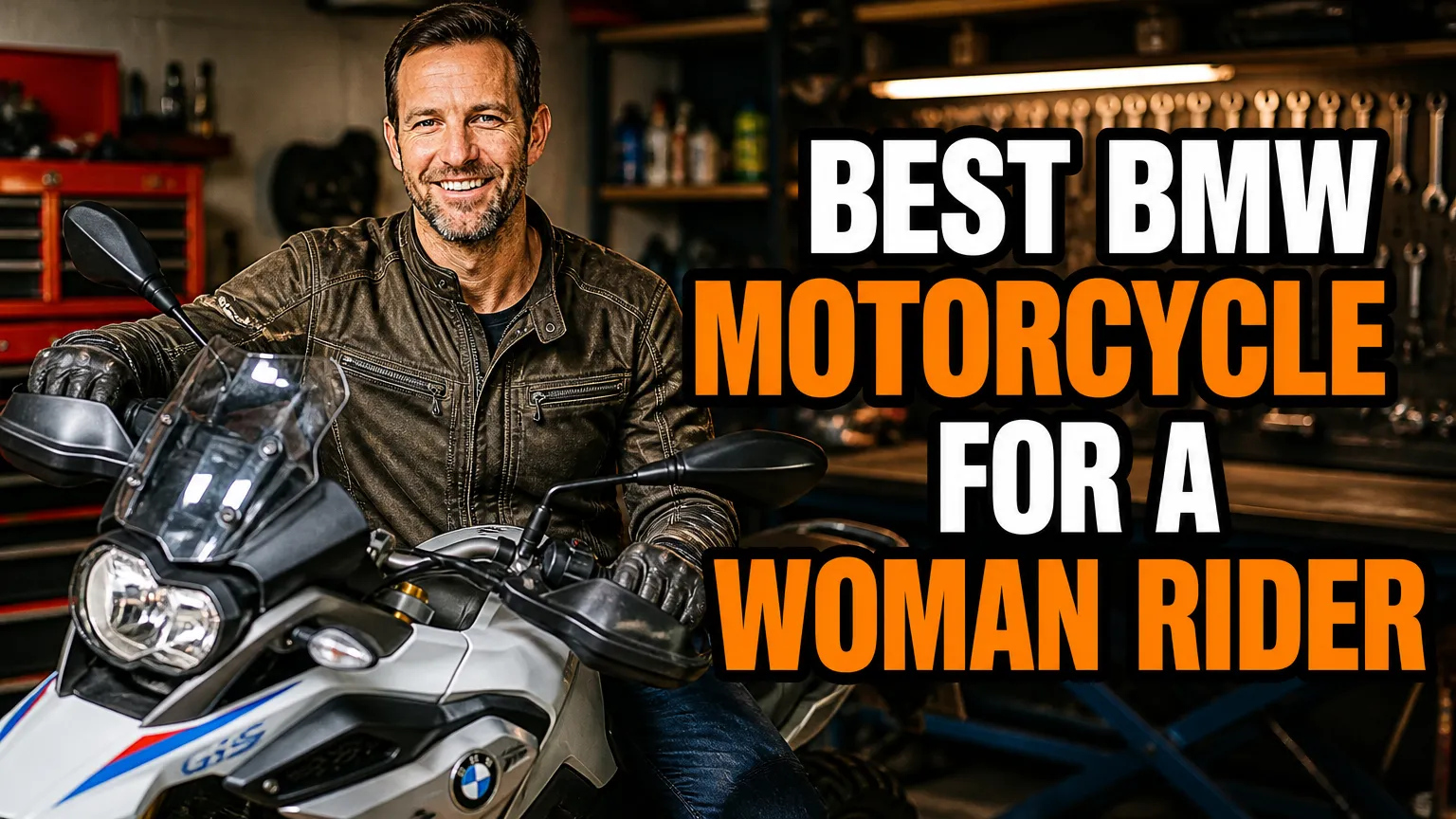
I don’t believe there’s one BMW motorcycle that automatically suits every woman rider. I look for a bike that fits my body, experience and plans, rather than choosing by a label—and I pay close attention to seat height, weight, balance and how easily I can reach the controls.
In this guide, I compare seven BMW models that appeal for different reasons, from a low-seat roadster to serious adventure tourers. Specifications and equipment can vary by model year and country, so I’d confirm the exact version with a BMW dealer before buying.
- I’d consider the BMW R 12 first if I want a low seat and relaxed road manners.
- I’d shortlist the F 900 R for an agile everyday roadster with lively performance.
- I’d choose the F 800 GS or F 900 GS for adventure riding, while checking their height and weight carefully.
- I’d test for real-world fit, not just compare seat-height numbers on a spec sheet.
How I choose a BMW that fits me
Seat height matters, but it’s only one part of the fit. I also check the width of the seat, where the bike carries its weight, the distance to the bars and whether I can comfortably operate the clutch and front brake.
I’d sit on a bike in the riding boots I normally wear and ask to try a slow-speed turn or a careful walk backwards. If I can only reach the ground by leaning dramatically, I’d look for a different seat option or model. A confident one-foot stop can work for some riders, but I want the bike to feel manageable, not like a constant balancing exercise.
For more sizing ideas, I’d also compare this guide with recommendations for a Best Motorcycle for 4’11 Woman, the best motorcycle for 52 woman, and the best motorcycle for 53 woman. Those guides can help me think through fit, but I’d still try the exact BMW model I’m considering.
1. BMW R 12 — My low-seat choice for relaxed road riding
If I want a BMW with a notably accessible seat, the R 12 is the first model I’d check. Its seat is about 29.7 inches high, which can make stopping feel less intimidating than it might on a tall adventure bike. I’d remember, though, that a low seat doesn’t make a motorcycle lightweight: the R 12’s curb weight is around 492 pounds, depending on equipment.
The R 12 uses BMW’s 1,170cc air-and-oil-cooled boxer twin, with a claimed 95 horsepower. I like the idea of that horizontally opposed engine for road riding because it gives this model a distinctly BMW character, while the low seat and cruiser-influenced stance suggest an easygoing approach to everyday trips.
Why I’d put it on my shortlist
I’d consider the R 12 for commuting, relaxed weekend rides and riders who want a lower seating position without stepping away from a full-size motorcycle. Its shaft drive also means I wouldn’t have to clean and lubricate a chain as part of routine ownership.
I wouldn’t pick it for serious off-road travel or for a rider who wants a light bike to push around in a tight garage. I’d sit on it and practise moving it at walking speed, because its weight still matters even when both feet reach the ground.
2. BMW F 900 R — My versatile pick for everyday roads
The F 900 R is the roadster I’d look at if I wanted an upright, sporty BMW for city streets and twisty roads. Its 895cc parallel-twin engine makes up to 105 horsepower in current versions, and its naked-bike layout leaves the motorcycle feeling less bulky than a fully dressed tourer.
Seat height is roughly 31 inches in standard form, though equipment and seat options can affect the final measurement. I’d ask about the available low seat and suspension configuration for the specific model year, then check how the bike feels with its weight settled underneath me rather than relying on the number alone.
Who I think it suits
I’d shortlist the F 900 R if I wanted one motorcycle for commuting, local rides and occasional longer trips with a small luggage setup. The upright posture makes more sense to me for varied street riding than a committed sport-bike crouch, while the twin-cylinder engine offers enough performance to keep experienced riders engaged.
It’s still a powerful motorcycle, so I wouldn’t treat it as a beginner bike by default. If I were new to riding, I’d consider my training, comfort with throttle response and ability to handle the bike in a parking lot before deciding. I’d also price optional riding aids and comfort equipment separately, since packages vary.
3. BMW F 900 XR — My sport-touring choice for longer days
When I want wind protection and a more touring-friendly shape without moving to a large adventure bike, I’d look at the F 900 XR. It shares the 895cc parallel-twin platform with the F 900 R and offers up to 105 horsepower, but its fairing and taller screen give it a more purposeful feel for highway miles.
The standard seat is around 32 inches high, with lower seat options available in some markets and model years. I’d make sure the windscreen and handlebar position suit my height, too. A motorcycle can have a comfortable seat and still feel wrong if the bars make my shoulders tense or the airflow hits my helmet awkwardly.
What I’d use it for
I’d choose the F 900 XR for commuting mixed with weekend touring, especially if I wanted a responsive bike with some weather protection. Its road-focused setup is a better match for paved routes than rough trails, and I’d consider luggage options if my trips regularly involve an overnight bag.
For a shorter rider, I’d be especially attentive to the bike’s overall width and loaded weight. I’d practise stops on a slight slope and test how confidently I can get a foot down. If I prefer a lower, more laid-back cruiser posture, I’d compare it with the R 12 rather than trying to make the XR fit every style.
4. BMW F 800 GS — My approachable entry into adventure touring
The F 800 GS is the adventure model I’d consider when I want a capable all-rounder without stepping up to BMW’s biggest GS machines. Its 895cc parallel twin produces about 87 horsepower, and its upright riding position gives me a useful view of traffic and room to move around on the bike.
The standard seat is roughly 32 inches high, and lower seat or suspension configurations may be offered depending on the market. That’s still tall for many riders, so I wouldn’t assume the F 800 GS is easy to manage just because it sits below some larger adventure bikes. I’d ask the dealer to show me the exact setup and check the bike with a realistic amount of fuel and luggage.
Why I’d consider it
I’d shortlist the F 800 GS if I wanted to combine paved touring with gravel roads and light adventure routes. Its 21-inch front wheel and long-travel suspension are designed for mixed surfaces, while its parallel twin gives it a different character from BMW’s larger boxer-powered GS models.
I’d be cautious if I were a newer rider or felt uncomfortable handling a tall motorcycle at walking pace. I’d practise mounting, dismounting and turning in a confined space before committing. For broader guidance on choosing by body size and riding experience, I’d also visit this guide to the best motorcycle for woman.
5. BMW F 900 GS — My pick for a lighter-feeling, serious adventure bike
If my plans include more challenging trails, I’d take a close look at the F 900 GS. It has the same basic 895cc parallel-twin capacity as the F 900 R and XR, but it’s tuned for 105 horsepower and paired with an adventure-focused chassis, long-travel suspension and a 21-inch front wheel.
The F 900 GS has a tall seat—around 33.5 inches in its standard configuration—and that’s the first thing I’d evaluate. Lower seat options may be available, but I’d also think about how the bike feels when I’m standing on the pegs or dealing with uneven ground. Trail riding can mean stopping on a slope, where simply touching the floor in a showroom doesn’t tell the whole story.
Where I see the trade-off
I’d choose this model over a road-focused BMW if I genuinely wanted to ride unpaved routes and needed the suspension and wheel setup to match. I’d expect to spend time learning slow-speed balance and off-road technique, rather than buying it solely for its adventure styling.
BMW offers rider aids and equipment options that vary by configuration, so I’d confirm what’s included in the bike I’m pricing. I’d also budget for protective gear and luggage if adventure travel is the goal. For me, the F 900 GS makes sense when I’m ready to use its capabilities, not just admire them in the garage.
6. BMW R 12 nineT — My choice for classic styling with modern performance
The R 12 nineT is the model I’d browse if I wanted a roadster with heritage-inspired styling and a more energetic feel than the standard R 12. Its 1,170cc boxer twin produces about 109 horsepower, and the bike combines a classic silhouette with contemporary features and configurable equipment.
Its seat is around 31 inches high, but the shape and width can influence how easily I reach the ground. I’d compare it directly with the lower R 12 rather than assuming the two models fit alike. I’d also remember that the nineT weighs roughly 485 pounds in running order, depending on specification.
Why it could be the right fit
I’d consider the R 12 nineT if I wanted a distinctive road bike for day rides, commuting and scenic backroads. The boxer engine and shaft drive give it the traditional BMW character I enjoy, while its relatively compact roadster layout avoids the height of a GS adventure bike.
I wouldn’t choose it for a rider whose priority is maximum wind protection, extensive touring storage or trail use. I’d view it as a style-conscious road motorcycle, then compare the cost of accessories and comfort upgrades before deciding. Optional equipment can change both the price and the way the bike feels under me.
7. BMW R 1300 GS — My long-distance adventure option
The R 1300 GS is the BMW I’d consider when long-distance travel and broad adventure capability matter more than a low seat or small footprint. Its 1,300cc boxer twin makes a claimed 145 horsepower, and the model is built for riders who want a substantial touring platform with advanced electronics and a wide range of equipment options.
That capability comes with a real size and weight commitment. The standard seat height is around 33.5 inches, while BMW’s available seat and adaptive suspension options can change how high the bike sits in different situations. I’d check the exact configuration, because the R 1300 GS can feel very different depending on seat, suspension and luggage choices.
When I’d choose it—and when I wouldn’t
I’d choose the R 1300 GS if I were an experienced rider planning long trips on a mix of paved roads and manageable dirt, and if I could confidently handle a large motorcycle. Its power, touring potential and available rider technology make it a compelling flagship, but those features don’t cancel out the physical demands of its size.
I wouldn’t choose it just because it’s the most capable or prestigious option. I’d test it fully loaded if possible, check how I manage a stop on uneven ground and compare it with the lighter F 800 GS or F 900 GS. Riders drawn to cruisers rather than adventure bikes might also find it useful to explore a best cruiser motorcycle for 65 rider guide for a different perspective on fit and riding posture.
My final checklist before choosing
Before I buy, I’d sit on my top two or three models and test the reach to the bars, levers and foot controls. I’d try a normal stop, a tight turn and a gentle reverse maneuver, ideally with a salesperson nearby. If a low seat or suspension option is available, I’d evaluate the finished setup rather than guessing how much it will help.
I’d also consider how I actually ride. The R 12 suits my interest in a low seat and relaxed road use; the F 900 R makes more sense as a lively everyday roadster; and the F 800 GS or F 900 GS better match a real appetite for adventure routes. The F 900 XR and R 12 nineT offer their own appealing middle ground, while the R 1300 GS is a serious choice for experienced touring riders.
My best BMW is ultimately the one I can operate confidently and enjoy riding regularly. I’d put fit and comfort ahead of horsepower, styling or anyone else’s idea of what a woman rider should choose. After a proper test ride and an honest look at my needs, I’d trust the motorcycle that feels natural beneath me.
Frequently Asked Questions
Which BMW motorcycle is easiest to manage for a shorter rider?
I’d start by sitting on the BMW R 12 because its low 29.7-inch seat can make reaching the ground easier. I’d still check its weight and balance in person.
Does BMW make motorcycles specifically for women?
BMW’s motorcycles aren’t defined by rider gender. I choose by fit, confidence, riding goals and control reach, then look for adjustable or low-seat options where needed.
Is the BMW F 800 GS suitable for a beginner?
I’d consider the F 800 GS for a beginner who is comfortable with its adventure-bike height and weight. Its lower-seat options may help, but I’d arrange a test ride first.
What should I check before buying a BMW motorcycle?
I’d check whether I can support the bike securely, reach the controls comfortably, maneuver it at walking pace and afford the model’s equipment, insurance and maintenance.

Related Articles

9 Best Beginner Motorcycles for Shorter Riders Who Want Confidence
Compare nine beginner-friendly motorcycles for shorter riders, with seat heights, weights, features, and my practical tips for choosing a bike…
Jake Miller
13 min read

8 Best Motorcycles for 5’4″ Riders, From Easygoing Cruisers to Agile Roadsters
Find the best motorcycle for a 5'4" woman with my picks, seat-height advice, real-world fit tips, and beginner-friendly options for…
Jake Miller
12 min read

8 Best Motorcycles for Short Riders: Comfortable Picks for a 5’1″ Rider
Compare eight approachable motorcycles for shorter riders, with seat heights, weight, handling notes, and practical tips for finding a confident…
Jake Miller
13 min read