
7 Honda Motorcycles I’d Recommend to Women Riders, From First Bike to Adventure Tourer
 Jake Miller
11 min read
Jake Miller
11 min read
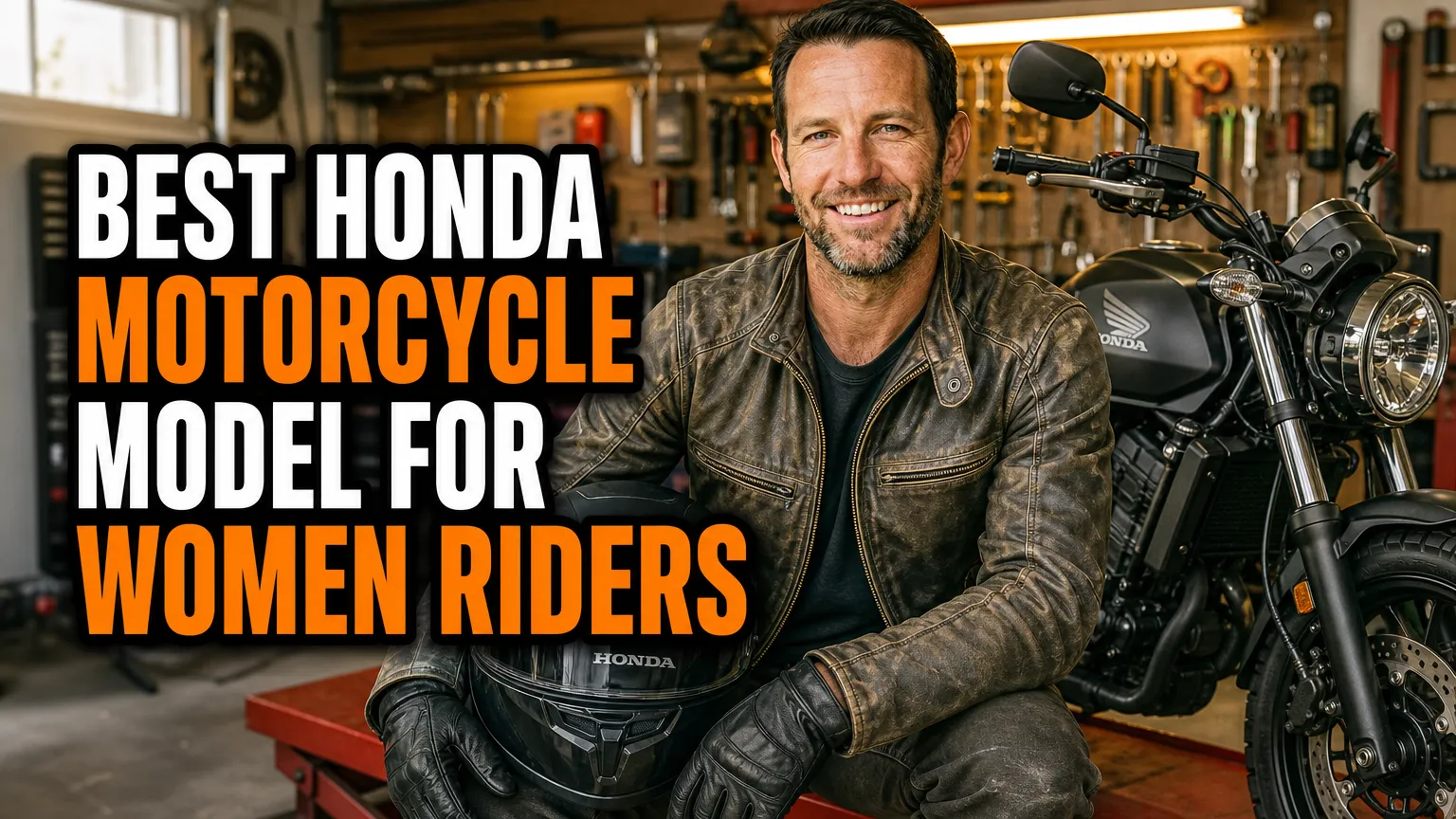
When I help someone choose a first or next motorcycle, I don’t start with the idea that one model is made for all women. I start with the rider: how confidently they can put a foot down, how easily they can lift and steer the bike, and where they actually plan to ride.
That’s why my search for the best Honda motorcycle model for women riders leads to several different answers. Honda’s lineup includes approachable cruisers, small urban bikes, sporty road machines, and taller adventure models, each with its own trade-offs in weight, power, and comfort.
- I’d start with the Rebel 500 for a low seat and versatile everyday riding.
- I’d choose the Grom for lightweight local trips, not regular highway use.
- The NX500 is my pick for a road-focused adventure bike with touring potential.
- I’d treat seat height, total weight, and riding experience as more important than gender.
I’ve organized these picks around real Honda models and the riders I think they suit best. Specifications and prices can change by model year and market, so I’d confirm the details with a local dealer and sit on the exact bike before buying.
1. Honda Rebel 500: My Most Versatile Low-Seat Pick
If I were narrowing the list to one easy-to-live-with road bike, I’d put the Honda Rebel 500 near the top. Its relaxed cruiser layout and 27.2-inch seat height make it easier for many riders to reach the ground than on a conventional standard or adventure bike.
The Rebel 500 uses a 471cc parallel-twin engine. That gives me a useful middle ground: more passing and highway ability than a small beginner bike, without jumping straight to the much stronger engine in the Rebel 1100.
Why I like it for everyday riding
- Low seat: At about 27.2 inches, the seat is one of the Rebel’s strongest fit advantages.
- Manageable engine: The 471cc twin is approachable for a range of experience levels, though new riders still need training and practice.
- Flexible use: I’d consider it for commuting, errands, weekend rides, and occasional highway trips.
- ABS option: Depending on model year and market, the Rebel 500 is available with anti-lock braking.
One detail I never ignore is weight. The Rebel 500’s curb weight is roughly 408 to 414 pounds, depending on specification, so I’d practice backing it up and maneuvering it in a parking lot before deciding it feels easy to handle.
For a rider who wants a lower seat and is also comparing other bikes by stature and fit, I’d browse this guide to the best motorcycle for short riders. My overall take: the Rebel 500 is a strong all-round choice, but it isn’t automatically the right fit just because its seat is low.
2. Honda Rebel 1100: My Choice for More Power and Longer Rides
I’d look at the Honda Rebel 1100 when an experienced rider wants cruiser ergonomics with substantially more power. It has a 1,084cc parallel-twin engine, a low seat of about 27.5 inches, and a choice of manual or automatic Dual Clutch Transmission (DCT) on applicable versions.
That low seat can make stops feel reassuring, but I wouldn’t confuse seat height with overall ease. At roughly 487 pounds in manual form and heavier in DCT form, the Rebel 1100 takes more effort to push around than the Rebel 500.
Who I think should consider it
I’d recommend the Rebel 1100 to a rider who already has solid throttle, braking, and slow-speed skills and wants more passing power or a stronger touring platform. The DCT version is particularly interesting if I want automatic gear changes, although I’d test its controls and added weight before choosing it.
For two-up weekends, I’d check passenger comfort, luggage options, and the bike’s payload rather than assume a cruiser is automatically spacious. If carrying a passenger is a regular part of the plan, I’d also compare the best cruiser motorcycle for 2 riders options.
My verdict is simple: the Rebel 1100 is a compelling step-up bike, not my default recommendation for a first motorcycle. Its accessible seat is a plus, but its engine and mass deserve respect.
3. Honda SCL500: My Retro-Style Pick for Mixed City Riding
The Honda SCL500 gives me a different take on the familiar 471cc twin. Its scrambler-inspired styling, upright riding position, and wide handlebar make it feel more open than the Rebel, and I’d consider it for a rider who wants a standard-style bike for city streets and paved back roads.
The seat is about 31.1 inches high, and curb weight is roughly 421 pounds. That combination means it may feel less confidence-inspiring at a stop than the Rebel, even though the SCL500 is not an especially large-capacity motorcycle.
What stands out to me
- Upright posture: I like the visibility and natural reach a standard layout can provide.
- 471cc twin: It offers more flexibility for open roads than a small-displacement city bike.
- Scrambler character: The styling and tires suit rough pavement and light gravel, but I wouldn’t mistake it for a dedicated off-road machine.
- Practical height check: Its 31.1-inch seat makes an in-person sit test especially useful.
I’d pick the SCL500 over the Rebel 500 if I preferred an upright, more standard riding position and was comfortable with the higher seat. I’d choose the Rebel if getting a foot down easily mattered more than that extra openness.
4. Honda NX500: My Road-Adventure Pick for Commuting and Touring
When I want adventure-bike styling with a strong road focus, I’d consider the Honda NX500. It has the same basic 471cc twin platform found in several Hondas, paired with an upright stance, a front screen, and a chassis suited to commuting and longer paved rides.
The NX500’s seat is around 32.8 inches high, and its curb weight is about 432 pounds. That makes it a less natural fit for someone who strongly prefers a low seat, but the upright position and broad view of the road may appeal to riders who feel comfortable with the bike’s height.
Where I see it working best
I’d choose the NX500 for daily road use, weekend trips, and light gravel detours rather than demanding off-road riding. Its adventure format offers useful versatility, but I’d match tires and expectations to the surfaces I actually plan to ride.
Before buying, I’d check whether I can comfortably reach the bars, balance the bike at a stop, and walk it backward on a slight slope. For riders specifically considering seat height on adventure bikes, I’d also read this guide to the best adv motorcycle for short riders.
My take: the NX500 is a good choice when practical road range and an upright posture matter more than a low seat. I’d put it ahead of the Rebel for a rider who regularly carries gear and spends longer stretches on the highway.
5. Honda CRF300L: My Lightweight Pick for Dirt Roads and Trails
The Honda CRF300L is the model I’d look at when a rider wants genuine trail capability as well as a bike that can connect dirt roads. Its 286cc single-cylinder engine and relatively light curb weight of about 309 pounds make it easier to maneuver off pavement than many larger adventure motorcycles.
The trade-off is seat height: the standard CRF300L is roughly 34.7 inches high. That can make a stop feel awkward for riders who prefer both feet flat on the ground, even though the bike’s lower weight can help when moving it around.
My fit and riding notes
- Lightweight feel: At around 309 pounds, it is notably lighter than the street-oriented twins on this list.
- Off-road intent: Suspension travel and dual-sport design make it more suitable for trails than the NX500 or SCL500.
- Tall seat: I’d consider a supervised test ride and proper stopping technique before deciding it works for me.
- Highway limits: It can handle road connections, but I wouldn’t choose it primarily for long, fast highway journeys.
I’d choose the CRF300L for dirt-road exploration and trail riding, not simply because it weighs less. A tall seat can be a real challenge when stopping on uneven ground, so I’d think about riding surfaces and skill as carefully as I think about reach.
If a smaller-displacement bike and a lower seat are priorities, I’d compare more options in this guide to the best 250cc motorcycle for short riders. The CRF300L has a 286cc engine, but the broader fit considerations are still useful.
6. Honda CBR500R: My Sporty Road Choice Without a Supersport Engine
I’d consider the Honda CBR500R if I wanted sportbike styling and a more forward-leaning position without moving immediately to a high-powered supersport machine. Its 471cc parallel twin offers a manageable step up for riders who have developed good fundamentals and want a road bike with a full fairing.
The seat is about 31.1 inches high, and curb weight is around 423 pounds. That puts it in a different fit category from the low-slung Rebel: I’d pay attention to the reach to the bars, wrist comfort, and how the bike feels during a slow U-turn.
When I’d pick it over the others
I’d choose the CBR500R for paved roads, commuting, and weekend rides when I value wind protection and sportbike looks. I would not assume that a fairing makes it a comfortable long-distance tourer for every body; posture and seat comfort vary from rider to rider.
Compared with the Rebel 500, the CBR500R puts me in a more committed riding position and gives up the Rebel’s very low seat. Compared with a larger supersport, I see its middleweight engine as a more approachable way to explore sporty road riding.
7. Honda Grom: My Fun, Lightweight Option for Local Trips
The Honda Grom is the smallest and lightest option here, with a 124cc engine, a seat height of about 30 inches, and curb weight around 223 pounds. I’d consider it for neighborhood rides, short urban commutes, and low-speed practice where its compact size can be a real advantage.
I wouldn’t treat the Grom as a full substitute for a larger motorcycle. Its small engine is best suited to lower-speed use, so I’d check local road speeds and my commute before buying; regular highway travel is not where I’d expect it to shine.
Why I’d still take it seriously
- Low weight: At roughly 223 pounds, it is much less intimidating to maneuver than the middleweight bikes.
- Approachable power: Its modest output can make low-speed practice less demanding for a new rider.
- Compact dimensions: I’d find it useful for tight parking and short city trips.
- Limited range of use: I’d plan around its speed and size rather than expect touring performance.
My verdict: the Grom can be a joyful small bike and a useful way to build confidence, but I’d choose the Rebel 500 or another larger model if I needed one motorcycle for varied roads and longer trips.
How I’d Choose the Right Fit
I don’t believe a single Honda model is the “women’s bike.” I believe the right choice is the one that matches a rider’s body, experience, and intended use. Seat height is a helpful starting point, but seat width, handlebar reach, weight, and balance all affect how a motorcycle feels.
What I’d check before buying
- Try the exact bike. I’d sit on the model and year I’m considering, wearing my usual riding boots.
- Test a real stop. I’d check whether I can support the bike confidently with one foot, rather than focus only on getting both feet flat.
- Move it while parked. I’d practice walking it forward and backward, and turning the bars at low speed.
- Match it to the roads. I’d choose a Grom for local low-speed trips, a CRF300L for trails, or an NX500 for more road and touring versatility.
- Budget for training and gear. I’d make room for a certified helmet, protective clothing, gloves, boots, and a reputable rider course.
If I were choosing an easygoing all-rounder, I’d begin with the Rebel 500. For small local rides, I’d consider the Grom; for an experienced rider wanting more power, the Rebel 1100; and for an upright road-adventure layout, the NX500.
I’d still make my final decision in person. The best Honda for me is the one I can control calmly at a stop, ride comfortably for the journeys I actually take, and keep improving on with good training and protective gear.
Frequently Asked Questions
Which Honda motorcycle is easiest for a new woman rider to manage?
I’d start by comparing the Rebel 500 and Grom. The Rebel 500 offers more road-going capability, while the lighter Grom is best for neighborhood rides and learning at lower speeds.
What is the best Honda motorcycle for a shorter rider?
I’d look first at the Rebel 500, with its low 27.2-inch seat, then assess the bike’s weight and reach at a dealership. Seat height alone does not determine whether a bike will feel comfortable.
Is the Honda Rebel 1100 suitable for a beginner?
I would not usually recommend the Rebel 1100 as a first motorcycle. Its low seat is approachable, but its 1,084cc engine delivers much more power than most new riders need.
Can I tour on a Honda Rebel 500?
Yes. I’d consider the Rebel 500 for day trips and moderate touring, especially with suitable luggage and a windscreen. For frequent highway travel, I’d also compare the NX500 or Rebel 1100.

Related Articles

7 Best Touring Motorcycles for Short Women: Low Seats, Real Comfort
Compare seven touring motorcycles that can fit shorter riders, from low-seat cruisers to full dressers, with key specs, comfort trade-offs,…
Jake Miller
10 min read

7 Best Sport-Touring Motorcycles for Women Who Want Comfort and Confidence
I compare seven sport-touring motorcycles for fit, seat height, weight, comfort, and features, with practical tips for choosing a bike…
Jake Miller
14 min read

8 Best Motorcycles for Women in the Philippines: Easy, Practical Picks for Every Ride
Compare eight approachable motorcycles for Philippine roads, from lightweight scooters to a low-seat cruiser, with fit tips, key specs, and…
Jake Miller
13 min read