
7 Best Sport-Touring Motorcycles for Women Who Want Comfort and Confidence
 Jake Miller
14 min read
Jake Miller
14 min read
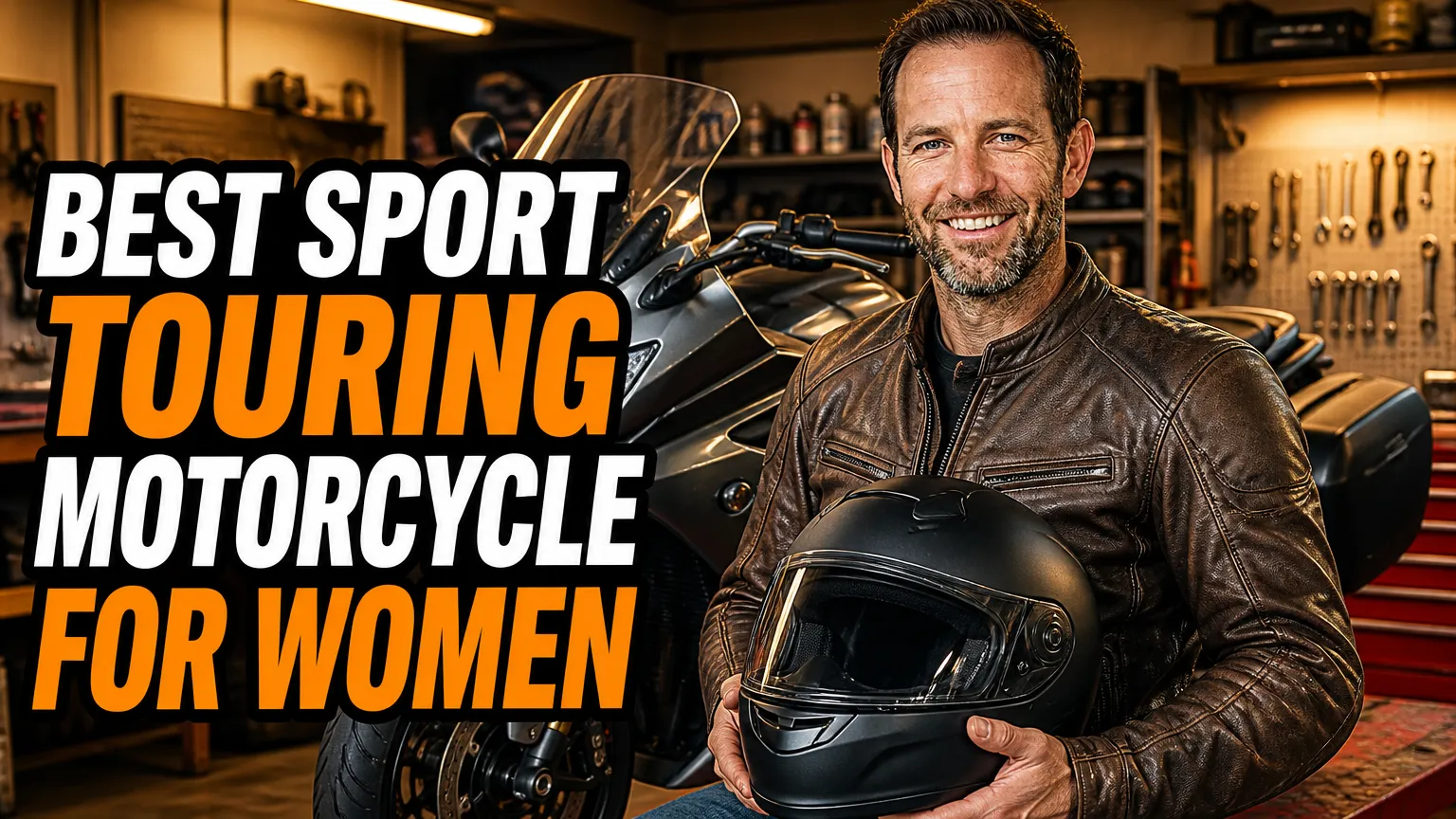
Choosing the best sport touring motorcycle for women isn’t about finding a bike designed around a single idea of what women riders need. I focus on the things that make a motorcycle feel right for me: a manageable fit, comfortable reach, predictable low-speed manners, useful wind protection, and enough performance for the rides I actually take.
I also look beyond the seat-height number. A narrow seat can make a taller bike easier to manage, while a heavy motorcycle can feel steady once moving but demanding in a sloped parking lot. Here are seven real sport-touring and sport-touring crossover models I’d put on my shortlist, with the strengths and compromises I’d weigh before buying.
- I’d start with the Suzuki GSX-S1000GT if a relatively low seat and sporty road manners are my priorities.
- I’d consider the BMW F 900 XR for its adjustable fit options and approachable middleweight character.
- The Yamaha Tracer 9 GT+ and Kawasaki Ninja 1100SX offer substantial touring technology, but I’d check their weight and seat height carefully.
- I’d test-sit any finalist with my usual riding gear and assess stopping, backing up, and reaching the controls.
1. Suzuki GSX-S1000GT — My Pick for a Sporty, Low-Seated Tourer
The Suzuki GSX-S1000GT is where I’d begin if I wanted a touring-ready bike with a seat height that’s comparatively approachable for this class. Suzuki lists the seat at about 31.9 inches, and the bike’s sporty, road-focused design makes it feel more like a fast sportbike adapted for longer rides than a tall adventure-style tourer.
Its 999cc inline-four is a serious engine, with Suzuki quoting around 150 horsepower. The GSX-S1000GT also comes with a quickshifter, cruise control, a color TFT display, and a full fairing. Those features make it a compelling option for riders who want brisk highway passing and a little extra convenience on long days.
Why I’d consider it
I like the combination of a relatively low seat and substantial wind protection. The seat height alone doesn’t guarantee an easy fit, but the GSX-S1000GT gives me a useful starting point if tall, wide motorcycles make me nervous at stoplights. Its listed curb weight is around 498 pounds, so I’d still pay attention to how it feels during a slow U-turn or when I’m pushing it out of a parking space.
The riding position is sportier than I’d expect on a relaxed, upright tourer. I’d check how the bars and footpegs feel over a longer ride, particularly if I have a sensitive back, wrists, or knees. For me, comfort needs to come from an actual test ride, not just the promise of a large fairing.
What I’d check before buying
The GSX-S1000GT’s engine performance may be more than I need if I’m a new rider or mostly commuting in traffic. I’d also compare the standard seat with any accessory seat options and confirm that luggage and heated accessories fit my plans. Prices vary by model year and market, so I’d check local Suzuki listings for current availability and pricing.
2. BMW F 900 XR — My Pick for Fit Flexibility
The BMW F 900 XR is a middleweight sport-tourer I’d look at when I want upright ergonomics without moving to a much larger motorcycle. It uses an 895cc parallel-twin engine, and BMW offers seat choices and equipment options that can help me tailor the bike to my reach and riding needs. Exact availability and options depend on the country and model year.
Its standard seat is around 32 inches high, with lower-seat options available in some markets. I’d confirm the specific seat and suspension configuration on the bike I’m considering, because a quoted seat height can differ between versions. BMW lists the F 900 XR’s weight at roughly 483 pounds ready to ride, depending on equipment.
Why it suits my kind of touring
I appreciate the XR’s upright posture and useful fairing, especially if I’m planning full days on mixed roads rather than just short, fast rides. Depending on the build, features can include heated grips, cruise control, and electronic suspension. I’d compare the included equipment carefully, since some comfort and convenience features may be optional rather than standard.
The parallel twin also gives the F 900 XR a different feel from a high-revving four-cylinder sport-tourer. That can make it a sensible match for riders who want responsive road performance without choosing the biggest engine on the list. I’d still check throttle response and low-speed balance on a test ride before deciding it feels relaxed enough for me.
My fit tip
I’d ask a BMW dealer to let me sit on the standard and low-seat versions, ideally wearing the boots I ride in. If I’m comparing other sizes and body proportions, I’d also read my guides to the best sport touring motorcycle for short riders and the best sport touring motorcycle for tall riders. My own comfort still comes down to the complete riding position, not just my inseam.
3. Yamaha Tracer 9 GT+ — My Pick for Feature-Rich Long-Distance Rides
The Yamaha Tracer 9 GT+ is a strong choice for me if I want modern touring technology and a flexible, upright riding position. Its 890cc CP3 triple produces around 119 horsepower, and the GT+ model is known for premium touring equipment, including electronically controlled suspension and radar-assisted rider features on equipped versions.
I’d pay particular attention to its seat height: it’s roughly 33.5 inches at the lower setting and can adjust higher, depending on the setup. Yamaha lists a curb weight of about 513 pounds, so this isn’t my first pick if I need the lightest possible bike. For the right rider, though, the upright posture and suspension can make long, varied routes more comfortable.
Where I see the value
Features such as adaptive cruise control, a quickshifter, heated grips, and a color display can take the edge off long highway days. Equipment varies by model year and market, so I’d verify what comes on the specific Tracer 9 GT+ I’m shopping for rather than assuming every example has the same package.
I’d also pay attention to how the adjustable suspension behaves with my weight, luggage, and passenger. A well-set-up motorcycle can feel more composed and comfortable, especially when the road surface changes. The three-cylinder engine adds character, and I’d expect it to feel lively when I leave the highway for winding roads.
Who I’d recommend it to
I’d shortlist the Tracer 9 GT+ if I value advanced touring aids and don’t mind a taller, substantial motorcycle. If I regularly ride with a passenger, I’d compare passenger comfort, luggage capacity, and suspension setup with my own needs; my guide to the best sport touring motorcycle for passenger offers another perspective on that decision.
4. Kawasaki Ninja 1100SX — My Pick for Fast, Fully Faired Touring
The Kawasaki Ninja 1100SX brings a sportbike-inspired shape together with touring equipment. Its 1,099cc inline-four delivers strong performance, while the fairing, adjustable windscreen, cruise control, and quickshifter make it much more practical for distance riding than a stripped-down sportbike. Exact specifications and equipment can vary by trim and model year.
The listed seat height is about 32.3 inches, and the curb weight is around 518 pounds. I’d consider those figures together: the seat is not especially tall for the category, but the weight is noticeable when I’m maneuvering slowly or dealing with a cambered road. I’d want a careful parking-lot test before committing.
What makes it a touring choice
I like that the Ninja 1100SX doesn’t ask me to give up a sporty feel just to gain touring convenience. Its upright-leaning position and wind protection are more suitable for distance than a committed supersport setup, while the inline-four gives me plenty of power for highway merges and passing.
Some versions add upgraded braking, suspension, or other equipment, so I’d compare trim levels rather than shopping by the model name alone. I’d also budget for luggage if the specific bike doesn’t include the cases I want. For riding with a partner and bags, I’d inspect passenger space and payload limits before assuming the Ninja fits the job.
My caution
This is a powerful, fairly heavy machine, and I wouldn’t choose it just because I like the styling. I’d want to feel comfortable with its throttle, weight, and stopping behavior in real traffic. If I’m still building confidence, I’d compare it with a lighter middleweight and read about the best sport touring motorcycle for beginners before making my shortlist.
5. Honda NT1100 — My Pick for Relaxed, Practical Touring
The Honda NT1100 is a more comfort-oriented option that I’d consider for steady touring and everyday use. It uses Honda’s 1,084cc parallel-twin engine and is offered in manual and DCT versions in some markets. Availability differs by country, so I’d first confirm that a new NT1100 is sold where I live.
The seat height is about 32.3 inches, and the bike has a full fairing and an upright riding position. Depending on version and equipment, it weighs roughly 524 pounds with the manual transmission and more with DCT. That makes it a substantial motorcycle to move around by hand, even if its riding position feels natural once I’m underway.
Why I’d put it on my list
The NT1100 is built around the practical side of touring: weather protection, a comfortable posture, and useful carrying capacity. Its twin-cylinder engine is tuned for road use rather than chasing the top-end character of a supersport-derived four-cylinder. I’d find that appealing if my ideal trip includes long highway stretches, daily errands, and unhurried back roads.
The DCT option may be worth a look if I prefer not to operate a conventional clutch in stop-and-go traffic. I’d test the transmission myself, because its feel is personal and different from shifting manually. I’d also confirm whether luggage, heated grips, and other accessories are included on the exact trim I’m considering.
Passenger and luggage considerations
If I often travel two-up, I’d sit on the bike with my passenger and check how both seats feel, how easy it is to mount, and whether the suspension can be adjusted for the added load. I’d use the same careful comparison when looking at the best sport touring motorcycle for two up riding, because passenger comfort can change what counts as the right bike for me.
6. Triumph Tiger Sport 800 — My Pick for a Lively Crossover
The Triumph Tiger Sport 800 is a sport-touring crossover I’d consider if I want an upright stance, three-cylinder performance, and enough versatility for daily riding as well as weekend trips. Its 798cc triple makes around 113 horsepower, and Triumph lists a seat height of approximately 32.7 inches. Specifications, accessories, and availability can vary by market.
At roughly 472 pounds wet, the Tiger Sport 800 is lighter than some of the larger touring bikes here, though I’d still test how its balance feels at a standstill. Its relatively tall stance and crossover styling may suit me if I like an upright view of the road, but I wouldn’t assume that its seat is an easy fit just because it’s a middleweight.
Why I’d ride it before deciding
I’d expect the triple to give the Tiger Sport 800 a lively character on curving roads while still offering useful power for highway travel. The upright posture can be appealing when I want less wrist pressure than I’d get from a more aggressive sportbike. I’d assess wind protection at my height, since the feel of a screen can differ considerably from one rider to another.
I’d also check the luggage options and passenger setup if touring is the main reason I’m shopping. A crossover can be a great all-rounder, but the exact equipment on the bike matters. I’d ask the dealer to confirm the accessories and make sure any fitted cases don’t interfere with my passenger or my preferred mounting routine.
7. Ducati Multistrada V2 — My Pick for Premium, Energetic Touring
The Ducati Multistrada V2 offers a premium take on sport-touring with an upright riding position and a lively 890cc V-twin engine. The newer V2 generation produces around 115 horsepower, and Ducati offers touring-oriented features and accessories depending on trim and market. I’d consider it if I want a refined, performance-focused bike and have the budget to match.
The standard seat height is around 32.7 inches, with lower-seat options available in some configurations. Ducati lists the motorcycle’s weight differently depending on whether the figure is dry or ready to ride, so I’d compare the actual wet weight with my other finalists. A lower seat can help my reach, but it doesn’t make a motorcycle’s mass disappear when I’m backing it up.
What I’d be paying for
I’d look to the Multistrada V2 for its premium finish, distinctive engine character, and touring flexibility. The higher-spec V2 S version adds equipment such as electronically controlled suspension, depending on the model year and market. That can be attractive if I want more adjustability, but I’d compare the full purchase price and ongoing ownership costs with the less expensive options on this list.
For me, the important question is whether the Ducati’s fit and ride feel justify the premium. I’d test the seat width, handlebar reach, and low-speed balance rather than getting distracted by the spec sheet. I’d also confirm what luggage and comfort accessories are included before treating it as a ready-made touring package.
How I Choose the Right Fit for My Body and Riding
Before I buy, I sit on each motorcycle and check whether I can reach the ground in a way that feels secure. I don’t need both feet flat to ride safely, but I do want a confident plan for stopping, starting on slopes, and handling uneven surfaces. Seat width, suspension sag, boots, and my riding technique all affect that feeling.
My practical test-ride checklist
- At a standstill: I check my foot reach, bar reach, and ability to move the bike off its stand.
- At walking speed: I try a tight turn and a controlled stop, if the dealer’s test route allows it.
- On the road: I notice pressure on my wrists, shoulders, knees, and lower back, along with wind buffeting.
- With luggage or a passenger: I confirm the payload rating and check how the bike’s balance changes.
- On the actual model: I verify seat, suspension, trim, and accessory details, since these can vary.
I’d also factor in the kind of riding I actually do. A powerful, fully faired motorcycle may be ideal for long, quick highway days, while a middleweight crossover may be easier to live with on mixed commutes and weekend roads. My best choice is the one that feels manageable in the situations I encounter most often, not simply the one with the most impressive specification sheet.
My Final Shortlist
If I wanted a sportier bike with a comparatively low seat, I’d start with the Suzuki GSX-S1000GT. For fit options in a middleweight package, I’d look closely at the BMW F 900 XR; for touring technology, I’d compare the Yamaha Tracer 9 GT+; and for a practical, more relaxed touring posture, I’d try the Honda NT1100 if it’s available in my market.
I’d put the Kawasaki Ninja 1100SX, Triumph Tiger Sport 800, and Ducati Multistrada V2 on my list when their performance, riding position, and ownership costs match my priorities. Most importantly, I’d test the real motorcycle in the real configuration I plan to buy. A good fit gives me more confidence, comfort, and freedom to enjoy the miles ahead.
Frequently Asked Questions
What should I prioritize when choosing a sport-touring motorcycle as a woman?
I’d prioritize a secure fit, manageable weight, comfortable reach to the bars, and a seat you can confidently manage at stops. Gender matters less than your individual proportions and riding experience.
Which sport-touring motorcycle on this list has the lowest seat?
The Suzuki GSX-S1000GT has a listed seat height of about 31.9 inches. Seat shape and width affect how easily I can reach the ground, so I’d still test-sit it before deciding.
Is a heavier sport-touring motorcycle unsuitable for a shorter rider?
Not automatically. I consider balance, seat width, center of gravity, and how a bike feels at walking speed, not weight alone. A test ride and careful parking practice can help me judge the fit.
Should I choose a smaller engine for my first sport-touring motorcycle?
I’d choose based on my skills, confidence, and typical routes rather than engine size alone. For more guidance, see my guide to the best sport touring motorcycle for beginners.

Related Articles

7 Honda Motorcycles I’d Recommend to Women Riders, From First Bike to Adventure Tourer
Compare seven Honda motorcycles by seat height, weight, power, and riding style, with my practical picks for new riders, commuting,…
Jake Miller
11 min read

7 Best Touring Motorcycles for Short Women: Low Seats, Real Comfort
Compare seven touring motorcycles that can fit shorter riders, from low-seat cruisers to full dressers, with key specs, comfort trade-offs,…
Jake Miller
10 min read

8 Best Motorcycles for Women in the Philippines: Easy, Practical Picks for Every Ride
Compare eight approachable motorcycles for Philippine roads, from lightweight scooters to a low-seat cruiser, with fit tips, key specs, and…
Jake Miller
13 min read