
7 Best Touring Motorcycles for Short Women: Low Seats, Real Comfort
 Jake Miller
10 min read
Jake Miller
10 min read
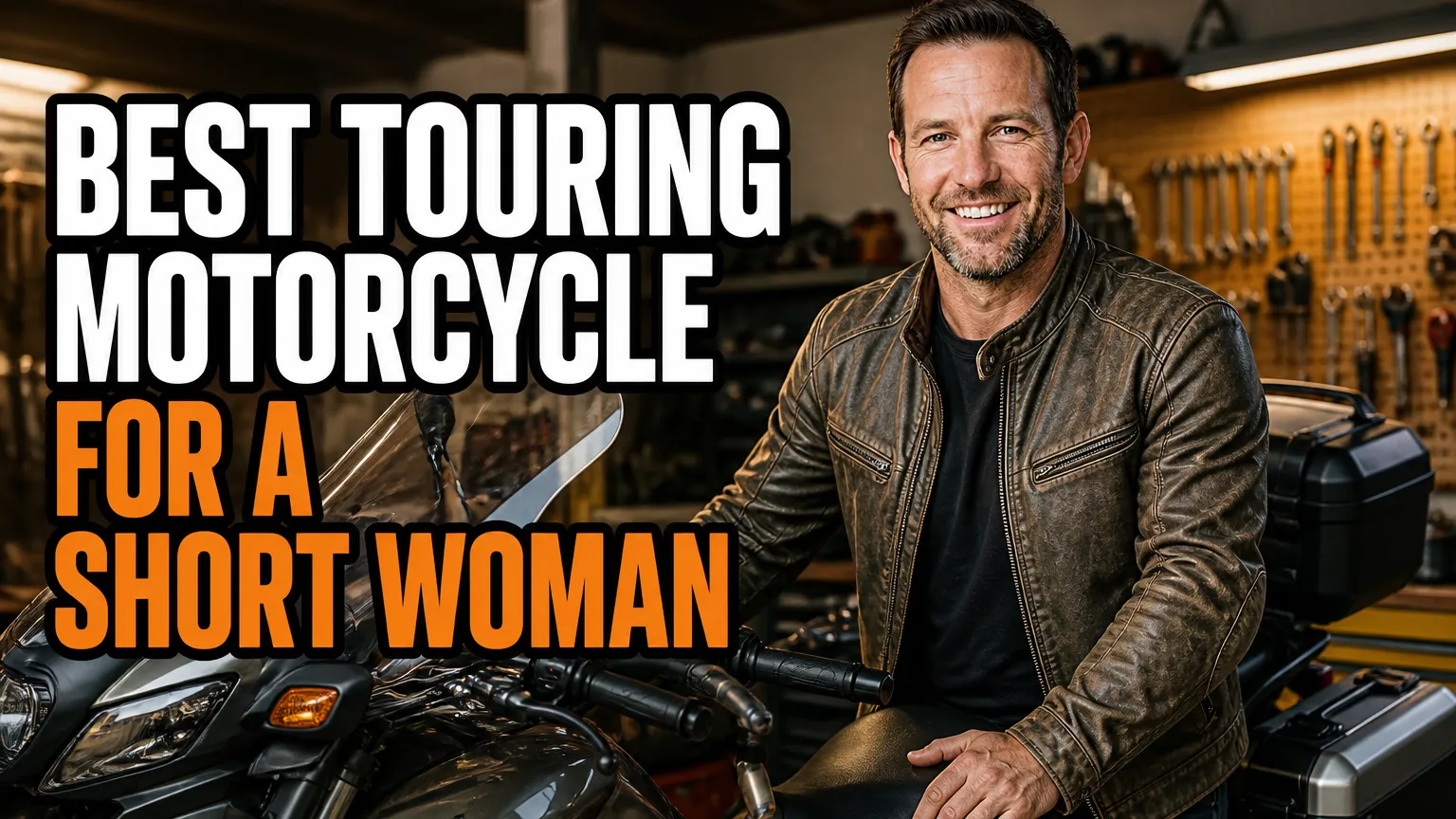
Finding a touring motorcycle that fits me starts with more than comparing seat-height numbers. I also consider how wide the seat is, how far the bars make me reach, where the bike carries its weight, and whether I can confidently steady it on an uneven road.
My shortlist includes everything from practical, low-seat cruisers to heavyweight machines built for crossing states. These bikes differ in price, luggage, and highway comfort, so I’ve included the compromises I’d weigh before buying, too. Seat heights and prices can vary by model year, trim, and market, so I’d verify current specifications with a dealer.
- I’d look beyond seat height to bike weight, seat shape, and balance.
- The Honda Rebel 1100T DCT is my practical pick for low-seat touring with built-in luggage.
- The Kawasaki Vulcan S ABS is an approachable option, but I’d budget for luggage and wind protection.
- The Honda Gold Wing Tour offers outstanding long-distance equipment, but its weight calls for a confident fit check.
1. Honda Rebel 1100T DCT — My Pick for Low-Seat Touring
The Honda Rebel 1100T DCT combines a low 27.5-inch seat with features I value for real trips: a small front fairing and hard saddlebags come fitted from the factory. Its 1,083 cc parallel-twin engine gives it more passing power than I’d expect from a lightweight-looking cruiser, while the automatic Dual Clutch Transmission offers clutch-free shifting.
For a rider who wants to reduce the demands of stop-and-go riding, the DCT is a meaningful option, not just a novelty. I’d still practice slow turns and parking-lot maneuvers, since a low seat doesn’t make a motorcycle’s weight disappear. Depending on year and equipment, the Rebel 1100T DCT weighs roughly 500 pounds or more, and pricing varies by model year.
What I’d consider before buying
The 1100T is a strong fit if I want a low seat, factory luggage, and a relaxed cruiser stance without stepping up to a giant touring bike. Its compact bags and modest fairing won’t offer the storage capacity or weather coverage of a full dresser, though. I’d sit on one with my touring gear and check whether its foot controls suit my leg reach.
2. Kawasaki Vulcan S ABS — My Easier-Going Entry Point
The Kawasaki Vulcan S ABS has a seat height of about 27.8 inches and an approachable, relatively narrow cruiser profile. Its 649 cc parallel-twin engine is paired with a six-speed transmission, and Kawasaki’s Ergo-Fit program offers different seat, handlebar, and footpeg configurations through its dealer network. That adjustability gives me more ways to fine-tune the fit than a seat-height figure alone suggests.
At roughly 500 pounds ready to ride, the Vulcan S is not featherweight, but it is notably less imposing than a large touring machine. The trade-off is that it doesn’t arrive as a dedicated touring package: I’d need to add luggage and, depending on my route, a windshield. I see it as a sensible choice for weekend trips and lighter touring rather than a two-up, cross-country load-hauler.
Why I’d try the Ergo-Fit setup
I’d ask a dealer to help me compare the available Ergo-Fit configurations instead of assuming the standard setup is the best one. Moving the foot controls or changing the seat can affect comfort and reach to the ground. If I’m exploring more cruiser options, I’d also compare guides to the best touring motorcycle for short riders.
3. Royal Enfield Super Meteor 650 — My Value-Minded Cruiser Tourer
The Royal Enfield Super Meteor 650 is built around a 648 cc parallel twin and a low 29.1-inch seat. Its Celestial trim adds touring-oriented equipment such as a windscreen and passenger backrest, while other versions give me room to choose accessories and make the setup my own. The engine produces modest power compared with big touring bikes, which suits an unhurried riding style better than frequent high-speed passing with a heavy load.
One point I’d check carefully is weight: the Super Meteor is around 530 pounds, which is substantial for a middleweight motorcycle. It may feel manageable once rolling, but backing it out of a sloped parking space is a different test. Prices vary by trim and market, but I’d generally place it below many large touring motorcycles, leaving some budget for luggage or comfort upgrades.
Where I think it makes the most sense
I’d consider the Super Meteor for scenic highway trips, relaxed day rides, and a more accessible purchase price than a premium full dresser. I’d take a test ride on the roads I actually use and check its loaded highway comfort before committing to a long tour. For me, the key question is whether its pace and storage capacity match the way I travel.
4. Indian Scout Classic — My Low-Seat Option for a Custom Setup
The current-generation Indian Scout Classic offers a very low seat, around 25.6 inches, and a 1,250 cc SpeedPlus V-twin. That seat height can make the reach to the ground feel reassuring, but I wouldn’t treat it as a guarantee of easy handling: the Scout is still a substantial motorcycle, and its low cruiser ergonomics won’t suit every rider.
I’d think of the Scout Classic as a touring-capable cruiser rather than a complete touring package. I would need to choose luggage, wind protection, and any passenger comfort accessories separately, and those additions affect both cost and handling. The Scout’s appeal is its low, customizable platform and strong engine; the compromise is that I’m building the touring setup myself rather than getting all the equipment in one trim.
My fit check for a Scout
I’d pay particular attention to handlebar reach and foot-control position. A seat can feel low yet still leave me stretched toward the bars or uncomfortable at the knees after an hour. Riders comparing fit across inseams can also read about the Best Motorcycle for 4’11 Woman and the best motorcycle for 52 woman.
5. Harley-Davidson Heritage Classic — My Traditional Touring Cruiser
The Harley-Davidson Heritage Classic pairs a low seat, approximately 26.3 inches, with a windscreen and locking saddlebags. Recent model years use the Milwaukee-Eight V-twin, with engine specifications varying by year. That equipment makes the Heritage Classic a more touring-ready starting point than a bare cruiser, and its upright, feet-forward riding position will appeal to riders who prefer that style.
I’d be realistic about its weight: depending on model year and configuration, it is well over 700 pounds ready to ride. The low seat can help me plant my feet, but it doesn’t make tight U-turns or parking-lot corrections effortless. Prices are also in the premium-cruiser range, so I’d factor in insurance, luggage needs, and any ergonomic changes alongside the sticker price.
Who I’d point toward this Harley
I’d shortlist the Heritage Classic if I wanted classic styling, a powerful V-twin, and built-in touring basics for relaxed pavement trips. I’d arrange a proper test ride before taking it on a long journey, especially if I’m new to heavier motorcycles. My priority would be confirming that I can maneuver it confidently when the road is slow, sloped, or crowded.
6. Harley-Davidson Street Glide — My Big-Bike Choice for Long Highway Days
The Street Glide is a full-size touring motorcycle with a frame-mounted fairing, hard saddlebags, and a large V-twin engine. Recent versions use the Milwaukee-Eight 117, though exact specifications depend on model year. Its seat is low for such a substantial motorcycle, around 26 inches, and the fairing and luggage make it much better equipped for long highway days than most low-seat cruisers.
The major qualification is mass: the Street Glide weighs around 800 pounds or more, depending on year and equipment. For me, this is a bike to assess carefully in person, not to choose based on seat height alone. It is also a major investment, with new-model pricing generally in the upper end of the touring market.
How I’d decide if it’s manageable
I’d practice walking the bike, stopping on a slight incline, and making slow turns before planning a long trip. I’d also ask about a professionally fitted seat if the stock seat makes my legs angle outward. If I’m specifically comparing fully equipped touring machines, I’d browse the guide to the best full touring motorcycle for short riders.
7. Honda Gold Wing Tour DCT — My Comfort-First Long-Distance Pick
The Honda Gold Wing Tour DCT is the most fully equipped long-distance option on my list. Its 1,833 cc flat-six engine, automatic Dual Clutch Transmission, integrated luggage, adjustable windscreen, and reverse assist are designed for covering serious miles. Its seat is about 29.3 inches high, which is taller than the Rebel’s, but the Gold Wing’s low center of gravity helps explain why some riders find it composed once underway.
That reassurance has limits. A Gold Wing Tour weighs roughly 850 pounds, with the precise figure depending on trim and model year, and the width and bulk can be challenging at a stop. It also sits at the high end of the price range. I’d only shortlist it after checking that I can reach the bars comfortably, steady it on my usual road surfaces, and manage it during parking.
Why I’d still consider such a large motorcycle
When comfort, passenger space, weather protection, and integrated touring features matter most, the Gold Wing Tour is a compelling package. I would not buy it simply because it has a low-ish seat; I’d need to feel secure handling its size in person. If long days in the saddle are my main goal, I’d compare it with other touring-focused options in the guide to the best sport touring motorcycle for short riders.
How I Choose the Right Fit Before a Long Trip
I treat seat height as a useful first filter, not the final answer. A narrow seat can let my legs reach the ground more easily than a wider seat with the same measurement, while suspension sag and seat padding can change how the bike feels when I’m aboard. I’d try the motorcycle in riding boots and ask the dealer whether a low seat or suspension adjustment is available.
- I check the weight and balance: I want to know how the bike feels when stopped, backed up, and turned slowly, not only while cruising.
- I check my riding position: I make sure I can reach the bars and controls without stretching or locking my knees.
- I think about my actual trips: I match luggage, wind protection, passenger needs, and engine performance to the routes I ride.
- I test the awkward moments: I practice a stop on a slight slope and a tight turn in a safe place before touring.
My favorite choice depends on the kind of touring I want to do. I’d start with the Honda Rebel 1100T DCT for a low-seat bike with factory luggage, consider the Vulcan S ABS for a simpler and more adaptable setup, and look at the Gold Wing Tour only if I’m ready for a very large motorcycle.
Most importantly, I’d choose the bike that feels manageable in the situations that make me hesitate, not simply the one with the lowest published seat height. A thoughtful fit check and a gradual test ride can tell me more than a specification sheet ever will.
Frequently Asked Questions
What seat height should I look for in a touring motorcycle?
I use seat height as a starting point, not a guarantee. Seat width, suspension sag, riding-boot soles, and where the seat lets your legs fall all affect how easily you can reach the ground.
What is the easiest touring motorcycle to manage at a stop?
I would start by comparing lighter, low-seat bikes such as the Kawasaki Vulcan S ABS and Honda Rebel 1100T DCT. Your comfort with the bike’s width, balance, and weight matters as much as its seat height.
Can a short rider handle a Honda Gold Wing?
Yes, some shorter riders are comfortable on a Gold Wing, especially once moving, but its substantial weight can make parking and low-speed handling demanding. I recommend a careful in-person fit check and practice before a long trip.
Should I choose a cruiser or an adventure-style touring bike?
I would choose based on your preferred riding position and typical routes. Low-seat cruisers can make ground reach easier, while taller touring bikes may offer more upright ergonomics and cornering clearance.

Related Articles

7 Honda Motorcycles I’d Recommend to Women Riders, From First Bike to Adventure Tourer
Compare seven Honda motorcycles by seat height, weight, power, and riding style, with my practical picks for new riders, commuting,…
Jake Miller
11 min read

7 Best Sport-Touring Motorcycles for Women Who Want Comfort and Confidence
I compare seven sport-touring motorcycles for fit, seat height, weight, comfort, and features, with practical tips for choosing a bike…
Jake Miller
14 min read

8 Best Motorcycles for Women in the Philippines: Easy, Practical Picks for Every Ride
Compare eight approachable motorcycles for Philippine roads, from lightweight scooters to a low-seat cruiser, with fit tips, key specs, and…
Jake Miller
13 min read