
Kickstart vs Electric Start: Which Motorcycle Starting System Is Right for You?
 Jake Miller
12 min read
Jake Miller
12 min read
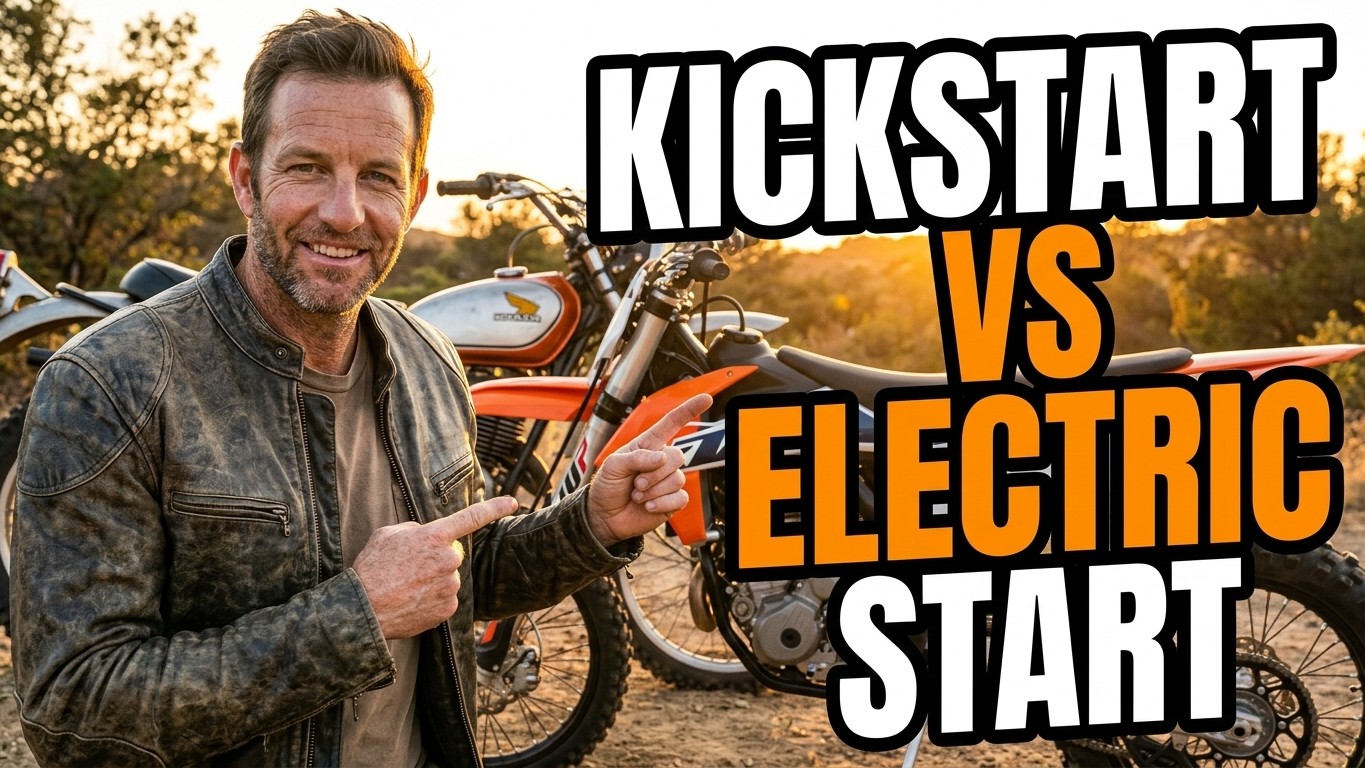
I’ve owned both kickstart and electric start motorcycles over the years, and I can tell you the debate between these two starting systems is far from settled. Each has passionate defenders, and honestly, both have earned their place in the motorcycle world for good reasons.
The choice between kickstart and electric start isn’t just about convenience. It impacts your bike’s weight, maintenance schedule, reliability in different conditions, and even your riding experience. Let me share what I’ve learned from real-world experience with both systems.
- Electric start wins for convenience and daily riding, while kickstart excels in simplicity and weight savings
- Kickstart requires proper technique but works without a battery; electric start can fail if electrical components malfunction
- Modern dual-sport and adventure bikes often include both systems for maximum versatility
- Your choice depends on riding style, maintenance willingness, and whether you prioritize reliability or convenience
Understanding How Each Starting System Works
Before diving into the comparison, I think it’s important to understand what’s actually happening when you start your motorcycle. The differences go deeper than just “push button” versus “kick lever.”
The Mechanics of Kickstart Systems
A kickstart is beautifully simple. When I fold out that lever and give it a firm kick, I’m physically rotating the engine’s crankshaft through a mechanical linkage. This compression stroke, combined with ignition timing, fires the engine to life.
The entire system consists of just a few components: the kick lever itself, a shaft, gears, and a one-way clutch mechanism. There’s no battery dependency, no starter motor, and minimal electrical components involved in the starting process.
I’ve always appreciated that this simplicity means fewer things can go wrong. When I’m miles from civilization, knowing I can start my bike with just mechanical force is reassuring.
How Electric Start Systems Operate
Electric start systems are more complex but incredibly convenient. When I press that starter button, an electrical signal activates a starter motor, which spins the engine using power from the battery.
The system includes a battery, starter motor, starter relay, ignition switch, and all the associated wiring. Some bikes also have a starter clutch or sprag clutch that engages during starting and disengages once the engine runs.
This complexity means more components that require maintenance and can potentially fail. But in my daily experience, modern electric start systems are remarkably reliable when properly maintained.
Weight and Complexity Differences
One of the first things I notice when comparing these systems is the weight difference. It might not sound like much on paper, but those pounds add up fast.
The Lightweight Advantage of Kickstart
A kickstart-only bike saves significant weight by eliminating the starter motor, battery, and associated wiring. I’ve seen weight savings of 10-15 pounds on average, though it varies by bike.
For dirt bike riders and off-road enthusiasts, this weight reduction is absolutely crucial. When I’m wrestling a bike through mud or picking it up after a crash, every pound matters.
The simplicity also means less to go wrong. I’ve ridden kickstart bikes through water crossings, mud bogs, and dusty trails without worrying about shorting out electrical components.
Electric Start’s Added Bulk
Electric start bikes carry the weight penalty of their convenience. That starter motor alone typically weighs 5-8 pounds, and the battery adds another 5-10 pounds depending on type and capacity.
For street riders and touring enthusiasts like myself, this extra weight is completely worth it. When I’m in stop-and-go traffic or making frequent stops, pressing a button beats kicking repeatedly.
Modern manufacturers have worked hard to minimize this weight penalty. Lithium batteries have helped shave several pounds compared to traditional lead-acid batteries.
Reliability in Different Conditions
This is where things get really interesting. I’ve tested both systems in various conditions, and each has situations where it truly shines.
When Kickstart Proves Superior
I learned the hard way that kickstart reliability is unbeatable in extreme conditions. After leaving my electric-start bike unused for two months, the battery was completely dead. My kickstart bike? Started on the second kick after sitting even longer.
Cold weather is another area where kickstart holds an advantage. While my electric start bike struggled with a cold battery on a freezing morning, my kickstart bike fired up once I got the technique right.
The mechanical simplicity means kickstart systems are virtually immune to electrical gremlins. No corroded connections, no failed relays, no dead batteries at the worst possible moment.
Electric Start’s Consistency Edge
That said, electric start wins for consistent, everyday reliability in my experience. When properly maintained, I’ve gone years without a single starting issue on my electric-start bikes.
Hot starting is where electric systems really excel. After a hard ride when the engine is heat-soaked, pressing a button is far easier than kickstarting a hot, temperamental engine.
I’ve also found electric start invaluable in technical riding situations. When I stall on a steep hill or in traffic, restarting immediately with a button press is safer than trying to balance while kickstarting.
Maintenance Requirements and Costs
Maintenance is an ongoing reality for any motorcycle, and these two systems have very different service needs.
Kickstart Maintenance Simplicity
Kickstart maintenance is refreshingly minimal. I occasionally check the kick shaft seal for leaks and ensure the return spring has proper tension. That’s about it for routine care.
The kick shaft seal is the most common wear item. I’ve replaced these a few times over the years, and it’s a straightforward job that costs $20-40 in parts.
The mechanical simplicity means repair costs are generally lower too. When something does break, it’s usually a simple mechanical part rather than an expensive electrical component.
Electric Start System Upkeep
Electric start systems demand more attention. I religiously maintain my battery with proper charging, especially during winter storage. Battery replacement every 3-5 years is essentially mandatory.
Starter motors can wear out over time, though I’ve personally never had one fail. When they do go bad, replacement costs $150-400 depending on the bike.
I’ve also learned to keep electrical connections clean and protected from corrosion. A $5 can of electrical contact cleaner has saved me from countless potential starting issues.
The Physical Technique Factor
There’s a skill component to kickstarting that often gets overlooked. It’s not just brute force—there’s definitely a technique to master.
Learning to Kickstart Properly
When I first started riding kickstart bikes, I struggled until an experienced rider showed me the proper technique. You need to find the compression stroke first by slowly pushing the kick lever until you feel resistance.
Then it’s about using your entire body weight, not just leg strength. I stand up on the opposite peg and drop my full weight through the kick lever in one smooth, committed motion.
Cold engines require a careful warm-up procedure. I’ve learned to prime the carburetor, set the choke correctly, and sometimes rotate the engine through several times before the big kick.
Electric Start’s Zero Learning Curve
Electric start requires zero technique. Press the button, and the bike starts. Period. I’ve taught several new riders on electric-start bikes, and starting has never been a barrier to their learning.
This accessibility is huge for building confidence in new riders. I remember how intimidating kickstarting seemed when I was learning, and how much easier electric start would have made those early days.
For riders with physical limitations, injuries, or simply less leg strength, electric start opens up motorcycling in a way kickstart never could.
Impact on Riding Experience
Beyond just getting the engine running, each system affects the overall riding experience in subtle but meaningful ways.
The Character of Kickstart Bikes
There’s an undeniable ritual to kickstarting. I find it connects me more intimately with my machine. That physical effort and the satisfying thump of the engine catching feels more involving than pressing a button.
Kickstart bikes often appeal to riders seeking a more traditional, mechanical experience. I ride my kickstart dual-sport specifically when I want that back-to-basics feeling.
The reduced electrical complexity also means these bikes often have a simpler, more analog riding experience overall. Fewer sensors, fewer electronics, just pure mechanical feedback.
Electric Start Convenience and Modern Integration
My electric-start bikes integrate seamlessly into modern life. Quick errands, commuting, touring—the push-button convenience removes friction from every ride.
I’ve noticed electric start encourages me to ride more often. When starting is effortless, I’m more likely to take the bike for a quick coffee run or to run errands.
Modern bikes with electric start also typically feature more sophisticated electronics overall—fuel injection, traction control, ABS. The starting system is just one part of a more refined overall package.
Fuel System Considerations
The type of fuel system on your bike significantly affects which starting method works best.
Carbureted Engines and Starting Methods
Carbureted bikes can be finicky to start, and I’ve found both systems have trade-offs here. Kickstart gives you direct, physical feedback about where the engine is in its cycle, which helps with technique.
However, electric start is more consistent with cold, carbureted engines. The starter motor turns the engine repeatedly, giving fuel time to vaporize and the engine time to clear flooding.
I’ve flooded carbureted engines while kickstarting more times than I can count. With electric start, I just hold the throttle open and crank until it clears.
Fuel Injection’s Perfect Match with Electric Start
Fuel-injected bikes almost universally use electric start, and for good reason. The ECU, fuel pump, and injectors all require electrical power anyway, so adding a starter motor is a natural fit.
I’ve found fuel injection paired with electric start creates the most reliable starting experience possible. Even after sitting for weeks, my fuel-injected bikes fire immediately at the touch of a button.
Cost Implications for Buyers
Money matters, and these systems have different financial implications both at purchase and over time.
Initial Purchase Price Differences
Kickstart-only bikes are generally cheaper to buy. I’ve seen price differences of $500-1000 on comparable models, though this varies widely by manufacturer and model.
This lower cost extends to the used market too. I picked up a kickstart-only dirt bike for significantly less than the electric-start version, which was perfect for my off-road riding needs.
Long-Term Ownership Costs
Over time, kickstart bikes have lower maintenance costs in my experience. No batteries to replace, no starter motors to rebuild, fewer electrical issues to troubleshoot.
However, I factor in the convenience value of electric start. The time and frustration saved over years of ownership has real value, even if it doesn’t show up as a line item on a maintenance receipt.
The Best of Both Worlds Solution
Many modern bikes don’t make you choose—they offer both systems, and I think this is often the ideal solution.
Dual-System Motorcycles
My current adventure bike has both electric start and a kickstart lever, and I genuinely use both. The electric start handles 95% of my starting needs, but that kickstart has saved me twice when electrical issues cropped up far from home.
These dual-system bikes do carry the weight penalty of both systems, but for serious adventure and dual-sport riding, I consider it essential redundancy.
The peace of mind alone is worth it. I ride with more confidence knowing I have a backup starting method if something goes wrong.
Making Your Decision
After years with both systems, I believe the right choice depends entirely on your specific riding style and priorities.
Choose Kickstart If You Value:
I recommend kickstart for riders prioritizing weight savings, mechanical simplicity, and off-road reliability. If you’re a dirt bike rider, trials rider, or vintage bike enthusiast, kickstart makes perfect sense.
The reduced electrical complexity is genuinely valuable in harsh environments. When I’m deep in the backcountry, I want as few systems as possible that can fail.
Choose Electric Start If You Want:
For street riding, commuting, touring, or if you’re a newer rider, electric start is the obvious choice. The convenience factor cannot be overstated, especially in traffic or when making frequent stops.
I also strongly recommend electric start for riders with any physical limitations. There’s no reason to struggle with kickstarting when a button does the job reliably.
Consider Both Systems If You Need:
Adventure riders and serious dual-sport enthusiasts should seriously consider bikes with both systems. The redundancy has proven invaluable to me, and the weight penalty is acceptable for the added reliability.
If you’re planning remote riding or international travel, having both starting methods provides crucial backup options when you’re far from help.
My Personal Verdict
After owning multiple bikes with each system, I’ve settled on this perspective: there’s no universal “better” option, but there is a better option for your specific needs.
For my street bikes and daily riders, electric start is non-negotiable. The convenience improves my daily riding experience in countless small ways that add up to major quality-of-life improvements.
For off-road and adventure riding, I strongly prefer having both systems available. The kickstart gives me confidence in the backcountry, while electric start handles routine starting duties.
If I could only choose one system across all my bikes, I’d reluctantly pick electric start for its consistency and convenience. But I’d miss the simplicity and character of kickstart bikes.
The good news is that you don’t have to love one and hate the other. I genuinely appreciate both systems for what they do well, and I think most riders can find the right fit by honestly assessing their riding style and priorities.
Whether you’re drawn to the mechanical purity of kickstart or the modern convenience of electric start, both are proven technologies that will serve you well when matched to the right application.
Frequently Asked Questions
Is kickstart more reliable than electric start?
In my experience, kickstart is mechanically simpler with fewer components to fail, but electric start is more consistently reliable in daily use. Kickstarts shine when batteries die, but electric systems rarely fail if properly maintained.
Can you add electric start to a kickstart-only bike?
Yes, but it’s expensive and complicated. You’ll need a starter motor, battery, wiring harness, and often a new stator. I’ve seen conversion kits range from $400-$1200 plus installation labor.
Why do dirt bikes still use kickstart?
Weight savings and simplicity. Off-road riding punishes electrical systems with mud, water, and crashes. A kickstart weighs less and works even when the battery is dead or damaged.
Does kickstarting damage your knee?
Not if you use proper technique. I’ve kickstarted bikes for years without issue by using my whole leg, not just my knee, and warming up the engine first on cold days.

Related Articles

How Long Does It Take to Charge a Car Battery While Driving? A Rider’s Complete Guide
Discover how long it takes to charge your car battery while driving. I share real-world charging times, factors that affect…
Jake Miller
13 min read

How Long to Charge a Car Battery at 2 Amps: My Complete Charging Guide
Discover exactly how long it takes to charge a car battery at 2 amps. I'll share my real-world experience, charging…
Jake Miller
12 min read

Can a Weak Battery Really Cause Transmission Problems? What I Learned the Hard Way
Discover how a weak motorcycle battery can trigger transmission issues. I explain the connection, symptoms I've experienced, and how to…
Jake Miller
12 min read