
The Perfect Battery for Your Harley Davidson Softail: A Rider’s Complete Guide
 Jake Miller
14 min read
Jake Miller
14 min read
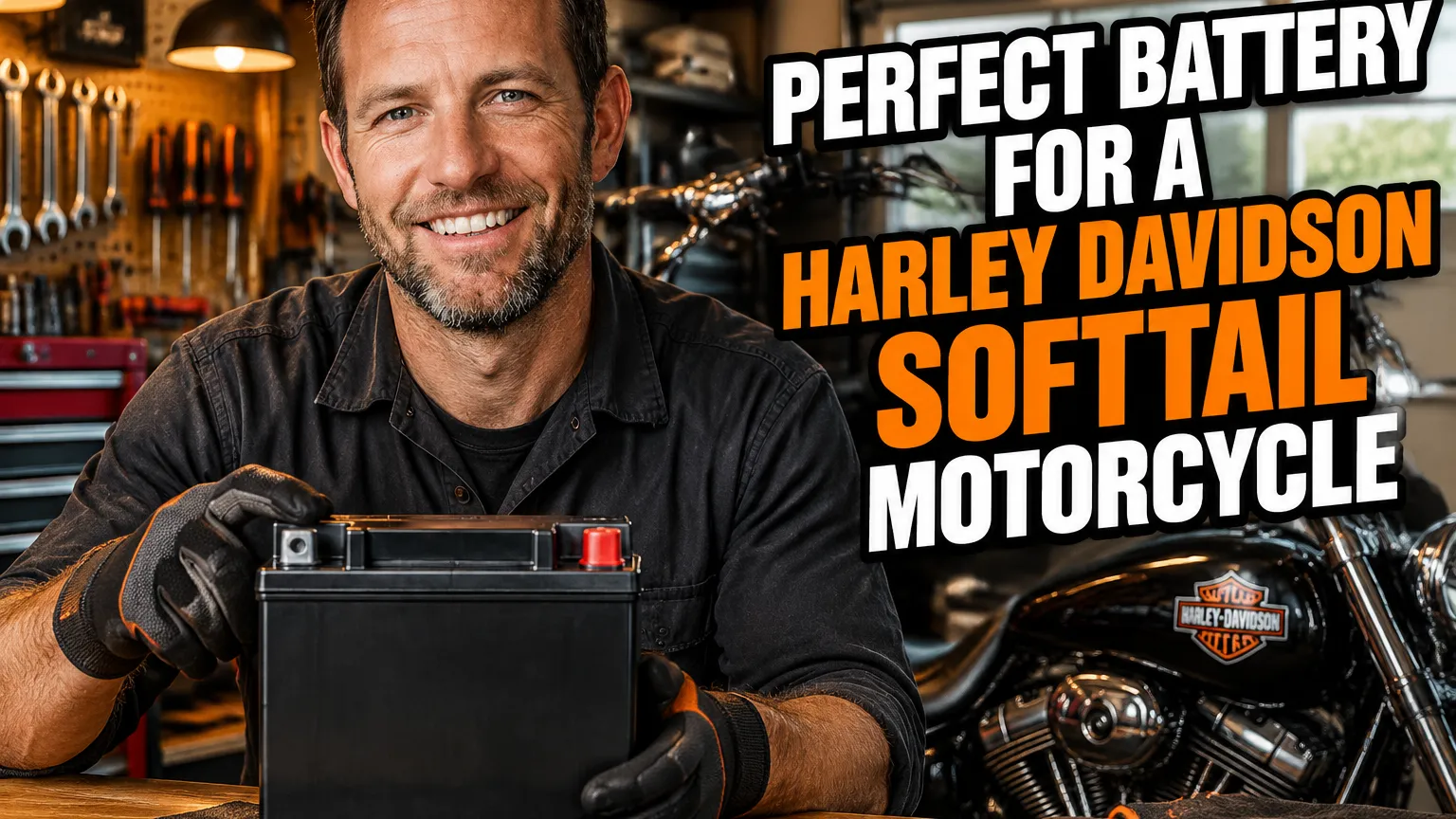
I’ve been riding Softails for over a decade, and I can tell you with absolute certainty that choosing the right battery is one of those decisions that either makes your life easier or leaves you stranded at the worst possible moment. After dealing with dead batteries on cold mornings and testing countless replacements, I’ve learned exactly what works and what doesn’t.
The Softail platform has specific electrical demands that not every battery can handle. Between the Milwaukee-Eight engine’s compression, the electronic fuel injection, and all the accessories we love to add, your battery works harder than you might think. I’ve made the mistakes so you don’t have to.
- AGM batteries are the gold standard for Softails, offering 3-5 years of reliable service with proper maintenance
- Your Softail needs at least 310-400 CCA, but I recommend 400+ for optimal performance in all conditions
- Lithium batteries offer massive weight savings but require charging system compatibility checks
- A quality battery tender is non-negotiable if you want to maximize battery lifespan
- Installation is straightforward, but proper terminal connection prevents 90% of battery issues
Understanding Your Softail’s Battery Requirements
Let me start with the basics that many riders overlook. Your Softail doesn’t just need “a battery” – it needs the right battery for its specific electrical architecture. I learned this the hard way when I bought a cheap replacement that left me stranded three months later.
Most Softail models from 2000 onward require a battery with substantial cold cranking amps. The Milwaukee-Eight engines that power modern Softails have higher compression ratios than the Twin Cams they replaced, which means they demand more starting power. I’ve found that 400 CCA is the sweet spot, even though the manual says you can get by with less.
The physical dimensions matter just as much as the electrical specs. Softails typically use either a BTX14 or BTX20 battery format, depending on your model year. Measure your battery tray before ordering – I once had to return a battery because it was 2mm too tall for the side cover to close properly.
Why Cold Cranking Amps Matter More Than You Think
I ride year-round in the Midwest, where winter temperatures regularly drop below freezing. Here’s what I’ve observed: a battery rated at 310 CCA might start your bike fine in summer, but come December, you’ll be hearing that dreaded slow crank. Cold weather can reduce available cranking power by 50% or more.
That’s why I always recommend going above the minimum CCA rating. The extra cranking power doesn’t just help in winter – it compensates for battery aging, gives you more margin with accessories running, and provides better performance when your engine oil is cold and thick.
AGM vs. Lithium: What I’ve Actually Experienced
The battery technology debate is real, and I’ve tested both extensively on my Softails. Let me share what I’ve learned from actual road experience, not just marketing claims.
AGM Batteries: My Go-To Recommendation
Absorbed Glass Mat batteries have been my default choice for years, and they’ve never let me down when I bought quality brands. These sealed, maintenance-free batteries handle the vibration and electrical demands of a Softail perfectly. I’ve consistently gotten 4-5 years from premium AGM batteries with proper maintenance.
The technology is proven and reliable. AGM batteries don’t leak, they resist vibration damage better than flooded batteries, and they charge efficiently with your stock charging system. I particularly appreciate that they’re forgiving – if I forget to put the bike on a tender for a week or two, my AGM battery doesn’t hold a grudge.
When looking at the best motorcycle battery for harley davidson options overall, AGM consistently dominates the reliability rankings. The upfront cost is reasonable, typically $100-200 for a quality unit, and the performance-to-price ratio is unbeatable.
Lithium Batteries: Impressive But With Caveats
I installed a lithium iron phosphate battery in my 2020 Softail Standard last season, and the weight savings alone made me smile. Dropping nearly 10 pounds from the bike improved handling noticeably, especially in parking lot maneuvers. The instant cranking power was impressive – the engine spins faster than with any AGM I’ve used.
But here’s what the marketing materials don’t emphasize enough: lithium batteries are finicky about charging voltage. Your voltage regulator needs to stay below 14.6V, or you’ll damage the battery. I had to verify my charging system voltage under load before I felt confident running lithium long-term.
The cold weather performance is another consideration. While lithium batteries don’t lose capacity in the cold like AGM does, they can’t accept a charge below freezing. If you’re caught out in 25-degree weather and drain your battery, you’ll need to warm it up before it’ll take a charge. That’s not ideal for touring riders.
My Top Battery Picks for Softail Models
After testing numerous options across different Softails, I’ve narrowed down my recommendations to batteries that actually deliver on their promises. These are brands I trust with my own bikes.
Premium Pick: Odyssey PC545
I’ve run Odyssey batteries in three different Softails, and they’ve consistently exceeded expectations. The PC545 offers 400 CCA in a compact package, and the pure lead plates give it exceptional deep-cycle capability. When I accidentally left my ignition on overnight, the Odyssey recovered fully after charging – many batteries would have been permanently damaged.
The warranty is solid at four years, and Odyssey actually honors it. The price point is higher at around $200-250, but I’ve gotten 5+ years from these batteries. That math works in my favor compared to replacing cheaper batteries every 2-3 years.
Best Value: Yuasa YTX20L-BS
Yuasa is OEM for many Harley models, and their aftermarket batteries maintain that quality standard. I’ve installed dozens of these in customer bikes when I was wrenching professionally, and the failure rate was remarkably low. The AGM construction is robust, and the 310 CCA rating handles most Softails adequately.
At around $130-160, the Yuasa offers excellent value. I typically see 3-4 years of reliable service with proper maintenance. It’s not exotic or exciting, but it works consistently – which is exactly what you want from a battery.
Weight-Conscious Option: Shorai LFX18L1-BS12
For riders who prioritize weight savings and have verified charging system compatibility, the Shorai lithium battery is impressive. I shaved 9 pounds off my Softail Slim with this battery, and the 270 pulse cranking amps translate to stronger cranking than you’d expect from the spec sheet.
The $250-300 price tag requires commitment, and you absolutely need a lithium-compatible charger. I use a CTEK lithium charger that cost another $80. The total investment is significant, but for performance-oriented riders or those building custom bikes where weight matters, it’s worth considering.
Installation Best Practices I’ve Learned
I’ve installed enough batteries to know that the process seems simple until something goes wrong. Let me walk you through the approach that’s never failed me.
The Correct Removal Sequence
Always disconnect the negative terminal first – this prevents accidental shorts if your wrench touches the frame while working on the positive terminal. I learned this after creating some spectacular sparks early in my wrenching career. Once the negative is clear, remove the positive terminal.
Before pulling the old battery, take a photo of the terminal connections. I can’t tell you how many times this simple step has saved me from confusion during reinstallation. Note which terminal has which wire, especially if your bike has aftermarket accessories.
Preparing the New Battery
Clean your terminal connectors with a wire brush before installing the new battery. Corrosion on the terminals reduces conductivity and can cause starting issues that you’ll mistakenly blame on the battery. I use dielectric grease on the terminals after connection to prevent future corrosion.
When installing the new battery, connect the positive terminal first, then the negative. Tighten the terminals firmly but don’t overtighten – I’ve seen cracked battery cases from excessive torque. The connection should be snug enough that you can’t rotate the terminal by hand.
Maintenance That Actually Extends Battery Life
Here’s where most riders leave performance on the table. A quality battery can last 5+ years with proper care, but most riders get 2-3 years because they neglect basic maintenance. I’m going to share the routine that’s kept my batteries healthy for years.
The Battery Tender is Non-Negotiable
I connect my Softail to a battery tender any time it’s going to sit for more than a week. This single habit has doubled my battery lifespan across multiple bikes. Modern electronics draw parasitic power even when the bike is off, and a tender maintains optimal charge without overcharging.
I use a smart tender that monitors battery condition and adjusts charging automatically. The $40-60 investment pays for itself by preventing a single premature battery replacement. I’ve got a tender pigtail permanently wired to every bike I own so connection is effortless.
Regular Voltage Checks Predict Problems
I check my battery voltage monthly with a simple multimeter. A healthy, fully charged battery should read 12.6-12.8 volts with the engine off. If I see anything below 12.4 volts, I know the battery isn’t holding a full charge and needs attention.
With the engine running at 2000 RPM, I should see 13.5-14.5 volts. This confirms the charging system is working properly. Voltage above 15V indicates a regulator problem that will destroy your battery quickly. I caught a failing regulator this way before it fried my battery.
Troubleshooting Common Battery Issues
Even with proper maintenance, issues arise. I’ve diagnosed hundreds of battery problems, and most fall into a few common categories that are easily resolved.
Slow Cranking in Cold Weather
If your Softail cranks slowly when temperatures drop, your battery is likely near the end of its life or undersized for your needs. Cold cranking amps diminish as batteries age, and what worked fine in summer fails in winter. I’ve seen batteries test good on a charger but fail under the actual load of cranking a cold engine.
The solution is upgrading to a higher CCA battery or ensuring your current battery is fully charged. I also switch to synthetic engine oil in winter because it flows better when cold, reducing cranking load. Choosing the what is the best oil for a harley davidson motorcycle for your climate makes a measurable difference in starting performance.
Battery Dies After Sitting
Parasitic drain is the usual culprit when batteries die during storage. Modern Softails have security systems, fuel injection modules, and electronics that draw small amounts of power continuously. Over weeks, this drains the battery completely.
I test for parasitic drain by connecting an ammeter between the negative battery cable and terminal with everything off. Draw should be under 50 milliamps. Anything higher indicates a problem – usually an aftermarket accessory that’s not wired correctly or a failing module.
How Your Riding Style Affects Battery Choice
Not all Softail riders use their bikes the same way, and battery selection should reflect your riding patterns. I’ve observed distinct usage categories that benefit from different approaches.
Daily Riders and Commuters
If you ride daily or several times per week, your charging system keeps the battery topped off naturally. I ran a basic AGM battery in my commuter Softail for four years with zero issues. You don’t need exotic technology when the bike gets regular use.
Focus on reliability and warranty rather than premium features. A quality AGM battery from a reputable brand will serve you perfectly. I’d rather spend the money saved on better maintenance products or upgrades to other systems like selecting quality options for best oil for a harley davidson motorcycle applications.
Weekend Warriors and Fair-Weather Riders
This is my category, and it’s the hardest on batteries. Riding once or twice per week means your battery sits partially discharged between rides. Starting the bike and riding 20 minutes doesn’t fully recharge a depleted battery – you need at least an hour of highway riding to restore full charge.
I’ve found that a battery tender is absolutely essential for this usage pattern. Without one, even premium batteries fail prematurely. I connect my tender after every ride, and my batteries consistently last 4+ years. This simple habit has saved me hundreds of dollars in replacement costs.
Long-Distance Touring Riders
Touring puts sustained demands on your electrical system. You’re running heated gear, GPS, phone chargers, auxiliary lights, and possibly a stereo – all while the engine and charging system work hard. I’ve seen touring riders drain batteries because their accessory load exceeded charging capacity.
For serious touring, I recommend the highest CCA battery you can fit, preferably with enhanced deep-cycle capability. The Odyssey PC545 has worked brilliantly for my long trips because it handles high loads without degradation. I also installed a voltmeter to monitor charging system health in real-time during rides.
Integrating Battery Health With Overall Bike Maintenance
Your battery doesn’t exist in isolation – it’s part of a complex electrical system that interfaces with every major component on your Softail. I’ve learned to think holistically about electrical health.
The charging system is critical. If your voltage regulator or stator is failing, you’ll go through batteries rapidly regardless of quality. I test charging system output annually as part of my service routine. Understanding how harley davidson engines interact with electrical systems helps diagnose issues before they become problems.
Starter condition also matters. A starter drawing excessive current will mask battery problems and can make a good battery appear weak. I’ve replaced starters that were pulling 250+ amps when they should have been pulling 150 amps. The battery was fine – the starter was the problem.
Even your exhaust system affects battery life indirectly. If you’ve installed bes motorcycle exhaust brands for harley davidson products that change back pressure significantly, your engine might run hotter or tune differently, which can affect charging system performance. Everything is connected.
Cost Analysis: Cheap vs. Quality Batteries
I’ve tried the cheap battery route, and I’m here to tell you it’s false economy. Let me break down the real costs based on my actual experience.
A $60-80 budget battery typically lasts 18-24 months before performance degrades noticeably. Over six years, you’ll buy three batteries at $240 total cost, plus installation time and the risk of being stranded. I’ve experienced the frustration of a dead battery on a Saturday morning when I had a group ride planned.
A $200 premium battery lasting five years costs $40 per year of service. The math alone favors quality, but the real value is reliability. I haven’t been stranded by a battery failure since I switched to premium brands exclusively. That peace of mind is worth more than the price difference.
Environmental Considerations and Disposal
Lead-acid batteries are highly recyclable, and I always ensure proper disposal. Most auto parts stores and battery retailers accept old batteries for recycling – many even offer a core charge credit toward your new battery purchase.
I’ve made it a practice to never throw batteries in regular trash. The lead and sulfuric acid are environmental hazards that require proper handling. When I replace a battery, the old one goes directly to a recycling facility the same day. It’s the responsible thing to do.
Final Thoughts on Finding Your Perfect Battery
After thousands of miles and multiple Softails, I’ve come to appreciate that the perfect battery is the one that matches your specific needs and riding style. There’s no universal answer – a daily commuter needs different specs than a weekend cruiser or touring rider.
My personal recommendation starts with a quality AGM battery of at least 400 CCA for most riders. Add a battery tender to your purchase, and commit to using it consistently. This combination delivers reliable starts, long service life, and minimal hassle.
If you’re building a performance or custom bike where weight matters, lithium becomes attractive despite the higher cost and charging system requirements. I love the weight savings and instant cranking power, but I only recommend it to riders who understand the limitations and are willing to invest in the proper charging infrastructure.
Whatever battery you choose, remember that installation and maintenance matter as much as the battery itself. I’ve seen premium batteries fail prematurely due to neglect, and budget batteries exceed expectations with excellent care. Your attention and habits determine ultimate longevity as much as the brand name on the case.
The perfect battery for your Harley Davidson Softail is out there. Armed with the information I’ve shared from years of real-world experience, you’re now equipped to make the choice that’s right for your specific bike, riding style, and budget. Start the bike, feel that solid crank, and ride with confidence.
Frequently Asked Questions
What CCA rating do I need for a Softail battery?
Most Softail models require a battery with at least 310-400 CCA (cold cranking amps). I recommend going slightly higher for better cold-weather starts and longevity.
How long should a Harley Softail battery last?
With proper maintenance, a quality AGM battery should last 3-5 years. I’ve gotten 4+ years from premium brands by using a battery tender during storage.
Can I use a lithium battery in my Softail?
Yes, but your charging system must be compatible. Lithium batteries offer 70% weight savings but require a voltage regulator that stays under 14.6V to avoid damage.
Do I need a battery tender for my Softail?
Absolutely. I use a tender whenever my bike sits for more than a week. It’s prevented countless dead batteries and extends battery life by 50% or more in my experience.

Related Articles

The Best Battery for Your Harley Davidson: My Complete Guide After Years of Testing
Discover which battery truly performs best for Harley Davidson motorcycles. Real rider experience with AGM, lithium, and OEM options to…
Jake Miller
12 min read

7 Best Lithium Motorcycle Batteries for Harley Davidson in 2026
I've tested lithium batteries on multiple Harleys. Here are the 7 best lithium motorcycle batteries for Harley Davidson that deliver…
Jake Miller
16 min read

7 Best Motorcycle Batteries for Harley Sportster That Won’t Let You Down
Looking for the best motorcycle battery for Harley Sportster? I've tested top AGM and lithium options to find which batteries…
Jake Miller
11 min read