
Dirt Bike vs Motorcycle: I Rode Both for Years, Here’s the Honest Truth
 Jake Miller
11 min read
Jake Miller
11 min read
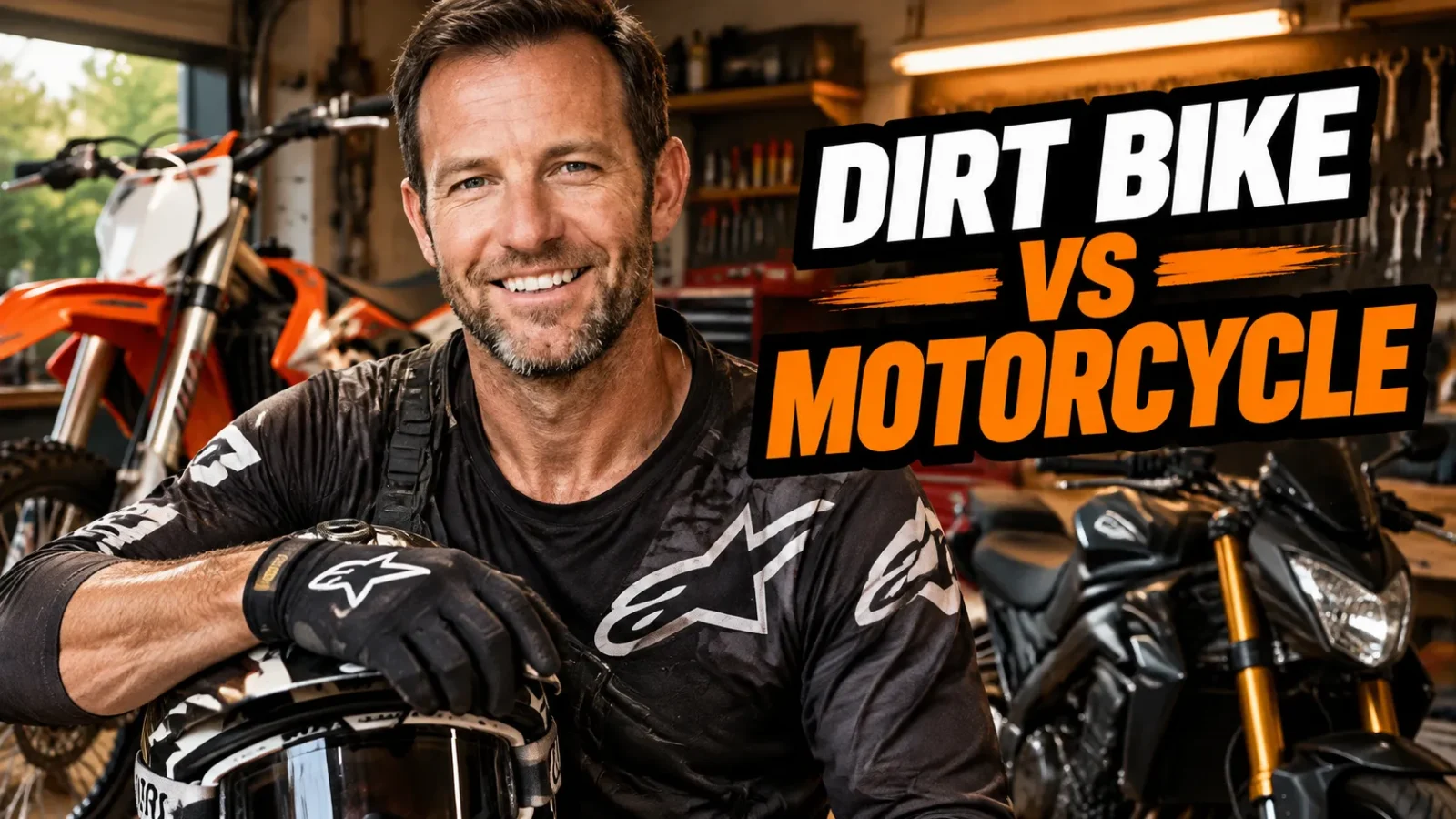
I still remember the afternoon I almost bought the wrong machine. I was standing between a featherweight dirt bike and a sleek street motorcycle, and I genuinely thought the only real difference was the tires. I was wrong. After years of riding both on trails, gravel, and pavement, I have learned that the gap goes far beyond tire tread. It touches suspension, power delivery, maintenance, seat height, and even how I plan a simple ride. That early confusion also sent me down a research spiral that included understanding electrical systems, which is why I recommend checking
what are the different types of motorcycle batteries ultimate guidebefore you buy either one.
- A dirt bike is built for off-road agility with long-travel suspension, knobby tires, and light weight, while a street motorcycle prioritizes comfort, stability, and smoother power.
- Dirt bikes demand more frequent maintenance, especially oil changes and air filter cleanings after dusty rides.
- Seat height and gearing are often the biggest surprises for first-time riders.
- If you split time between pavement and dirt, a dual-sport or adventure bike may be the best compromise.
My First Big Mistake: Confusing Weight with Strength
When I started, I assumed a heavier street motorcycle would automatically be stronger than a dirt bike. That assumption collapsed the first time I tried to lift a dropped dirt bike out of a sandy wash. It was light enough to manhandle, but it still had enough snap to climb a hill I had no business riding.
A dirt bike is built around a completely different mission. Its frame, swingarm, and wheels are designed to survive jumps, rocks, and ruts. The motorcycle I owned later felt planted and stable at highway speed. Both machines can be powerful, but they deliver strength in very different ways.
Why Weight Changes Everything
Dirt bikes usually weigh between 200 and 280 pounds. Street motorcycles often start near 350 pounds and can easily exceed 500. That weight difference affects how you brake, turn, and recover from mistakes.
I learned this the hard way on a tight single-track trail. My dirt bike would pivot around roots with a small body shift. A heavier motorcycle would have worn me out in twenty minutes. On the highway, the opposite was true. The street bike felt calm in crosswinds, while the dirt bike danced around like a kite.
Suspension Travel Is the Real Tell
If you look closely, dirt bikes have long, exposed suspension components. They need many inches of travel to absorb hard landings. Street motorcycles use shorter, firmer suspension for stability and predictable cornering.
That suspension difference explains why a dirt bike feels bouncy on pavement. It is not broken. It is simply tuned for terrain that never appears on a smooth highway. I eventually stopped asking mechanics if my dirt bike was too soft.
Power Delivery: Wheelies vs Windshields
Dirt bike engines, especially four-strokes, are tuned for instant throttle response. They make their power quickly and aggressively. A street motorcycle spreads power out more evenly, which is why it can cruise at 70 mph without feeling frantic.
I have ridden a 450cc dirt bike that felt more violent than a 650cc street bike. The dirt bike wanted to lift the front wheel in the first three gears. The street motorcycle wanted to settle into a rhythm. Neither is better; they are just aimed at different jobs.
Gearing and Top Speed
Dirt bikes run short gearing to maximize acceleration on loose ground. That means they top out much sooner than a street motorcycle of similar displacement. I often hit the rev limiter on a dirt bike at speeds that felt like a warm-up for a street bike.
This is why riding a dirt bike on the highway is miserable. The engine buzzes, the knobby tires vibrate, and the wind blast punishes you. Street motorcycles have taller gearing and aerodynamic fairings for exactly that environment.
Tires, Brakes, and the Ground You Ride On
Tires are the obvious difference, but the subtleties matter. Dirt bikes use knobby tires with tall lugs that bite into mud, sand, and gravel. Street motorcycles use smooth, rounded tires that maximize contact on asphalt.
I once rode a dirt bike on wet pavement after a rain. The knobbies skated around like I was on ice. The same tires had felt glued to a muddy berm an hour earlier. Tire choice is not a style statement; it is a safety decision.
Brakes also differ. Dirt bikes often use smaller discs and calipers to save weight. Street motorcycles need stronger, larger brakes to shed speed from higher velocities. I learned to be much gentler with the front brake on dirt, especially downhill.
Seat Height and Ergonomics
Dirt bikes sit tall. Many have seat heights over 35 inches so they can clear obstacles. Street motorcycles are usually lower and easier to flat-foot. I am not short, but I still had to slide off the seat at stoplights on some dirt bikes.
That tall stance gives you leverage for standing on the pegs, which is critical off-road. Standing helps you absorb impacts with your legs. On a street bike, you rarely stand, so comfort is designed around sitting for long stretches.
Maintenance: The Part Nobody Warns You About
Dirt bikes are high-maintenance machines. After every dusty ride, I clean the air filter. After every few rides, I change the oil. The engine gets squeezed hard, and dirt gets everywhere. That constant care is part of the experience.
Street motorcycles are not maintenance-free, but the intervals are usually longer. Still, neglect can hurt either machine. I learned that the hard way when a neglected engine started running hot. If you have ever faced that, I suggest reading about bike engine overheating after oil change causes solutions because the fixes often surprise new riders.
Oil Choice Matters More Than I Expected
I used to buy the cheapest oil on the shelf. Then I noticed my dirt bike shifting roughly after hard rides. Better oil changed the feel immediately. Now I usually pick a best motor oil for 4 stroke motorcycle that holds up under heat.
If you want a deeper comparison, I also keep a list of the top engine oil for 4 stroke motorcycle options for different budgets. Small differences in additive packages matter when you ride in mud and dust.
When I spent a few months riding in India, the heat made me rethink everything. I went through a lot of research to find the best engine oil for 4 stroke motorcycle in india because local temperatures changed how quickly oil thinned out. That experience taught me not to assume one oil works everywhere.
Why Dirt Bikes Need More Frequent Oil Changes
Because dirt bikes operate in harsh conditions, oil gets contaminated faster. Sand particles and clutch material end up in the oil sooner. I change oil on my dirt bike every few rides if I have been riding in deep dust.
Street motorcycles typically see cleaner, more consistent conditions. You can follow the manufacturer’s interval with less worry. Either way, using the right oil for your engine is non-negotiable.
Can One Bike Do Both? My Honest Answer
If you are not sure whether to buy a dirt bike or a street motorcycle, you might be asking the wrong question. I used to think I had to choose one. Then I discovered dual-sport and adventure bikes. They split the difference, though they rarely excel at both.
A dual-sport can handle gravel roads and moderate trails while still being street-legal. If that sounds like your life, you might want to look at the best motorcycle for long distances and dirt roads before committing to a pure dirt bike. I have ridden a few options that genuinely surprised me.
What I Recommend for New Riders
For pure off-road fun, a 250cc four-stroke dirt bike is hard to beat. It is light, forgiving, and teaches throttle control. For pure street riding, a 300cc to 500cc standard motorcycle is a smart starting point.
I do not recommend a high-strung motocross bike for a beginner. The power comes on too abruptly. Likewise, a heavy touring bike is too much for a first ride. Start with something manageable and build skills.
The Compromise I Rode for a Year
I spent a year on a small adventure bike. It was not the best on tight singletrack, but it handled fire roads and pavement well. That bike allowed me to explore without needing a truck and trailer.
If your budget only allows one machine, a dual-sport or a lightweight adventure bike is often the practical answer. You will give up some off-road agility and some highway comfort, but you gain freedom.
The Emotional Side of Riding
This is where I get a little personal. Dirt bikes make me feel like a kid. The lightness and aggression are intoxicating. I laugh inside my helmet when I slide through a corner.
Street motorcycles give me a different kind of joy. I love the rhythm of a long road, the wind, and the sense of covering distance. Neither feeling is better. They are just different moods.
I have owned both at the same time because I could not settle the dirt bike vs motorcycle question. Some weekends I wanted to kick up dust. Other weekends I wanted to disappear down a highway. If you can afford two bikes, do it.
How I Decide Before Every Ride
Before I grab a set of keys, I ask myself one question: What surface will I actually ride today? If the answer is mostly pavement, the street motorcycle wins. If the answer is dirt, sand, or rocks, the dirt bike is the obvious choice.
That simple question saves me from bad rides. I have made the mistake of taking a dirt bike on a 200-mile highway trip. I will not do that again. I have also tried to ride a street motorcycle down a gravel road. That ended with a slow, embarrassing drop.
Cost Comparison: What I Actually Spent
People ask me which is cheaper to own. The honest answer is that dirt bikes often cost less to buy upfront, but maintenance adds up quickly. Street motorcycles have higher initial costs, insurance, and tire replacement costs.
I spent more on oil changes and air filters for my dirt bike in one season than I did on my street bike in the same period. That is normal if you ride hard and often. The tradeoff is that dirt bike parts are often simpler and easier to replace at home.
Insurance and Registration Differences
Street motorcycles require registration, insurance, and a license plate. Dirt bikes used only on private land or closed courses may not need any of that. But if you ride a dirt bike on public land, many areas require an off-highway vehicle permit.
The rules vary by state or country. I always check local regulations before buying. A bike that seems cheap can become expensive if you get fined for riding where you should not.
Safety Gear: It Changes Too
I do not wear the same gear on a dirt bike as I do on a street motorcycle. Dirt riding demands boots with stiff ankles, knee braces, and a full-face helmet with a visor. Street riding demands abrasion-resistant jackets, gloves, and pants designed for sliding on asphalt.
Some gear overlaps, but not all. I crashed a dirt bike in soft sand and walked away because my boots and knee pads did their jobs. That same gear would not have been ideal for a highway slide.
The Helmet Misconception
Many new riders think any helmet works for any bike. In reality, dirt helmets are designed for low-speed impacts and maximum ventilation. Street helmets are built for higher-speed crashes and wind noise reduction.
I own one of each. Wearing a dirt helmet on a street bike at 70 mph is loud and exhausting. Wearing a street helmet on a dirt bike in summer feels like an oven. Buy for the riding you actually do.
Final Verdict: What I Would Buy Again
If I had to start over with a limited budget, I would buy a dual-sport or a small adventure bike. It would let me learn both worlds without being locked out of either. But if I had money and space for two bikes, I would get a 250cc dirt bike and a mid-size street motorcycle.
The dirt bike would be for pure fun. The street motorcycle would be for longer rides and commuting. That combination covers 95 percent of what I actually want to do.
Don’t Overthink It, But Don’t Ignore the Differences
The dirt bike vs motorcycle debate often gets oversimplified. People say one is off-road and the other is on-road. That is true, but it misses how different the suspension, gearing, maintenance, and rider position feel.
My best advice is to ride both before buying. Rent a dirt bike for a day. Borrow a friend’s street motorcycle. The experience will teach you more than any spec sheet. And when you do buy, pay attention to maintenance early.
Frequently Asked Questions
Is a dirt bike faster than a motorcycle?
It depends on terrain. A dirt bike accelerates harder on loose surfaces thanks to gearing and knobby tires, while most street motorcycles have a higher top speed and smoother highway power.
Can I ride a dirt bike on the street legally?
Usually no, unless it is a dual-sport or enduro model with lights, mirrors, and a license plate. Check your local laws before buying.
Which is better for a beginner?
A smaller street motorcycle is often easier for pavement beginners, but a low-seat dirt bike can be great for learning balance off-road. I recommend 250cc or smaller either way.
Do dirt bikes require more maintenance than motorcycles?
Yes, especially after muddy or dusty rides. Frequent oil changes and air filter cleaning are common, so I use high-quality motorcycle oil and check the manual often.

Related Articles

Scooters vs Motorcycles: My Honest, First-Hand Comparison After Riding Both for Years
After thousands of miles on both scooters and motorcycles, I break down cost, comfort, maintenance, and safety to help you…
Jake Miller
10 min read

7 Scooters That Look Like Motorcycles for Riders Who Want Style and Storage
Explore my top 7 scooters that look like motorcycles, from adventure crossovers like the Honda X-ADV to sporty maxis like…
Jake Miller
9 min read

How Long Do Honda Motorcycles Last? My 20-Year Owner’s Reality Check
Discover how long Honda motorcycles really last from an owner with 100k+ miles of experience. Learn maintenance secrets, high-mileage examples,…
Jake Miller
10 min read