
Scooters vs Motorcycles: My Honest, First-Hand Comparison After Riding Both for Years
 Jake Miller
10 min read
Jake Miller
10 min read
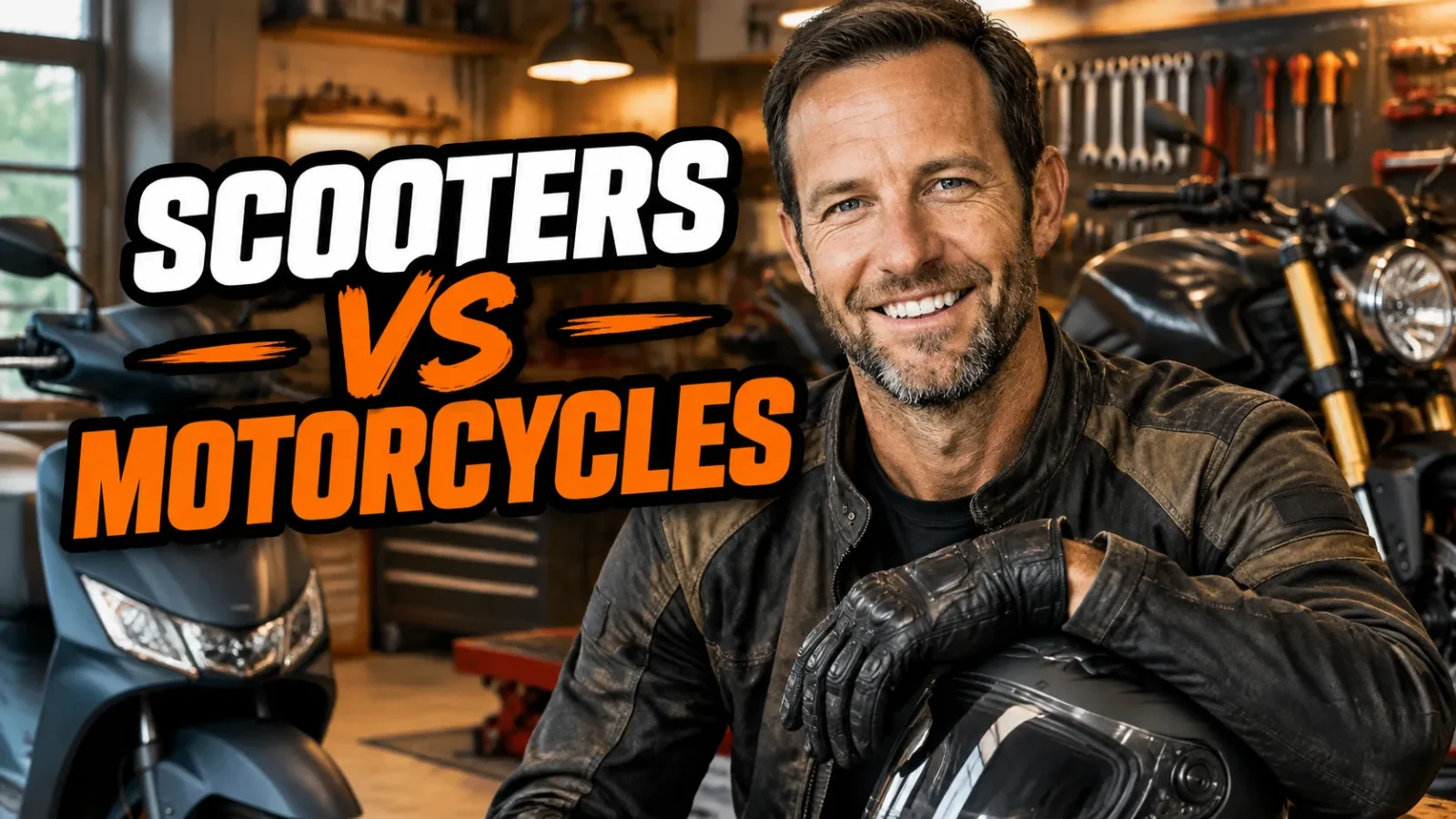
Most people assume scooters and motorcycles are basically the same thing with a different frame. I used to think that too, until I spent years commuting, touring, and wrenching on both. The truth is, the gap between them shapes everything from where you park to how much you pay for insurance.
I’ve owned a 125cc scooter for city errands and a 400cc motorcycle for longer trips, and I’ve borrowed plenty of others along the way. Before I even got into engine oil and clutch feel, I had to understand the electrical side of my bikes, because a dead battery can leave you stranded just as fast as an empty tank. That’s why I always point new riders to this what are the different types of motorcycle batteries ultimate guide when they start comparing two-wheelers.
My goal here isn’t to declare one category the winner. I want to walk you through the real differences I’ve felt in my hands, feet, and wallet, so you can pick the machine that fits your life.
- Scooters win for stop-and-go city riding, storage, and ease of use, while motorcycles win for highway stability, power, and long-distance comfort.
- The automatic transmission on a scooter makes learning easier, but a motorcycle’s manual gearbox gives you more control and engagement.
- Maintenance costs differ more by engine size and oil quality than by body style, so your choice of oil matters a lot.
- Most riders end up happier with a scooter for pure urban errands and a motorcycle for anything beyond city limits.
How I Ended Up With One of Each
For years, I was a motorcycle-only rider. I looked at scooters as slow, boring, and a little dorky. Then I moved to a dense city where parking a motorcycle meant dodging traffic, squeezing between cars, and sweating through my jacket before I even reached the coffee shop.
A friend lent me a 125cc scooter for a week. By day three, I understood the appeal completely. The twist-and-go throttle, the underseat storage, and the feather-light feel in traffic made my daily commute feel less like a chore and more like a shortcut through the chaos.
Now I keep both. My scooter handles the short trips, and my motorcycle handles the open road. That split isn’t a compromise. It’s a lesson in matching the machine to the mission.
The Biggest Physical Differences I Felt on the Road
The spec sheet only tells half the story. When you actually swing a leg over each one, the differences hit you in the first block.
Ergonomics and Leg Position
On a scooter, you sit more like you’re on a chair. Your feet rest flat on the floorboard, your knees stay bent around ninety degrees, and your back stays upright. It feels immediately relaxed, especially in stop-and-go traffic.
On a motorcycle, your feet go to pegs, your knees grip the tank, and your upper body leans slightly forward or back depending on the style. That position gives you way more leverage when cornering hard, but it demands more core strength over a long day.
I used to think the scooter’s flat floor was just a styling quirk. Now I realize it changes how you brace yourself. On a motorcycle, you squeeze the tank with your legs. On a scooter, you plant your feet and let the floorboard do the work.
Weight and Low-Speed Confidence
Scooters carry their mass low and centered. The engine, transmission, and fuel tank usually sit under the seat or below the floorboard. That low center of gravity makes a scooter feel almost impossible to tip over at walking speed.
Motorcycles carry their weight higher, especially with a full tank and a tall seat. At a stoplight, you balance more carefully. In a tight U-turn, you lean and counterbalance. I’ve dropped a motorcycle once at a parking lot speed. I’ve never dropped a scooter.
For new riders, that low-speed confidence gap is huge. A scooter forgives mistakes that a motorcycle punishes with a broken mirror or a bruised ego.
Storage and Daily Utility
Nothing prepared me for how much I’d use underseat storage. My scooter swallows a full-face helmet, a rain jacket, and a small bag of groceries. I can park, lock the helmet away, and walk into a store without carrying anything.
Most motorcycles force you into a backpack or aftermarket saddlebags. That gets old fast when you’re just running to the pharmacy. I added a top case to my motorcycle, but it still doesn’t match the built-in convenience of a scooter’s storage tub.
If daily practicality is your top priority, this one difference alone might settle the debate for you.
Engine Character: They Are Not Just Different Sizes
People assume a 150cc scooter and a 150cc motorcycle perform the same because the displacement matches. That’s completely wrong. The way the power reaches the rear wheel changes everything.
Automatic Transmissions Change Everything
Scooters almost always use a continuously variable transmission, or CVT. There’s no clutch lever, no gear shifter, and no neutral to find. You twist the throttle and the bike smoothly changes its drive ratio as you speed up.
Motorcycles, with a few rare exceptions, use a manual gearbox. You pull the clutch, shift with your foot, and match engine speed to wheel speed. There’s a learning curve, but once you get it, you feel far more connected to the bike.
In heavy traffic, I’d take the CVT every time. On a twisty back road, I’d rather have the manual gearbox and the ability to hold a gear through a corner. The scooter feels effortless. The motorcycle feels alive.
Top Speed and Highway Stability
Small scooters struggle past 60 mph. Even large maxi-scooters with 300cc or 400cc engines can feel floaty at highway speeds because of their small wheels and upright riding position.
A motorcycle with similar displacement usually has larger wheels, a longer wheelbase, and more stable geometry. That translates to confidence when a semi truck blows past you at 75 mph. I’ve ridden a 300cc scooter on the highway exactly once. I spent the entire ride gripping the bars too tight.
If your route includes regular highway miles, a motorcycle wins this category without much argument.
The Money Side: Fuel, Insurance, and Tires
I used to think scooters were automatically cheaper to own. That’s only half true. Smaller scooters sip fuel and cost almost nothing to insure, but their small tires and frequent belt replacements can add up.
Motorcycles have bigger, more expensive tires, but those tires often last longer. Motorcycle insurance can be pricier, especially for sport bikes, but a standard or cruiser motorcycle might cost less to insure than you expect.
Fuel economy is where scooters shine brightest. A 125cc scooter can return 80 to 100 mpg in city riding. My 400cc motorcycle gets around 55 to 60 mpg if I behave. Over a year of commuting, that difference adds up to hundreds of dollars.
Maintenance: What Actually Shows Up in the Garage
Both machines need oil, brakes, tires, and chain or belt maintenance. But the jobs differ in ways that affect your weekend plans.
Oil Changes and Engine Care
Oil is where I see one of the biggest divides in ownership. A small scooter might hold less than a quart, but that means you need to stay disciplined about changes. For my four-stroke scooters and motorcycles, I’ve tested several options, and if you want a reliable starting point, this guide on the best motor oil for 4 stroke motorcycle helped me narrow things down.
On bigger singles and twins, I look for something that handles heat well. I spent way too much time comparing specs before settling on what I’d call the top engine oil for 4 stroke motorcycle for my own garage.
Riders in hotter climates or stop-and-go traffic face a different challenge altogether. I’ve spoken to friends in India who swear by a specific viscosity, and this breakdown of the best engine oil for 4 stroke motorcycle in india confirms that ambient temperature matters more than displacement.
If you’re new to all this and just want a direct answer to what is the best engine oil for 4 stroke motorcycle, I get it. The short version is: pick a quality synthetic blend that meets your manufacturer’s JASO spec, and change it on time.
Finally, if you want one broader look at what to pour into both machines, my go-to reference is this article on the best engine oil for motorcycle. It saved me from buying the wrong oil more than once.
Safety, Visibility, and Skill Development
Scooters sit you higher in traffic, which can improve your sightlines over cars. But some drivers still treat scooters like bicycles, passing too close or assuming you’ll stay in the gutter. I’ve noticed more close calls on my scooter in urban traffic than on my motorcycle, partly because the smaller silhouette gets overlooked.
Motorcycles, especially with a loud exhaust and a full-sized frame, command more road presence. That doesn’t make them inherently safer, but it does change how other drivers react. You also have more room to carry proper riding gear without looking out of place.
Skill development matters too. Learning manual shifting on a motorcycle makes you a more engaged rider. You understand throttle control, engine braking, and traction in a way that a CVT scooter never forces you to learn. If you want to become a better rider long-term, a motorcycle pushes you harder.
My Recommendations by Rider Type
After all this, the right answer still depends on you. Here’s how I break it down for the people who ask me this question on the street.
Short City Commute
If your ride is under five miles, mostly in the city, and filled with stoplights, get a scooter. You’ll spend less on fuel, park easier, and carry your helmet without hauling it around. I genuinely miss my scooter every time I take the motorcycle on a two-mile grocery run.
Suburban or Mixed Riding
For a mix of surface streets and occasional highway, a 250cc to 400cc motorcycle or a maxi-scooter can both work. I’d lean motorcycle if you want room to grow, and scooter if you value storage and ease above all else.
Highway Commutes and Weekend Trips
Motorcycle, no contest. A scooter can technically do it, but you’ll arrive tired, anxious, and ready to sell it. A motorcycle gives you the stability, power, and braking confidence to actually enjoy the journey.
Final Thoughts: Choosing Your Next Ride
I’ve stopped trying to convince people that one category is objectively better. Scooters are brilliant urban tools. Motorcycles are brilliant machines for motion, skill, and adventure. Most riders can justify owning one of each, even if the garage feels a little crowded.
Your first step is honesty about where you actually ride. If that’s a ten-minute city loop, buy the scooter and don’t look back. If you dream of weekend escapes and empty back roads, get the motorcycle and learn it properly. Either way, keep your oil fresh, your battery charged, and your head on a swivel.
Frequently Asked Questions
Is a scooter easier to ride than a motorcycle?
Yes, scooters are generally easier because of the automatic transmission, lighter weight, and lower seat height.
Which is cheaper to maintain, a scooter or a motorcycle?
Scooters usually cost less for tires and brakes, but motorcycles often have longer service intervals if you use the best motor oil for 4 stroke motorcycle and follow the manual.
Can a scooter go on the highway?
Only scooters with a 150cc engine or larger are highway capable, and even then a motorcycle feels more stable at high speed.
What scooter engine size is equivalent to a motorcycle?
A 150cc to 300cc scooter can keep up with a 250cc to 400cc motorcycle in city traffic, but a motorcycle will outperform it at higher speeds.

Related Articles

7 Scooters That Look Like Motorcycles for Riders Who Want Style and Storage
Explore my top 7 scooters that look like motorcycles, from adventure crossovers like the Honda X-ADV to sporty maxis like…
Jake Miller
9 min read

How Long Do Honda Motorcycles Last? My 20-Year Owner’s Reality Check
Discover how long Honda motorcycles really last from an owner with 100k+ miles of experience. Learn maintenance secrets, high-mileage examples,…
Jake Miller
10 min read

Dirt Bike vs Motorcycle: I Rode Both for Years, Here’s the Honest Truth
After years on both a dirt bike and a street motorcycle, I break down the real differences in power, suspension,…
Jake Miller
11 min read