
2-Into-1 vs Dual Exhaust on a Harley: What I Learned After Running Both
 Jake Miller
7 min read
Jake Miller
7 min read
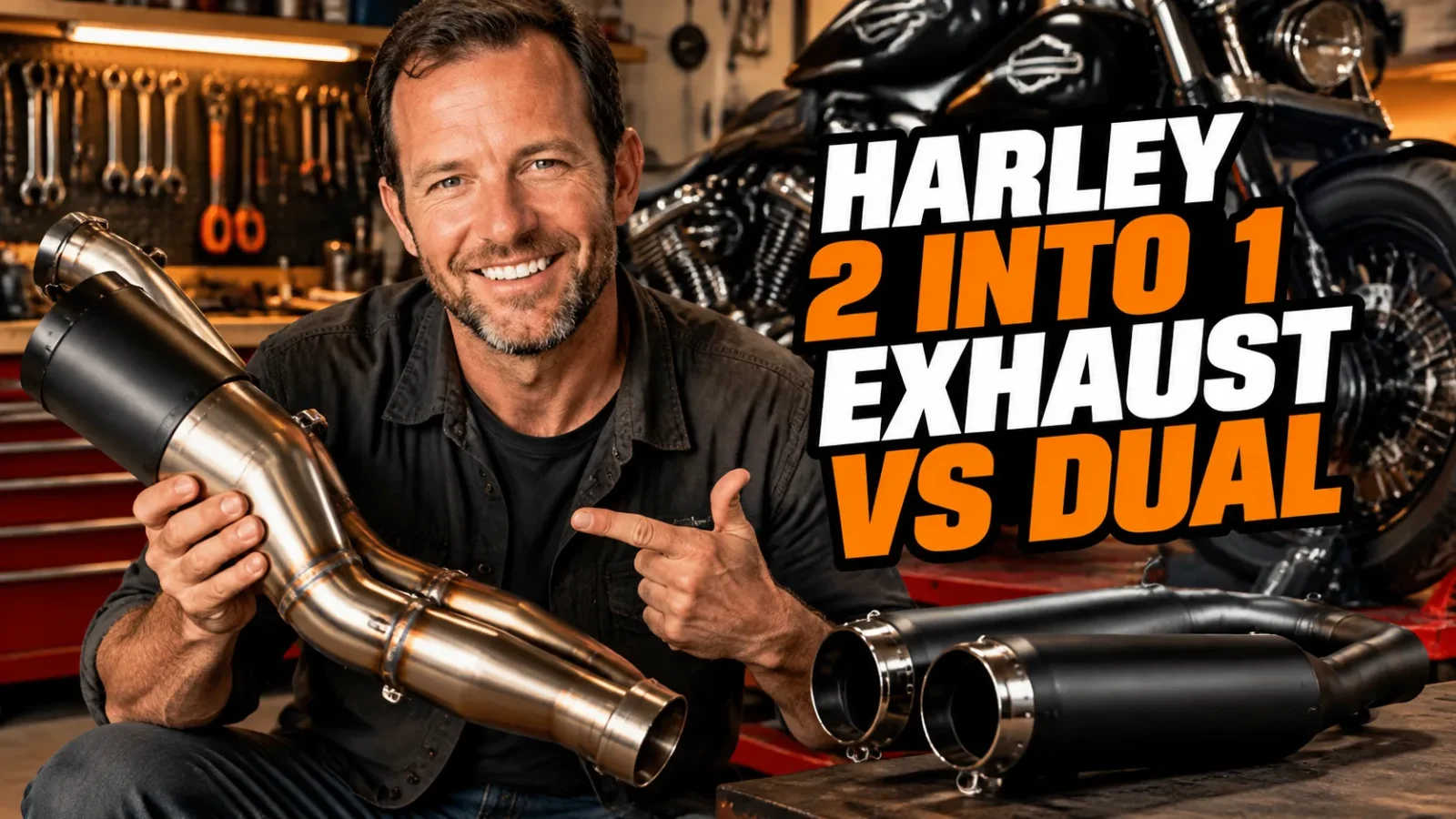
I’ve spent way too much money on exhaust systems. That’s not a confession I’m proud of, but it does mean I can speak from experience instead of just repeating what a catalog says.
My first Harley came with factory duals. A couple of seasons later I bolted on a 2-into-1, and I’ve since gone back and forth on different bikes. Every time, I learn something new about how these two designs actually behave on the road.
So if you’re stuck deciding between a 2-into-1 and a dual setup, this is the article I wish someone had handed me years ago.
- A 2-into-1 typically delivers stronger low-end and midrange torque thanks to exhaust scavenging.
- True duals usually win on sound, symmetry, and that traditional Harley look.
- Either way, you’ll need a tuner. Skipping it wastes money and can hurt your engine.
- Ride style matters more than specs: touring and two-up riders lean 2-into-1, while cruisers and show bikes lean duals.
Why I Started Paying Attention to Exhaust Design
For years I thought exhaust was mostly about noise. Louder equals faster, right? That’s what my buddy with the straight pipes told me, and I believed him for way too long.
Then I swapped a 2-into-1 onto my Dyna and took it up a familiar mountain road. Same bike, same gearing, same rider. The difference in how it pulled out of tight corners genuinely surprised me. That’s when I started reading about exhaust theory instead of just buying whatever looked cool.
How a 2-Into-1 System Actually Works
A 2-into-1 collects the exhaust from both cylinders into a single pipe before it exits. That merge point is the whole magic trick.
The Scavenging Effect, Explained Simply
Here’s the short version: as exhaust gases leave one cylinder at speed, they create a low-pressure pulse that helps pull the gases out of the other cylinder. Engineers call this scavenging. I call it free horsepower.
Because a 2-into-1 has a longer, more continuous path, it manages those pressure waves more effectively. The result is a cleaner cylinder fill on the next intake stroke, which means more usable power.
Where the 2-Into-1 Wins
In my experience, the biggest gains show up in the low and midrange. That’s exactly where you live on a street bike. Rolling on the throttle at 2,500 RPM, the 2-into-1 just goes.
It also tends to weigh less, since you’re carrying one muffler instead of two. Lighter is faster, and it’s one less thing hanging off the back of your bike.
What True Duals Bring to the Table
True duals give each cylinder its own independent path all the way out the back. No merge, no shared collector, just two separate systems running side by side.
From a pure tuning standpoint, that’s a compromise. You lose the scavenging benefit because the two pipes never talk to each other.
The Sound Everyone Recognizes
Here’s where I have to be honest: duals sound better to me. Not louder, better. There’s a depth and a rumble that a 2-into-1 rarely matches.
If you grew up around Harleys, that staggered dual crackle is the sound in your head. A 2-into-1 is sharper and more modern, but it doesn’t have that same chest-thumping warmth.
Looks, Symmetry, and Heat
Duals look balanced. On a bagger or a softail, two pipes flanking the rear wheel just complete the picture in a way a single pipe can’t. I’ve had more compliments on my dual setups than anything else I’ve run.
The tradeoff is heat. Two pipes running close to your right leg can get toasty in summer traffic. My 2-into-1 routed heat away from me more effectively, which matters on long, slow rides.
Performance: What I Actually Felt on the Road
Dyno charts are great, but you don’t ride a dyno. Here’s how the two designs translated to real seat time.
Low-End Torque
The 2-into-1 pulled harder off idle, no question. Rolling on from a stop or lugging up a hill, it felt like the bike had gained a gear. That’s the scavenging at work.
With duals, I had to be more deliberate. The bike still moved, but it wanted more RPM before it really woke up.
Midrange and Top End
The midrange gap was smaller than I expected. A well-built dual system on a properly tuned bike can absolutely hold its own from about 3,000 RPM upward.
At the very top of the rev range, duals sometimes edge ahead on peak numbers. But how often are you living above 5,000 RPM on a Harley cruiser? For me, almost never.
Sound Comparison: I’ll Be Straight With You
If sound is your number one priority, duals usually win. That’s the honest answer, and I’m not going to pretend otherwise just because 2-into-1 sells better.
A 2-into-1 has a distinct, aggressive bark. It sounds fast. But it’s a sharper note, and some people find it harsher at highway speeds.
Duals give you a lower, rounder tone. Two cylinders firing through two separate pipes creates a layered rumble that’s hard to replicate. It’s the sound most riders picture when they hear the word “Harley.”
Fitment, Heat, and Everyday Comfort
This is the part nobody talks about enough. A 2-into-1 takes up less space, which makes it easier to work around when you’re doing maintenance.
It also means fewer parts to loosen up. I’ve had heat shields rattle on dual setups more than once, and tracking down which pipe is buzzing can be maddening.
On the other side, duals give you more options for slip-on mufflers and tips. If you like changing your look every season, duals give you more to play with.
Fueling and Tuning: The Cost Nobody Mentions
Whatever you choose, budget for a tuner. I learned this the expensive way on my first swap.
Changing your exhaust changes how the engine breathes. Modern Harleys run lean from the factory, and leaning them out further is a great way to cook a piston. A tuner like a Power Vision or Fuelpak lets you correct the air/fuel ratio properly.
Without a tune, you’re leaving power on the table and adding heat. With a tune, both designs come alive. Realistically, add a few hundred dollars to whatever you’re spending on pipes.
Which One Should You Buy? My Honest Take
After running both, I don’t think there’s a universal winner. It comes down to what you actually want from your bike.
Go 2-Into-1 If…
You ride loaded, ride two-up, or chase torque. If you want the seat-of-the-pants pull that makes a heavy touring bike feel lighter, a 2-into-1 is the better tool.
It’s also my pick if you care about weight savings and want a more modern, aggressive look.
Go With Duals If…
You want the classic sound and the balanced look. If your bike is more about style and cruising than outright grunt, duals deliver the experience you’re after.
They’re also the better choice if you plan to change mufflers often or just love that traditional silhouette.
Mistakes I Made So You Don’t Have To
First mistake: buying on sound alone. I picked a set of pipes because they sounded amazing in a YouTube video, then hated them at highway speed. Sound in a video is not sound on your bike.
Second mistake: skipping the tune. I ran untuned for a month because I wanted to “feel the difference first.” All I felt was heat and a flat spot.
Third mistake: not thinking about my passenger. My wife noticed the exhaust heat before I did. Lesson learned.
Final Thoughts From Someone Who’s Been There
If you want the most usable power for real-world riding, the 2-into-1 is the smarter buy. That’s my honest recommendation for anyone who rides hard or rides loaded.
But if you want the sound and the look that made you fall in love with Harleys in the first place, duals are worth every tradeoff. Performance isn’t the only thing that matters on a motorcycle.
Either way, don’t skip the tune, don’t trust a phone recording, and don’t let anyone tell you there’s only one right answer. Ride both if you can. Your butt dyno knows better than any forum thread.
Frequently Asked Questions
Does a 2-into-1 exhaust make more power than duals on a Harley?
In most cases, yes, especially in the low and midrange. A well-designed 2-into-1 uses exhaust scavenging to pull spent gases out of the cylinder more efficiently, which typically means stronger torque off idle and through the midrange. Duals can still make great peak numbers, but you usually have to spin the engine higher to feel it.
Will I need a tuner after swapping my Harley exhaust?
Almost always. Any change to the exhaust changes how the engine breathes, and most modern Harleys run lean from the factory. A quality tuner like a Power Vision or Fuelpak lets you correct the air/fuel ratio, which protects the engine and unlocks the gains you paid for.
Is a 2-into-1 louder than a dual exhaust?
Not necessarily louder, but different. A 2-into-1 tends to produce a sharper, more aggressive tone with a harder bark when you get on it. Duals usually deliver a deeper, rounder rumble that many riders describe as the classic Harley sound.
Which exhaust is better for a touring bike?
For most touring riders I talk to, 2-into-1 wins on torque, which matters when you’re loaded down with luggage and a passenger. Duals win on symmetry and that traditional bagger look. If you ride two-up and loaded, I’d lean 2-into-1.

Related Articles

White Smoke on Startup That Vanishes: What I’ve Learned After Years of Cold Mornings
White smoke from your exhaust on startup that vanishes? I explain when that puff is harmless condensation and when it…
Jake Miller
9 min read

Loss of Power and Black Smoke From a Diesel? Here’s How I Track Down the Real Cause
Black smoke plus power loss in a diesel almost always means too much fuel and not enough air. I share…
Jake Miller
9 min read

Black Smoke From Your Exhaust at Startup? What I Found After Years of Chasing It
Black smoke from the exhaust when starting usually means a rich fuel mixture. I'll walk through the real causes I've…
Jake Miller
8 min read