
What Should Be in a Motorcycle Tool Kit? My Real-World Loadout After 15 Years in the Saddle
 Jake Miller
10 min read
Jake Miller
10 min read
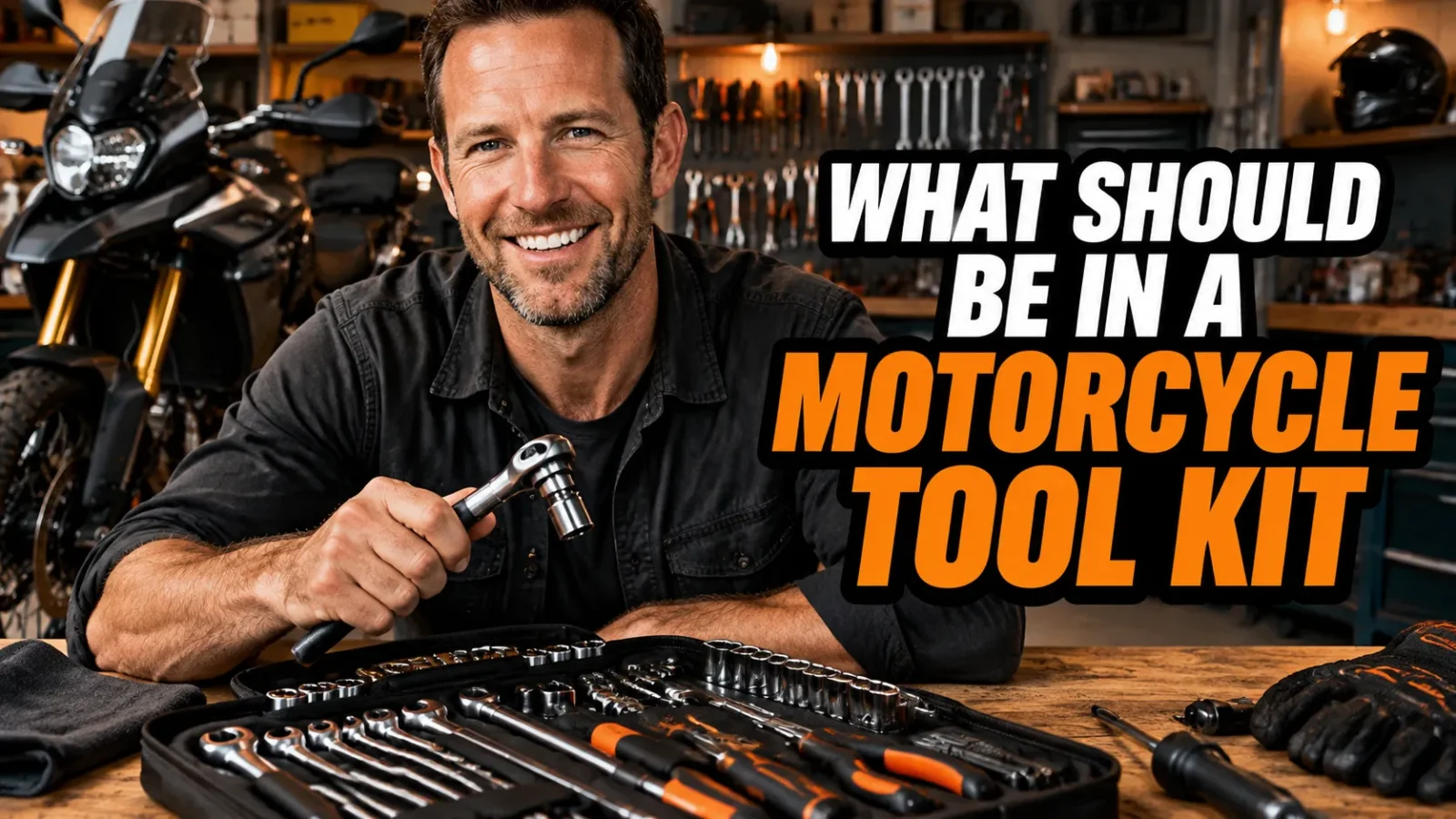
I still remember the exact moment I decided to build a real motorcycle tool kit. I was 40 miles from home on a Sunday evening, sitting on the shoulder with a mirror dangling off my handlebar and a battery terminal that had vibrated loose. I had a phone with 12% battery and absolutely nothing in my saddlebags except a hoodie and a half-eaten protein bar.
That night cost me a two-hour wait and a $180 tow. It also taught me a lesson that has shaped every ride since: the tools you carry are not about paranoia, they are about independence. A well-built kit weighs three or four pounds and can turn a ride-ending disaster into a ten-minute parking lot fix.
Since then I have rebuilt my kit more times than I can count. I have added things, thrown things out, and learned the hard way which items earn their space. This is what I actually carry now, and why.
- Start with sockets, hex keys, pliers, and a driver that fit your bike’s fasteners, not a generic set.
- Tire plugs, an inflation source, zip ties, electrical tape, and spare fuses cover the vast majority of roadside failures.
- Weigh everything. A five-pound kit you actually use beats a fifteen-pound kit you leave at home.
- Bike-specific additions matter more than brand names, especially for cruisers and adventure bikes.
- Check and re-pack the kit before every long trip and at the start of each season.
Start With the Fasteners Your Bike Actually Uses
The single biggest mistake I made early on was buying a generic 200-piece tool kit from a big box store. It looked impressive. It weighed nine pounds. And half the sockets did not fit anything on my bike.
What I learned is that almost every motorcycle uses a surprisingly small range of fastener sizes. On most Japanese bikes that is 8, 10, 12, 14, and 17mm, plus a handful of 4, 5, and 6mm hex heads. On my Harley it skews toward imperial sizes with a few Torx bolts thrown in.
So before you buy anything, walk around your bike with a small notepad and figure out what sizes are actually holding it together. That list is your shopping list.
Sockets, Hex Keys, and Wrenches
I carry a compact 1/4-inch drive socket set with the sizes I listed above, plus a short extension and a small ratchet. The extension matters more than people realize, because it lets me reach recessed bolts on the engine case without knuckle-busting contortions.
For hex keys I use a folding set rather than loose L-keys. Folding sets are slower but they never scatter across a gravel shoulder, which I have learned is the real enemy.
I also carry one adjustable wrench. It is not precise, but it is the tool that has saved me when I dropped a bolt in the grass and needed to hold something steady while I improvised.
Pliers, Cutters, and a Driver
Needle-nose pliers, a small pair of side cutters, and a screwdriver with swappable bits cover an enormous amount of ground. I use the pliers constantly for hose clamps, cotter pins, and pulling stuck fuses.
The driver handles Phillips, flathead, and Torx bits, which means one handle replaces four tools in my roll.
The Small Stuff That Punches Way Above Its Weight
If I had to choose between my socket set and my bag of consumables for a 500-mile trip, I would honestly think about it. That is how often the cheap stuff saves the day.
Why Zip Ties Are the MVP
I have used zip ties to reattach a broken turn signal, secure a loose exhaust heat shield, hold a saddlebag strap out of my wheel, and strap a snapped mirror stalk to my fork leg. I carry a dozen in mixed sizes, and I have never once regretted the space.
Safety wire and a small roll of duct tape ride along too. Duct tape is not elegant, but it is the difference between limping home and calling a tow.
Spare Bolts and a Tiny Tube of Threadlocker
Vibration is a motorcycle’s quiet saboteur. I keep four or five spare bolts in the sizes my bike uses most, along with a small tube of blue threadlocker. On one trip a rear fender bolt worked itself loose over 300 miles, and that tiny tube kept it in place for the rest of the ride.
Tire Repair Gear Is Non-Negotiable
A flat tire is the most common way a good ride turns bad. If your bike runs tubeless tires, you have options that did not exist twenty years ago.
Plug Kits, Pumps, and Pressure Gauges
I carry a mushroom-style plug kit with a reaming tool and insertion tool. Combined with a compact 12V pump or a handful of CO2 cartridges, this setup has gotten me and two riding buddies home from punctures that would otherwise have ended the day.
A small digital tire pressure gauge weighs almost nothing and lets me confirm the repair actually sealed. I check it again after ten minutes of riding, because a slow leak shows up fast.
If your bike runs tubes, your kit looks different. You will need tire irons, a spare tube, and the patience of a saint. I have done it on the side of a road once, and once was enough to make me switch to a tubeless setup.
Electrical Rescue Tools
Electrical gremlins are the hardest roadside problems to diagnose, but a few small items give you a fighting chance. I carry a spare fuse assortment matched to my bike, a compact multimeter, and a small length of 16-gauge wire with butt connectors.
A pocket-sized lithium jump pack is the one item I resisted for years and now consider essential. It has started my bike, a friend’s truck, and a stranger’s Honda at a gas station in rural Nevada. It weighs about a pound.
Multi-Tools Versus a Full Tool Roll
I have gone back and forth on this for years. When I first started looking at the best leatherman tool for motorcycle adventures, I assumed it would replace my entire roll. It did not, but it earned a permanent spot anyway.
When a Multi-Tool Earns Its Place
For short local rides, my multi-tool plus a tire plug kit is genuinely all I bring. It handles loose mirrors, battery terminals, hose clamps, and the endless small annoyances that pop up on a Saturday morning.
On long tours, the multi-tool is a supplement, not a replacement. It cannot break a stubborn axle nut or properly torque a caliper bolt, and pretending otherwise is how people get hurt.
Bike-Specific Additions Worth Considering
This is where your kit stops being generic and starts being yours. The right additions depend entirely on what you ride and where you ride it.
For Cruisers and Harley Riders
Cruisers carry more weight, run bigger fasteners, and often sit lower to the ground, which makes certain maintenance tasks awkward. I have found that a good best motorcycle wheel roller for harley setup changes how easy it is to move and clean a heavy bike in a tight garage, even if it is not something you would carry on the road.
Beyond that, I add imperial sockets, a Torx set, and a small bottle of touch-up paint because cruisers tend to collect stone chips.
For Adventure and Dual-Sport Riders
Adventure riders need more, plain and simple. Tire irons, a spare tube, a bead breaker, and a proper mini pump are standard for anyone riding dirt far from help.
I also carry a small folding saw and extra water, because the situations that strand adventure riders are rarely mechanical alone.
For Sportbike Riders
Space is the constraint here, so I prioritize ruthlessly. A multi-tool, tire plug kit, CO2 cartridges, zip ties, and a credit card cover most scenarios. Undertail storage is limited, so every item has to justify itself.
Packing It So You Actually Use It
A tool kit is only useful if you can find what you need in under a minute, in the dark, with cold hands. That is the standard I hold mine to.
I use a roll-up canvas tool roll with labeled slots. It weighs less than a hard case, conforms to whatever space I have, and unrolls into a flat workspace so nothing rolls into the grass.
Weight distribution matters too. I keep the tool roll low and centered, ideally near the bike’s center of gravity, rather than high in a top case where it affects handling.
Maintenance Habits That Keep the Kit Honest
The best tool kit in the world does not replace good habits. Every item in my roll exists to handle a problem that regular basic motorcycle maintenance would have prevented in the first place.
I check torque on critical fasteners monthly. I inspect my chain, tires, and brake pads before long rides. I keep my battery on a tender when the bike sits.
Seasonal Storage and Tool Care
When riding season ends, my kit gets a full audit. I have learned to follow a proper how to winterize your motorcycle routine that includes cleaning and re-oiling tools, replacing dried-out tape, and restocking zip ties and fuses.
Rubber and adhesive degrade in cold garages. I have pulled out tape in March that had turned into a brittle, useless ribbon.
Hauling the Bike Changes the Kit
If you trailer your motorcycle to a ride, your needs shift. The kit that lives in your saddlebags is now a kit that lives in your truck, and it should include straps, soft ties, and a wheel chock.
Knowing how to properly tie down a motorcycle is a skill I picked up after watching a friend’s bike tip over in a trailer. The damage was cosmetic, but the lesson was permanent. I now carry spare straps and always double-check compression on the forks before pulling out of the driveway.
What My Kit Actually Weighs and Contains
For anyone who wants a concrete starting point, here is my current loadout. It fits in a roll roughly the size of a burrito and weighs a little over four pounds.
Sockets and ratchet in 8, 10, 12, 14, and 17mm. Folding hex key set. Adjustable wrench. Needle-nose pliers. Side cutters. Multi-bit driver. Tire plug kit. CO2 inflator with four cartridges. Digital pressure gauge. Spare fuses. Electrical tape and duct tape. Twelve zip ties. Spare bolts. Threadlocker. Multimeter. Jump pack. Flashlight. Nitrile gloves.
The gloves are the item people laugh at until they need to change a chain on a hot engine in a parking lot.
Final Thoughts From Someone Who Learned the Hard Way
If you take one thing from my experience, let it be this: build your kit around your bike, not around a checklist you found online. Every motorcycle has its own quirks, its own fastener sizes, and its own failure points.
Start small. Carry the basics, ride, and pay attention to what breaks. Every time something goes wrong on the road, ask yourself what single tool would have fixed it. Add that tool. Remove something you have never touched in two years.
Do that for a season and you will end up with a kit that is genuinely yours. Mine has evolved into something I trust completely, and that trust is worth more than any single tool in the roll. When I am 200 miles from home and something rattles loose, I do not panic anymore. I pull over, unroll the canvas, and get back to riding.
Frequently Asked Questions
What are the absolute must-have tools for a motorcycle tool kit?
At minimum I carry a socket set sized for my bike’s fasteners, hex keys, an adjustable wrench, pliers, a screwdriver with swappable bits, a tire plug kit, a mini pump or CO2 inflator, zip ties, electrical tape, spare fuses, and a small flashlight. That covers roughly 90% of the breakdowns I have personally run into.
Do I really need a tire plug kit on a motorcycle?
Yes, if you run tubeless tires. A plug kit plus an inflation source turns a ride-ending puncture into a 15 minute roadside fix. On tube-type tires you will need tire irons and a spare tube instead.
How often should I check my motorcycle tool kit?
I go through mine before every long trip and once at the start of each riding season. Tools loosen, zip ties get borrowed, and tape dries out. A quick inventory takes five minutes and has saved me more than once.
Can a multi-tool replace a full tool roll?
For short local rides, yes. A good multi-tool handles loose mirrors, hose clamps, and battery terminals. For long tours I still carry both, because a multi-tool cannot break a stubborn axle nut or torque a caliper bolt properly.

Related Articles

10 Best Multi Hand Tools for Motorcycle Riders Who Fix Their Own Bikes
I compared the best multi hand tools for motorcycle riders, from the Leatherman Wave+ to the Gerber Center-Drive, so you…
Jake Miller
12 min read

8 Best Motorcycle Chocks for Harley Touring That Actually Hold a 900 lb Bagger
I've tested chocks that genuinely hold a 900 lb Harley Touring bike. From Condor to Baxley, here are the best…
Jake Miller
12 min read

10 Best Harley-Davidson Tool Kits and Roadside Tools I Actually Carry
After years of roadside repairs on my Milwaukee-Eight, here are the best tool kits for Harley-Davidson riders, from CruzTOOLS to…
Jake Miller
11 min read