
8 Best Phones for Adventure Motorcycle Navigation, Maps, and Rough-Road Riding
 Jake Miller
12 min read
Jake Miller
12 min read
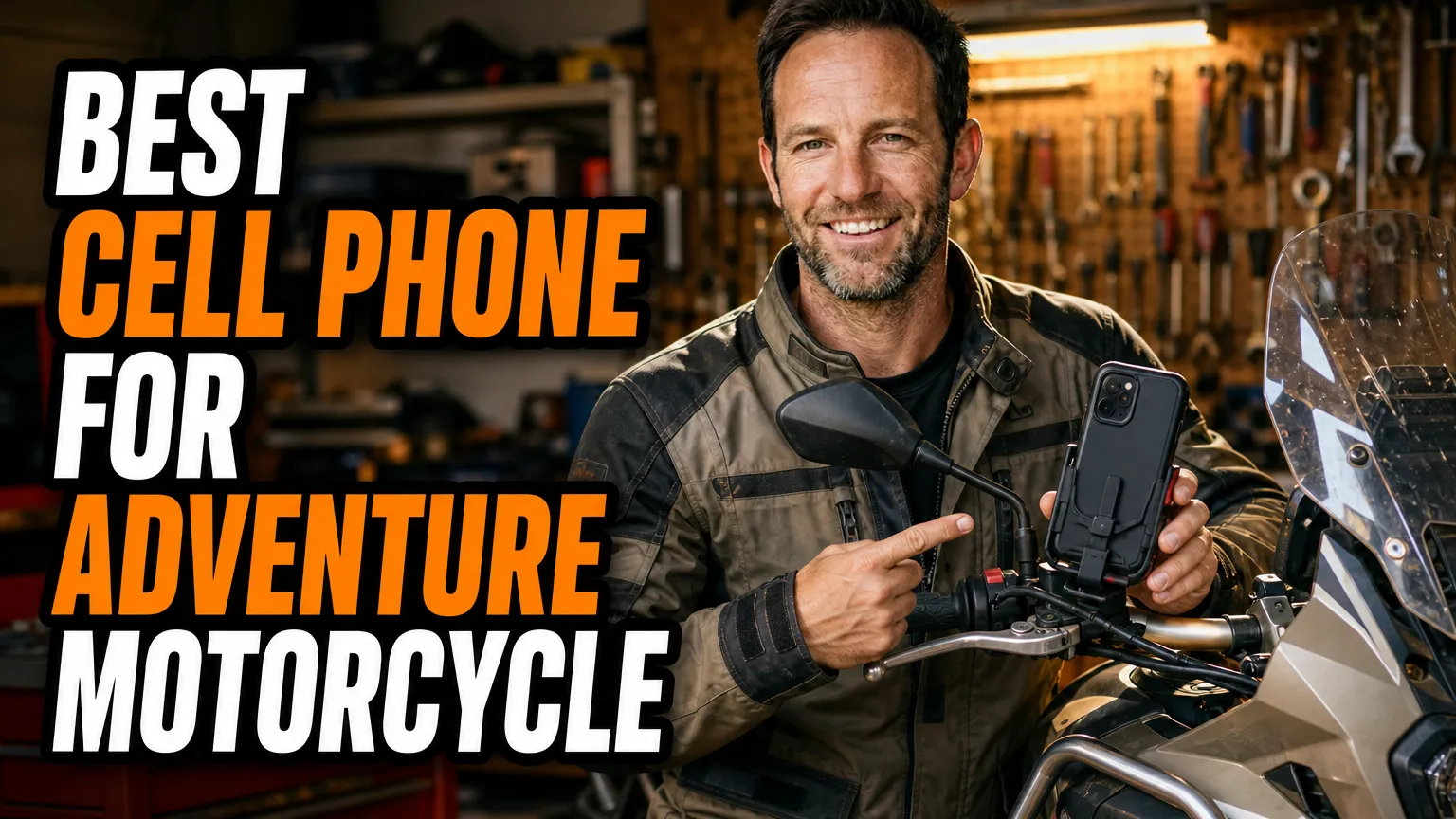
I rely on my phone for route planning, weather checks, maps, and the occasional roadside photo, so I want more from it than a fast processor. On an adventure motorcycle, I also think about dust, rain, gloves, charging, bright sun, and the vibration that can work its way through a handlebar mount.
There is no single perfect choice for every rider. I’ve included rugged phones built for hard conditions alongside mainstream models that can work brilliantly with a good case and mount. I’d still protect any phone from sustained vibration, and I wouldn’t treat water-resistance ratings as permission to ignore the manufacturer’s limits.
- I’d pick the Samsung Galaxy XCover7 Pro for a rugged, practical riding phone.
- I’d choose the Samsung Galaxy S25 Ultra or OnePlus 13 for a large, bright display.
- I’d consider the Ulefone Armor 27T Pro or AGM G2 Guardian for extra-tough builds and specialized features.
- I’d use offline maps, a secure mount, and vibration damping with any phone I take on the bars.
1. Samsung Galaxy XCover7 Pro — My Rugged All-Rounder
When I want a phone designed for rough handling rather than just protected after the fact, I look at the Samsung Galaxy XCover7 Pro. Its IP68 water- and dust-resistance rating and MIL-STD-810H testing make it a more natural fit for muddy gloves, dusty tracks, and unpredictable weather than a typical glass-backed flagship.
I also like that the XCover7 Pro has a removable battery, a useful feature when I want to carry a spare instead of relying entirely on a charging cable. Its 6.6-inch 120Hz display gives me a generous map view, while the programmable key can be assigned to a frequently used app or function.
Why I’d take it riding
The XCover7 Pro is the kind of phone I’d rather use with wet or dirty hands than a delicate premium handset. I still wouldn’t deliberately drop it on rocks, but its rugged design gives me more confidence when I’m pulling it out at a muddy junction or packing it alongside tools.
It is not my pick for the best camera or the most powerful processor. I’d choose it for the combination of practical durability, a replaceable battery, and a screen large enough for navigation. Pricing varies by region and retailer, but I’d expect it to sit in the midrange rather than flagship tier.
2. Samsung Galaxy S25 Ultra — My Pick for a Big, Bright Map
For riders who want a premium phone with a large navigation screen, I’d consider the Samsung Galaxy S25 Ultra. Its 6.9-inch Dynamic AMOLED 2X display has a high-resolution picture and an anti-reflective treatment, which I appreciate when the sun is hitting the screen at an awkward angle.
I also value its IP68 rating, capable cameras, and large battery. Those features make the S25 Ultra useful off the bike, too: I can plan routes, take detailed photos, and keep up with messages without carrying a separate everyday phone.
What I’d protect before mounting
This is an expensive phone, so I’d pair it with a protective case and a quality mount rather than trusting a bare clamp. I’d also use a vibration-damping system. The S25 Ultra has advanced camera hardware, and I don’t want sustained engine vibration reaching the camera assembly through the handlebars.
I’d choose this model if I wanted one premium device for navigation, photography, and everyday use. Its large screen is a real advantage for maps, but the size and price may be overkill if I mainly need turn-by-turn directions. I’d compare its cost with a dedicated motorcycle GPS before spending flagship money just for the bike.
3. Apple iPhone 16 Pro — My Choice for the Apple Ecosystem
I’d put the iPhone 16 Pro on my shortlist if I already use Apple devices and want a compact premium phone with strong cameras. Its 6.3-inch Super Retina XDR display is easier for me to fit into a compact cockpit than some larger phones, while still providing a useful map area.
The iPhone 16 Pro has an IP68 rating, a USB-C port, and a programmable Action button. I find those practical touches helpful for an everyday phone that also comes along on rides. I can download maps in compatible apps before leaving service, then switch to offline navigation when cell coverage disappears.
Where it fits best
I’d choose the iPhone 16 Pro for its balance of size, camera quality, and smooth integration with the Apple ecosystem, not because it is a purpose-built motorcycle device. A tough case and a secure, vibration-damped mount are still important, and I’d keep the phone out of direct weather exposure whenever I can.
Its price is firmly in premium territory, though the exact cost depends on storage and current retailer offers. If I’m buying specifically for navigation, I’d consider whether I want to risk an expensive phone on the bars or keep it protected in a pocket and use a dedicated GPS up front.
4. Google Pixel 9 Pro — My Pick for Maps and Everyday Photography
The Google Pixel 9 Pro is a strong option if I want a high-quality camera and a clear display in a more manageable size than an extra-large phone. Its 6.3-inch LTPO OLED screen offers a sharp map view, and Google’s software makes it straightforward for me to use Google Maps and download areas for offline travel.
I also like having a capable camera for documenting a route, campsite, or unexpected scenic stop. The Pixel 9 Pro is IP68-rated, but I would still use a case because water resistance does not protect a phone from impact, grit in a port, or repeated vibration.
My practical trade-off
I see this as a polished everyday phone that can do motorcycle navigation well when mounted and protected properly. It is not a rugged handset, so I’d be more careful with it on remote, rough routes than with the XCover7 Pro or a purpose-built rugged model.
For me, its appeal is the combination of a bright, high-quality screen, Google software, and excellent photography. I’d check current pricing carefully, since newer Pixel models and sales can change the value equation. If the Pixel is already my daily phone, I’d invest in a good mount and protection before buying a second device.
5. OnePlus 13 — My Pick for a Large Screen and Strong Battery
I’d look at the OnePlus 13 if I wanted a large, bright screen and a substantial battery in a mainstream flagship. Its 6.82-inch QHD+ display gives me plenty of room to read route lines and map labels, while its high refresh rate keeps scrolling and zooming smooth.
The OnePlus 13 also has IP68 and IP69 ratings, which indicate tested resistance to dust and water under specified conditions. I like that added reassurance for wet-weather travel, but I wouldn’t deliberately expose the phone to pressure washing or assume a rating covers every kind of water, damage, or wear.
Why I’d consider it for long days
A large battery can make a meaningful difference when I’m navigating, taking photos, and using mobile data throughout the day. I’d still carry a USB-C charging option for longer rides, especially if I’m running a screen at high brightness or following a route continuously.
The main compromise is its size. I’d check that my chosen mount can hold the OnePlus 13 securely and that I can see the screen without blocking instruments. I’d also use vibration damping and a case, even with its water-resistance ratings.
6. Samsung Galaxy XCover6 Pro — My Practical, Lower-Cost Rugged Option
If I find one at a good price, I’d consider the Samsung Galaxy XCover6 Pro as a more affordable rugged alternative. It has a 6.6-inch 120Hz display, an IP68 rating, and MIL-STD-810H testing. Like the newer XCover7 Pro, it stands out for having a removable battery and microSD expansion.
Those features suit the way I like to prepare for a trip: I can store offline maps on expandable storage, and a spare battery can be more convenient than stopping to plug in. I’d check the exact version and its network compatibility before buying, since availability and configurations can vary by market.
What I’d check before buying
The XCover6 Pro is an older model, so I’d pay attention to software support, battery condition, and whether the seller is offering a new, refurbished, or used device. I wouldn’t assume a discounted listing is a bargain until I had checked its warranty and return policy.
I’d pick it when rugged construction and practical features matter more to me than having the latest camera or processor. If the price is close to the XCover7 Pro, I’d compare their specifications and support periods before deciding.
7. Ulefone Armor 27T Pro — My Pick for Rugged Extras
The Ulefone Armor 27T Pro is a more specialized choice that I’d consider when I want a rugged phone with features beyond basic navigation. It combines IP68 and IP69K ratings with MIL-STD-810H testing, and its large-capacity battery is designed to support extended use between charges.
One of its standout features is a FLIR thermal camera, alongside a night-vision camera. I can imagine the thermal imager being useful for checking equipment or looking for heat differences during a stop, although I wouldn’t buy it expecting a thermal camera to replace proper mechanical inspection or safety equipment.
A distinctive tool, with trade-offs
The Armor 27T Pro is heavier and bulkier than a conventional smartphone. I’d confirm that a handlebar mount can securely accommodate its dimensions, and I’d think about whether I want that much weight on the bars before choosing it as my main navigation screen.
I’d look at this model if ruggedness, a large battery, and thermal imaging genuinely fit how I travel. Its price can vary considerably by seller and bundle, so I’d compare the warranty and included accessories instead of relying on a headline discount.
8. AGM G2 Guardian — My Choice for a Heavy-Duty Build
I’d consider the AGM G2 Guardian for a rider who wants a rugged handset with a large battery and specialist hardware. It is built with IP68 and IP69K water- and dust-resistance ratings and MIL-STD-810H testing, and it includes a thermal imaging feature that sets it apart from ordinary phones.
The G2 Guardian’s substantial body and battery make it feel more like a piece of field equipment than a slim everyday flagship. That can be reassuring on demanding trips, but I’d make sure I’m comfortable with its weight and size before buying a mount or planning to use it one-handed at stops.
When I’d choose it
I’d shortlist the AGM G2 Guardian if I wanted a rugged phone for more than motorcycle navigation, such as outdoor work or frequent travel in harsh conditions. For a typical weekend ride, I might prefer a lighter phone with a good case, then spend the savings on a reliable mount and charging setup.
As with any specialist rugged phone, I’d verify local network bands, software support, warranty coverage, and current stock before ordering. Its thermal camera and protective construction are compelling only if I’ll actually use them.
How I Choose a Phone for Adventure Riding
I prioritize the screen and navigation setup
A screen that looks great indoors may be hard to read in direct sunlight. I consider display brightness, reflections, screen size, and whether I can operate the phone with the gloves I ride in. Before a longer trip, I download offline maps and test the navigation app so I’m not troubleshooting at the first dead zone.
I also think about whether a phone is the right navigation tool for a particular route. I compare dedicated options in my guide to the best gps for adventure motorcycle touring. For remote travel, I also weigh the benefits of the best handheld gps for motorcycle adventure riding.
I take vibration protection seriously
Many modern phones use optical image stabilization or other sensitive camera components. Long exposure to motorcycle vibration can cause problems, so I use a vibration-damping mount and avoid leaving my phone fixed to the handlebars for hours when I don’t need it there. A sturdy mount should hold the phone securely without putting excessive pressure on the screen or buttons.
I match the mount to the motorcycle and the phone, rather than assuming one setup fits every cockpit. Riders comparing mounting options can browse my guide to the best quick release phone mount for motorcycle top 5 picks. For larger touring bikes, I also point people toward this guide to the best motorcycle phone mount for a goldwing.
I plan for power, weather, and lost coverage
Navigation drains a battery faster when the screen stays bright and the phone is searching for a signal. I carry a charging cable and a suitable power source, and I check that the motorcycle’s charging connection is weather-protected. I also keep downloaded maps available so I don’t depend on cellular service for every turn.
Even a phone with an IP rating can be vulnerable if its seals are worn, a port cover is open, or the device has been damaged. I use a waterproof case or tank-bag window when conditions call for it, and I keep the phone somewhere secure when the weather turns especially rough.
My Final Pick
If I wanted one straightforward recommendation, I’d start with the Samsung Galaxy XCover7 Pro for its rugged design, removable battery, and navigation-friendly screen. If I wanted a premium everyday phone with a larger display, I’d compare the Samsung Galaxy S25 Ultra and OnePlus 13. For extra-tough construction and unusual features, I’d look more closely at the Ulefone Armor 27T Pro or AGM G2 Guardian.
My choice would ultimately depend on the routes I ride and how much risk I’m willing to take with an expensive phone mounted to the bike. Whichever model I pick, I’d download maps in advance, secure it with a well-matched mount, and use vibration damping. Those habits matter just as much as the phone itself.
Frequently Asked Questions
Can motorcycle vibrations damage a phone camera?
Yes. Long exposure to handlebar vibration can damage optical image stabilization on some phones. I use a vibration-damping mount and avoid leaving my phone mounted when I am not navigating.
Do I need a rugged phone for adventure riding?
Not necessarily. I can use a regular phone with a protective case, waterproofing, and a secure vibration-damped mount, but a rugged model offers extra peace of mind.
Is a phone enough for motorcycle navigation?
A phone works well for many rides, especially with downloaded offline maps. For remote routes, I consider a dedicated GPS or handheld device as a more specialized backup.
What matters most when choosing a motorcycle phone?
I prioritize a readable screen, dependable battery, weather protection, offline navigation, and a secure mount that manages vibration.

Related Articles

6 Best Motorcycle Phone Mounts That Keep Your Phone Charged on the Road
Compare six dependable motorcycle phone mounts with wireless or USB charging, including fit, power wiring, vibration protection, weather resistance, and…
Jake Miller
10 min read

5 Best Motorcycle Phone Mounts for Naked Bikes and Open-Cockpit Riding
I compare secure, vibration-conscious phone mounts for naked and touring bikes, with fit notes, real trade-offs, and setup tips for…
Jake Miller
11 min read

7 Best Phone Mounts for Sport Bikes: Secure, Vibration-Smart Picks
Compare secure phone mounts for sport bikes, including clip-on fit, vibration control, case systems, prices, and my practical picks for…
Jake Miller
12 min read