
10 Best GPS Units for Adventure Motorcycle Touring, Picked by a Rider Who’s Used Them
 Jake Miller
11 min read
Jake Miller
11 min read
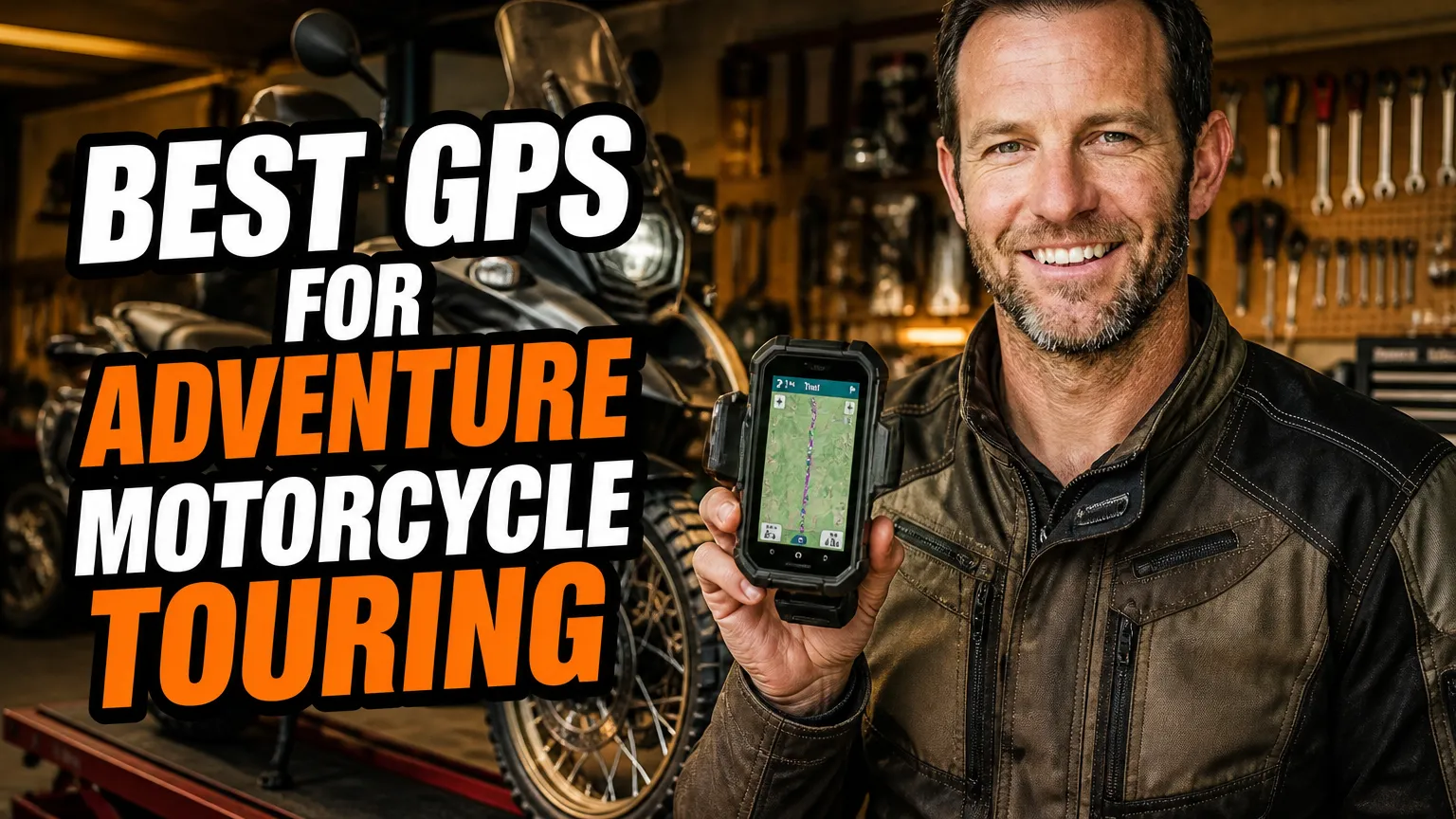
I still remember the moment it clicked. I was somewhere above a Spanish village on a gravel track that my paper map insisted did not exist, watching the light drain out of the sky and my phone battery drain out of the single bar it had left. That ride ended fine, but it ended with me buying my first proper motorcycle GPS the following week.
Since then I’ve toured with most of the major units on the market. I’ve baked screens in Andalusian heat, drowned mounts in Icelandic rain, and cursed more than one route planner for sending me down what turned out to be a goat track. Along the way I’ve figured out what actually matters when you’re navigating an adventure bike over long distances, and which devices are worth the money.
Below is my honest list of the best GPS options for adventure motorcycle touring, based on real miles rather than spec sheets.
- My overall pick is the Garmin zumo XT2: bright 6 inch screen, built in Group Ride Radio, and proper IPX7 waterproofing.
- The Garmin zumo XT is still the best value if you want a proven unit for around $350 to $400.
- For serious off road work, the Garmin Tread Overland Edition or a DMD2 tablet rig beats everything else.
- Riders who want CarPlay on a budget should look at the Chigee AIO-5 Play or the Carpuride W702.
- If you want satellite SOS built in, go with the Garmin Montana 700i.
How I Judge an Adventure Motorcycle GPS
Before I get into the list, here’s what I actually care about after a few hundred thousand kilometres in the saddle. Screen brightness tops my list, because a dim display is useless at noon on a Greek mountain road with the sun directly overhead.
Second is glove friendly touch. I ride with thick winter gloves for half the year, and if a screen can’t handle a gloved finger, it’s a deal breaker. I want to be able to pan a map at 100 km/h without taking my eyes off the road for long.
Third is waterproofing. Not “splash resistant”, but properly sealed. I’ve ridden through multi hour rainstorms in Norway and I don’t want to be pulling a device off the bars to stuff it in my jacket.
Finally, route planning flexibility. I plan tracks in software at night, import them in the morning, and I want the unit to follow them exactly instead of “improving” my route with a shortcut through a field.
1. Garmin zumo XT2 — My Overall Pick
If I had to ride one unit for the rest of my life, the Garmin zumo XT2 is what I’d bolt to my bars. The 6 inch display runs at 1280×720 and is genuinely readable in direct sunlight, which is the single biggest difference between a good touring GPS and a frustrating one.
It’s fully IPX7 waterproof, so rain doesn’t bother it at all. The touchscreen works with gloves, and the whole interface is designed for riders rather than hikers, which I appreciate more every year.
Why Group Ride Radio Matters
Group Ride Radio is built into the zumo XT2, and it’s the feature I didn’t know I needed until I used it. You can see your riding buddies on the map and track their position without any cell coverage at all, which is enormous when you’re touring in places with no signal.
Adventurous Routing is the other headline feature. It deliberately prioritises twisty, hilly roads over the fastest route, and I’ve discovered some genuinely brilliant passes because of it. You can dial the curvy preference up or down depending on how much of a detour you’re happy with.
Pricing sits around $600, which is a serious investment, but I’ve had mine through two full seasons of abuse with zero complaints.
2. Garmin zumo XT — The Best Value Option
Before the XT2 arrived, the Garmin zumo XT was the default answer for adventure riders, and it still earns its place. You get the same 5.5 inch glove friendly screen and the same IPX7 sealing, just with a slightly older processor and no Group Ride Radio.
For most riders, that trade off is worth it. I regularly see the zumo XT for around $350 to $400, which is roughly half the price of the XT2, and it does everything a touring rider actually needs.
The mount is rock solid, the powered cradle keeps the battery topped up from the bike, and the Garmin Drive app handles route transfers from your phone without drama. I’ve used one on a two week trip through the Alps and never once felt like I was missing anything.
If you’re on a budget and you want a device that will simply work, buy this one and put the savings towards fuel.
3. Garmin Tread Overland Edition — Best for Group Rides and Dirt
This is the unit I’d choose if my touring involved a lot of unsealed roads and remote tracks. The Garmin Tread Overland Edition has an 8 inch display, an IP67 rating, and comes with Group Ride Radio included, along with a proper external antenna.
The map package is the real difference. It ships with topographic mapping and access to BirdsEye Satellite Imagery, so you can see whether that “road” on the map is actually a road or just a suggestion. It also plays nicely with Garmin PowerSwitch if you want to control accessories from the screen.
Where It Falls Short
It’s big. On a narrow adventure bike with a small fairing, that 8 inch screen dominates the cockpit in a way that takes some getting used to. It’s also expensive, typically over $1,000.
One thing to know: satellite messaging isn’t built in. I pair mine with an inReach Mini 2 for SOS and messaging when I’m riding well beyond civilisation. That pairing gives me the safety net without paying for a Montana or GPSMAP on top.
4. BMW Motorrad Navigator VI — Best for GS Owners
If you ride a BMW with the navigation preparation and the Multi-Controller wheel on the left bar, the BMW Motorrad Navigator VI is the only unit that feels properly integrated. Garmin builds it for BMW, and the difference is that you can zoom, pan, and scroll through menus using the wheel instead of poking at a screen with gloves on.
It has a 5 inch display, IPX7 sealing, and a locking powered cradle that mounts straight to the factory nav prep. That locking mount is a genuine security benefit when you stop for lunch in a city.
The downside is the price. Expect to pay around $800, and it only makes sense if you own a compatible BMW. The interface also feels dated compared to the zumo XT2, and BMW’s newer ConnectedRide Navigator exists for riders who want something fresher. But for GS riders who love the wheel integration, nothing else comes close.
5. Chigee AIO-5 Play — Best CarPlay and Android Auto Screen
Not everyone wants to learn a proprietary Garmin interface, and that’s exactly the gap the Chigee AIO-5 Play fills. It’s a compact screen that runs wireless CarPlay or Android Auto, so you’re using the same navigation apps you already trust on your phone.
I like it because it keeps my phone in my pocket and safe from vibration, while giving me a proper IP67 rated display that shrugs off rain. It also supports tyre pressure sensors and, on BMW bikes, the wonder wheel, which is a nice touch.
Here’s the catch I always flag to friends: it uses your phone for GPS, so you must download offline maps before you lose signal. If you’re touring through remote areas with patchy coverage, that’s a real planning step, not an optional one.
At roughly $300, it’s a sensible middle ground between a phone mount and a full dedicated unit.
6. Carpuride W702 — Best Budget CarPlay Screen
When I want CarPlay on a tight budget, the Carpuride W702 is the unit I recommend. It’s a 7 inch display with wireless CarPlay and Android Auto, a sunshade to keep glare under control, and a water resistant housing that has survived everything I’ve thrown at it.
The screen is bright enough for daytime riding, and the handlebar mount is simple to fit. At around $200, it’s the cheapest way to get a modern, familiar interface onto your adventure bike.
What you give up is refinement. The build quality isn’t in the same league as a Garmin, the touch response isn’t quite as crisp with heavy gloves, and like the Chigee, it depends on your phone for navigation and offline maps. For a rider who mostly tours on sealed roads and wants to spend the money on fuel instead, it’s a very sensible call.
7. TomTom Rider 550 — Best for Winding Road Route Planning
The TomTom Rider 550 has a loyal following among riders who care more about the quality of the road than the destination. Its Winding Roads feature does a genuinely excellent job of stringing together entertaining routes, and the MyDrive route planner is one of the nicest to use on a laptop.
It’s a 4.3 inch screen, IPX7 rated, glove friendly, and it comes with a RAM mount and powered cradle in the box. Lifetime world maps are included, and GPX import works reliably.
My honest caveat is that the hardware feels old now. TomTom hasn’t refreshed it in years, the screen is noticeably smaller than the Garmin competition, and availability is patchy. I still recommend it to riders who plan routes obsessively and want a device built around that, but I’d check stock carefully before committing.
8. Garmin Montana 700i — Best Multi-Sport GPS with Satellite SOS
The Garmin Montana 700i is the device I reach for when the trip involves hiking, off bike exploring, or genuinely remote terrain. It’s a 5 inch glove friendly unit with an IPX7 and MIL-STD-810 rugged build, plus an 8 megapixel camera for documenting the good bits.
inReach: The Real Reason I Carry It
The 700i has inReach satellite technology built in, which means two way messaging, location tracking, and emergency SOS anywhere on the planet. That alone justifies the price for anyone riding solo in remote areas. You also get TopoActive maps, multi constellation GPS, and up to around 18 hours of GPS use per charge.
It’s not a dedicated motorcycle unit, so you’ll want Garmin’s powered motorcycle mount kit for the bars. Expect to pay around $700. If you want something more pocket sized with the same satellite features, the Garmin GPSMAP 67i is the alternative I’d look at.
9. DMD2 with the DMD-T865X Tablet — Best for Rally Style Off Road
This is the setup I’d choose for hardcore off road navigation, and it’s what a lot of rally riders actually use. DMD2 is an Android app by Thork Racing, and the DMD-T865X is the rugged 8 inch tablet they sell with it preloaded.
What makes it special is the roadbook and track handling. You can build long GPX routes, follow them with rally style roadbook navigation, and run full offline mapping without any reliance on phone signal or a manufacturer’s ecosystem. Trip meters, altitude, and heading data are all on screen at once.
Why Rally Riders Swear By It
Because it’s Android, you can run whatever mapping you like alongside it. That flexibility is exactly what you lose with a closed system, and for riders navigating deserts or mountains it’s worth the extra complexity.
The downside is the learning curve and the cost. A DMD-T865X bundle runs around $900, and you’ll spend a few evenings setting it up. I’d only go this route if off road navigation is the main event rather than an occasional detour.
10. Beeline Moto II — Best Minimalist Navigation
Sometimes I don’t want a giant screen glowing in front of me. The Beeline Moto II is a small circular unit that gives you a simple arrow pointing towards your next turn, and honestly, it changed how I ride.
You plan routes in the Beeline app, including GPX imports, then follow the arrow. There are no maps to stare at, so I keep my eyes on the road and enjoy the ride more. It’s IP67 rated, charges over USB-C, and the battery lasts for multiple riding days per charge.
At around $250 it’s cheaper than most dedicated units, and the handlebar mounts are neat and unobtrusive. The trade off is obvious: no topographic maps, no Group Ride Radio, and no satellite messaging. For day rides and relaxed touring on known roads, though, it’s my favourite thing on the bars.
What I’d Actually Buy
If you want one answer, it’s the Garmin zumo XT2. It’s bright, waterproof, glove friendly, and the Group Ride Radio means I never lose my friends on a group tour. That combination is hard to beat.
If the budget is tighter, the Garmin zumo XT delivers ninety percent of the experience for half the money, and I’d happily ride one across a continent tomorrow. If your touring leans heavily off road, stretch to the Garmin Tread Overland Edition or build a DMD2 setup.
Whatever you choose, buy it before your next big trip, not after. Learning a new navigation system on a wet mountain pass at dusk is a lesson I’ve already learned for you.
Frequently Asked Questions
Do I really need a dedicated motorcycle GPS instead of my phone?
In my experience, phones overheat in direct sun, their vibration can kill camera stabilizers, and touchscreens usually stop working with gloves on. A dedicated unit like the Garmin zumo XT2 is waterproof, glove friendly, and runs on bike power, so it just works when the weather turns ugly.
Which GPS is best for off-road adventure touring?
For pure off-road and rally style riding, the Garmin Tread Overland Edition and a DMD2 tablet setup are the two I trust most. Both handle GPX tracks, topographic maps, and offline navigation without needing any cell signal.
Is the older Garmin zumo XT still worth buying?
Absolutely. The Garmin zumo XT is my value pick. It has the same 5.5 inch glove friendly screen, full IPX7 waterproofing, and Adventurous Routing, just without Group Ride Radio and the newer processor.
Can any of these devices call for help in an emergency?
The Garmin Montana 700i and GPSMAP 67i have inReach satellite technology built in for SOS and two way messaging. Every other unit here can pair with an inReach Mini 2 over Bluetooth for the same safety net.

Related Articles

6 Best Motorcycle Phone Mounts That Keep Your Phone Charged on the Road
Compare six dependable motorcycle phone mounts with wireless or USB charging, including fit, power wiring, vibration protection, weather resistance, and…
Jake Miller
10 min read

5 Best Motorcycle Phone Mounts for Naked Bikes and Open-Cockpit Riding
I compare secure, vibration-conscious phone mounts for naked and touring bikes, with fit notes, real trade-offs, and setup tips for…
Jake Miller
11 min read

7 Best Phone Mounts for Sport Bikes: Secure, Vibration-Smart Picks
Compare secure phone mounts for sport bikes, including clip-on fit, vibration control, case systems, prices, and my practical picks for…
Jake Miller
12 min read