
8 Best Garmin GPS Units for Motorcycle Riders, Ridden and Ranked
 Jake Miller
11 min read
Jake Miller
11 min read
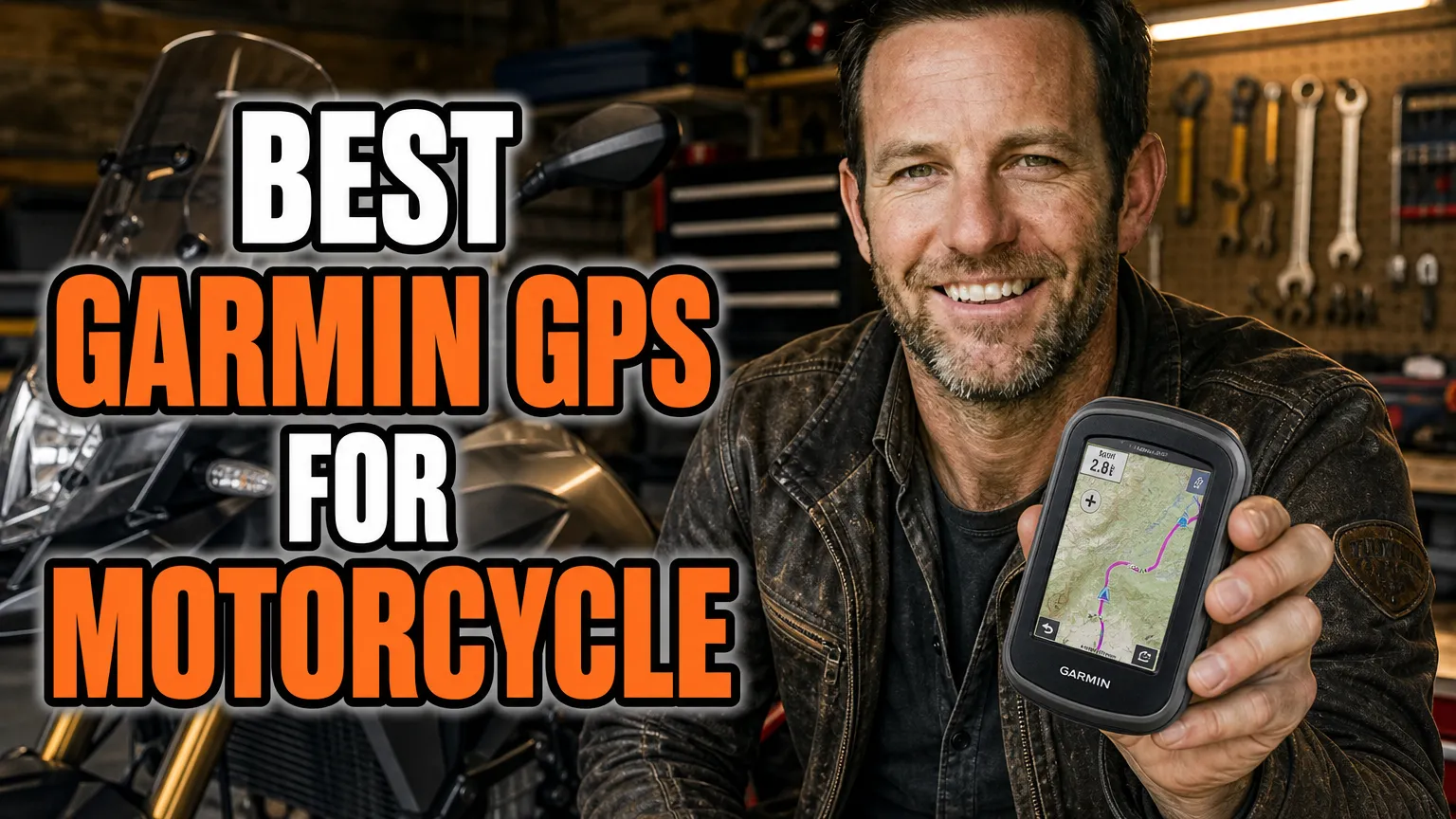
I have been bolting a GPS to my handlebars for the better part of a decade. I started with a phone in a waterproof case, killed one camera to vibration, and eventually admitted that a dedicated unit is simply the right tool for the job. Since then I have run Garmin hardware through rain, dust, baking desert heat and one very memorable hailstorm in the Rockies.
What I have learned is that Garmin’s motorcycle lineup is smaller than most riders assume, and the gaps between the models matter far more than the spec sheets suggest. A 4.3 inch screen is fine for commuting and genuinely frustrating when you are planning a route at a fuel stop. A 6 inch screen is wonderful until you try to squeeze it behind a small windscreen.
So this is my honest, ridden and ranked list. Every unit below is a real, currently available Garmin product that I would actually fit to my own bike. I have also been blunt about the ones that are better suited to a chase truck than to handlebars.
- The Garmin zūmo XT2 is my overall pick for street and touring riders who want one do-everything unit.
- The zūmo XT is the smarter buy for most people, since it does 90 percent of the XT2 job for less money.
- Off-road and dual-sport riders should look at the Garmin Tread for trail maps and public land boundaries.
- The zūmo 396 LMT-S is the best budget option if you mainly need turn-by-turn and lifetime maps.
- If you ride far from cell coverage, the Montana 700i adds inReach satellite messaging to a rugged handheld.
1. Garmin zūmo XT2 — Best Overall Motorcycle GPS
If I could only own one Garmin for the rest of my riding life, the zūmo XT2 is the one I would keep. It has a 6.0 inch glove-friendly touchscreen, an IPX7 waterproof and dust-sealed body, and a build that shrugs off the vibration that kills lesser electronics.
Garmin lists roughly 6 hours of battery life, which sounds modest until you realise you will almost always have it wired into the bike anyway. Pricing sits around $600, and it does fluctuate with sales, so it pays to watch for a deal.
Why I Ride With It
The screen is the headline. It is bright enough to read in direct midday sun, and it responds through winter gloves without me stabbing at it like a woodpecker. On a long tour that alone is worth the money.
Garmin’s Adventurous Routing is the feature I use most. It deliberately bends a route toward twisty roads and elevation change, and while it occasionally sends me down a goat track, it has also produced some of my best riding days. I can also import GPX files, build multi-day trips on the device, and push updates over Wi-Fi instead of wrestling with a cable.
Group Ride Radio support lets me track up to 20 riders on a map, which is a genuine game changer on group tours. It requires the radio accessory, so budget for that separately if you ride in a pack.
Where It Falls Short
It is expensive, and the 6 inch body is a lot of real estate on a small naked bike or a tight cockpit behind a short screen. The battery is also nothing special, so long days off the charger are not really on the table.
2. Garmin zūmo XT — Best Value for Most Riders
The zūmo XT is the unit I recommend to friends who ask me what to buy without a specific brief. It runs a 5.5 inch display, keeps the IPX7 sealing, and covers the same core ground as the XT2 for meaningfully less money.
Street pricing usually lands between $400 and $500, and it regularly dips lower on promotion. For a rider who mostly wants reliable navigation, weatherproofing and glove-friendly touch, that is the sweet spot.
Why I Ride With It
Adventurous Routing is here, as is GPX import, Bluetooth hands-free calling, music control and rider alerts for sharp curves and speed changes. Wi-Fi map updates mean I never have to think about map files again.
The slightly smaller screen is genuinely easier to mount on a crowded cockpit, and I find the 5.5 inch size a better match for adventure bikes with narrow bars.
Where It Falls Short
You give up Group Ride Radio, Garmin PowerSwitch integration and the newer processor. If neither of those first two features matters to you, saving the cash is the rational call.
3. Garmin Tread — Best for Off-Road and Dual-Sport Riding
The Garmin Tread is built for powersports rather than pure street touring, and that shows in the best possible way. It has a 5.5 inch display, IPX7 sealing, roughly 6 hours of battery, and a map set tuned for dirt.
Pricing is around $600. If your idea of a Saturday involves Forest Service roads, two-track and a bit of getting lost on purpose, this is the unit I would hand you.
Why I Ride With It
It ships with off-road trail maps, public land boundaries and USFS road data, which is exactly the information you need when the tarmac runs out and you want to know whether you are allowed to be there. Group Ride Radio support is included for tracking riding buddies.
I have used it on a dual-sport through BLM land and found the land boundary layer genuinely useful rather than decorative. It also handles GPX tracks from other riders cleanly.
Where It Falls Short
Its on-road routing is less polished than the zūmo line, and the interface is trail-first. If you are 95 percent tarmac, buy a zūmo instead.
4. Garmin Montana 700i — Best Rugged Handheld with Satellite Messaging
The Montana 700i is the unit I take when I am riding somewhere with no cell signal at all. It has a 5 inch display, IPX7 sealing, a rugged chassis tested to MIL-STD-810, and up to 18 hours of battery in GPS mode.
The headline feature is built-in inReach satellite technology, which means two-way messaging and an SOS button that works anywhere on the planet. Expect to pay around $600.
Why I Ride With It
Multi-band GNSS support keeps a fix in canyons and dense tree cover where cheaper units lose their minds. The battery life is the best in this list by a wide margin, which matters when you are camping and cannot recharge every night.
I also like that it doubles as a hiking handheld. I can leave the bike at camp and take the same device up a trail without losing my navigation setup.
Where It Falls Short
It is not a purpose-built motorcycle unit, so you will need to buy a powered mount and a RAM arm separately. On-road turn-by-turn is competent but not as refined as the zūmo experience.
5. Garmin zūmo 396 LMT-S — Best Budget Motorcycle GPS
The zūmo 396 LMT-S is the cheapest way I would still recommend getting into proper motorcycle navigation. It has a 4.3 inch display, IPX7 waterproofing, lifetime maps and traffic, and roughly 4 hours of battery.
Street prices commonly sit between $200 and $300, which makes it the obvious entry point for a rider on a tight budget.
Why I Ride With It
It does the fundamentals well. Turn-by-turn navigation is clear, Bluetooth hands-free calling works, and the lifetime map updates mean you are not paying a subscription just to stay current.
For a commuter or a weekend rider who wants a permanently mounted unit that survives rain, this is genuinely all you need.
Where It Falls Short
The 4.3 inch screen feels small the moment you start planning routes on the device rather than at home. There is no Wi-Fi, so updates mean plugging in, and the processor is noticeably slower than the newer units.
6. Garmin Montana 750i — Best Handheld for Tourers Who Shoot Photos
The Montana 750i takes everything I like about the 700i and adds an 8 megapixel autofocus camera. It keeps the 5 inch display, MIL-STD-810 ruggedness, IPX7 sealing and the same inReach satellite messaging.
Pricing is higher, generally around $700. For a rider who documents trips and does not want to dig a phone out of a jacket pocket with wet gloves, that premium can make sense.
Why I Ride With It
Having the camera built into the navigator means every photo is automatically geotagged, which is brilliant when you are trying to remember where that perfect overlook actually was. Battery life is the same excellent 18 hours.
The inReach pairing means my partner can track my position on a long solo ride without me doing anything more than leaving the device on.
Where It Falls Short
The camera is good rather than great, and the phone in your pocket will beat it in low light. The price gap over the 700i is also hard to justify if you rarely take photos.
7. Garmin GPSMAP 67i — Best Compact Backup for Dual-Sport Riders
The GPSMAP 67i is the smallest unit here, with a 3 inch display and a very purposeful, button-driven design. It keeps IPX7 sealing and inReach satellite messaging, and it is priced around $600.
Its battery numbers are absurd in the best way: Garmin rates it at up to 35 hours in standard GPS mode and far longer in expedition mode.
Why I Ride With It
Physical buttons mean it works perfectly with heavy gloves in freezing rain, which is more than I can say for any touchscreen. It is also small enough to live in a tank bag as a backup navigator while a bigger unit handles the main routing.
Multi-band GNSS makes it impressively accurate under tree cover, and the expedition mode stretches battery life into multi-day territory.
Where It Falls Short
A 3 inch screen is not a primary navigation display for most riders. I treat this as a companion device and an emergency communicator, not the main event.
8. Garmin Tread – Overland Edition — Best Big Screen for Overland Riders
The Tread – Overland Edition is the outlier on this list, and I want to be honest about that. It has an 8 inch display, IPX7 sealing and a price around $1,000, and it is genuinely enormous for handlebars.
I include it because a lot of motorcycle riders also run a truck or 4×4 for camping and bike hauling, and this unit can move between both.
Why I Ride With It
It comes loaded with topographic maps, public land boundaries, USFS roads and iOverlander POI data, which is a phenomenal package for overland travel. Group Ride Radio support is included, and it pairs with Garmin’s inReach devices and PowerSwitch accessory controller.
Where It Falls Short
An 8 inch screen on a motorcycle is a stretch, and it needs external power. In my experience it belongs in the chase truck or on a big adventure rig, not on a set of narrow bars.
What I Look For in a Motorcycle GPS
Screen size and glove compatibility
I would rather have a slightly smaller screen that responds reliably through gloves than a huge one that fights me at every junction. Anything under 4 inches starts to feel cramped for route planning.
Mounting and power
A hardwired, vibration-resistant mount matters more than most buyers expect. Garmin’s powered motorcycle cradles keep the unit charged and hold it steady over rough surfaces.
Maps, updates and offline reliability
Preloaded maps plus Wi-Fi updating is the combination I want. Everything here navigates without a phone signal, because satellite positioning does not depend on cell towers.
Satellite messaging
If I ride solo in remote country, inReach capability moves from nice-to-have to essential. The Montana 700i, Montana 750i and GPSMAP 67i all deliver it.
My Final Take
If you want one answer: the Garmin zūmo XT2 is the best motorcycle GPS I have used, and the zūmo XT is the one I tell most riders to buy. For dirt-focused riding, the Tread earns its place, and for riders who leave cell coverage behind, the Montana 700i is the unit I trust with my safety.
Buy for the riding you actually do, not the riding you daydream about, and you will end up with a Garmin you keep for years. 😊
Frequently Asked Questions
Is there a Garmin GPS made specifically for motorcycles?
Yes. The zūmo line is built for motorcycles, with glove-friendly screens, weather sealing and vibration-resistant mounts.
Do I need a phone signal for a Garmin motorcycle GPS to work?
No. Maps are stored on the device and positioning comes from GPS satellites, so navigation works where there is no cell coverage. A phone link is only needed for live traffic, weather and messages.
What is the best budget Garmin for a motorcycle?
The zūmo 396 LMT-S is my budget pick. It has a 4.3 inch screen, lifetime maps and a waterproof body for around $200 to $300.
Can I use a Garmin car GPS on my motorcycle?
I would not. Car units are not sealed against rain and their screens often will not respond through gloves, which is a real problem at speed.

Related Articles

6 Best Motorcycle Phone Mounts That Keep Your Phone Charged on the Road
Compare six dependable motorcycle phone mounts with wireless or USB charging, including fit, power wiring, vibration protection, weather resistance, and…
Jake Miller
10 min read

5 Best Motorcycle Phone Mounts for Naked Bikes and Open-Cockpit Riding
I compare secure, vibration-conscious phone mounts for naked and touring bikes, with fit notes, real trade-offs, and setup tips for…
Jake Miller
11 min read

7 Best Phone Mounts for Sport Bikes: Secure, Vibration-Smart Picks
Compare secure phone mounts for sport bikes, including clip-on fit, vibration control, case systems, prices, and my practical picks for…
Jake Miller
12 min read