
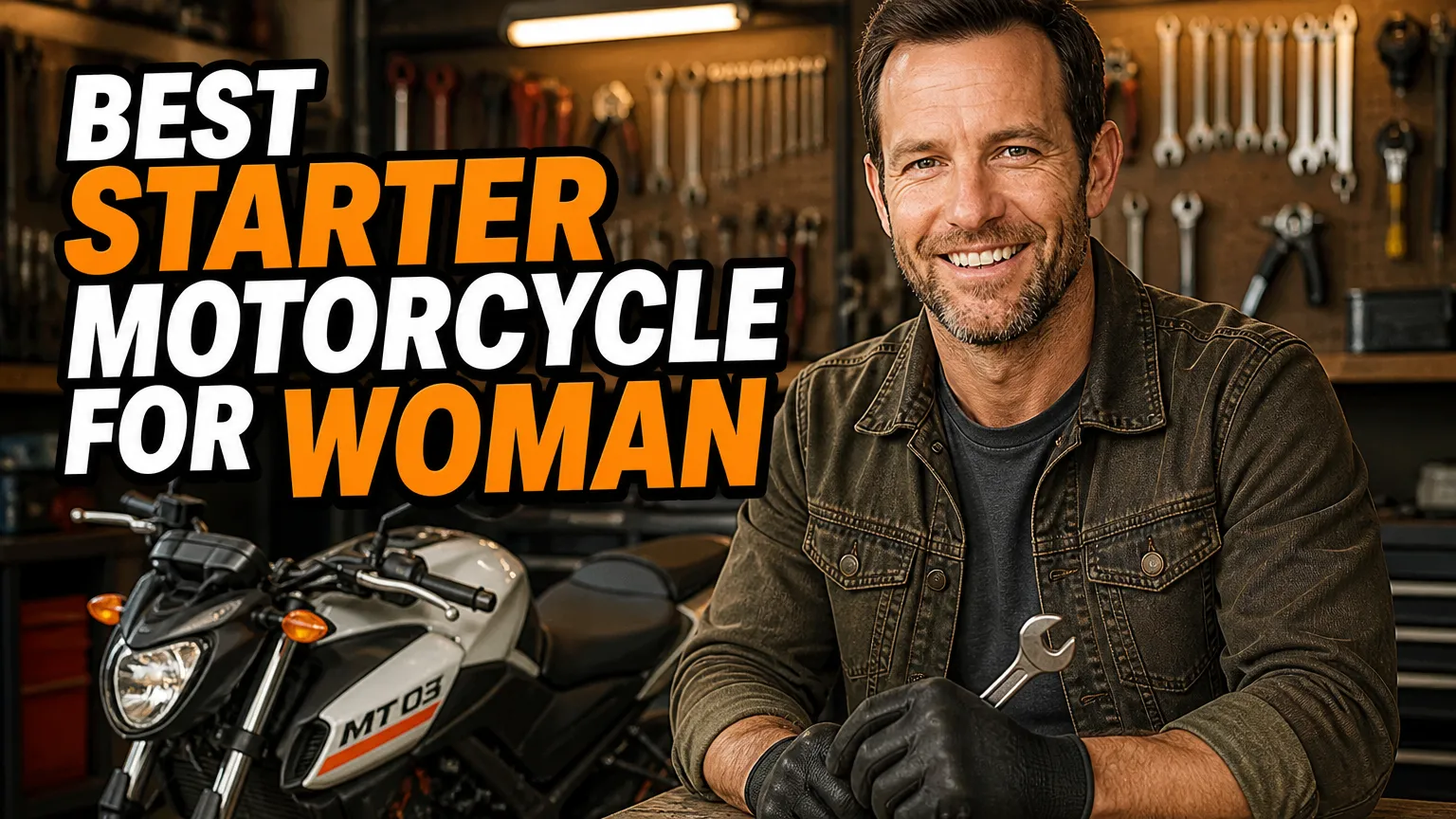
When I help someone choose their first motorcycle, I look beyond engine size or styling. A manageable weight, predictable power, comfortable controls, and a riding position that suits your body can make learning far less intimidating. There isn’t one perfect best starter motorcycle for woman; there’s the bike that fits you and the riding you actually want to do.
I’ve put together eight real models I’d consider for a new rider, from a tiny city runabout to beginner-friendly twins with more highway ability. Prices and availability vary by location and model year, so I treat the figures below as general guidance and recommend checking current local listings.
- I’d start with fit, confidence at a stop, and manageable weight rather than choosing by engine size alone.
- The Honda Rebel 300 is my first look for a low seat and approachable cruiser feel.
- The Honda Grom suits short urban trips, while the Kawasaki Ninja 500 and Eliminator 450 offer more room to grow.
- I’d sit on several bikes, try the controls, and take a beginner rider course before buying.
1. Honda Rebel 300: My Pick for an Easy, Low Seat
I often point new riders toward the Honda Rebel 300 when they want a relaxed riding position and a seat that feels close to the ground. Its seat height is about 27.2 inches, and that can help me feel more settled when stopping, especially if I’m still building balance and low-speed confidence.
The Rebel 300 uses a 286cc single-cylinder engine and has a low-slung cruiser layout. Depending on the year and ABS equipment, its curb weight is around the mid-360-pound range. That isn’t featherlight, but the low center of gravity can make it feel easier to steady than a taller bike of similar weight.
What I like, and what I’d consider
I like the Rebel’s simple controls, approachable power delivery, and wide availability of accessories. It’s a sensible choice for commuting, neighborhood rides, and learning smooth clutch control. The engine is modest, though, so I’d consider whether my regular routes include long stretches of fast highway before choosing it.
I also remind short riders that seat height is only part of the fit equation. Bar reach, footpeg position, and the bike’s shape where the seat meets the tank all matter. If height is a major concern, I’d compare advice in this guide to the best motorcycle for 52 woman and try the Rebel in person before deciding.
2. Honda Grom: My Choice for Light, Local Riding
When I want a motorcycle that feels playful and unintimidating around town, I consider the Honda Grom. Its 124cc engine, roughly 30-inch seat height, and very low curb weight of about 223 pounds make it easier for me to maneuver in a driveway or parking lot than most full-size motorcycles.
I see the Grom as a great way to learn basic motorcycle habits: looking through turns, shifting, braking smoothly, and placing the bike accurately at low speeds. Its small size can make practice feel less stressful, and the upright posture is comfortable for short rides.
Where the Grom works best
I wouldn’t choose the Grom as my only bike if I regularly needed to ride on high-speed roads or travel long distances. It has limited power and a small footprint, so I’d plan around slower urban routes. If you’re curious about the limits of a small-displacement bike, I’d read this explanation of how fast can a 150cc motorcycle go unleashing top speeds.
For a first motorcycle that I can easily push around and enjoy on local streets, the Grom is hard to ignore. I’d make sure its compact proportions feel comfortable rather than cramped, especially if I’m tall or expect to carry a passenger.
3. Royal Enfield Hunter 350: My Relaxed, Retro-Style Option
I’d look at the Royal Enfield Hunter 350 if I wanted a friendly standard motorcycle with classic styling and a calm pace. Its 349cc single-cylinder engine is tuned for accessible everyday riding, and the upright seating position gives me a clear view of traffic without the forward lean of a sport bike.
The Hunter’s seat is about 31 inches high, and its curb weight is close to 400 pounds, depending on specification. That makes it heavier than the Grom or Rebel 300, so I’d pay attention to how it feels when stationary. A low seat can help, but it doesn’t erase the effort of moving a heavier bike around on a slope.
Why I’d consider it for everyday use
I like the Hunter 350’s straightforward character for commuting and relaxed back-road rides. Its engine is not designed to deliver aggressive acceleration, which can help a new rider focus on smooth inputs. I’d still check the local dealer network and parts support near me, since service access is part of a practical first-bike decision.
For shorter riders, I’d compare the seat shape and reach as carefully as the published seat-height number. If you’re around 5 feet 3 inches tall, I’d use the fit discussion in this best motorcycle for 53 woman guide as another starting point, then sit on the Hunter yourself.
4. Yamaha MT-03: My Upright, Nimble Street Bike
The Yamaha MT-03 is one of the bikes I’d consider if I wanted a light-feeling standard with a smooth parallel-twin engine. Its 321cc engine provides more flexibility than a tiny city bike, while the upright handlebar and relatively compact chassis make it approachable for everyday riding and beginner practice.
The seat is about 30.7 inches high, and the wet weight is roughly 373 pounds. That’s not the lowest seat in this list, so I’d check whether I can plant one foot securely and reach the controls without stretching. I like that the MT-03 feels sporty without requiring the committed crouch of a full sport motorcycle.
My take on its power and versatility
I find a 300-class twin appealing because it can be useful beyond slow neighborhood streets while still feeling manageable for a learner. The MT-03 is a good candidate for commuting and curvy local roads, though I’d assess wind protection and comfort if my rides are long.
Engine displacement alone doesn’t tell me whether a motorcycle will suit a beginner. I’d compare throttle response, gearing, weight, and my own route needs, using this guide to the best motorcycle engine size for beginners to understand the trade-offs.
5. Kawasaki Eliminator 450: My Cruiser for a Bit More Road Reach
I’d put the Kawasaki Eliminator 450 on my shortlist if I liked cruiser styling but wanted more engine than the Rebel 300 offers. Its 451cc parallel-twin engine gives it a stronger reserve for faster roads, while the low seat, about 28.9 inches, helps me feel connected to the ground at stops.
The Eliminator weighs around 390 pounds curb, depending on version. I appreciate that Kawasaki has kept the layout approachable, but I would not assume that every low-seat bike is automatically easy to handle. I’d walk it around, test the bar reach, and see how the weight feels when I lean it slightly while stationary.
Who I think it suits
I’d choose the Eliminator over a smaller bike if I expected to combine city riding with occasional highway trips. Its parallel twin offers more flexibility than a small single, but I’d still practice careful throttle control and low-speed turns before riding in heavy traffic.
For me, the Eliminator is a useful middle ground: a low cruiser stance without giving up as much passing ability as the smallest options. I’d compare its price and insurance costs with the Rebel, since a lower purchase price isn’t the only measure of affordability.
6. Kawasaki Ninja 500: My Beginner Sport Bike with Room to Grow
If I wanted sport-bike looks and a fuller fairing, I’d consider the Kawasaki Ninja 500. It shares a 451cc parallel-twin platform with the Eliminator, but the riding position and styling are more sport-oriented. Its seat is around 30.9 inches, and the curb weight is roughly 377 pounds, depending on trim and ABS equipment.
I like that the Ninja 500 can serve as a first bike without feeling like a tiny machine I’ll outgrow immediately. Its engine offers usable power for commuting and some highway riding, but I’d still treat it as a real motorcycle, not an automatic upgrade from a beginner course. Smoothness and patience matter more than chasing acceleration.
Fit and riding position matter
I’d pay particular attention to how my wrists, shoulders, and knees feel on the Ninja. The posture is less upright than on the MT-03, and comfort varies with rider proportions. I’d also check whether the windscreen and fairing suit my height, because wind can feel very different depending on where it hits my helmet.
Before I bought one, I’d arrange a test sit and, if possible, a supervised test ride. I’d also research the typical performance of this class; this article on how fast can a 300cc motorcycle go offers a useful comparison point, even though the Ninja 500 has a larger engine.
7. Triumph Speed 400: My Premium-feeling Standard
The Triumph Speed 400 is a motorcycle I’d consider when I wanted modern features and classic roadster styling in one approachable package. It has a 398cc single-cylinder engine, a seat height of about 31 inches, and a wet weight around 398 pounds. I’d expect its manageable proportions to suit many riders, while still checking the actual feel rather than relying on specs.
I like the Speed 400’s upright riding position and the way its engine size gives it room for varied everyday use. Depending on model year and market, equipment can include features such as ABS, traction control, and a ride-by-wire throttle. I’d confirm the precise specification with a local dealer, since equipment can change between versions.
My practical buying notes
I’d consider the Speed 400 for someone who plans to commute, take weekend rides, and keep a first motorcycle for a while. It costs more than some small-displacement alternatives, and I’d include insurance, scheduled maintenance, protective gear, and dealer distance in my budget.
One thing I’d never compromise on is a comfortable reach to the bars and levers. I want to operate the clutch and front brake without tension, especially during slow practice. If the stock setup doesn’t feel quite right, I’d ask a qualified shop whether a lever adjustment or other ergonomic change is suitable.
8. BMW G 310 R: My Compact Premium Standard
I’d add the BMW G 310 R to my comparison list if I wanted a compact naked bike from an established manufacturer. It uses a 313cc single-cylinder engine and has a seat height around 30.9 inches. Its curb weight is approximately 364 pounds, making it lighter than several larger options here.
The G 310 R’s upright position appeals to me for city riding and ordinary commuting. Its single-cylinder layout keeps the package straightforward, while its power sits in a range many new riders can learn on. I’d check the current model-year specifications and local pricing, as BMW equipment and availability can differ by market.
What I’d weigh before buying
I’d compare the G 310 R closely with the Yamaha MT-03. The BMW’s single-cylinder engine has a different feel from Yamaha’s twin, and I’d choose based on the way each responds at low speed, not just a spec sheet. I’d also consider dealer access and routine service costs before deciding.
For me, this bike makes the most sense when its fit, styling, and ownership support all line up. If I were choosing a first motorcycle strictly for the lowest possible seat, I’d probably start with the Rebel or Eliminator. If I wanted a more upright standard, the G 310 R deserves a proper sit and comparison ride.
How I’d Choose Between These Beginner Bikes
I’d begin by listing where and how I plan to ride. A tiny bike like the Grom is a natural fit for short urban trips, while a Ninja 500 or Eliminator 450 may make more sense if my routes involve faster roads. The right choice is the one that matches my real riding, not an imagined future version of it.
Next, I’d test the fit on several motorcycles. I’d check whether I can operate the clutch and brake comfortably, turn the handlebars without reaching, and support the bike securely when stopped. I don’t need to put both feet flat on the ground, but I do want a reliable way to balance the bike that feels safe to me.
I’d budget for the whole experience
I’d set aside money for a certified beginner riding course, a properly fitted helmet, gloves, jacket, pants, and over-the-ankle boots. I’d also get an insurance quote before buying. A bike that looks affordable on a listing can become a very different purchase once I add gear, registration, maintenance, and insurance.
Finally, I’d choose a motorcycle I’m excited to practice on. A manageable bike that fits well can help me build skills steadily, but no model replaces training and good judgment. I’d take my time, compare real examples, and make sure the bike feels like something I want to ride every day.
Frequently Asked Questions
What is the best starter motorcycle for a woman?
I’d start by comparing fit, weight, and intended use. The Honda Rebel 300 is a strong first look for riders who want a low seat and approachable power.
What engine size should I choose as a new rider?
I’d choose an engine that feels manageable for your routes and experience. A 250cc to 500cc bike can work well, but weight, throttle response, and fit matter just as much.
Do I need to be able to put both feet flat on the ground?
No. I find it more useful to feel balanced and confident with one foot firmly planted. A test sit and practice with a trained instructor can help you judge fit.
Is a 300cc motorcycle suitable for highway riding?
Some 300cc motorcycles can handle highway speeds, but comfort and passing power vary by model, rider, and road conditions. I’d test one on the kind of route you plan to ride.

Related Articles

7 Beginner Motorcycles I’d Recommend for Shorter Women
Compare seven beginner motorcycles for shorter women, with seat heights, weight, prices, fit tips, and my picks for confident first…
 Jake Miller
10 min read
Jake Miller
10 min read

8 Roomy Motorcycles That Make a Great Fit for Tall Women
Compare eight roomy motorcycles for tall women, with seat heights, ergonomics, strengths, trade-offs, and fit tips to help you choose…
Jake Miller
11 min read

8 Beginner Motorcycles That Give Taller Riders More Room to Ride
Explore eight approachable motorcycles for taller riders, with comfort-focused fit notes, beginner-friendly handling, price guidance and important payload checks.
Jake Miller
14 min read