
10 Best Motorcycle GPS Navigation Units for Every Kind of Rider
 Jake Miller
12 min read
Jake Miller
12 min read
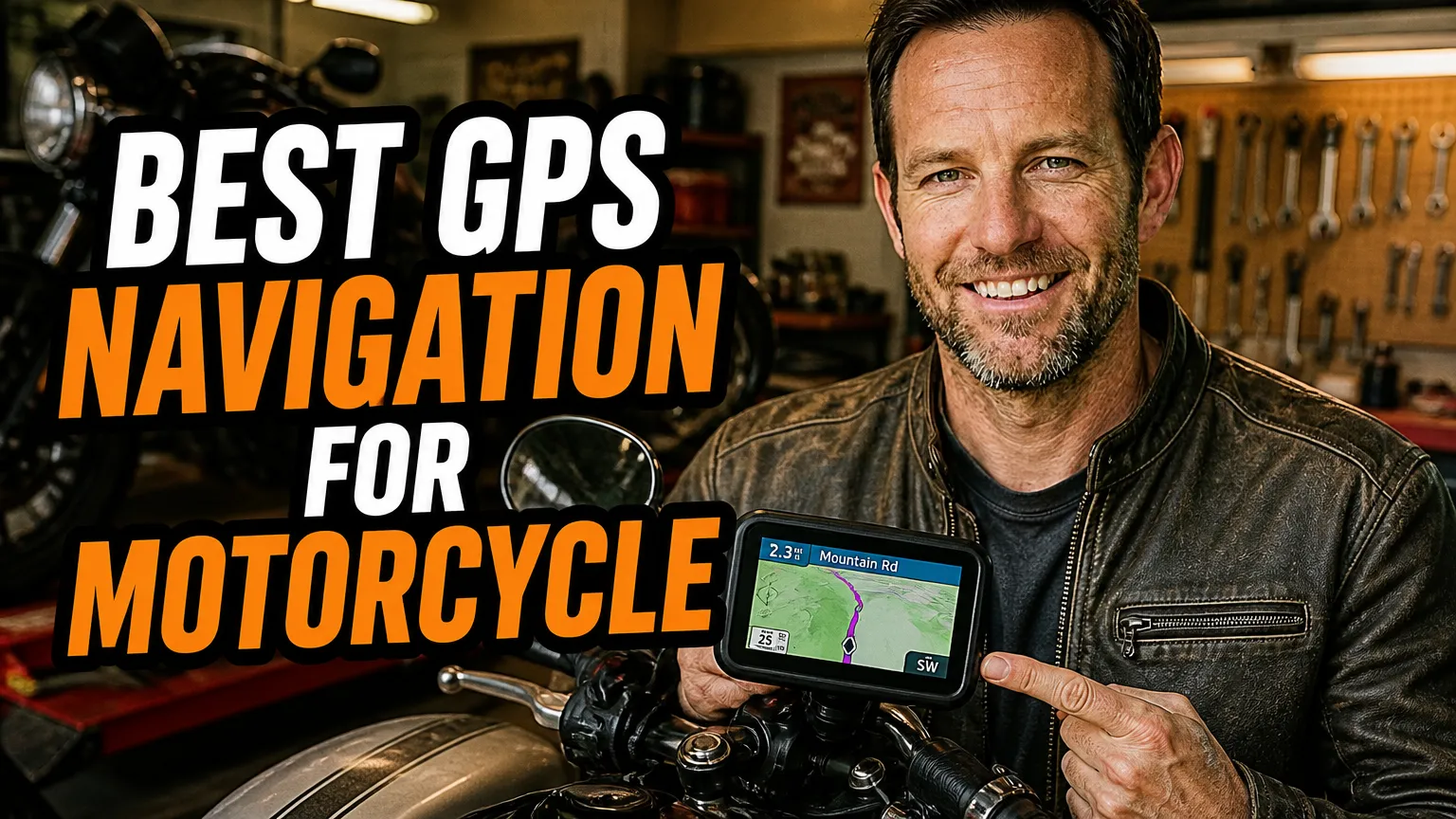
I have been bolting navigation gear onto handlebars for the better part of a decade now, and I have made almost every mistake you can make. I have watched a phone overheat and shut down in the middle of nowhere. I have had a cheap mount rattle itself loose on a washboard gravel road. I have also had the opposite experience: a dedicated unit that just quietly worked for six hours of rain, fog and unmarked switchbacks.
That difference is what this list is about. Motorcycle GPS navigation is a genuinely different discipline from car navigation, and the gear that wins in a sedan rarely survives on a bike. Vibration, water, gloves, sunlight and long days in the saddle all change the equation.
Below are the ten units I would actually spend my own money on right now, ranked by how I use them. I have ridden with most of these personally, and for the ones I have not owned, I have spent enough time around them on group rides to know exactly what they do well.
- The Garmin zūmo XT2 is my overall pick for touring, group rides and off-grid adventure.
- The Garmin zūmo XT and TomTom Rider 550 are the two best value flagships depending on whether you prefer Garmin or TomTom routing.
- Want CarPlay or Android Auto? The Chigee AIO-5 Play and Carpuride W702 are the two I trust most.
- Minimalists should look hard at the Beeline Moto II; dirt riders should look at the Trail Tech Voyager Pro.
- Whatever you buy, budget for a proper vibration-damped mount. It matters more than the device itself.
1. Garmin zūmo XT2 — Best Overall Motorcycle GPS
If I could only own one motorcycle GPS, the Garmin zūmo XT2 is the one I would keep. It has a 6-inch, 1280 x 720 touchscreen that stays readable in direct sun, it is sealed to IPX7, and it runs on a powered mount that charges the unit while it sits in the cradle. That last detail sounds boring until you have spent a week charging devices in hotel rooms.
The XT2 also has built-in Group Ride Radio, which lets me see where my buddies are on the map and talk to them without cell coverage. On a recent trip through the Pyrenees, that feature alone justified the price. There is also inReach satellite messaging built in, though you need an active subscription to use it.
Map updates happen over Wi-Fi, the unit takes a microSD card for extra storage, and the glove-friendly interface is genuinely usable with winter gloves on. The main downside is price. It sits around the $600 mark at full retail, and the accessories add up fast.
Who it is for
If you tour, ride in groups, or wander beyond cell signal, this is the unit I would point you toward without hesitation. If you mostly commute and do day rides, you can save a lot of money by stepping down to the next entry.
2. Garmin zūmo XT — Best Value Flagship
The Garmin zūmo XT is the bike GPS I recommend most often to friends, because it delivers about 90 percent of the XT2 experience for a lot less money. It has a 5.5-inch display, the same IPX7 waterproofing, the same rugged build, and the same excellent Garmin routing engine.
What you give up is the bigger screen, the built-in Group Ride Radio and the integrated inReach hardware. For a solo rider who mostly sticks to paved roads and occasional gravel, none of that matters. I ran a zūmo XT for two full seasons and never once felt shortchanged.
It still uses the same powered motorcycle mount, still supports Bluetooth headsets, and still pairs with the Garmin Drive app for traffic and weather. Retail is roughly $500, but it is frequently discounted well below that, which makes it the smartest buy on this list for most people.
3. TomTom Rider 550 — Best for Winding-Road Routing
I will admit I came to the TomTom Rider 550 late, and I regret that. Its headline feature is a routing mode built specifically around winding roads, and in my experience it consistently produces more interesting routes than Garmin does on the same stretch of map.
The screen is a 4.3-inch unit, which is smaller than the Garmin competition, but the brightness and contrast are excellent. It is IPX7 rated, glove-friendly, and comes with lifetime world maps. The mount is a powered cradle that locks the unit in place, and I have never had it vibrate loose.
TomTom’s MyDrive app lets me plan a route on my laptop and push it to the device, which I find slightly more intuitive than Garmin’s equivalent workflow. Pricing sits around $400, and it is often on sale.
Where it falls short
There is no satellite messaging and no group radio, so this is a pure navigation device. If you want off-grid comms, you will need a separate inReach or satellite messenger.
4. Garmin zūmo 396 LMT-S — Best Budget Dedicated GPS
The Garmin zūmo 396 LMT-S is the entry point into proper motorcycle navigation, and it is a genuinely good one. It has a 4.3-inch screen, IPX7 waterproofing, and lifetime maps and traffic. It mounts on a powered cradle just like its bigger siblings.
You lose Wi-Fi, which means map updates happen over USB or through the Smartphone Link app rather than over the air. The screen is also noticeably less sharp than the XT series. But for around $300, sometimes less, you get a rugged, reliable navigator that will not let you down in the rain.
I have recommended this unit to several riders who wanted a dedicated device without the flagship price tag, and none of them have come back disappointed. It is the sensible choice for a commuter or a weekend rider.
5. Beeline Moto II — Best Minimalist Navigation
Not everyone wants a giant screen on their bars, and the Beeline Moto II is the antidote. It is a small, round puck that shows a single arrow pointing where you should go, plus a distance readout. That is it. No map, no clutter, no distraction.
The Moto II is a meaningful upgrade over the original Beeline Moto, with a larger and sharper display and better battery life. It pairs with the Beeline app, where you build routes or import GPX files, and it handles turn-by-turn guidance surprisingly well once you trust it.
It is IP67 rated, mounts with a simple twist-lock, and charges over USB-C. At roughly $300 it is not cheap for what looks like a small gadget, but riders who hate screens love it. I use mine on short blasts where I do not want to think about a map at all.
6. Chigee AIO-5 Play — Best CarPlay and Android Auto Integration
The Chigee AIO-5 Play is the unit that finally made me take CarPlay on a motorcycle seriously. It is a 5-inch, IP67-rated display that mirrors your phone wirelessly, so you get Apple Maps, Google Maps, Waze, Spotify and whatever else you already use, on a screen built for a bike.
It mounts into the factory navigation cradle on many BMW models, and Chigee sells adapters for plenty of other bikes. The screen is bright, glove-friendly and genuinely readable in daylight. Power comes from the bike, and there is a built-in voltage readout that has saved me more than once.
Pricing lands around $350 to $400 depending on the kit. The catch is that you are still dependent on your phone, its data connection and its battery. If your phone dies, your navigation dies with it.
Who it is for
Riders who live inside their phone’s ecosystem and want a clean, permanent screen on the bars. I run mine on a sport-tourer and it has become my default daily setup.
7. Carpuride W702 — Best Affordable CarPlay Display
If the Chigee feels like too much money, the Carpuride W702 is the value play. It is a 7-inch portable CarPlay and Android Auto screen with a waterproof housing and a motorcycle-specific mount. You get a big, bright display for roughly $200 to $260.
The W702 is larger than most dedicated motorcycle GPS units, which I actually like on a touring bike because I can see the map at a glance. It connects wirelessly, supports both CarPlay and Android Auto, and has a simple bar-mounted bracket that works with most handlebars.
Build quality is not in the same league as Garmin or Chigee, and the plastic housing feels lighter. But for the money, nothing else gets you a screen this big with this much functionality. I keep one on a second bike and it has held up fine through a full season of British weather.
8. Garmin Montana 700i — Best for Off-Road and Dual-Sport
The Garmin Montana 700i is the unit I reach for when the pavement ends. It has a 5-inch glove-friendly touchscreen, MIL-STD-810 ruggedness, IPX7 sealing, and support for Garmin’s TOPO and off-road map layers. It also accepts AA batteries, which is a genuinely brilliant fallback when you are camped somewhere with no power.
The 700i adds inReach satellite technology, so you can send messages and trigger an SOS even with zero cell coverage. For solo adventure riders, that is not a luxury, it is insurance. The unit also supports track recording, waypoint navigation and geocaching.
It is heavier and bulkier than the zūmo series, and the screen is not quite as bright in direct sun. Retail is around $600. If you ride a big adventure bike and split your time between tarmac and trails, this is the one I would buy.
9. Trail Tech Voyager Pro — Best Dirt-Bike Specific Unit
The Trail Tech Voyager Pro is not really a touring GPS, and it does not pretend to be. It is a 4-inch color touchscreen built for dirt bikes and dual-sports, and it combines GPS navigation with engine data, RPM, temperature and speed readouts from your bike’s sensors.
Its standout feature is buddy tracking over radio, which lets you see where the rest of your group is without any cell signal at all. For trail riding in areas with no coverage, that is a game changer. It also supports TPMS sensors for tire pressure monitoring.
Installation is bike-specific, so you buy a kit matched to your model, and pricing lands around $500 to $550 with the sensor package. It is not the right choice for road touring, but for serious off-road riders it is arguably the best tool on this list.
10. Calimoto — Best Navigation App for Twisties
Sometimes the best GPS is the one already in your pocket. Calimoto is a motorcycle-specific navigation app that builds routes around curves, and in my experience it finds better back roads than any generic mapping app. You tell it how far you want to ride and which direction, and it does the rest.
The free tier covers basic navigation in your home region. The paid subscription, roughly $60 to $90 per year depending on the plan, unlocks unlimited regions, offline maps, turn-by-turn voice guidance and route export. I have used it on trips where I did not want to carry a second device.
The obvious caveats apply: your phone needs power, a vibration-damped mount and protection from sun and rain. I would not rely on it for a two-week tour, but for weekend blasts it is superb. Kurviger is a solid alternative if you prefer a different routing algorithm.
What I Look For Before Buying Any Motorcycle GPS
After enough seasons of trial and error, my checklist has gotten pretty short. These are the things that actually change how much I enjoy a device.
Screen Size and Glove-Friendly Touch
A 4.3-inch screen is the practical minimum for me. Anything smaller and I am squinting at junctions. More important than size is whether the touchscreen responds to gloved fingers, especially wet ones. Capacitive screens with a glove mode win every time.
Waterproofing and Power
IPX7 is the standard I insist on. Anything less and I am worrying about a rain shower instead of enjoying the ride. A powered cradle that charges the unit while mounted is worth far more than it sounds, because it removes an entire category of stress from a long day.
Maps, Updates and Subscriptions
Lifetime maps are close to standard now, but read the fine print. Satellite messaging, live traffic and premium weather often require a subscription, and those costs add up over several years. I always factor three years of subscriptions into the real price before deciding.
Mounting and Vibration
This is the part riders underestimate most. A cheap mount will destroy an expensive device, and vibration is the silent killer. I use a vibration-damped mount on every bike I own, and I have never regretted spending the extra money on it.
My Final Take
If you want one answer, it is the Garmin zūmo XT2 for touring and adventure, the Garmin zūmo XT if you want to save money, and the TomTom Rider 550 if you care most about twisty-road routing. Those three cover the overwhelming majority of riders I know.
For everything else, match the tool to the job. CarPlay fans should look at the Chigee AIO-5 Play. Minimalists will love the Beeline Moto II. Dirt riders should go straight to the Trail Tech Voyager Pro. And if you just want to ride this weekend without buying hardware, download Calimoto and see how you get on.
Whatever you choose, mount it properly, wire it to switched power, and then forget about it. The best motorcycle GPS is the one you stop thinking about, because you are too busy enjoying the road.
Frequently Asked Questions
Do I really need a dedicated motorcycle GPS, or is my phone enough?
For short local rides, a phone in a waterproof case is fine. But for long tours I still mount a dedicated unit like the Garmin zūmo XT2, because phone cameras hate vibration, screens overheat in direct sun, and a mid-ride notification can wipe your route.
Is the Garmin zūmo XT2 worth the extra money over the zūmo XT?
If you ride in groups or off the grid, yes. The XT2 adds a bigger 6-inch screen, Wi-Fi map updates and built-in Group Ride Radio. If you mostly ride solo on paved roads, the older zūmo XT is still excellent and often costs noticeably less.
Can I use a regular car GPS on a motorcycle?
You can, but I would not. Car units are not waterproof, their mounts are not built for vibration, and their screens are usually too dim for bright daylight with a visor on. A proper motorcycle GPS is sealed to IPX7 and designed for gloved fingers.
Which motorcycle GPS is best for off-road riding?
For dual-sport and adventure riding I reach for the Garmin Montana 700i because it takes TOPO maps, runs on AA batteries in a pinch, and includes inReach satellite messaging. Pure dirt riders often prefer the Trail Tech Voyager Pro for its engine data and buddy tracking.

Related Articles

6 Best Motorcycle Phone Mounts That Keep Your Phone Charged on the Road
Compare six dependable motorcycle phone mounts with wireless or USB charging, including fit, power wiring, vibration protection, weather resistance, and…
Jake Miller
10 min read

5 Best Motorcycle Phone Mounts for Naked Bikes and Open-Cockpit Riding
I compare secure, vibration-conscious phone mounts for naked and touring bikes, with fit notes, real trade-offs, and setup tips for…
Jake Miller
11 min read

7 Best Phone Mounts for Sport Bikes: Secure, Vibration-Smart Picks
Compare secure phone mounts for sport bikes, including clip-on fit, vibration control, case systems, prices, and my practical picks for…
Jake Miller
12 min read