
6 Best Beginner Cruiser Motorcycles for Tall Riders Who Need More Room
 Jake Miller
11 min read
Jake Miller
11 min read
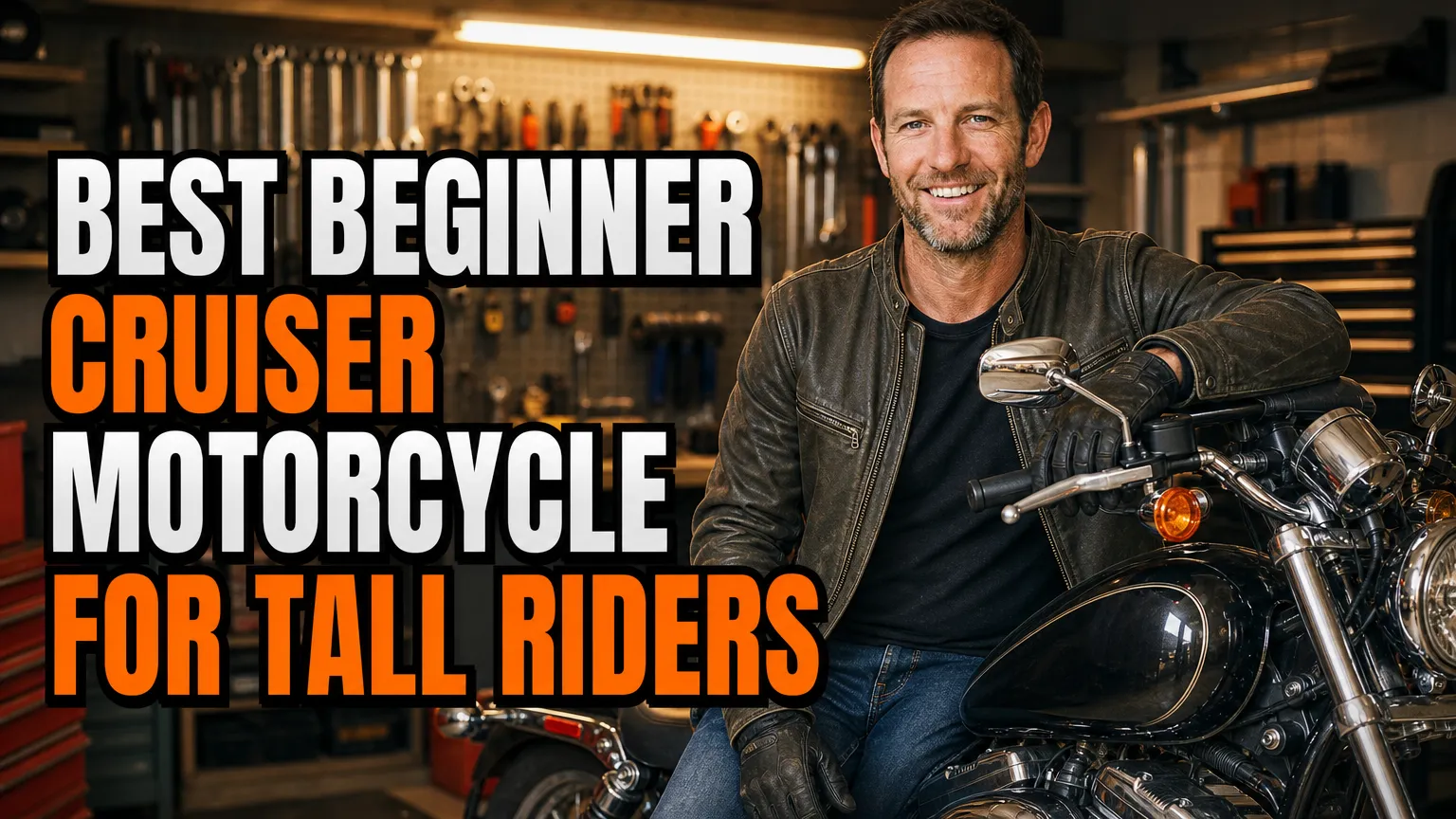
Finding a beginner cruiser that fits a tall frame can take more work than choosing one by engine size or looks. A low seat may make a bike easy to stop, but a cramped knee position or far-forward controls can turn an otherwise appealing motorcycle into an uncomfortable daily ride.
When I compare beginner-friendly cruisers, I look at more than seat height. I consider weight, power delivery, control reach, and whether the riding position gives a taller rider enough room to relax. These six models are real options I’d put on a tall beginner’s shortlist, though I’d always recommend sitting on one before buying.
- I’d start with the Kawasaki Eliminator 450 for a friendly mix of manageable weight, approachable power, and a less low-slung fit.
- The Kawasaki Vulcan S stands out when adjustable footpeg positions matter more than keeping weight to a minimum.
- The Honda Rebel 500 is a strong all-rounder, but I’d check knee room carefully if I’m tall.
- I treat engine size as only one part of beginner suitability: weight, control, training, and confidence matter just as much.
I’ve also found it useful to compare cruisers with other beginner categories before settling on a style. If I’m still weighing riding positions, I’d look at this guide to the best beginner motorcycle for big and tall riders, then decide whether a cruiser’s lower, more relaxed stance suits me.
1. Kawasaki Eliminator 450: My Best All-Around Starting Point
The Kawasaki Eliminator 450 is the bike I’d check first if I wanted a beginner-friendly cruiser that doesn’t feel extremely low or heavy. It uses a 451cc parallel-twin engine, has a seat height of about 28.9 inches, and weighs roughly 388 pounds in standard trim, with small differences depending on ABS equipment and model year.
In my view, that combination makes the Eliminator easier to manage than many larger traditional cruisers while still offering useful performance beyond a small city-only bike. Its engine is approachable for a learner who is deliberate with the throttle, and the relatively light curb weight helps when moving the motorcycle around a parking space or making slow turns.
Why I like its fit for taller beginners
The seat is higher than the very low perch on a Honda Rebel, which may give my legs a little more room. That doesn’t guarantee a perfect fit: inseam, torso length, and arm reach all affect how a motorcycle feels. I’d pay particular attention to whether my knees sit comfortably and whether I can reach the bars without leaning forward.
For a new rider, I also appreciate that the Eliminator has modern essentials such as ABS availability and a straightforward belt final drive. Its US pricing has generally landed in the mid-$6,000 range, depending on year and trim. I’d confirm current local pricing, since taxes, dealer fees, and equipment packages can change the out-the-door cost.
What I’d consider before buying
The Eliminator is still a fairly compact cruiser, so I wouldn’t assume it will fit every tall rider just because its seat is higher than some competitors. I’d take a test ride if possible and check the bend in my knees after several minutes, not just during a quick showroom sit.
2. Kawasaki Vulcan S: My Pick for Adjustable Legroom
The Kawasaki Vulcan S is a 649cc cruiser with a low seat of about 27.8 inches and a curb weight around 498 pounds. What makes it especially interesting for tall riders is Kawasaki’s Ergo-Fit system, which offers different seat and footpeg configurations through factory options or dealer-installed parts, depending on the market and trim.
I consider the Vulcan S a good example of why a low seat doesn’t automatically mean a cramped riding position. Its adjustable footpeg setup can help a taller rider find more comfortable legroom than a fixed-control cruiser. I’d ask a dealer exactly which Ergo-Fit components are included and what they cost, rather than assuming every bike on the floor has the same setup.
Where its beginner appeal comes from
The parallel-twin engine has more power than I’d recommend for someone who hasn’t learned basic throttle control, but it can suit a careful beginner who has taken a riding course and is ready for a bike with room to grow. I’d practice in a quiet area and stay gentle with the throttle, especially at low speeds.
The main trade-off for me is weight. At close to 500 pounds, the Vulcan S takes more effort to push around than the Eliminator 450 or Rebel 500. I’d make sure I can back it out of a sloped parking spot and confidently hold it upright before committing. New-bike pricing often sits in the upper-$7,000 range in the US, although model year and trim can shift that figure.
If I like the Vulcan S concept but want to compare it with a different style of machine, I’d also read about the best streetfighter motorcycle for tall riders. A more upright bike may give my legs and back a different kind of room.
3. Honda Rebel 500: My Versatile, Easy-to-Live-With Choice
The Honda Rebel 500 is one of the most recognizable beginner-friendly cruisers for good reason. Its 471cc parallel-twin engine is paired with a low 27.2-inch seat, and the bike weighs roughly 408 to 414 pounds depending on version and ABS equipment. I find it approachable in traffic and easy to understand as a first motorcycle.
For tall riders, the Rebel 500 is a bike I’d call “try before you decide,” rather than an automatic fit. The low seat helps me reach the ground, but the overall compact proportions and footpeg position can create a tight knee angle for longer legs. A few minutes sitting on it may feel fine; I’d still test ride it to see how my hips and knees feel once I’m moving.
Why I’d keep it on my shortlist
I like the Rebel 500 because it balances manageable size with enough engine for a range of everyday riding. It has a broad dealer network in many places, a large rider community, and a big supply of accessories. Depending on model year and market, I may be able to improve comfort with an aftermarket seat, handlebar changes, or compatible foot-control adjustments.
Those changes can help, but I wouldn’t buy the Rebel assuming modifications will solve a poor fit. I’d compare the cost of the bike and comfort parts against a motorcycle that feels right in standard form. Its US list price has commonly been around the mid-$6,000 range, with ABS and other details affecting the final number.
Who I think it suits
I’d recommend the Rebel 500 to a tall beginner who values a light, approachable motorcycle and finds its riding position comfortable in person. If my knees feel sharply bent or my wrists carry too much weight, I’d move on rather than trying to talk myself into it.
4. CFMOTO 450CL-C: My Modern, Feature-Rich Alternative
The CFMOTO 450CL-C brings a contemporary take on the middleweight cruiser. It uses a 449.5cc parallel-twin engine, makes about 41 horsepower, and has a belt final drive. Published specifications put its seat height at roughly 27.2 inches and its curb weight near 399 pounds, although I’d check the exact figures for the version sold in my region.
I like that the 450CL-C combines beginner-manageable displacement with modern equipment and a relatively approachable weight. Depending on market and trim, features can include a TFT display, traction control, and ABS. I’d verify which electronics come standard on the local model, because equipment can differ by country and year.
How I’d judge its comfort
Its low seat makes stopping easier, but I wouldn’t confuse that with generous legroom. Tall riders should check the distance from the seat to the foot controls and see whether the handlebar reach feels natural. The style and control layout make it worth trying, but a tall rider with a long inseam may prefer the more adjustable Kawasaki Vulcan S.
In markets where it is sold, the 450CL-C is generally positioned below many established middleweight cruisers in price. I’d still compare dealer support, parts availability, warranty terms, and resale expectations near me before choosing it. A good spec sheet matters less if I can’t easily get service or replacement parts where I live.
5. Royal Enfield Meteor 350: My Calm Choice for Local Riding
The Royal Enfield Meteor 350 offers a gentler, less powerful option for beginners who want an easygoing cruiser. Its 349cc single-cylinder engine produces modest output, and its seat height is about 30.1 inches. The bike weighs roughly 421 pounds in running order, so it isn’t the lightest choice here, but its engine character is designed for relaxed everyday riding.
I’d consider the Meteor 350 if I expected most of my riding to be around town, on back roads, or at moderate speeds. Its upright, relaxed posture can feel more spacious than the low seat number might suggest, though I’d still check how my knees line up with the controls. The Meteor is not a fast highway tourer, and I wouldn’t choose it for frequent high-speed trips with a passenger and luggage.
What makes it beginner-friendly
The modest power can help me build confidence without dealing with the stronger acceleration of a larger twin. I’d still take a recognized safety course and practice braking, turning, and low-speed control. A friendly engine does not remove the need to learn good habits.
Royal Enfield’s Meteor 350 is sold in multiple markets, and pricing varies significantly by country and equipment. I’d check the local model’s standard features and service coverage before buying. If I’m drawn to the Meteor’s simple, laid-back feel but want to compare a taller, more open riding triangle, I’d also explore the best bobber motorcycle for tall riders.
6. Royal Enfield Super Meteor 650: My Roomier Option for Confident Beginners
The Royal Enfield Super Meteor 650 is a larger and heavier step up from the Meteor 350. It has a 648cc parallel-twin engine, a seat height of about 29.1 inches, and a kerb weight around 531 pounds. I see it as a cruiser for a beginner who is confident handling a substantial motorcycle, not as the easiest possible first bike.
Its riding position can feel more open than that of smaller, compact cruisers, which may suit taller riders who want a relaxed cruising posture. The forward controls are part of that character, but they won’t work for everyone. I’d check that I can reach the controls easily, shift my weight comfortably, and manage the bike at a stop without feeling stretched out.
Why I’d approach it carefully
The Super Meteor’s weight is its biggest beginner drawback for me. A low seat may make it easy to plant my feet, but it doesn’t make a 531-pound motorcycle effortless to recover from a lean or maneuver in a tight space. I’d practice slow-speed handling and parking before taking it into heavy traffic.
I’d choose the Super Meteor 650 if I had completed training, had the strength and balance to manage its mass, and wanted a cruiser I could keep as my skills developed. Its price varies by market and trim, so I’d compare the cost of the motorcycle, touring accessories, and insurance. For riders who want a different posture for longer days on the road, I’d also check the best sport touring motorcycle for tall riders.
How I Choose the Right Fit as a Tall Beginner
I don’t rely on a single measurement to decide whether a motorcycle fits me. Seat height tells me how high the saddle sits, but it doesn’t explain the reach to the bars, the distance to the pegs, or how my knees feel once I’m riding. I try to assess the whole riding triangle, ideally with a test ride.
- I check my leg position: I want a comfortable knee bend and enough room to move my feet between the pegs and controls.
- I test the handlebar reach: I want relaxed shoulders and elbows, not a constant forward stretch.
- I handle the bike at walking pace: I practice turns and stops to see whether the weight feels manageable.
- I consider my real routes: A gentle 350cc cruiser may suit local roads, while regular highway riding may call for more power and wind protection.
- I look beyond the showroom fit: I ask about seat, peg, and bar adjustments, while remembering that accessories may not fix a fundamentally poor fit.
If I’m still comparing styles, I might also consider the best scrambler motorcycle for tall beginner options. Scramblers often have a more upright posture and higher seats, so they may give a tall rider a different balance of legroom and control.
My overall first stop would be the Kawasaki Eliminator 450, with the Kawasaki Vulcan S close behind for its adjustable fit options. I’d put the Honda Rebel 500 on my list too, but I’d be especially careful about knee room. Whichever one I choose, I’d prioritize proper training, ABS where available, sensible protective gear, and a confident fit over styling or engine size alone.
Frequently Asked Questions
What is the best beginner cruiser for a tall rider?
I’d start with the Kawasaki Eliminator 450 for its approachable power and taller seat, or the Kawasaki Vulcan S if adjustable footpeg positions are a priority.
Is a Honda Rebel 500 comfortable for tall riders?
It can be, but its low seat and compact riding position may feel cramped. I recommend sitting on one and checking your knee bend before buying.
Is a 650cc cruiser too powerful for a beginner?
Not automatically. I’d judge the motorcycle by its throttle response, weight, and your experience, then take training and practice seriously.
What should a tall beginner check when trying a cruiser?
I check knee bend, reach to the bars, foot control access, low-speed balance, and whether I can comfortably manage the bike at a stop.

Related Articles

7 Best Cruisers for Comfortable Two-Up Motorcycle Trips
Compare seven comfortable cruisers for two-up rides, with real-world notes on passenger comfort, power, luggage, pricing, and how to choose…
Jake Miller
12 min read

8 Comfortable Cruisers That Make Two-Up Riding More Enjoyable
Find a cruiser you and your passenger can enjoy together. I compare eight comfortable motorcycles, with real-world strengths, trade-offs, and…
Jake Miller
11 min read

7 Luxury Cruisers That Make Long-Distance Riding Feel First-Class
I compare seven luxurious cruisers for long-distance comfort, power, weather protection, luggage, technology, and value to help you choose the…
Jake Miller
13 min read