
8 Best Cruisers for Tall Riders: Roomy Picks for 6-Foot Motorcyclists
 Jake Miller
12 min read
Jake Miller
12 min read
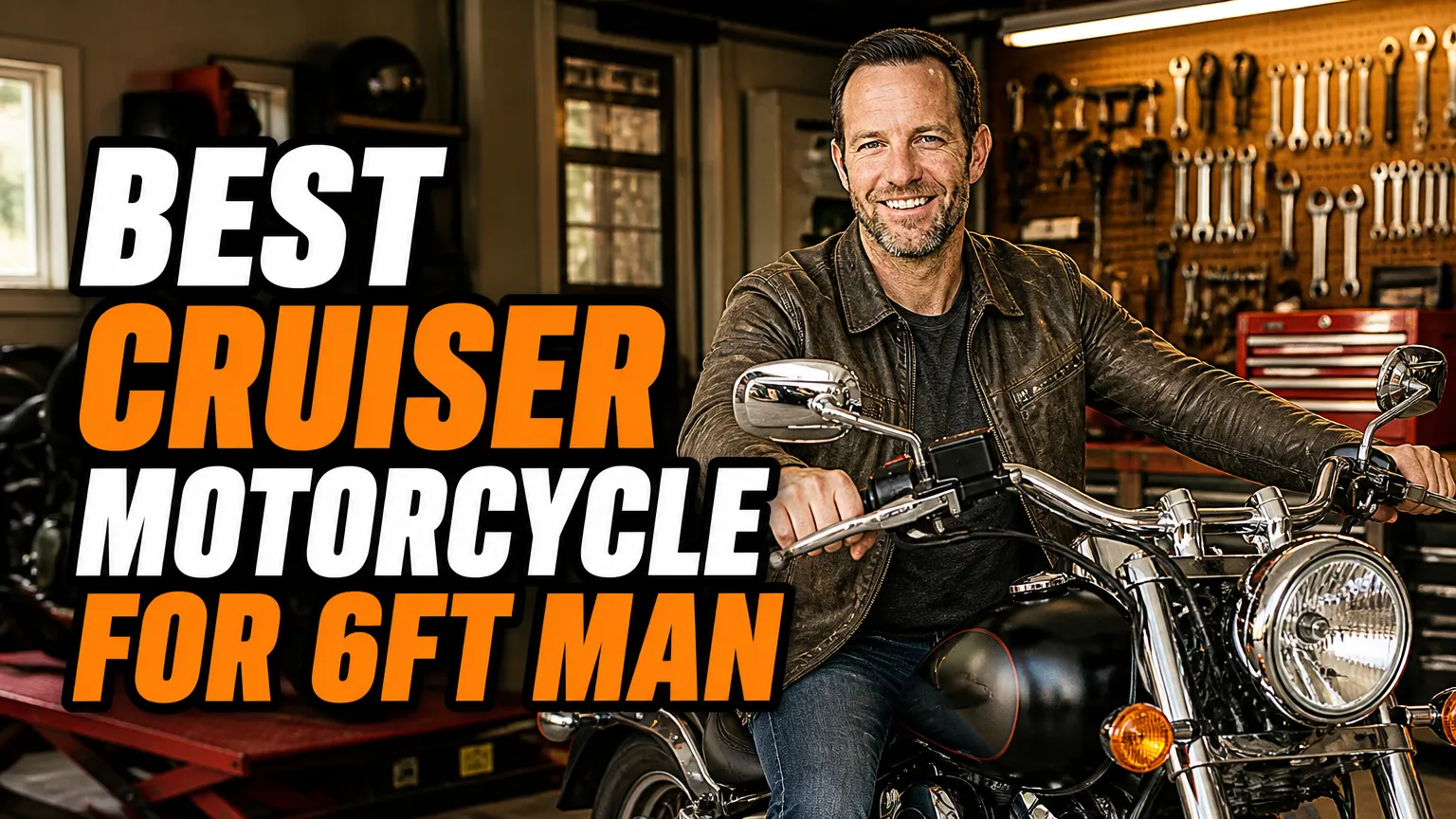
When friends ask me to find the best cruiser motorcycle for a 6ft man, I tell them not to shop by seat height alone. A low seat can feel reassuring at a stop, but it can also leave a tall rider’s knees sharply bent. I compare the whole riding position: seat-to-peg distance, handlebar reach, and how naturally I can move around on the bike.
Below, I’ve picked eight real cruisers with different strengths, from adjustable middleweights to heavyweight touring-friendly machines. I’ve included specs and approximate U.S. price ranges to help narrow the search, but I’d always confirm current model details with a local dealer and take a proper test ride before buying.
- I’d start with the Kawasaki Vulcan S if adjustable controls are my top priority.
- I’d look at the Indian Chief Dark Horse or Harley-Davidson Heritage Classic for substantial, full-size cruiser comfort.
- I wouldn’t assume a tall rider needs the biggest engine; fit and intended use matter more.
- I’d test ride any shortlist bike long enough to check knee angle, reach, and comfort in traffic.
How I Judge Cruiser Fit for a Taller Rider
At six feet, I pay close attention to the bend in my knees and whether my feet sit comfortably on the controls. Forward controls can open up legroom, but some riders find them too stretched out, especially when maneuvering slowly. A mid-control layout may feel more natural if I want to stand briefly over bumps or shift my weight through a turn.
I also check the bars. If I have to lock my elbows or hunch my shoulders to reach them, I know I’ll notice that discomfort more as the miles add up. When possible, I ask the dealer about taller handlebars, alternate seats, and peg or control options before deciding a model is a poor fit.
If I’m comparing cruisers with other motorcycle styles, I also consider experience level and intended use. My guide to the best beginner motorcycle for 6ft rider can help me weigh approachable ergonomics across categories, while my overview of the best motorcycle engine size for beginners explains why engine displacement shouldn’t be my only buying filter.
1. Kawasaki Vulcan S ABS: My Pick for Adjustable Fit
The Kawasaki Vulcan S ABS is the first bike I’d try if I wanted a cruiser that can be adjusted to suit different bodies. Its 649cc parallel-twin engine, six-speed gearbox, and relatively manageable weight make it less intimidating than a heavyweight cruiser. The headline feature for fit is Kawasaki’s Ergo-Fit system, which offers configurations with different seat, handlebar, and footpeg positions.
Why I’d consider it
For a tall rider, the ability to configure the footpeg position is especially useful. I’d ask a Kawasaki dealer to show me the extended-reach setup and let me sit on each configuration, rather than assuming the standard arrangement will work. The Vulcan S is a practical choice for commuting and everyday riding, and ABS is available on the ABS version.
The trade-off is that it remains a middleweight cruiser, not a wide, plush touring machine. Its seat is around 27.8 inches high, and U.S. pricing is generally in the roughly $8,000–$9,000 range depending on model year and trim. I’d consider the Vulcan S if I value adjustable ergonomics and approachable performance over a big V-twin’s size and torque.
2. Indian Chief Dark Horse: My Full-Size, Classic Cruiser Choice
The Indian Chief Dark Horse appeals to me when I want a substantial cruiser with a clean, stripped-back look. Recent versions use Indian’s air-cooled Thunderstroke 116 V-twin, a 1,890cc engine paired with a six-speed transmission. Its low seat, around 26 inches, makes the bike easy to reach at a stop, while the wide, solid-feeling chassis gives it the presence I expect from a full-size cruiser.
What I’d check for comfort
I wouldn’t judge the Chief Dark Horse by its low seat alone. I’d sit on it long enough to see whether my knees feel cramped and whether the bar position lets my shoulders relax. Depending on my body proportions and trim, I might also ask about a different seat or handlebar setup to fine-tune the reach.
For me, the big V-twin makes the most sense if I want strong low-speed pull and a bike that feels comfortable cruising at highway pace. It’s heavy compared with the Vulcan S, and its price is typically in the low-to-mid $20,000 range depending on year and equipment. I’d choose the Chief Dark Horse for its combination of full-size character and straightforward styling, not because I expect every tall rider to find the stock setup perfect.
3. Harley-Davidson Heritage Classic: My Choice for Longer Rides
The Harley-Davidson Heritage Classic is the option I’d examine first if my cruiser plans included weekend trips as well as local rides. It combines traditional styling with useful touring details such as saddlebags and a windshield, and recent models use Harley-Davidson’s Milwaukee-Eight 117 V-twin. The low seat height—about 26 inches—makes stops feel approachable, though I’d still check how the foot controls suit my legs.
Where it stands out for me
I like that I can carry basic travel gear without immediately adding luggage, and the windshield helps make longer stretches more comfortable. The Heritage Classic is a large, heavy motorcycle, so I’d take time to practice slow turns and parking-lot maneuvers before heading out on a long ride. Its weight and broad touring equipment are part of the package, not small details to overlook.
Depending on model year and options, I’d budget roughly in the $23,000–$27,000 range in the U.S. I’d shortlist the Heritage Classic if I want a relaxed, traditional cruiser that’s ready for day trips. Before buying, I’d check whether the standard seat-to-peg distance gives me enough knee room or whether an accessory seat would improve it.
4. Indian Scout 101: My Sportier, Modern Cruiser Pick
The Indian Scout 101 gives me a more performance-oriented feel than a laid-back heavyweight cruiser. The latest generation uses a 1,250cc liquid-cooled V-twin, and the Scout 101 is tuned as the higher-performance member of the family. It has a low seat, roughly 27.8 inches, but a taller rider should still consider the relationship between the seat, pegs, and bars before assuming the fit will work.
What I like about its character
I’d look at the Scout 101 if I wanted a cruiser that feels relatively compact and lively rather than massive. Its adjustable rear suspension is a useful feature, and the bike’s modern engine and chassis give it a different personality from the air-cooled cruisers on this list. I’d take a careful test ride because the riding position may feel more compact than the bike’s displacement suggests.
Pricing varies by year and equipment, but I’d expect a U.S. Scout 101 to sit around the high-$teens or above. It’s not my pick for someone whose main goal is maximum passenger-and-luggage touring comfort. I’d choose it when I want an energetic solo cruiser and find the cockpit comfortable after a real ride.
5. Honda Rebel 1100 DCT: My Practical Automatic Option
The Honda Rebel 1100 DCT stands out to me because it pairs cruiser styling with a 1,084cc parallel-twin and Honda’s six-speed Dual Clutch Transmission. I can ride the DCT version without operating a conventional clutch lever, or choose the manual version if I prefer shifting myself. Its seat is about 27.9 inches high, and its relatively accessible price makes it worth considering for riders who want modern features without stepping straight into a heavyweight bike.
What I’d consider before buying
I’d pay particular attention to knee bend on the Rebel 1100. The low, compact layout works well for many riders, but a six-foot rider may want more legroom than the standard position provides. I’d sit on it and test both the seat comfort and handlebar reach, then ask a Honda dealer what genuine accessory options are available for that model year.
In the U.S., pricing typically starts around the low-$10,000 range, with trim and DCT equipment affecting the total. I’d choose the Rebel 1100 DCT if I valued its easy-to-use transmission, manageable feel, and everyday versatility. I wouldn’t buy it based on displacement alone; the ergonomics need to suit me first.
6. Harley-Davidson Low Rider S: My Powerful, More Engaged Ride
The Harley-Davidson Low Rider S suits me when I want a cruiser with a more assertive riding position and a performance-minded character. Recent versions are powered by the Milwaukee-Eight 117 V-twin, with a six-speed transmission and a low seat around 28 inches. Compared with a relaxed feet-forward cruiser, its controls and overall layout encourage a more engaged posture.
My fit notes
For a taller rider, I’d check the reach to the bars and the bend in my knees rather than expecting the low seat to solve everything. The Low Rider S can feel commanding, but it’s also a heavy, powerful motorcycle. I’d make sure I can handle it confidently at walking speed and that its posture feels comfortable on a longer test ride, not just while sitting still in a showroom.
Depending on the year and options, I’d expect pricing to be in the low-to-mid $20,000s in the U.S. I’d choose this Harley if I wanted strong V-twin performance and a more spirited cruiser feel. If I wanted built-in weather protection and luggage for touring, I’d compare it closely with the Heritage Classic instead.
7. Triumph Bonneville Speedmaster: My Refined Two-Up Cruiser
The Triumph Bonneville Speedmaster brings British styling to the cruiser format. Its 1,200cc parallel-twin engine is tuned for accessible torque, and the bike has a low, relaxed seating position with forward-set foot controls. The seat height is around 27 inches, but I’d check the actual knee angle carefully because forward controls can feel either liberating or overly stretched depending on my proportions.
Why I’d take a test ride
I like the Speedmaster’s combination of classic looks and modern equipment, including rider aids such as ABS and traction control. It also offers a passenger seat, making it more appealing to me than a strictly solo-focused bobber if I sometimes ride two-up. I’d assess passenger comfort separately, since a short test ride by myself won’t tell me how the bike behaves with a second person aboard.
Prices vary by market and model year, but I’d budget around the mid-teens in U.S. dollars before accounting for fees and accessories. I’d shortlist the Speedmaster if I value distinctive styling and a polished road feel. I’d still confirm that I can move my feet comfortably and that the forward controls don’t make low-speed handling feel awkward.
8. BMW R 18: My Big, Relaxed Cruiser Alternative
The BMW R 18 offers a very different take on the cruiser. Its 1,802cc air/oil-cooled boxer twin produces a distinctive feel, and its low seat—about 27 inches—makes it easy to place my feet on the ground. The bike’s long, low stance and large engine give it a substantial road presence, while its styling nods to classic BMW motorcycles.
What I’d weigh up
The R 18’s mass is important to me: depending on version and equipment, it weighs well over 700 pounds. That can make slow-speed turns, backing up, and parking more demanding than the seat height suggests. I’d also compare the standard R 18 with touring-oriented versions if I expected to carry luggage or wanted more wind protection.
Depending on trim and local pricing, I’d expect a U.S. R 18 to fall somewhere in the mid-teens to low-$20,000s. I’d pick it for its unusual boxer-engine character and relaxed cruising feel, not as the easiest first heavy motorcycle. If I were new to riding, I’d build confidence on a more manageable bike before moving up to this much weight and power.
How I’d Choose Between Engine Sizes and Riding Styles
I don’t think a taller rider automatically needs a larger engine. A 649cc middleweight may fit my needs better than a heavy 1,800cc cruiser if I mostly ride around town, while a larger engine can make sense when I regularly cover highway miles with a passenger. I match the bike to my routes, experience, and comfort rather than treating displacement as a status symbol.
When I’m comparing smaller bikes, I find it useful to understand realistic performance expectations. These guides on how fast can a 150cc motorcycle go unleashing top speeds, how fast can a 300cc motorcycle go, and how fast can a 500cc motorcycle go help put engine size into context. I’d still judge any particular motorcycle by its power delivery, gearing, weight, and intended use.
My Final Checklist Before I Buy
- I check the whole riding position: I look at knee bend, foot placement, handlebar reach, and whether I can relax my shoulders.
- I test the bike in real conditions: I try stop-and-go traffic, slow turns, and a stretch at typical cruising speed if the test ride allows.
- I think about weight: I practice backing up and maneuvering before deciding a tall seat or a low seat makes a bike easy to handle.
- I ask about adjustments: I confirm whether alternate seats, bars, pegs, or control positions are available and what they cost.
- I match the bike to my riding: I decide how often I’ll ride with a passenger, carry luggage, or spend time on highways.
My strongest starting points are the Kawasaki Vulcan S ABS for its adjustable fit, the Indian Chief Dark Horse for full-size cruiser presence, and the Heritage Classic for longer rides with useful touring equipment. But no specification sheet can tell me exactly how a motorcycle will feel in my body. I’d take my shortlist to a dealer, sit on each bike, and choose the one that stays comfortable after the initial showroom excitement fades.
Frequently Asked Questions
What should a 6-foot rider check when choosing a cruiser?
I check legroom, knee bend, handlebar reach, and seat comfort together. Seat height alone does not tell me whether a bike will fit.
Which cruiser on this list offers adjustable ergonomics?
I would start with the Kawasaki Vulcan S because its Ergo-Fit system offers different seat, handlebar, and footpeg configurations.
Is a low-seat cruiser automatically uncomfortable for a tall rider?
Not necessarily. I focus on the relationship between the seat, foot controls, and handlebars, since a low seat can still pair with a comfortable riding position.
Should I test ride a cruiser before buying it?
Yes. I recommend a long enough test ride to check comfort at stops and while moving, and I would ask a dealer about available ergonomic accessories.

Related Articles

7 Best Cruisers for Comfortable Two-Up Motorcycle Trips
Compare seven comfortable cruisers for two-up rides, with real-world notes on passenger comfort, power, luggage, pricing, and how to choose…
Jake Miller
12 min read

8 Comfortable Cruisers That Make Two-Up Riding More Enjoyable
Find a cruiser you and your passenger can enjoy together. I compare eight comfortable motorcycles, with real-world strengths, trade-offs, and…
Jake Miller
11 min read

7 Luxury Cruisers That Make Long-Distance Riding Feel First-Class
I compare seven luxurious cruisers for long-distance comfort, power, weather protection, luggage, technology, and value to help you choose the…
Jake Miller
13 min read