
7 Best Motorcycle Engine Sizes for Beginners: Real-World Picks I Recommend
 Jake Miller
14 min read
Jake Miller
14 min read
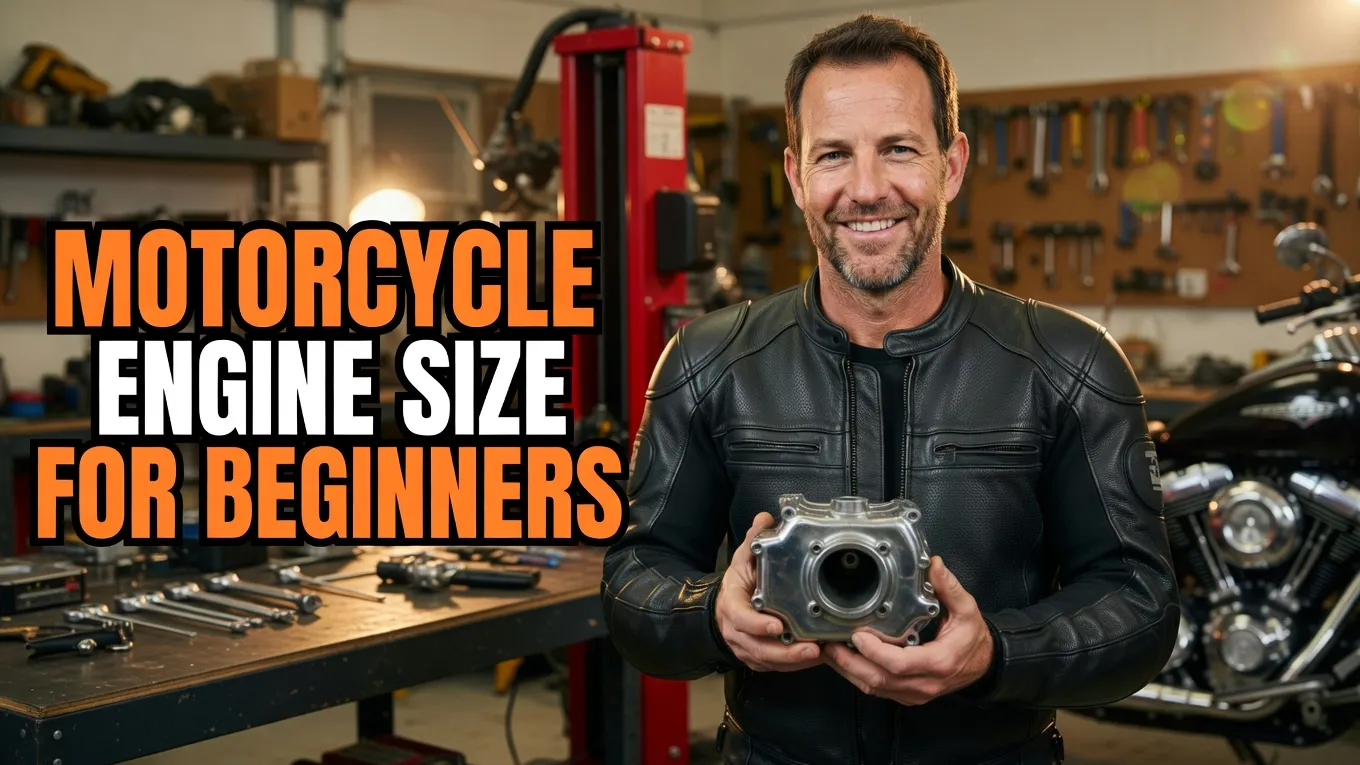
I’ve been riding motorcycles for over a decade, and I can tell you that choosing the right engine size as a beginner is crucial to your success and safety. Too small, and you’ll outgrow it in weeks. Too large, and you’re setting yourself up for a scary learning curve.
After coaching dozens of new riders and testing bikes across the displacement spectrum, I’ve identified the sweet spots that work for different rider profiles. Whether you’re commuting in the city or dreaming of weekend tours, there’s an ideal engine size for your situation.
- 300-500cc is the goldilocks zone for most beginners, offering highway capability without overwhelming power
- Parallel-twin 650cc bikes are surprisingly beginner-friendly despite higher displacement
- 250cc singles are perfect for city riding but struggle on highways
- Engine configuration matters more than raw displacement — avoid supersport 600cc inline-fours
- Your physical size, riding environment, and confidence level should guide your choice
1. Honda CB300R — Best 286cc Single-Cylinder for Urban Beginners
I absolutely love recommending the Honda CB300R to city-dwelling beginners. This naked bike packs a 286cc single-cylinder engine that produces about 31 horsepower, which sounds modest until you experience how perfectly matched it is to urban riding.
The single-cylinder configuration delivers power smoothly and predictably. There’s no sudden surge that’ll catch you off guard, which is exactly what you want when you’re still mastering clutch control and throttle management.
Why This Displacement Works
At 286cc, the CB300R sits in that perfect zone where you have enough power to merge confidently in traffic and keep up on suburban roads. I’ve taken mine on short highway stints, and while it’s not ideal for long-distance touring, it’ll comfortably cruise at 70-75 mph.
The lightweight nature of this engine size means the entire bike weighs just 313 pounds wet. When you’re learning to maneuver at low speeds or pick up a dropped bike, every pound matters. Keeping your engine maintained with the best engine oil for motorcycle applications ensures this single-cylinder runs smoothly for years.
Real-World Performance
I’ve watched countless beginners grow confident on the CB300R within weeks. The engine’s forgiving nature means you won’t wheelie accidentally or spin the rear tire from ham-fisted throttle inputs. Fuel economy hovers around 65-70 mpg, which is fantastic when you’re on a budget.
The downside? If you’re a larger rider (over 6’2″ or 220 pounds) or plan frequent highway use, you might find yourself wanting more after six months. But for pure beginner-friendliness in a sub-300cc package, this Honda is hard to beat.
2. Yamaha YZF-R3 — Best 321cc Parallel-Twin for Sporty Beginners
The Yamaha YZF-R3 was my second motorcycle, and I kept it for three years because it was just that good. This 321cc parallel-twin produces 42 horsepower, giving you noticeably more punch than single-cylinder alternatives while maintaining excellent beginner manners.
What makes the R3 special is its engine configuration. The parallel-twin is smoother than a single-cylinder, producing less vibration at highway speeds. It also revs more freely, making the bike feel more exciting without being dangerous.
Power Delivery That Teaches Proper Technique
I love that the R3’s power band encourages you to learn proper shifting technique. Peak power arrives around 10,750 rpm, so you’ll naturally develop the habit of using the gearbox effectively. This skill translates directly to larger bikes later.
The seating position is sporty but not aggressive. You’re leaned slightly forward, which helps you learn proper body positioning for cornering without the wrist and back pain that comes from full supersport ergonomics.
Highway and Beyond
This is where the R3 really shines compared to smaller displacement bikes. I’ve comfortably cruised at 80 mph for hours, and the bike still has more to give. Top speed is around 115 mph, though you’ll never need that as a beginner.
The fairing provides decent wind protection, making highway riding less exhausting. At around $5,000 new (less used), the R3 offers incredible value. Regular maintenance is straightforward — just ensure you’re using the best cleaner for motorcycle engine to keep the parallel-twin looking good and running optimally.
3. KTM 390 Duke — Best 373cc Single for Aggressive Learners
If you’re a beginner who values excitement over pure comfort, the KTM 390 Duke is my top pick. This Austrian-made hooligan packs a 373cc single-cylinder that punches way above its weight class, producing 43 horsepower with a character that’s addictively fun.
I’ll be honest: the 390 Duke is at the upper limit of what I’d recommend for true beginners. But if you’ve spent time on dirt bikes, have strong self-control, or simply want a bike you won’t outgrow quickly, this is the one.
Performance That Surprises
The Duke’s single-cylinder is a technological marvel. It revs willingly to 10,500 rpm and delivers power with urgency that feels more like a 600cc bike than a sub-400cc machine. The six-speed transmission is slick, and the slipper clutch prevents rear-wheel lockup during aggressive downshifts.
What really impressed me is the electronics package. You get ABS and ride-by-wire throttle as standard, plus a TFT display that looks like it belongs on a bike twice the price. These features genuinely enhance safety for new riders.
The Learning Curve
This bike will teach you quickly, sometimes harshly. The upright seating position and light weight (366 pounds) make it incredibly flickable, but that also means you can get into trouble faster than on more relaxed beginner bikes.
I recommend the 390 Duke if you’re confident in your self-discipline and want a bike that’ll stay fun even after you’ve mastered the basics. Maintenance costs are higher than Japanese equivalents, and you’ll want to keep the engine bay clean using a quality best degreaser for motorcycle engine product, as the Duke can get grimy in urban conditions.
4. Kawasaki Ninja 400 — Best 399cc Parallel-Twin Overall
In my opinion, the Kawasaki Ninja 400 is the single best beginner sportbike you can buy, period. The 399cc parallel-twin produces 45 horsepower and 28 lb-ft of torque, delivering a perfect balance of excitement and forgiveness that I haven’t found in any other package.
I’ve put over 15,000 miles on a Ninja 400, and it never stopped impressing me. The engine is a masterpiece of smooth power delivery — linear and predictable from 3,000 rpm all the way to the 11,000 rpm redline.
Why 400cc Is the Sweet Spot
The Ninja 400’s displacement hits the goldilocks zone perfectly. You have enough power to comfortably ride two-up, cruise at highway speeds with power in reserve, and accelerate briskly when needed. Yet the power never arrives so suddenly that it catches you off guard.
The parallel-twin configuration means you get that satisfying twin-cylinder sound without the vibration of larger twins or the peakiness of single-cylinders. It’s smooth enough for commuting but exciting enough for canyon carving on weekends.
Versatility and Value
What I love most about the Ninja 400 is its versatility. I’ve used mine for everything from daily commuting to track days, and it excelled at all of it. The ergonomics are sporty but not extreme, so you can ride for hours without serious discomfort.
At 366 pounds and with a low 30.9-inch seat height, the bike is manageable at stops and easy to muscle around parking lots. Fuel economy is excellent at 55-60 mpg, and reliability is typical Kawasaki — basically bulletproof if you follow the maintenance schedule and occasionally run an best engine flush for motorcycle to keep internals clean.
New riders often ask if they’ll outgrow this bike quickly. After three years, I can tell you: probably not as fast as you think. The Ninja 400 is genuinely fun even after you’ve developed real skill.
5. Honda CB500F — Best 471cc Parallel-Twin for Practical Riders
The Honda CB500F represents my top pick for beginners who prioritize practicality over sportiness. This naked bike’s 471cc parallel-twin produces 47 horsepower, and while that doesn’t sound exciting on paper, the real-world usability is outstanding.
I recommend the CB500F to riders who are older, more risk-averse, or simply want a bike that does everything well without drama. It’s the motorcycle equivalent of a Honda Civic — not the most thrilling choice, but you’ll never regret buying one.
The Torque Advantage
What sets the CB500F apart from smaller displacement bikes is its torque curve. With 32 lb-ft available at just 7,000 rpm, you have usable power everywhere. This means less shifting in traffic, easier highway merging, and more relaxed touring capability.
The engine never feels stressed or buzzy. I’ve cruised for hours at 75-80 mph with minimal vibration reaching the bars or pegs. For longer rides, this comfort level matters enormously.
Learning Without Compromise
The CB500F teaches proper riding technique without punishing mistakes. The power delivery is so linear that you’d have to try to wheelie or lose traction. Yet you’re still riding a proper motorcycle that can handle any situation you’ll encounter as a beginner.
Build quality is typical Honda — exceptional. Everything feels solid, controls are smooth, and reliability is legendary. At around 430 pounds wet, it’s heavier than smaller bikes but still manageable. The upright seating position and low seat height (30.9 inches) accommodate a wide range of rider sizes.
If you’re considering the CB500F, know that it’s not the most exciting bike in this list. But it might be the smartest choice, especially if you value long-term satisfaction over initial thrills.
6. Kawasaki Ninja 650 — Best 649cc Parallel-Twin for Confident Beginners
Here’s where I’ll challenge conventional wisdom: the Kawasaki Ninja 650 and its 649cc parallel-twin can absolutely work for beginners, if you approach it with respect and proper training. I’ve recommended this bike to taller, heavier riders and those with prior experience on smaller displacement machines.
The Ninja 650 produces 67 horsepower, which sounds like too much for a beginner. But here’s the critical detail: it’s a parallel-twin with extremely smooth, predictable power delivery. This isn’t a 600cc supersport with a peaky inline-four that tries to kill you.
Why Displacement Isn’t Everything
I cannot stress this enough: engine configuration matters more than raw displacement. The Ninja 650’s twin-cylinder makes peak power at just 8,000 rpm, with a broad, flat torque curve that delivers usable power from 3,000 rpm onwards. There’s no sudden power surge or aggressive transition.
For larger riders (I’m thinking 6’0″ and 200+ pounds), the extra power and torque of the 650 actually makes learning easier. You’re not constantly wringing the engine’s neck just to keep up with traffic or merge safely on highways.
The Confidence Factor
What I love about the Ninja 650 for confident beginners is that you won’t outgrow it. This bike has enough performance to remain fun and capable for years. I know experienced riders who choose the 650 over larger bikes because it’s just enough performance without being excessive.
The ergonomics are more relaxed than the sportier Ninja 400, making this a genuine all-day tourer. Wind protection from the fairing is excellent, and the seat is comfortable enough for 200+ mile days. At 410 pounds, it’s manageable but substantial enough to feel stable at highway speeds.
I only recommend the Ninja 650 to beginners who have taken a quality MSF course, have strong self-control, and understand that they’re starting on a bike with real performance. Respect the throttle, and this parallel-twin will serve you brilliantly for years.
7. Suzuki SV650 — Best 645cc V-Twin Character Bike for Enthusiasts
The Suzuki SV650 holds a special place in my heart as one of the most beloved beginner-to-advanced bikes ever made. Its 645cc 90-degree V-twin produces 75 horsepower with a character that’s uniquely engaging — more exciting than parallel-twins but far more forgiving than supersport engines.
I’ve owned two SV650s over the years, and I can confidently say this bike punches way above its weight class in the fun department. The V-twin’s distinctive rumble and character make every ride special, even if you’re just commuting.
V-Twin Magic
What makes the SV650 so special is its engine character. The 90-degree V-twin delivers power with a unique pulse that feels alive in a way that parallel-twins don’t quite match. There’s torque everywhere — a lazy 42 lb-ft available from low in the rev range — meaning you can ride in higher gears and still have power on tap.
The power delivery is immediate but never abrupt. Crack the throttle, and the bike surges forward with enthusiasm while remaining completely controllable. It’s engaging without being intimidating, which is perfect for developing your skills.
The Do-Everything Beginner Bike
I’ve used SV650s for track days, touring, commuting, and canyon carving. It excels at all of it. The upright seating position is comfortable for hours, the handlebar width gives excellent leverage for steering, and the bike is light enough (430 pounds) to feel nimble in tight situations.
What really makes the SV650 shine is the massive aftermarket support. There are countless upgrades available, from suspension improvements to exhaust systems. Many riders buy an SV650 as their first bike and keep it for life, gradually modifying it to suit their evolving needs.
Long-Term Value
The SV650 is one of the best-holding-value motorcycles in the used market because riders know what they’re getting. Even older models with 30,000+ miles are still sought after. Maintenance is straightforward and affordable — just use quality fluids and occasionally consider exploring best electric engine for motorcycle options if you’re curious about future technologies, though this traditional V-twin will likely outlast us all.
I recommend the SV650 to beginners who want a bike with soul, who appreciate the visceral connection that a characterful engine provides. It’s more bike than most beginners need, but unlike supersports in the same power range, it’s forgiving enough to learn on safely.
Finding Your Perfect Displacement
After testing and riding bikes from 250cc to 1000cc+, I’ve learned that the “best” engine size for beginners isn’t a single number — it’s a range that depends on your specific situation. Let me break down how to choose based on your circumstances.
Consider Your Physical Size
Your height and weight genuinely matter. If you’re 5’6″ and 140 pounds, a 300cc bike will feel completely different than it does for someone who’s 6’2″ and 220 pounds. Larger riders often feel cramped and underpowered on sub-300cc bikes, making learning frustrating rather than fun.
I typically recommend 400-500cc for riders over 6’0″ or 200 pounds, even as complete beginners. The extra power and weight help the bike feel stable and capable rather than overwhelmed.
Where Will You Ride?
Your riding environment should heavily influence displacement choice. If you’re exclusively commuting in dense urban areas with no highway use, a 250-300cc bike is perfect. The light weight and narrow profile make filtering through traffic easier, and you’ll never feel like you need more power.
But if your commute includes highway merging or you want weekend touring capability, 400cc is the minimum I’d recommend. You need enough power to merge safely and maintain highway speeds without the engine screaming in distress.
Respect the Learning Curve
Be honest about your discipline and risk tolerance. If you’re someone who tends to get overconfident quickly or has a need for speed, starting smaller is smarter. A 300cc bike that you ride confidently is infinitely safer than a 650cc bike that intimidates you into riding timidly (or worse, overrides your self-preservation instincts).
I’ve seen too many beginners buy 600cc+ bikes because they didn’t want to “waste money” on a smaller bike they’d outgrow. Then they either drop the expensive bike in the first month or ride so tentatively that they don’t develop proper skills. Start with something that builds confidence, not fear.
Think About Longevity
Finally, consider how long you plan to keep your first bike. If you’re the type who upgrades frequently, a smaller displacement makes sense — you’ll learn quickly and move on. But if you prefer to keep bikes for years, choosing something in the 400-650cc range means you won’t feel the need to upgrade as quickly.
The sweet spot for most beginners, in my experience, is 300-500cc. This range offers enough capability for real-world riding while maintaining the forgiveness that new riders need. You can’t go wrong with bikes like the Ninja 400 or CB500F — they’re popular for good reasons.
Remember that whatever engine size you choose, proper training matters more than displacement. Take an MSF course, practice in parking lots, and gradually build your skills. The bike is just a tool — your judgment and skill determine whether you’re safe on the road.
Frequently Asked Questions
What is the best engine size for a beginner motorcycle?
In my experience, 300cc to 500cc is ideal for most beginners. This range offers enough power for highway riding while remaining manageable. Smaller 250cc bikes work well for city commuting, while 650cc parallel-twins suit taller or more confident new riders.
Is a 600cc motorcycle too much for a beginner?
It depends on the engine type. A 600cc supersport with inline-four engine is absolutely too much for beginners due to explosive power delivery. However, a 650cc parallel-twin like the Kawasaki Ninja 650 is actually beginner-friendly because of its smooth, linear power.
Should I start on a 125cc or 250cc motorcycle?
I recommend 250cc for most beginners. While 125cc bikes are great for city riding and learning basics, they lack highway capability. A 250cc provides better versatility and won’t feel underpowered as quickly.
How long should I ride a beginner bike before upgrading?
Most riders are ready to upgrade after 1-2 years or 5,000-10,000 miles. However, many experienced riders keep their beginner bikes because they’re fun, affordable to maintain, and perfect for urban riding.

Related Articles
7 Best Batteries for Motorcycles I’ve Tested and Trust in 2026
I've tested dozens of motorcycle batteries to find the best performers. From AGM to lithium, here are my top picks…
Jake Miller
15 min read

The Perfect Battery for Your Harley Davidson Softail: A Rider’s Complete Guide
Discover the perfect battery for your Harley Davidson Softail. I've tested multiple options and share real-world performance data, maintenance tips,…
Jake Miller
14 min read

The Best Battery for Your Harley Davidson: My Complete Guide After Years of Testing
Discover which battery truly performs best for Harley Davidson motorcycles. Real rider experience with AGM, lithium, and OEM options to…
Jake Miller
12 min read