
5 Best First-Ride Toys for 2-Year-Olds: Safe Motorcycle-Inspired Picks
 Jake Miller
11 min read
Jake Miller
11 min read
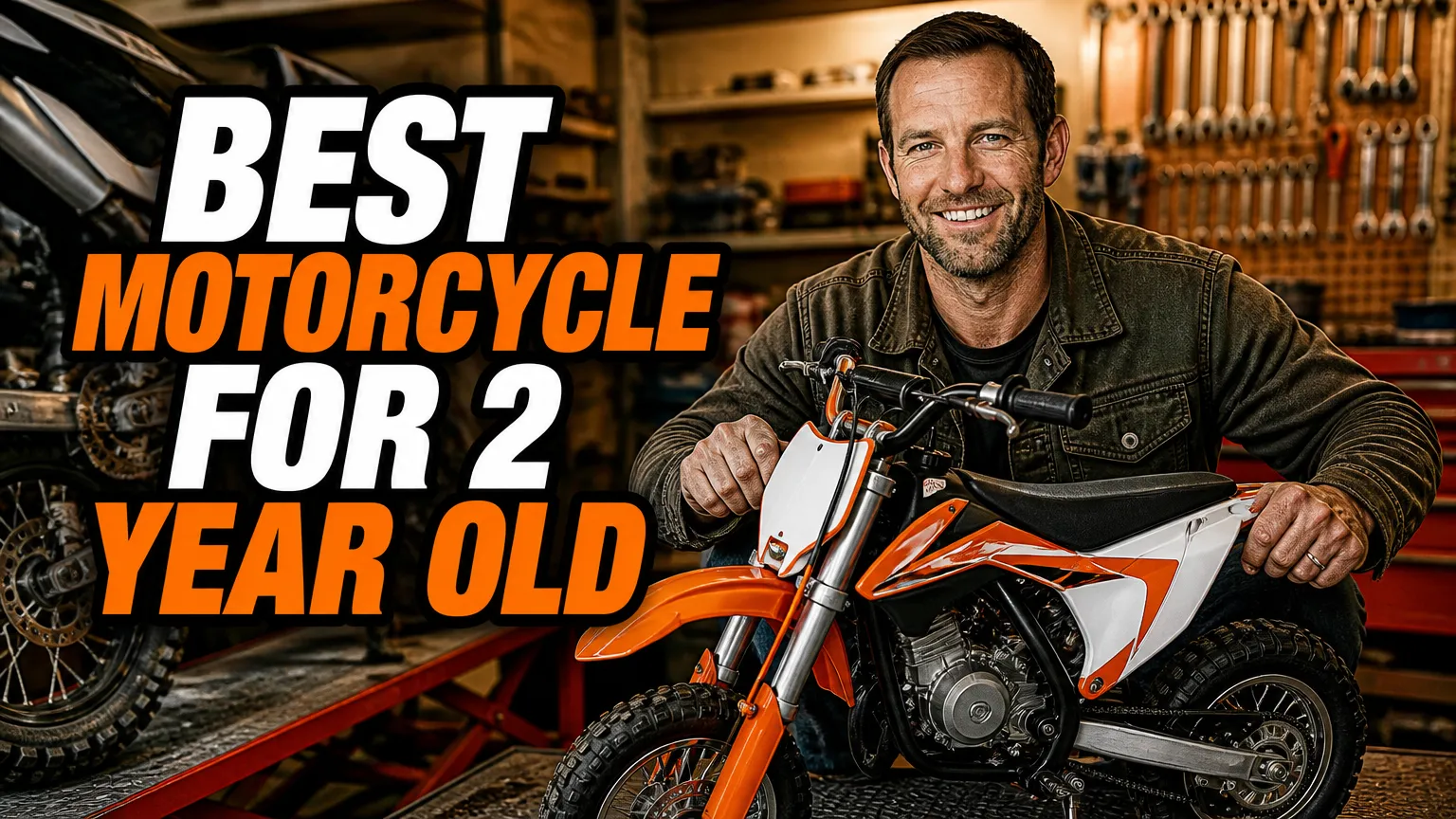
As a rider, I understand why a little motorcycle-shaped ride-on can look like the perfect first set of wheels. But when I’m choosing something for a 2-year-old, I put safe, age-appropriate movement ahead of engine sounds, speed, or realistic styling. At this age, a child needs a toy they can control with their own feet, not a powered motorcycle.
So when I talk about the best motorcycle for 2 year old, I mean a motorcycle-inspired ride-on or beginner balance bike, not a street motorcycle or electric dirt bike. I’ve focused on recognizable products with simple, child-powered movement and practical features to consider. A toddler’s readiness varies, so I’d check the manufacturer’s age and size guidance before buying.
- I would choose a non-powered ride-on, balance bike, or trike—not a real or electric motorcycle—for a 2-year-old.
- My leading options include the Chicco Ducati Scrambler, Strider 12 Sport, and Fisher-Price Harley-Davidson Tough Trike.
- I’d check fit, age guidance, surface, and the child’s ability to stop before every ride.
- I’d use a properly fitted helmet and stay close enough to intervene every time.
What I look for before choosing a first ride
At two, children differ widely in balance, coordination, confidence, and height. I’d look for a low seat or easy-to-mount frame, a manageable weight, smooth steering, and a product that the child can propel and stop without relying on a motor. A stable trike can suit a beginner; a balance bike can work well for a toddler who already walks confidently and enjoys steering.
I also separate toddler toys from actual motorcycles. A powered bike introduces speed, throttle control, braking, and other demands that are not appropriate for a 2-year-old. When I’m researching adult machines, I might compare the best motorcycle engine size for beginners, but that kind of decision belongs to an adult rider—not a toddler’s first ride.
1. Chicco Ducati Scrambler Balance Bike — Best Motorcycle Styling
The Chicco Ducati Scrambler Balance Bike is my pick when a parent wants a motorcycle-inspired look without a motor. It’s a child-powered balance bike: the rider sits on the seat, holds the handlebars, and pushes along with their feet. The Ducati Scrambler branding gives it a distinctive mini-bike appearance, while the basic riding action stays simple.
Why I’d consider it
I like the idea of a balance bike for a child who is already steady on their feet and eager to move. It lets a toddler practice steering and gradually learn to balance without pedals or a throttle to manage. The Chicco Ducati Scrambler is made for young beginners, but I’d still verify the current manufacturer age and height guidance and make sure my child can put both feet down comfortably.
It is not a miniature road motorcycle, and I wouldn’t describe it as one. Its appeal is the familiar motorcycle shape paired with child-powered movement. For me, that’s a better combination for a toddler than a battery-powered bike that can move faster than the child can comfortably control.
What I’d check before buying
I’d check the seat adjustment, overall weight, and whether the child can reach the ground while seated. I’d also inspect the tires and steering before the first ride, then start on a flat, clear surface. A balance bike is only a good choice if the child is willing to walk it forward and can follow simple stop-and-start guidance.
2. Strider 12 Sport — Best Adjustable Balance Bike
The Strider 12 Sport is a well-known, pedal-free balance bike designed for young riders. Its adjustable seat and handlebars help accommodate growing children, and the 12-inch format is intended for early balance-bike practice. I like this option for parents who value fit and adjustment more than motorcycle styling.
The Strider 12 Sport is built around a straightforward idea: a child pushes with their feet, steers, and learns to balance at a pace they choose. There’s no engine, battery, or pedal system. In my view, that makes it a sensible way to introduce two-wheel movement to a toddler who is ready for it, provided the bike fits and an adult is supervising.
My fit and readiness checklist
I’d set the saddle low enough that my child can plant both feet on the ground and bend their knees slightly. If the child has to tiptoe, stretch, or struggle to hold the bike upright, I’d wait or choose a more stable ride-on. A good fit matters more to me than buying a larger bike that might last longer.
I’d also remember that a balance bike isn’t automatically the right first ride for every 2-year-old. Some children are happier starting with a three-wheel toy and moving to two wheels later. I’d let the child’s comfort and control guide that choice rather than treating an early balance-bike start as a milestone to rush.
3. Fisher-Price Harley-Davidson Tough Trike — Best Stable Trike
The Fisher-Price Harley-Davidson Tough Trike brings motorcycle branding to a three-wheel pedal trike. It has a broad, stable stance, pedals, and a low riding position, with an under-seat storage compartment on the Tough Trike design. I’d consider this style for a toddler who wants to pedal but isn’t ready to balance on two wheels.
Because it has three wheels, the Tough Trike offers a different experience from a balance bike: the child pedals and steers rather than pushing along to learn two-wheel balance. I like that distinction for families who want a sturdy, simple outdoor toy. It’s still important to check the current product’s age, weight, and assembly guidance because versions and availability can change.
Where I’d use it
I’d use a trike on a flat driveway, patio, or other smooth, enclosed area, away from traffic, steep slopes, stairs, and pools. I wouldn’t assume that three wheels make it tip-proof, especially if a child turns sharply or rides over uneven ground. Staying nearby matters just as much as choosing a stable design.
For a child who is keen on pedals, this could be more appealing than a balance bike. But I’d check that the pedals are easy for the child to reach and push, and that the trike doesn’t feel too large. If my toddler can’t comfortably move it, I’d put it aside until they grow into it.
4. Radio Flyer Scoot 2 Scooter — Best Convertible Ride-On
The Radio Flyer Scoot 2 Scooter is a convertible ride-on that changes from a seated scoot-along toy into a three-wheel scooter. That gives it more than one mode of use as a child grows, although I’d follow the manufacturer’s age and ability guidance for each configuration. Its design is less like a motorcycle than the Ducati or Harley-Davidson options, but it offers a useful step between sitting and standing movement.
I’d choose it for a child who enjoys exploring different ways to move and has an adult available to help with conversion and supervision. The seated ride-on mode can feel more approachable for a beginner, while a scooter mode asks for more balance and coordination. I wouldn’t assume that a child who handles one mode is automatically ready for the other.
How I’d approach the transition
I’d start with the mode that keeps the child in control and close to the ground. Before trying the scooter setup, I’d look for steady walking, confident steering, and the ability to follow simple directions. I’d introduce it on a level, uncluttered surface and keep the first sessions short.
Since this is a convertible product, I’d pay close attention to assembly and locking instructions. I’d check that parts are secured before each use and put it away if anything feels loose or damaged. A product’s extra features are only valuable to me if the toy remains properly assembled and suited to the child using it.
5. Yvolution Y Velo Junior — Best for a Gradual Balance-Bike Start
The Yvolution Y Velo Junior is a toddler balance-bike option designed with a three-wheel configuration that can transition toward two wheels. That gradual approach may appeal to parents whose child is curious about a balance bike but still wants more support. As with any convertible design, I’d follow the manufacturer’s instructions for changing its setup and confirm the child is ready for each stage.
I like that it offers a path from extra stability toward more independent balancing without adding a motor. Still, I wouldn’t treat the three-wheel setting as a guarantee that every child will be comfortable, or the two-wheel setting as a goal to reach quickly. A toddler can take breaks, repeat an easier mode, or decide that a trike suits them better for now.
Who I think it suits
I’d consider the Y Velo Junior for a family that wants a balance-bike-style product with flexibility as the child develops. Before buying, I’d check the listed age range, seat-height range, weight limit, and current availability. Then I’d compare those details with my child’s actual size and confidence rather than relying on the product name alone.
As a rider, I appreciate a gradual learning curve. But I’d keep the goal modest at this age: a fun, supervised ride, not training for a full-size motorcycle. Adult motorcycle speed and engine questions, such as how fast can a 150cc motorcycle go, or how fast can a 300cc motorcycle go, have no place in choosing a toddler’s ride-on.
How I’d choose between a trike and a balance bike
If my 2-year-old wanted a stable toy for pedaling and imaginative play, I’d start by looking at the Fisher-Price Harley-Davidson Tough Trike. If the child walked confidently, could steer, and enjoyed pushing along with their feet, I’d compare the Chicco Ducati Scrambler and Strider 12 Sport. For a child who benefits from a gradual move toward two wheels, I’d look at the Yvolution Y Velo Junior.
I’d avoid buying based only on a vehicle’s appearance. Motorcycle styling can be fun, but fit and the child’s ability to control the toy matter more. I’d also consider where the ride will happen: a scooter or balance bike needs a suitable, smooth area, while a trike may work better for a child who wants a more stable seated start.
My other rule is to avoid powered ride-ons for toddlers unless a product is explicitly intended for the child’s age and the family can meet every safety requirement. In practice, I’d choose a non-powered option at two. I would never put a 2-year-old on a full-size motorcycle; adult bikes require skills, protective gear, and physical reach that a toddler does not have. Even adult choices such as the speed of a 500cc motorcycle or the best ADV motorcycle for short riders are simply unrelated to toddler riding.
Safety steps I would take before every ride
Check the child, toy, and riding area
I’d check that the product is assembled correctly, has no loose or damaged parts, and is suitable for the child’s age and size. I’d choose a flat, enclosed area away from vehicles, driveways, stairs, water, and steep slopes. I’d keep the ride short and stay close enough to stop the toy or help the child if needed.
Use protective gear and active supervision
I’d put a properly fitted helmet on my child for wheeled riding and follow the helmet maker’s sizing instructions and local safety guidance. I’d make sure it sits level and secure, rather than loose or tipped backward. Protective gear doesn’t replace supervision, so I’d stay present and keep my attention on the child throughout the ride.
I’d also set simple rules: ride in the designated area, keep a safe pace, and stop when an adult asks. At two, children are still learning how to judge hazards and follow directions consistently. I’d never leave a child alone with a ride-on toy, and I’d store it safely when playtime is over.
My final pick for a toddler’s first wheels
If I wanted the most motorcycle-like look without a motor, I’d start with the Chicco Ducati Scrambler Balance Bike, assuming it fits the child and they’re ready to steer and push. For a stable pedal-powered alternative, I’d consider the Fisher-Price Harley-Davidson Tough Trike. If long-term adjustability matters most, I’d compare the Strider 12 Sport with the Yvolution Y Velo Junior and check which one better suits the child’s height and confidence.
There isn’t one perfect first ride for every toddler. I’d choose a non-powered toy that my child can control, use it only in a safe area, and stay close throughout. For a 2-year-old, that’s the kind of first ride I can enjoy sharing as a rider: playful, supervised, and built around the child’s abilities.
Frequently Asked Questions
Can a 2-year-old ride a real motorcycle?
No. I would not put a 2-year-old on a powered motorcycle, even as a passenger. Choose a suitable, non-powered ride-on toy and supervise closely.
What is the safest motorcycle-style toy for a 2-year-old?
I favor a low, stable, non-powered ride-on that matches the child’s height and abilities. The Chicco Ducati Scrambler balance bike is one option for a child ready to walk and steer.
Does my toddler need a helmet for a balance bike or trike?
I recommend a properly fitted, age-appropriate helmet whenever a child uses a wheeled ride-on. Check the helmet label and local safety guidance, and supervise every ride.
Are electric ride-on motorcycles suitable for 2-year-olds?
I would avoid powered ride-on motorcycles at this age. Follow each product’s age and ability guidance, and choose a non-powered toy that lets your toddler stop and move at their own pace.

Related Articles

5 Best Electric Dirt Bikes for 7-Year-Old Riders: Safe, Size-Smart Picks
Compare five real electric motorcycles for young riders, with age guidance, speed and feature notes, plus practical tips for choosing…
Jake Miller
13 min read

5 Electric Dirt Bikes I’d Consider for a 4-Year-Old Beginner
Compare five child-sized electric dirt bikes for a 4-year-old, with speed limits, fit, safety gear, pricing, and my beginner-friendly picks.
Jake Miller
11 min read

5 Best First-Ride Motorcycles for 3-Year-Olds: Safe Picks for Tiny Riders
Explore five age-conscious motorcycle-style rides for 3-year-olds, from balance bikes to electric toys, plus fit, safety, and buying tips for…
Jake Miller
11 min read