
5 Electric Dirt Bikes I’d Consider for a 4-Year-Old Beginner
 Jake Miller
11 min read
Jake Miller
11 min read
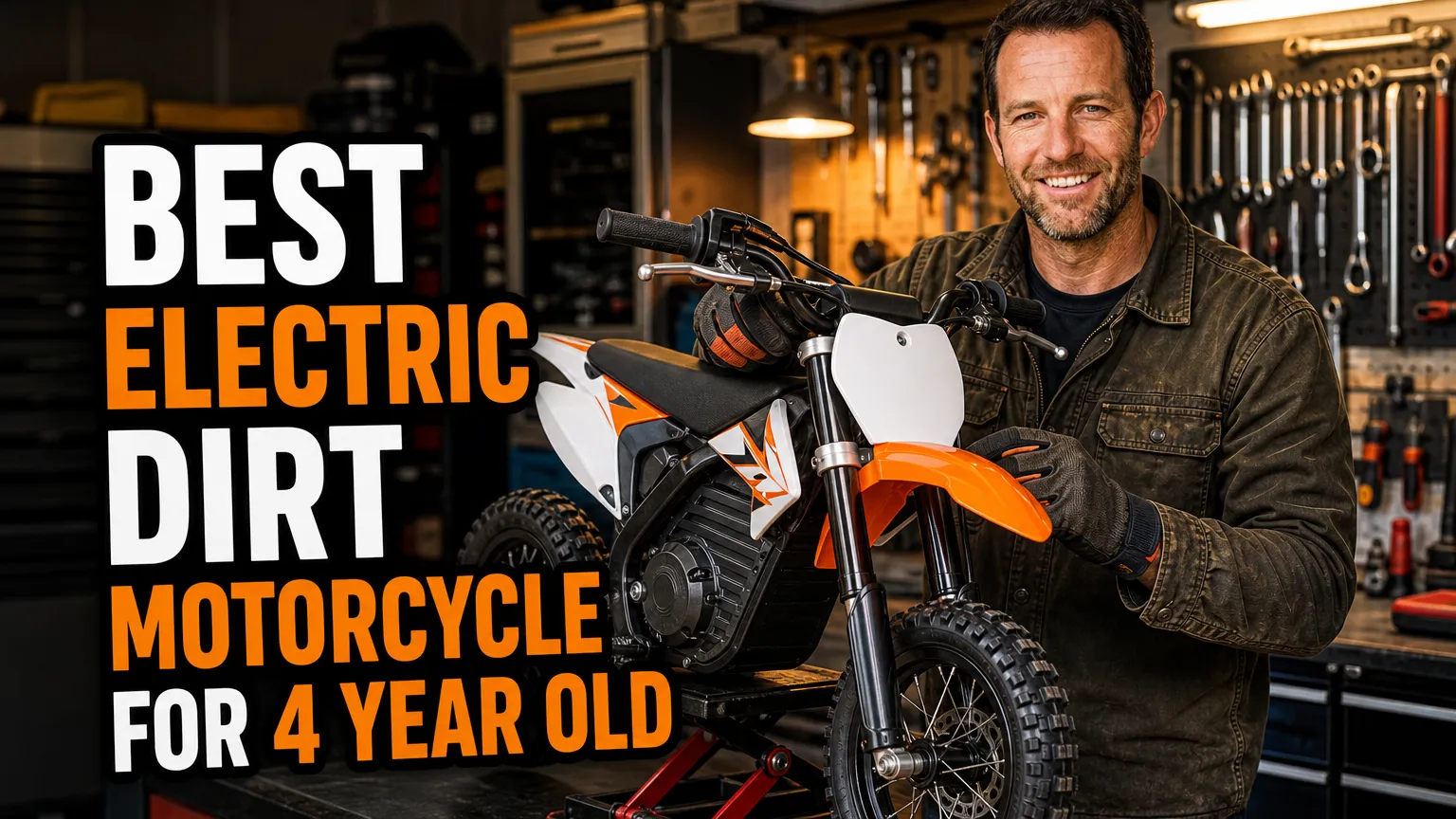
I think the best electric dirt bike for a 4-year-old is the one a child can control confidently, not the one with the biggest motor or the highest top speed. At this age, fit, gentle power delivery, reliable brakes, and close adult supervision matter much more than impressive performance figures.
I’ve put together this shortlist around real, named models with child-focused designs. Availability, specifications, and prices can change, so I’d confirm details with the maker or dealer before buying; I’d also have my child try the bike in person whenever possible.
- I’d start by checking the child’s inseam, balance, and ability to use both brakes.
- The STACYC 12eDRIVE is my beginner-friendly first choice for many smaller riders.
- I’d consider larger or faster models only if the child fits them and can already ride confidently.
- A full-face helmet, protective gear, a closed practice area, and adult supervision are essential.
1. STACYC 12eDRIVE — My First Pick for a Small Beginner
When I’m looking for a first powered two-wheeler for a young child, I like the STACYC 12eDRIVE because its small format and restrained performance are built around early riding practice. It has 12-inch wheels, a 100-watt motor, and a low top speed commonly listed at about 6 mph, with speed modes that let an adult choose a more manageable setting.
STACYC positions the 12eDRIVE for children around ages 3 to 5, but I treat that as a guide rather than a guarantee of fit. I’d check whether my child can stand over it comfortably, reach the controls, and hold it upright. A child who is still learning to balance may benefit from practicing on a non-powered balance bike first.
Why I like it for early practice
The low speed makes the STACYC 12eDRIVE appealing for learning throttle control in a flat, open space. Its balance-bike-style layout also gives a young rider room to focus on looking ahead, steering, and stopping instead of immediately managing a complicated set of motorcycle controls.
I wouldn’t mistake a low top speed for permission to skip safety gear. I’d still use a properly fitted full-face helmet, gloves, boots, and protective clothing, and I’d stay close enough to intervene. Prices vary by retailer and package, but I’d expect it to sit in the several-hundred-dollar range.
2. STACYC 16eDRIVE — My Choice for a Taller, More Confident Child
The STACYC 16eDRIVE is the next size up in the brand’s electric balance-bike lineup. It uses 16-inch wheels and a 200-watt motor, and its published top speed is commonly around 11 mph, depending on the version and selected mode. STACYC generally lists it for children roughly ages 4 to 8.
That age range includes four-year-olds, but I wouldn’t buy it just because the birthday fits the label. I’d check the child’s inseam and confidence carefully. If my rider cannot comfortably manage the bike’s size and weight while stopped, I’d choose a smaller model or wait rather than expecting them to grow into it.
When I’d step up to the 16-inch model
I’d consider the 16eDRIVE for a child who has already practiced on a balance bike, can steer and brake reliably, and is tall enough to handle the larger frame. Its multiple speed settings give an adult a way to begin conservatively, but I’d keep the bike on its lowest suitable setting until the child’s control is consistent.
The larger wheels may feel more composed over small bumps than a smaller bike, but they do not turn this into a high-speed trail machine. My estimate for pricing would be in the upper-hundreds range, with the exact cost depending on battery, charger, and retailer. I’d compare those included items before deciding.
3. OSET 12.5 Eco — My Pick for a Purpose-Built Trials-Style Bike
The OSET 12.5 Eco is a small electric trials-style motorcycle designed for young riders, rather than a simple balance bike with a motor added. OSET’s youth models are known for adjustable power settings, and the 12.5 platform is aimed at very young children. I’d look at this model for a family that wants a more motorcycle-like learning experience on private land.
Its appeal to me is the focus on controlled off-road riding. Electric power avoids clutch and gear changes, while adult-adjustable settings can help tailor the response to a beginner. I’d verify the precise equipment and adjustment options for the specific model year, since specifications and versions can differ by market.
Who I think should consider it
I’d put the OSET 12.5 Eco on the list for a child who already shows good balance and is ready for dedicated off-road instruction. It’s a more specialized and typically more expensive choice than a small balance-style electric bike, so I’d want access to a suitable practice area and a clear plan for coaching before spending at this level.
It’s also important to judge the bike by fit, not the “12.5” in its name. I’d ask an OSET dealer about seat height, weight, recommended rider range, battery care, and available speed limits. Depending on the package and market, I’d budget substantially more than for an entry-level children’s electric bike.
4. Hiboy DK1 — My Lower-Cost Seated Option, With a Speed Caution
The Hiboy DK1 is a seated electric dirt-style bike marketed for children, with a 300-watt motor, a 36-volt battery, and three speed settings. Published product information commonly lists settings of about 5, 7.5, and 15.5 mph, though I’d confirm the current specification before ordering. Its higher top setting is the reason I’d be especially careful about choosing it for a four-year-old.
I like that the lowest speed is much more approachable than the maximum, and the DK1 usually costs less than specialist trials bikes. Still, I wouldn’t assume that an age range in a product listing means it fits every child of that age. I’d check the seat height, brake reach, rider weight limit, and whether a supervising adult can control access to higher modes.
How I’d approach the DK1
If I chose the Hiboy DK1 for a four-year-old, I’d use only the slowest setting at first and ride in a level, enclosed area away from traffic, water, steep slopes, and other riders. I’d supervise continuously and stop the session as soon as the child became tired or distracted.
This model may suit a family comparing value, but I’d weigh price against the practical details: how easily the bike fits the child, how the brakes feel, what replacement parts are available, and how the speed setting is managed. I’d also check the seller’s warranty and battery instructions rather than relying only on a listing headline.
5. KTM SX-E 1.12 — My Premium Balance-Style Alternative
The KTM SX-E 1.12 is an electric balance-bike-style model made for young riders, and it gives families a way to start with a recognizable motorcycle brand. Its compact 12-inch format is intended for small children, with electric assistance and selectable riding modes depending on the model version. I’d confirm current availability and specifications through an authorized KTM dealer.
I see the SX-E 1.12 as a choice for learning balance and basic electric-bike control rather than as a full-size motocross motorcycle. That distinction matters: a child may enjoy the dirt-bike look, but the best first ride is still the one that lets them put their feet down, steer naturally, and stop without panic.
What I’d check before buying
I’d ask the dealer about the speed range, how the riding modes are changed, battery charging time, replacement battery availability, and whether the model can be adjusted as the child grows. KTM-branded children’s products can vary in local availability, and the price may be higher than a basic entry-level option.
I’d also compare it directly with the STACYC 12eDRIVE rather than assuming the brand name makes it the better fit. If my child is new to two wheels, I’d put ease of learning and manageable speed ahead of styling, badge, or adult-sized-bike resemblance.
How I Choose the Right Size and Power
Before I compare motors or prices, I measure the child’s inseam and think about their current riding skills. I want them to reach the ground securely, hold the bike steady, turn the bars without stretching, and operate the brakes. A child who can ride a pedal bike confidently may be ready for different controls than a child who is still working on balance.
I also look beyond the age recommendation. Rider height and weight limits, bike weight, brake reach, and the way the throttle responds all affect whether a child can manage a machine. I’d rather buy a well-fitting, slower bike than a larger model that a child can only handle when it is moving straight ahead.
Balance bike or seated dirt bike?
I think of the STACYC and KTM balance-style options as tools for developing balance and throttle control, while the OSET and Hiboy models offer more of a seated motorcycle experience. The right style depends on what the child can already do and what kind of riding the family intends to supervise.
If I’m still comparing riding categories, I find it useful to understand the difference between a dirt bike vs motorcycle. For a child’s first bike, though, I keep the decision simple: fit, low-speed control, and a safe place to practice come first.
Safety Rules I’d Follow Every Time
I’d never let a four-year-old ride without direct adult supervision. I’d choose a closed, flat practice space with plenty of room, keep the first sessions short, and teach one skill at a time: starting, looking ahead, turning gently, and stopping. I’d keep the bike away from public roads and never allow a child to ride near cars.
My minimum gear would include a correctly fitted full-face helmet designed for off-road riding, eye protection if the helmet does not provide it, gloves, long sleeves and pants, and sturdy over-the-ankle boots. I’d check the helmet fit each time and replace damaged protective equipment instead of treating it as an optional extra.
My pre-ride check
- I check tire condition, brakes, throttle return, fasteners, and battery charge.
- I confirm the beginner speed setting and make sure the child cannot change it unsupervised.
- I explain where to ride, where to stop, and what signal means “stop now.”
- I supervise from close by and end the ride if the child is tired, upset, or losing focus.
What I’d Budget For Beyond the Bike
I don’t compare purchase prices in isolation. I include a correctly sized helmet and protective gear, a charger, possible replacement parts, and routine battery care in my budget. I’d also check the warranty and parts support, especially for a model that may need new tires, brake components, or a battery after regular use.
If I’m learning about electric bikes for myself as well, I keep adult models separate from children’s bikes. Guides to the best electric motorcycle for beginners or the best motorcycle engine size for beginners can help with adult buying decisions, but those recommendations don’t determine what is safe for a preschool-age rider.
Likewise, commuter and touring motorcycles are a different conversation entirely. I’d use a guide to the best electric motorcycle for highway commuting or the best motorcycle for long distances and dirt roads for adult use, not as a shortcut for choosing children’s equipment.
My Final Pick
For many four-year-olds who are new to powered riding, I’d begin with the STACYC 12eDRIVE because its small size and low-speed design make it a practical starting point. If my child were taller and already confident on two wheels, I’d compare the STACYC 16eDRIVE and KTM SX-E 1.12 in person before choosing.
I’d reserve the OSET 12.5 Eco for a family seeking a more specialized trials-style experience, and I’d approach the faster top setting on the Hiboy DK1 with extra caution. Above all, I’d choose based on the child’s actual fit and control, follow the manufacturer’s instructions, and make every ride a supervised lesson rather than a speed test.
Frequently Asked Questions
What is the best electric dirt bike for most 4-year-olds?
I’d start by checking fit and riding ability. The STACYC 12eDRIVE is a sensible option for many beginners because it is small, light, and speed-limited.
Can a 4-year-old ride an electric dirt bike safely?
Some can, with close adult supervision, a correctly fitted helmet and protective gear, and a bike whose speed and size suit the child. Follow the manufacturer’s age and safety guidance.
How fast should an electric dirt bike for a young child go?
I prefer a low, adjustable beginner setting. A child should first show they can balance, brake, and stop reliably before anyone considers increasing the speed.
Should I choose a balance bike or a seated electric dirt bike?
I’d choose based on the child’s balance, reach, and control. A balance-style model helps build two-wheel skills, while a seated bike may suit a child who is not ready to manage a motorcycle-style riding position.

Related Articles

5 Best Electric Dirt Bikes for 7-Year-Old Riders: Safe, Size-Smart Picks
Compare five real electric motorcycles for young riders, with age guidance, speed and feature notes, plus practical tips for choosing…
Jake Miller
13 min read

5 Best First-Ride Motorcycles for 3-Year-Olds: Safe Picks for Tiny Riders
Explore five age-conscious motorcycle-style rides for 3-year-olds, from balance bikes to electric toys, plus fit, safety, and buying tips for…
Jake Miller
11 min read

8 Best Beginner Motorcycles for Teen Riders: Safe, Manageable Picks
Compare eight manageable motorcycles for teen riders, from learner-friendly street bikes to trail models, with fit, licensing, safety, and buying…
Jake Miller
13 min read