
8 Best Adventure Motorcycles for Short Riders That Actually Let You Flat-Foot in 2025
 Jake Miller
8 min read
Jake Miller
8 min read
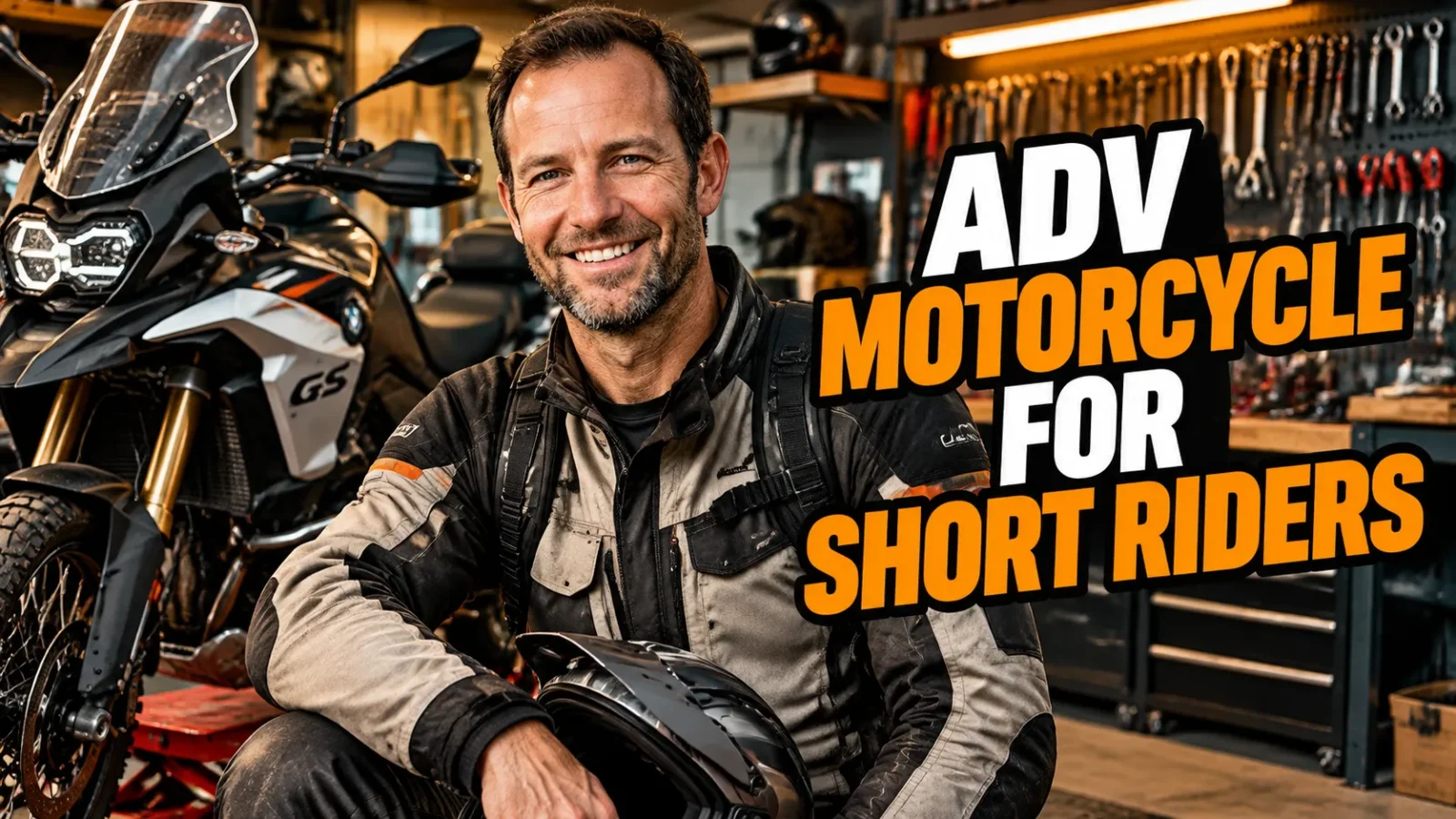
I’m 5 foot 5 with a 28-inch inseam. For years I avoided the adventure bike aisle because tall seats and wide tanks made me feel like I was climbing onto a moving ladder. Then I spent a full season test-riding current ADV machines, swapping low seats, and trying factory lowering kits. The best adv motorcycle for short riders category is finally getting real options from big brands, and I’ve narrowed down the ones that actually worked for my legs.
Before I get into my picks, one quick note. I’ve also learned that a weak battery can leave you stranded far from pavement, so I recommend reading what are the different types of motorcycle batteries ultimate guide if you plan to add heated grips, GPS, or auxiliary lights to any of these bikes.
- The Triumph Tiger 900 GT Low is my overall pick because its 760-780 mm seat lets me flat-foot without losing ADV capability.
- The BMW F 750 GS with factory low suspension and low seat drops to roughly 770 mm, making it a superb highway tourer.
- The Kawasaki Versys-X 300 and BMW G 310 GS are the most accessible lightweight ADVs for shorter beginners.
- Factory low seat options, narrow frames, and lowering links matter more than the on-paper seat height.
1. Triumph Tiger 900 GT Low — My Overall Pick for Flat-Footing Confidence
If I could only own one ADV bike for my short inseam, this is the one. Triumph actually sells a dedicated low version of the Tiger 900, and that matters more than any aftermarket lowering link.
The Tiger 900 GT Low’s seat sits between 760 mm and 780 mm depending on the quick-adjust mechanism. I flat-foot both boots with my 28-inch inseam, even on uneven pavement. The low version keeps the 20-liter tank and full TFT display, so you lose very little besides height.
Power comes from an 888cc inline-triple that makes around 94 hp. It has a 6-axis IMU, cornering ABS, and multiple ride modes. The chassis feels stable at speed and soft enough on gravel.
My only real complaint is price. At roughly $15,000, it is the most expensive option here. But if you want a premium middleweight adventure bike without tiptoeing at every stop, nothing else I tested comes close.
2. BMW F 750 GS with Low Suspension — Best for Highway Comfort and Low Seat Options
The standard F 750 GS has a seat height of 815 mm, which already feels lower than many ADVs. But BMW offers a factory low suspension that drops the bike to 790 mm.
Add the low seat and you can get down to about 770 mm. I rode one with that exact setup, and my feet were comfortably planted at stops. The 853cc parallel twin puts out around 77 hp and 61 lb-ft of torque. It is smooth, predictable, and excellent on long highway stretches.
The optional dynamic electronic suspension and multiple ride modes make the F 750 GS feel more polished than its price suggests. With luggage and a passenger, it stays stable and planted.
If you want even more wind protection and comfort for cross-country trips, my best full touring motorcycle for short riders guide covers taller but still manageable tourers.
3. Honda NX500 — Best Middleweight Adventure Bike for Newer Riders
The Honda NX500 replaced the old CB500X, and I was skeptical at first. It keeps the approachable parallel-twin character that made the previous model so popular with shorter and newer riders.
Seat height is 830 mm, which sounds tall on paper. In reality, Honda’s narrow waist and low center of gravity let me get the balls of both feet down with my 28-inch inseam. The 471cc twin makes 47 hp and 31 lb-ft. It never scares you, even when you grab a little too much throttle on loose gravel.
I like the 5-inch TFT dash, traction control, and 19-inch front wheel that soaks up rough pavement without feeling heavy. Around town and on fire roads, the NX500 is forgiving and easy to manage.
For more confidence-first machines, my best motorcycle for short beginners guide covers alternatives that are even less intimidating.
4. Royal Enfield Himalayan 450 — Best Affordable Modern ADV for Shorter Inseams
I did not expect a Royal Enfield to land on this list, but the new Himalayan 450 changed my mind. Its standard seat height is 825 mm, and Royal Enfield offers a low seat that brings it down to around 805 mm.
That is a meaningful difference when you are stopped on a sloped shoulder. The new 452cc liquid-cooled Sherpa single makes about 40 hp and 29 lb-ft. It is not fast, but the torque is friendly and predictable.
The Showa suspension front and rear gives the chassis more stability than the old 411. I felt comfortable standing on the pegs and sliding the bike around mild gravel. The seat is narrow near the tank, so my legs drop closer to straight down.
It also shows up in my best beginner motorcycle for short girls guide because the low seat and soft power delivery inspire confidence.
5. Kawasaki Versys-X 300 — Best Lightweight Adventure Bike for City and Gravel
The Versys-X 300 has been a default recommendation for shorter ADV riders for years, and for good reason. Its seat height is 815 mm, which is lower than almost anything in the class.
The 296cc parallel twin makes about 40 hp. It is not a missile, but it will hold 70 mph on the highway and feels much lighter than a middleweight. The 19-inch front wheel and long-travel suspension handle gravel roads and broken pavement well.
I found the narrow seat and slim fuel tank let me put both heels down without any modifications. It is my pick if you want a cheap, reliable, easy-to-ride adventure bike that does not demand long legs or expert skills.
For more dirt-leaning machines that still fit shorter riders, check my best dual purpose motorcycle for short riders guide.
6. KTM 390 Adventure — Best Off-Road-Capable Small ADV for Short Riders
This one looks tall on paper. The standard seat is 855 mm, which would normally scare me away. But KTM’s 390 Adventure is one of the narrowest bikes in the class, and the optional low seat drops the height to about 830 mm.
With that low seat, I could get the balls of both feet down. It is still a reach, but the upright ergos and light 373cc single make it easy to manage. The engine makes around 44 hp and is surprisingly punchy for its size.
Cornering ABS and off-road traction control are standard, and the WP suspension is adjustable. On dirt, the 390 Adventure feels more serious than a touring-oriented ADV. If you want to spend more time on actual trails, this is my pick.
I also cover dedicated dirt bikes in my best off road motorcycle for short riders guide if the 390 still feels too tall.
7. Suzuki V-Strom 650 with Low Seat — Best Proven All-Rounder
The V-Strom 650 has been around forever, and that is not a bad thing. The standard seat is 835 mm, but Suzuki offers a factory low seat that drops height by about 20 mm. With that installed, I can get both toes down and control the bike at stops.
The 645cc V-twin makes about 70 hp and 46 lb-ft. It is much stronger than the 300-class machines and still lighter than most liter-plus ADVs. The seat is long and wide, which can reduce perceived height once you are moving.
I like the proven reliability and huge accessory market. It is easy to add luggage, crash bars, and heated grips. The V-Strom is heavier at low speed, so shorter riders should practice slow-speed balance before loading it down.
This is a great middle ground if you want a real twin-cylinder ADV without jumping to a tall, top-heavy machine.
8. BMW G 310 GS — Best Entry-Level Euro ADV for Short Riders
The G 310 GS is another strong entry-level adventure bike. Its standard seat is 835 mm, but a factory low seat brings it to around 820 mm. That does not sound huge, but the bike weighs only about 175 kg wet.
The light weight and narrow mid-section make it much easier to catch and hold at a stop. The 313cc single makes about 34 hp and 20 lb-ft. It is smooth enough for short highway stints and excellent for city commuting and gravel.
Build quality is typical BMW, with a reverse-mounted single cylinder that lowers the center of gravity. I felt more confident on this bike at stoplights than on many shorter-seat cruisers.
It is not an exciting engine, but for short riders building skills or wanting a manageable adventure bike, it is one of the easiest picks to live with day to day.
My biggest lesson from all this testing is simple: seat height is only part of the story. Narrow frames, low center of gravity, and factory low seat options matter just as much. A tall-looking bike with a slim waist can feel easier to handle than a low cruiser with wide pegs.
Before you buy, sit on the bike with your riding boots on. Reach for the ground, hold the brakes, and rock the bike side to side. If you can plant the balls of both feet and control the weight, that is usually enough. For shorter riders like me, the right adventure bike is out there. You just need to ignore the spec sheet and trust your feet.
Frequently Asked Questions
What is the best adventure motorcycle for short riders?
My top pick is the Triumph Tiger 900 GT Low because its seat adjusts down to 760 mm, giving most inseams a flat-footed stop.
Can a 5 foot tall rider ride an adventure motorcycle?
Yes, but you almost always need a factory low seat, lowered suspension, or a narrow frame. Bikes like the Kawasaki Versys-X 300 and BMW G 310 GS are more manageable.
How much does lowering an ADV bike cost?
A quality lowering link and kickstand adjustment often runs $100 to $400, while a professional suspension lower can cost $500 to $1,200 depending on the bike.
Are 300cc ADV motorcycles enough for highway riding?
Yes, a Versys-X 300 or BMW G 310 GS will hold 70 mph, but long climbs and loaded touring are more relaxed on a middleweight like the Honda NX500.

Related Articles

Scooters vs Motorcycles: My Honest, First-Hand Comparison After Riding Both for Years
After thousands of miles on both scooters and motorcycles, I break down cost, comfort, maintenance, and safety to help you…
Jake Miller
10 min read

7 Scooters That Look Like Motorcycles for Riders Who Want Style and Storage
Explore my top 7 scooters that look like motorcycles, from adventure crossovers like the Honda X-ADV to sporty maxis like…
Jake Miller
9 min read

How Long Do Honda Motorcycles Last? My 20-Year Owner’s Reality Check
Discover how long Honda motorcycles really last from an owner with 100k+ miles of experience. Learn maintenance secrets, high-mileage examples,…
Jake Miller
10 min read