
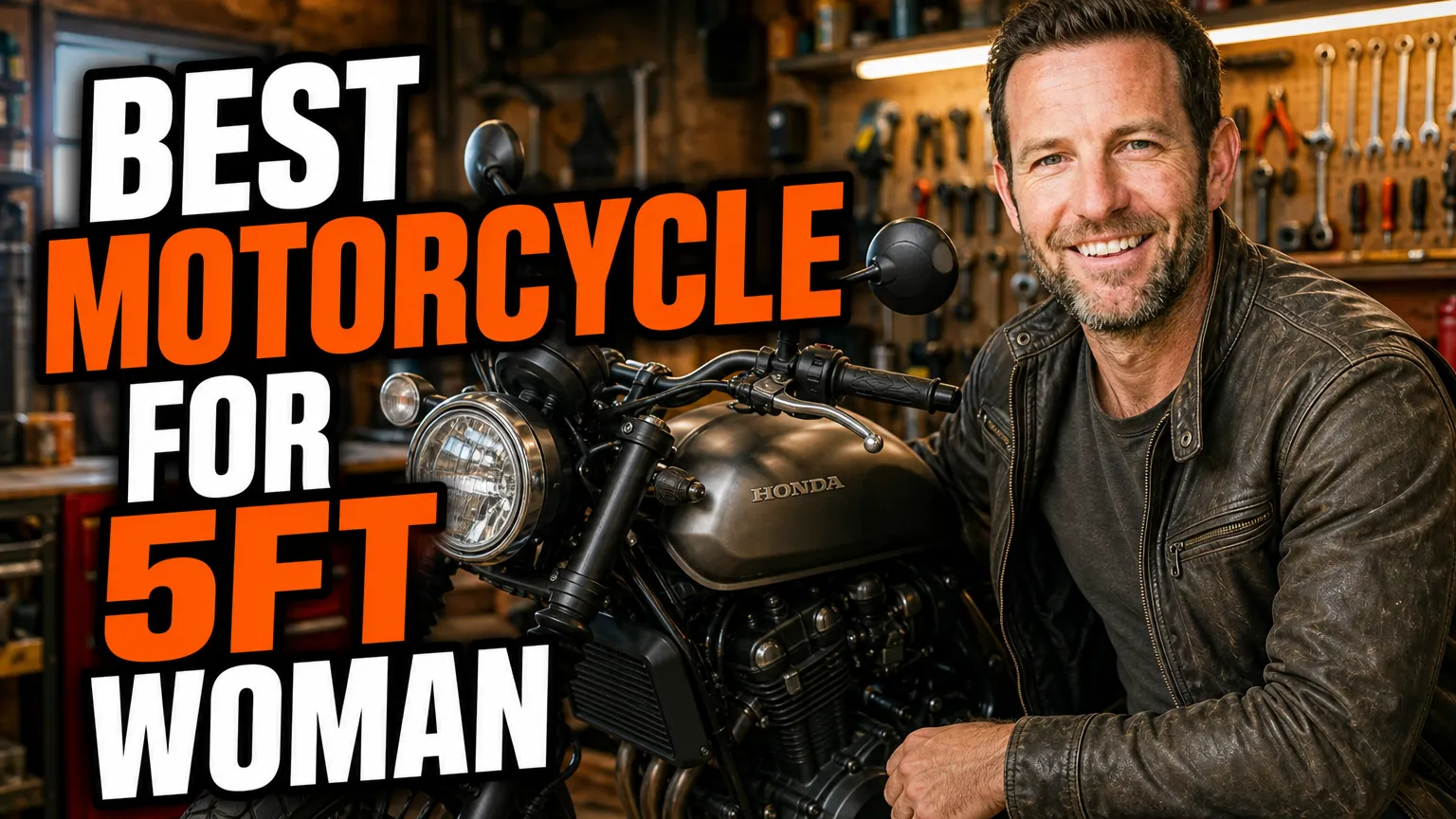
Finding a motorcycle that fits when I’m five feet tall is about more than reaching the pavement with both feet. I also want to reach the controls comfortably, balance the bike at low speeds, and feel confident backing it into a parking space. A low seat can help, but a narrow seat and manageable weight can make just as much difference.
- I’d start with the Yamaha V Star 250 or Honda Rebel 300 for an approachable, low-seat ride.
- The Kawasaki Eliminator and Honda Rebel 500 offer more power while keeping a relatively accessible fit.
- The Honda Grom is light and friendly for town riding, but I wouldn’t choose it as my main highway bike.
- I always test the seat, reach, balance, and parking-lot handling before deciding a motorcycle fits me.
Below, I’ve picked eight real motorcycles that I’d consider for a rider around five feet tall. Published specifications can vary by model year and market, so I’d confirm the numbers for the exact bike I’m shopping for and sit on it in person whenever possible.
1. Yamaha V Star 250 — My Pick for a Light, Low Cruiser
The Yamaha V Star 250 appeals to me because its compact cruiser layout pairs a seat height of about 27 inches with a wet weight of roughly 326 pounds. Its 249cc air-cooled, fuel-injected V-twin is approachable in size, and the narrow shape can make it easier to get a foot down than a wider motorcycle with a similar seat measurement.
I’d consider it for relaxed local rides, commuting, and learning on a traditional-looking motorcycle. Its modest engine is better suited to steady, sensible riding than rapid acceleration or long stretches of fast highway travel, so I’d think carefully about the routes I ride most often.
Why I’d try it
For me, the combination of a low seat and relatively light weight is the V Star’s strongest selling point. A bike that I can confidently steady at a stop can feel much less intimidating than a heavier model, even if the heavier model’s seat is only slightly taller.
I’d check current dealer availability and pricing, since model-year offerings can change. I’d also take a test ride before treating the V Star 250 as a long-distance option; comfort and passing power depend on my own riding conditions and expectations.
2. Honda Rebel 300 — My Beginner-Friendly Full-Size Choice
The Honda Rebel 300 is one of my first test-ride candidates for a shorter new rider. It has a low seat height of about 27.2 inches, a 286cc liquid-cooled single-cylinder engine, and a curb weight around 364 pounds, depending on the version and model year.
I like that the Rebel’s cruiser stance gives me a low seat without the bike feeling like a tiny minibike. Its modern equipment, including fuel injection and available ABS on applicable versions, also makes it a practical choice for everyday riding. I’d confirm which trim I’m buying, because equipment and pricing can vary.
What I’d check before buying
I’d sit on the Rebel 300 and pay attention to where its tank and seat meet: that area affects how easily I can slide forward and plant a foot. I’d also try the clutch and handlebars from my natural riding position instead of assuming the low saddle guarantees a comfortable fit.
If I’m new to riding, I’d compare the engine and intended use against this guide to the best motorcycle engine size for beginners. For a small-displacement bike, I’d also read about how fast can a 150cc motorcycle go unleashing top speeds to get a sense of how engine size relates to performance, while remembering that the Rebel 300 is a different class of motorcycle.
3. Honda Rebel 500 — My Low Cruiser for More Passing Power
The Honda Rebel 500 keeps the Rebel family’s low 27.2-inch seat but uses a 471cc liquid-cooled parallel-twin engine. Depending on model year and ABS equipment, its curb weight is roughly 408 to 414 pounds. I see it as a useful step up for riders who want more performance than a beginner-focused 300 without moving to a tall, upright motorcycle.
In my view, that extra power can make the Rebel 500 more comfortable for mixed riding, including faster roads, than a small-displacement cruiser. I’d still be honest about the added weight: a low seat helps me reach the ground, but it doesn’t make a 400-pound motorcycle effortless to push around when the engine is off.
How I’d decide between the 300 and 500
I’d compare them based on where and how I plan to ride, not on a rule that says every new rider must start small. If I expect regular highway trips or frequent two-up riding, I’d take the 500 for a careful test ride and see whether its clutch, throttle response, and weight feel comfortable to me.
For a closer look at engine size and performance expectations, I’d read how fast can a 300cc motorcycle go and how fast can a 500cc motorcycle go. Those comparisons help me think about my needs, but they can’t replace a test ride on the actual motorcycle.
4. Kawasaki Eliminator — My Choice for a Modern, Manageable Twin
The Kawasaki Eliminator uses a 451cc liquid-cooled parallel-twin engine and has a seat height of about 28.9 inches. Its curb weight is around 388 pounds, giving it a relatively accessible combination of moderate seat height and manageable mass for a motorcycle with a larger engine than the small entry-level cruisers.
I’d put the Eliminator on my list if I wanted a more upright, contemporary cruiser feel rather than the laid-back posture of some traditional designs. The seat is taller than the Rebel’s on paper, so I’d pay particular attention to how its seat width and shape affect my reach to the ground.
Where it may suit me
I’d consider the Eliminator for commuting and general road use if its riding position feels natural. Its twin-cylinder engine gives it a different character from a small single, but I’d check the exact model-year features and pricing with a dealer instead of assuming every trim is identical.
At five feet tall, I wouldn’t reject the Eliminator just because its published seat height is nearly 29 inches. I’d sit on it wearing my normal riding boots and check whether I can support it securely with one foot, which may be more useful than expecting to have both feet flat.
5. Kawasaki Vulcan S — My Adjustable-Fit Option
The Kawasaki Vulcan S is a 649cc parallel-twin cruiser with a low seat height of about 27.8 inches and a curb weight around 498 pounds. Its standout feature for fit is Kawasaki’s Ergo-Fit system, which offers different combinations of seat, handlebar, and footpeg positions on applicable configurations.
I like the idea of adjustable contact points because a shorter rider’s comfort depends on more than leg length. If I can bring the controls into a position that suits my reach, I may feel less stretched out and more relaxed. I’d ask a dealer which Ergo-Fit parts and configurations are available for the exact bike.
The trade-off I’d consider
The Vulcan S is considerably heavier than the Rebel 300 or Eliminator, and its 649cc engine deserves respect from a newer rider. I’d practice low-speed turns and stops before committing to daily use, and I’d make sure I can manage the bike in a driveway or parking space without relying on the engine to do the work.
For me, this is a promising option when I want a low seat and a bigger engine, but it is not an automatic fit for every five-foot rider. I’d make its adjustable ergonomics work in my favor only after a proper sit-on and test ride.
6. Royal Enfield Meteor 350 — My Relaxed, Classic-Style Pick
The Royal Enfield Meteor 350 has a seat height of about 30.1 inches and a curb weight around 421 pounds. Those figures make it taller and heavier than the smallest cruisers here, but I’d still consider it because seat shape and riding posture can change how reachable a motorcycle feels in practice.
Its 349cc air-oil-cooled single-cylinder engine, relaxed cruiser layout, and trip-friendly features such as a standard digital instrument display and navigation-related equipment on some trims give the Meteor a distinctive everyday character. I’d confirm the equipment on the specific version I’m considering, since features differ by market and trim.
Why I’d insist on a real fit check
A 30-inch seat height could be a challenge for me at five feet tall, so I wouldn’t buy this one based on photos or specification sheets alone. I’d check whether I can slide forward naturally, reach the bars without leaning, and support the bike at a stop.
If I like its classic style, I’d ask a dealer about seat options and whether any change affects my reach or comfort. I’d also test maneuvering it at walking speed, because the Meteor’s weight matters just as much as its seat height when I’m turning around or backing up.
7. Honda Grom — My Lightweight Pick for Town Riding
The Honda Grom is a compact mini motorcycle with a 124cc air-cooled single-cylinder engine, a seat height around 30 inches, and a curb weight of roughly 224 pounds. Its saddle is not especially low on paper, but I’d consider it because its very light weight can make stopping, parking, and low-speed practice feel less daunting.
I see the Grom as a fun urban runabout or an additional motorcycle for short trips, not as my all-purpose highway machine. Its small engine and compact size suit local streets and lower-speed riding better than long, fast commutes. I’d check the road conditions and legal requirements where I live before choosing it for regular travel.
Who I think will enjoy it
I’d suggest the Grom to someone who wants an easygoing motorcycle for neighborhood rides, city errands, or building basic skills. Its low overall mass can be a real confidence boost, but I’d still try the seat because a 30-inch measurement may surprise riders who expect a mini bike to have a very low saddle.
For my needs, the Grom would be a specialist choice rather than a direct substitute for a full-size cruiser. I’d choose it for light, local fun and look elsewhere if I needed more comfort, range, or performance at higher speeds.
8. Indian Scout Bobber — My Low-Seat Choice for Experienced Riders
The Indian Scout Bobber stands out for its very low seat, listed around 25.6 inches on recent versions, and its powerful 1,250cc V-twin engine. It is a full-size, premium motorcycle, and its weight is roughly in the mid-500-pound range depending on model year and configuration. That low seat may help me reach the ground, but the weight and power make it a serious commitment.
I’d consider the Scout Bobber if I were an experienced rider who wanted a muscular cruiser and could confidently manage its size. Its low saddle does not make it a beginner bike by itself, and I’d think carefully about parking, slow-speed control, and the cost of purchase and ownership.
My fit and experience caveat
I wouldn’t put the Scout Bobber at the top of a first-bike shortlist simply because it has the lowest seat here. I’d arrange a thorough dealer sit-on and test ride, and I’d practice in a controlled area before riding it in traffic. A short rider can enjoy a large motorcycle, but I’d want my skills and confidence to match its performance.
If I’m more interested in upright adventure-style motorcycles, I’d compare options in this guide to the best adv motorcycle for short riders. Adventure bikes are often taller, so I’d pay close attention to seat shape, suspension, and available fit adjustments.
How I Choose the Right Fit at Five Feet Tall
I start with the seat, but I don’t stop there. A narrow saddle can let my legs drop more vertically, while a wide seat can push them outward and make the ground feel farther away. I also check handlebar reach, footpeg position, clutch effort, and whether I can turn the bars comfortably without stretching.
When I test a motorcycle, I wear the boots and gear I expect to ride in. I try stopping with one foot planted, then move the motorcycle a short distance with the engine off if the dealer permits it. I pay attention to how the bike feels at a standstill, because that’s when weight and balance are easiest to notice.
My checklist before I buy
- Seat and reach: I check whether I can get a secure foot down and reach the controls without straining.
- Weight and balance: I assess how easily I can steady, push, and turn the bike at walking speed.
- Riding plans: I match engine size and comfort to my usual roads, passenger needs, and experience.
- Fit options: I ask about alternative seats, adjustable controls, and any available ergonomic accessories.
- Training: I consider a beginner course or refresher practice before riding a heavier or more powerful model.
I wouldn’t assume that I need to touch the ground with both feet flat. If I can confidently support the bike with one foot, reach the controls, and handle it during slow maneuvers, a motorcycle may still fit me well. If I feel uncertain during a test ride, I’d keep looking rather than trying to make myself adapt to a poor fit.
My Final Picks
If I wanted the lowest-stress place to begin, I’d compare the Yamaha V Star 250 and Honda Rebel 300 first. I’d look at the Rebel 500 or Kawasaki Eliminator if I wanted more engine performance, and I’d consider the Vulcan S if its adjustable ergonomics and added weight suited my needs.
My favorite choice is ultimately the one I can control confidently, not the one with the smallest seat-height number. I’d test several motorcycles, check current specifications and pricing, and choose the bike that feels balanced under me both on the road and when I’m maneuvering it at a standstill.
Frequently Asked Questions
What seat height should I look for if I am five feet tall?
I would start by trying motorcycles with seats around 27 to 29 inches, but seat width and suspension sag matter as much as the published height.
Can I ride a motorcycle if I cannot put both feet flat on the ground?
Yes. I focus on being able to plant one foot securely, balance the bike, and stop confidently. A professional fit check can help me assess whether a particular model feels manageable.
Which motorcycle on this list is best for a beginner?
I would shortlist the Honda Rebel 300, Yamaha V Star 250, and Honda Grom, depending on whether I want a full-size road bike, a simple cruiser, or a lightweight city motorcycle.
Are low-seat motorcycles always easy to handle?
No. Seat height is only one part of fit. I also consider weight, seat width, handlebar reach, balance, and how easily I can move the bike at walking speed.

Related Articles

7 Honda Motorcycles I’d Recommend to Women Riders, From First Bike to Adventure Tourer
Compare seven Honda motorcycles by seat height, weight, power, and riding style, with my practical picks for new riders, commuting,…
 Jake Miller
11 min read
Jake Miller
11 min read

7 Best Touring Motorcycles for Short Women: Low Seats, Real Comfort
Compare seven touring motorcycles that can fit shorter riders, from low-seat cruisers to full dressers, with key specs, comfort trade-offs,…
Jake Miller
10 min read

7 Best Sport-Touring Motorcycles for Women Who Want Comfort and Confidence
I compare seven sport-touring motorcycles for fit, seat height, weight, comfort, and features, with practical tips for choosing a bike…
Jake Miller
14 min read