
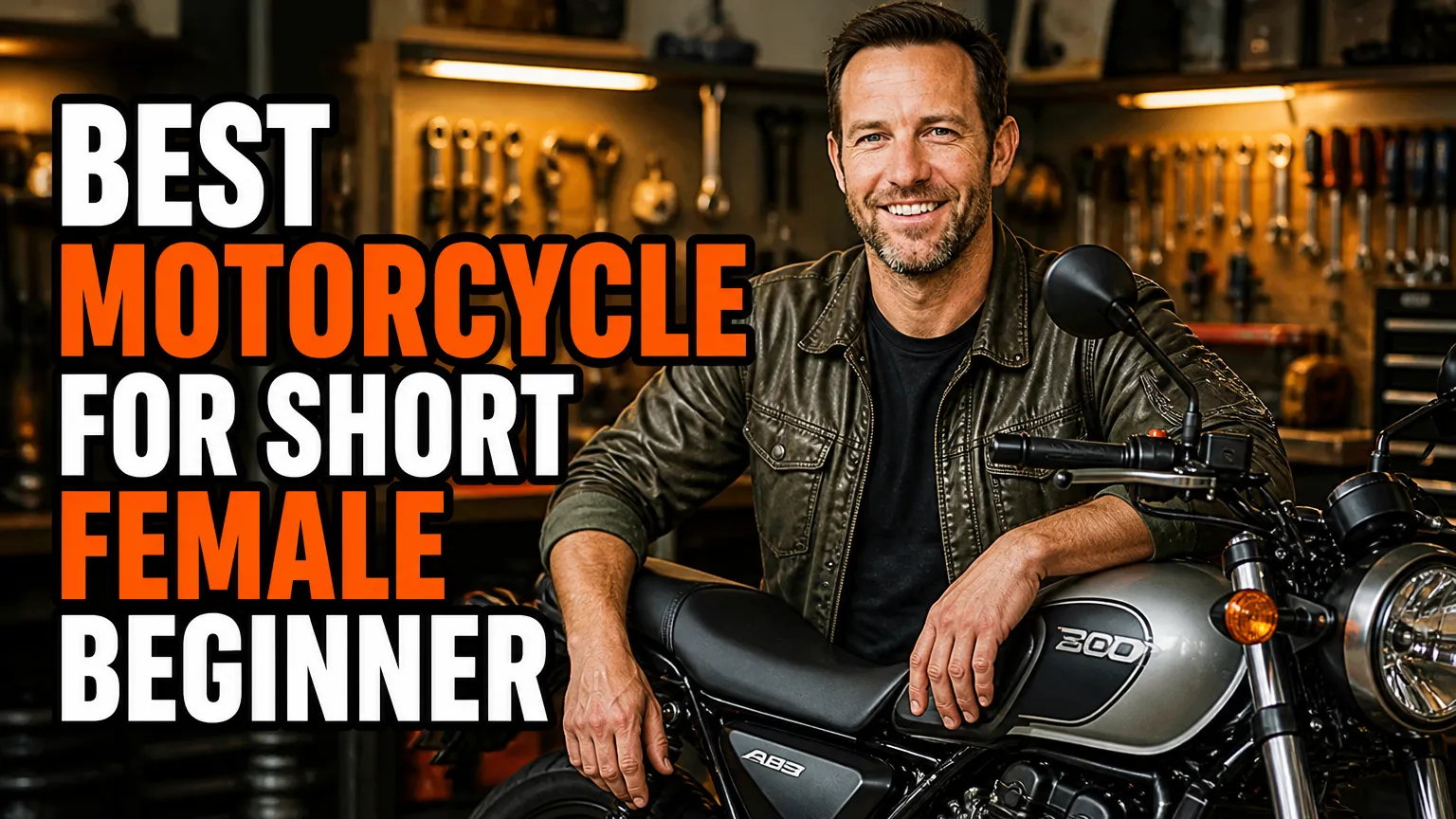
Finding a first motorcycle that feels manageable is about more than being able to touch the ground. I pay attention to seat height, seat width, weight, and how naturally I can reach the controls, because those details can make everyday stops feel far less stressful.
If you’re looking for the best motorcycle for a short female beginner, I’d start with bikes that have approachable power and a comfortable riding position, then sit on several before deciding. Here are seven real models I’d put on my shortlist, along with what I like about each and where I think it works best.
- I’d try the Honda Rebel 300 first if a low seat and approachable road manners are priorities.
- I’d compare seat width, bike weight, and balance alongside seat height; the lowest seat is not always the easiest fit.
- The Honda Grom is a friendly practice bike, but I wouldn’t choose it for regular highway use.
- I’d sit on the exact model, practice a safe stop, and take a beginner course before buying.
How I choose a beginner bike for a shorter rider
When I assess fit, I don’t treat a published seat-height number as a guarantee. A narrow seat lets my legs fall more vertically, while a broad seat can make a bike feel taller than its measurements suggest. I also think about whether I can lift the bike off its side stand and paddle it around without straining.
I don’t need both feet flat on the pavement at every stop. I do want to feel stable and in control, with a reliable way to put one foot down and reach the brake and clutch comfortably. If you want more options organized by fit, I’ve also put together a guide to the best beginner motorcycle for short people.
Every bike below is a real model, but availability and specifications can vary by year and country. I treat prices as approximate U.S. new-bike ranges, before taxes, fees, and accessories; I’d confirm the current local listing before budgeting.
1. Honda Rebel 300 — My pick for an especially low seat
The Honda Rebel 300 is the first bike I’d ask to sit on if I wanted a low seat and a calm, approachable street motorcycle. Its seat height is about 27.2 inches, which is notably lower than many standard-style beginner bikes. The 286cc single-cylinder engine gives me a more practical road-bike starting point than a small pit-style machine.
I like the Rebel’s feet-forward cruiser layout because it can feel natural at relaxed speeds, and its low seat helps me feel connected to the ground at a stop. Depending on year and ABS equipment, curb weight is roughly in the mid-360-pound range. I’d still ask for a stationary fit check, since a low seat doesn’t make a bike weightless when I’m moving it around a parking spot.
New-bike pricing commonly lands around the mid-$4,000s to low-$5,000s, depending on model year, ABS, and dealer charges. I’d choose the Rebel 300 for local roads and beginner practice, and I’d consider the ABS-equipped version if it fits my budget. For more low-seat cruiser ideas, I’d compare it with the best beginner cruiser motorcycle for short riders.
2. Kawasaki Eliminator — My choice for a roomier lightweight cruiser
The Kawasaki Eliminator gives me cruiser styling without the particularly stretched-out feel some cruisers have. Its 451cc parallel-twin engine is larger than the Rebel 300’s, and its seat sits around 28.9 inches high. I’d consider it for a beginner who wants a bike that can feel less limited as their confidence and road experience grow.
The Eliminator’s relatively low seat is a plus, but I’d pay close attention to its overall size and roughly 390-pound curb weight. I’d want to see whether I can comfortably reach the bars and manage the bike at walking pace, not just sit on it while it’s held upright. ABS availability and specifications depend on market and model year, so I’d check the exact version I’m considering.
I usually see new pricing in the mid-$6,000 range before fees, though the year and trim can change that. I’d pick the Eliminator if I wanted more engine capacity than a small starter bike offers and felt comfortable with its weight. If I’m deciding among fit-focused styles, I also find a broader guide to the best motorcycle for short riders useful.
3. Royal Enfield Meteor 350 — My pick for relaxed, steady rides
The Royal Enfield Meteor 350 appeals to me when I want a relaxed cruiser posture and simple, unhurried power. Its 349cc single-cylinder engine, low 30.1-inch seat, and upright feet-forward position make it a friendly candidate for commuting and scenic rides. I’d also look at its seat shape, because the way it narrows at the front can affect how easily I reach the ground.
The Meteor is heavier than its seat height might suggest, at about 421 pounds ready to ride, so I wouldn’t assume that a low saddle automatically makes it effortless to handle. I’d practice moving it with the engine off and check how it feels when I turn the bars fully. Its relaxed character suits a rider who values comfort over quick, sporty responses.
Pricing varies by trim and market, but I’d generally budget around the mid-$4,000s to low-$5,000s before fees. I’d consider the Meteor 350 if I had a comfortable fit and mostly planned relaxed road riding. If I’m still sorting through what matters for a first bike, I’d use a wider best motorcycle for short beginners guide to compare priorities.
4. Honda Grom — My choice for low-speed practice and city fun
The Honda Grom is the bike I’d consider when I want a lightweight, unintimidating way to learn the basics. Its 125cc air-cooled engine, four-speed manual transmission, and roughly 30-inch seat height make it approachable for neighborhood riding and low-speed practice. At about 224 pounds curb weight, it’s also much easier to maneuver by hand than the heavier road bikes on this list.
I wouldn’t confuse small size with universal suitability. The Grom is a compact motorcycle, and its engine is best suited to lower-speed streets; I wouldn’t choose it for frequent highway travel or carrying a passenger on longer trips. I’d also check how cramped the riding position feels, especially if I’m tall through the torso or legs.
New pricing is generally around the mid-$3,000s before fees, with the exact amount depending on year and location. For me, the Grom is a fun first step if my riding will stay local, or a useful practice bike before moving up. It’s not the best choice for every beginner, but its low weight can make early handling practice feel less intimidating.
5. Yamaha MT-03 — My pick for a light, upright street bike
The Yamaha MT-03 is a useful option for a beginner who wants a standard-style motorcycle rather than a cruiser. It has a 321cc parallel-twin engine, an upright riding position, and a seat height around 30.7 inches. I like that its neutral posture can make it easier to look around in traffic and keep my arms relaxed.
At roughly 373 pounds wet, the MT-03 is not as light as the Grom, but it’s still manageable compared with many larger motorcycles. I’d check whether the seat width lets my feet reach the ground comfortably and whether the handlebar position feels natural. Its engine has more road-going flexibility than a 125cc bike, so I’d consider it for commuting and varied streets.
I’d expect new pricing around the $5,000 mark before destination and dealer fees, with model-year differences. I’d choose the MT-03 if I wanted a beginner-friendly bike with a more conventional street-bike feel and planned to build skills gradually. For a very short inseam, I’d compare it in person with the Rebel and Eliminator rather than relying on seat-height figures alone.
6. Triumph Speed 400 — My pick for modern features in a compact standard
The Triumph Speed 400 brings a modern standard-bike layout to the beginner shortlist. Its 398cc liquid-cooled single-cylinder engine, six-speed gearbox, and seat height of about 31.1 inches give it a different feel from the low-slung cruisers here. I’d consider it if I wanted an upright position and features such as ride-by-wire throttle and switchable traction control.
Its seat is higher than the Rebel’s, but I wouldn’t rule it out just from that number. The Speed 400 weighs about 375 pounds wet, and seat shape and suspension sag can influence how it feels once I’m aboard. I’d want to try a complete stop, a tight turn, and a slow walk backward before deciding it suits me.
New pricing is commonly around $5,000 before fees, but I’d check current local pricing and included equipment. I’d pick the Speed 400 for a beginner who feels comfortable with its reach and wants a polished standard rather than a cruiser. Its higher seat makes an in-person fit check especially important for shorter riders.
7. BMW G 310 R — My pick for a premium-feeling small street bike
The BMW G 310 R is another compact road bike I’d consider if I wanted an upright riding position and a manageable engine. It uses a 313cc liquid-cooled single-cylinder engine, with a seat height around 30.9 inches and curb weight in the low- to mid-360-pound range, depending on specification. I find its proportions appealing for everyday street riding.
I’d pay attention to the G 310 R’s slightly taller seat compared with the Rebel 300, as well as the reach to the handlebars. For me, its standard-bike layout offers a useful middle ground: it isn’t as tiny as the Grom, but it also avoids the size of a larger touring motorcycle. I’d still check model-year details for equipment and available ABS features before buying.
Pricing is often around the $5,000 mark or higher before fees, and local promotions can make a meaningful difference. I’d consider the BMW if I wanted a compact, upright bike and its fit worked for my body. I wouldn’t pay extra for a badge before comparing the actual seat comfort, controls, and service costs with the other options.
My final fit checks before I buy
Try the exact bike, not just the specification sheet
I’d visit a dealership or a reputable used-bike seller and sit on the exact model and year I’m considering. With the bike held upright safely, I’d check whether I can place one foot firmly down, reach the controls without stretching, and turn the handlebars comfortably. If possible, I’d ask for a supervised test ride rather than guessing from a showroom perch.
Think about the whole riding routine
I’d picture the places I’ll actually ride: steep driveways, uneven parking lots, stop-and-go streets, and the occasional need to back into a parking space. A slightly taller, lighter bike might suit me better than a lower but heavier one. I’d also include protective gear, insurance, maintenance, and a certified beginner course in my budget.
Finally, I’d choose the motorcycle that helps me feel calm and in control, not the one that looks best in a photo or has the lowest number on a spec sheet. My personal starting points would be the Rebel 300 for a low seat, the Grom for low-speed practice, and the MT-03 for a conventional upright street-bike feel. I’d let a real fit check decide between them.
Frequently Asked Questions
What is the easiest beginner motorcycle for a short woman to handle?
I’d start by trying the Honda Rebel 300: its 27.2-inch seat and approachable power make it a strong fit for many newer riders. I’d still check the bike’s weight and your own reach in person.
Is a low seat height the only thing that matters?
No. I also look at a bike’s weight, seat width, balance, handlebar reach, and how confidently I can put a foot down. A narrow seat can make a taller bike easier to manage.
Can a Honda Grom be a good first motorcycle?
Yes, especially for learning controls and riding around town. I wouldn’t choose it if I needed regular highway capability, because its 125cc engine is best suited to lower-speed trips.
Should I lower a motorcycle if I can’t touch both feet down?
Not automatically. I’d first try a narrower seat and practice stopping with one foot down. If I still want a lower suspension, I’d have a qualified shop assess the handling and ground clearance.

Related Articles

8 Beginner-Friendly Motorcycles That Make Learning Feel Natural
Compare eight approachable beginner motorcycles by seat height, weight, engine size, and riding style, plus fit tips to help you…
 Jake Miller
12 min read
Jake Miller
12 min read

8 Roomy Motorcycles That Make a Great Fit for Tall Women
Compare eight roomy motorcycles for tall women, with seat heights, ergonomics, strengths, trade-offs, and fit tips to help you choose…
Jake Miller
11 min read

8 Beginner Motorcycles That Give Taller Riders More Room to Ride
Explore eight approachable motorcycles for taller riders, with comfort-focused fit notes, beginner-friendly handling, price guidance and important payload checks.
Jake Miller
14 min read