
8 Best Motorcycle Face Coverings for Women, From Summer Rides to Cold Commutes
 Jake Miller
13 min read
Jake Miller
13 min read
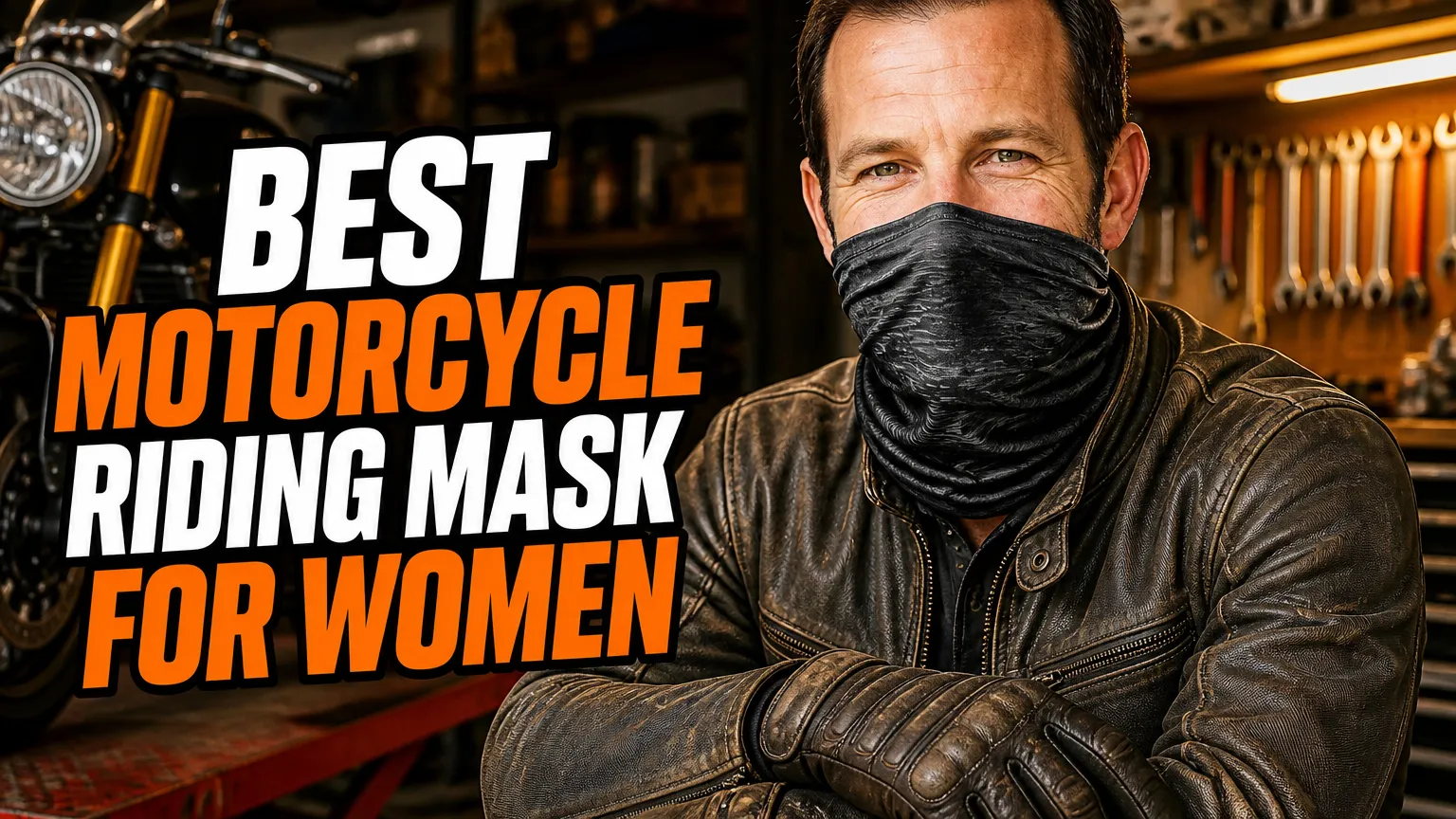
When I choose a motorcycle face covering, I want more than a piece of fabric between me and the wind. It needs to sit comfortably under my helmet, breathe well enough for the conditions, and stay in place when I turn my head. As a woman rider, I also pay attention to how a covering works with my hair, helmet fit, and the shape of my face.
There isn’t one perfect option for every ride. Below, I’ve gathered eight real products I’d consider for different weather and comfort needs, from lightweight neckwear to insulated balaclavas. I also share what I look for before buying, because a snug, comfortable fit matters as much as the fabric.
- I’d choose the REV’IT! Micro 2 WB Balaclava for a close-fitting, wind-blocking option in cool weather.
- I like the Schampa The Stretchy Thing and BUFF ThermoNet for versatile, lighter coverage.
- I check breathing comfort, helmet fit, fabric bulk, and how the covering handles my hair before buying.
- I treat every mask as comfort gear, not protective equipment or a substitute for my helmet.
1. REV’IT! Micro 2 WB Balaclava — My Pick for Windy, Cool Rides
When I want a close-fitting layer for chilly rides, the REV’IT! Micro 2 WB Balaclava is one of the first products I’d compare. The “WB” refers to its WindBarrier construction, which is designed to limit wind penetration. I like that idea for the exposed areas around my neck and lower face, where a steady breeze can make a cool ride feel much colder.
The Micro 2 WB is made to sit under a helmet rather than act like bulky winter headwear. I’d still check how its seams and face opening line up with my own helmet, especially if I wear glasses or have a helmet with a tight cheek fit. Prices vary by retailer and season, but I generally expect a technical motorcycle balaclava like this to cost more than a simple fabric tube.
Why I’d consider it
I’d reach for this model when I want wind resistance without wrapping a thick scarf around my neck. It’s a practical match for cool commutes and longer rides where exposed skin gets uncomfortable. For me, it’s less appealing on hot days, when even a thin full-coverage layer can feel too warm.
I’d try it under my helmet before heading out, rather than assuming the fabric will feel the same as it does off the bike. A covering that bunches near my jaw can affect comfort and make a helmet feel tighter than it should.
2. KLIM Arctic Balaclava — My Choice for Colder Conditions
The KLIM Arctic Balaclava is the one I’d put on my shortlist for genuinely cold-weather riding. KLIM is known for motorcycle apparel designed for demanding conditions, and this model is made as a thermal layer for under a helmet. Depending on the version available, its fabric and panel details can differ, so I’d check the current product listing rather than assume every year’s model is identical.
I like the idea of a balaclava that covers more than my neck and chin when cold air is finding every gap around my jacket collar. For winter use, I’d pay close attention to how much of my face it covers and whether the opening lets me breathe freely. My comfort threshold changes quickly when a face covering gets damp from breath or sits too close to my nose.
What I’d check before buying
I’d compare the Arctic Balaclava’s current fabric description and sizing with my helmet and jacket collar. A long neck section can be useful, but I don’t want excess material bunching under my collar or pushing up against the helmet. I’d also test it on a short ride first to see how it handles moisture.
This kind of insulated layer makes the most sense to me for cold rides, not all-season use. When I’m planning a winter route, I also think about the whole setup, including gloves, jacket, and bike choice. My guide to the best motorcycle for riding in snow is a useful place to think through the motorcycle side of those conditions.
3. Alpinestars Tech Neck Warmer — My Lightweight Neck-and-Chin Layer
I’d consider the Alpinestars Tech Neck Warmer when I want less coverage than a full balaclava. It’s a neck warmer rather than a traditional head-and-face mask, but I can pull many neck gaiter-style coverings higher over my chin when I need a little extra protection from cool air. I like this sort of simple layer for mild conditions when a full head covering feels like too much.
Alpinestars makes motorcycle gear, and the Tech Neck Warmer is designed as a lightweight accessory that can fit beneath riding equipment. I’d check the current product description for the exact material and care instructions, as details can vary between versions and retailers. Its main appeal for me is easy layering, not heavy insulation or complete face coverage.
When I’d wear it
I’d use it on a cool morning commute or a breezy ride when my neck needs coverage but my head doesn’t. It also gives me flexibility: I can adjust how high it sits instead of wearing a fixed face opening all day. If I’m riding in very cold weather, I’d pair this kind of neck layer with a more substantial option rather than expect it to block every gust.
Before I ride, I’d make sure the fabric stays flat under my jacket collar and doesn’t slide down. For shorter trips around town, that simple adjustability can be more convenient than changing into a full balaclava. I’d compare it with the needs of my route and the best motorcycle for town riding when putting together a practical everyday setup.
4. Seirus Innovation Neofleece Combo Clava — My Pick for a Warmer Face Covering
The Seirus Innovation Neofleece Combo Clava combines a balaclava-style covering with a warmer face section. I’d look at it when I want more insulation around my cheeks and lower face than a thin stretch tube can provide. Seirus has a range of cold-weather accessories, and the Combo Clava format is made to cover the head and neck while adding face protection.
For me, the key trade-off with a warmer design is that insulation can add bulk and hold more heat. I’d check that the face panel doesn’t interfere with my helmet fit or make breathing feel restricted. If I wear glasses, I’d also test the covering with them, since warm breath and a close-fitting fabric can contribute to fogging.
Who I think it suits
I’d consider this model for cold-weather riding or chilly days when a thin gaiter isn’t enough. It may also suit riders who want one item that covers more of the head and neck than a neck warmer. I’d be less likely to choose it for summer or stop-and-go riding on a warm day.
Price depends on the retailer and current version, so I’d compare the product details and return policy before ordering. With any insulated face covering, I’d start with a short ride and adjust the fit until the fabric feels secure without pressing uncomfortably against my face.
5. Schampa The Stretchy Thing — My Versatile Everyday Tube
Schampa The Stretchy Thing is a straightforward, adaptable neck tube that I’d consider for everyday riding. It can be worn in several ways, including as a neck gaiter or pulled up to cover the lower face. I like that versatility because I can change the coverage as conditions shift instead of committing to a full balaclava.
A tube-style covering is also useful when I want to keep my hair tucked away from my jacket collar or reduce direct contact between my skin and helmet padding. I’d check how its stretch and length work for my head and neck, since a tube that slides down can become an annoyance on a ride. The fabric is generally lighter than insulated winter options, but it still might feel warm in summer.
Why it earns a place on my list
I’d choose The Stretchy Thing for flexible coverage, easy packing, and layering. It doesn’t offer the same dedicated wind-blocking design as a technical balaclava, so I wouldn’t expect it to perform like one in cold, exposed conditions. But for mild weather and everyday use, I appreciate a simple item that can be adjusted quickly.
I’d wash it regularly and let it dry fully before putting it back in my riding gear. A neck tube gets close to my skin and can collect sweat, sunscreen, and dust, so easy care matters. When I’m picking gear for busy roads, I also think about the whole riding setup and my guide to the best motorcycle for urban riding.
6. BUFF ThermoNet Multifunctional Neckwear — My Lightweight Pick for Cool, Active Rides
The BUFF ThermoNet Multifunctional Neckwear is a versatile option I’d consider when I want lightweight coverage and several ways to wear it. BUFF’s ThermoNet range is designed to be light and warm for its weight, making it a potential middle ground between a thin summer tube and a thicker winter balaclava. I’d check the current version’s exact fabric details and care instructions before buying.
I like multifunctional neckwear because I can wear it around my neck, pull it over my chin, or adjust it depending on wind and temperature. That flexibility is handy when the morning starts cool and the afternoon warms up. It is not necessarily a dedicated motorcycle wind-blocking mask, so I’d keep my expectations realistic on a fast or very cold ride.
How I’d use it
I’d use the ThermoNet as a light layer for commuting, touring, or riding in changeable weather. The low-bulk feel is appealing to me under a helmet, but I’d still try it on with my actual helmet to check for pressure around my ears. I’d also make sure it doesn’t slip over my nose when I turn my head.
For women with long hair, a neck tube can help contain loose strands around the collar, though I’d still secure my hair so it can’t interfere with my helmet or riding. I’d choose this model when I want adaptable coverage more than full insulation, and keep a warmer option for genuinely cold days.
7. Airhole Airtube Ergo Drytech — My Option for Breathable, Shaped Coverage
The Airhole Airtube Ergo Drytech is a shaped neck-and-face tube from a brand known for face coverings used in outdoor sports. I’d consider it when I want a more contoured fit than a basic straight tube. The Drytech fabric is intended to manage moisture, which matters to me when a covering sits close to my mouth during a longer ride.
Airhole’s design approach focuses on face coverage and breathing comfort, but I’d check the current model’s exact construction before ordering. Products and materials can change over time, and I want to know how much coverage I’m getting around my nose, mouth, and neck. A close fit can be comfortable, but it should never make breathing feel difficult.
Fit notes from my perspective
I’d try the Airtube Ergo Drytech with my helmet and check whether its shaped section lines up with my nose and chin. That fit can vary from rider to rider, so I wouldn’t assume a model that works for one person will work just as well for me. I’d also test it for glasses fogging and see whether it stays put when I look over my shoulder.
This is the kind of option I’d compare for mild-to-cool conditions when I want more structured coverage than a loose neck gaiter. I wouldn’t rely on it for impact protection or treat it as a substitute for a helmet. For regular street use, I’d weigh comfort alongside the other gear I wear and the best motorcycle for street riding.
8. ZANheadgear Neoprene Half Face Mask — My Budget Option for Targeted Coverage
The ZANheadgear Neoprene Half Face Mask is a simple option I’d look at when I want coverage focused on my lower face. Neoprene is thicker and less airy than a lightweight fabric tube, so I’d expect a different feel and use case. I’d check the current version’s fastening method, venting, and material description, as product details can vary across designs.
I like the idea of a half mask for riders who don’t want fabric covering the whole head. At the same time, I’d pay close attention to how it sits under my helmet and whether its edges create pressure against my cheeks. Neoprene can feel warm, so I’d reserve it for cooler weather rather than assume it will be comfortable in every season.
What I’d keep in mind
I’d compare this mask with a full balaclava if I need neck warmth or want to keep hair contained. A half mask may be easier to put on and remove, but it doesn’t offer the same coverage. I’d also make sure any vents or openings feel comfortable and don’t direct cold air where I don’t want it.
Its price is usually more approachable than that of specialized technical gear, though I’d confirm current pricing and construction with the seller. If I’m buying a budget mask, I still want a fit that works safely with my helmet and doesn’t shift into my line of sight.
How I Choose a Face Covering for My Helmet and Riding Style
I match the fabric to the weather
For warm weather, I tend to look for light, breathable fabric that won’t trap too much heat. For cold or windy rides, I look for better insulation or a wind-resistant panel, while remembering that thicker fabric can feel bulky under a helmet. I don’t expect one mask to do every job well.
I check fit, seams, and breathing comfort
I put the covering on, then wear my helmet and check for bunching around my ears, jaw, and neck. I also take a few comfortable breaths and turn my head from side to side. If the mask shifts, presses painfully, or makes breathing feel restricted, I keep looking.
I think about hair, glasses, and washing
As a woman with hair that can escape around a helmet, I like coverings that help keep loose strands away from my collar without creating a bulky knot. I also check how the fabric works with my glasses and whether it is easy to wash. Regular cleaning helps me keep a face covering fresh, especially after sweaty rides.
Most importantly, I remember that a motorcycle mask is a comfort and weather layer, not protective armor. I wear a properly fitted, certified helmet and make sure my face covering doesn’t interfere with its fit. Once I’ve settled on the right coverage for my weather and route, I’m more comfortable focusing on the ride.
Frequently Asked Questions
How do I choose a motorcycle face covering that fits comfortably under a helmet?
I look for a low-bulk, stretchy design that stays flat around my ears, nose, and chin. I always try it with my helmet before riding.
Are motorcycle balaclavas too warm for summer?
Some are. I prefer lightweight, breathable neckwear for hot weather and save fleece or wind-blocking balaclavas for colder conditions.
Can a face covering replace a motorcycle helmet or protective gear?
No. I use a face covering for comfort and weather protection, but it is not a substitute for a certified helmet or protective riding equipment.
How often should I wash a motorcycle mask?
I follow the care label and wash mine regularly, especially after sweaty rides. Clean, fully dry fabric is more comfortable and helps prevent odors.

Related Articles

6 Best Sidecar Motorcycle Combos for Confident, Comfortable Riding
Compare six motorcycle and sidecar combinations for comfort, control, and passenger space, with practical buying advice to help me choose…
Jake Miller
10 min read

6 Best Ural Sidecar Motorcycles for Women: Stable, Characterful Picks
I compare six Ural sidecar models for women, from the current Gear Up to used classics, with fit, handling, features,…
Jake Miller
11 min read

7 Best Motorcycle Hair Solutions for Women With Long, Straight Hair
I compare seven practical hair and riding accessories for long, straight hair, with tips for helmet fit, low-bulk styles, comfort,…
Jake Miller
11 min read