
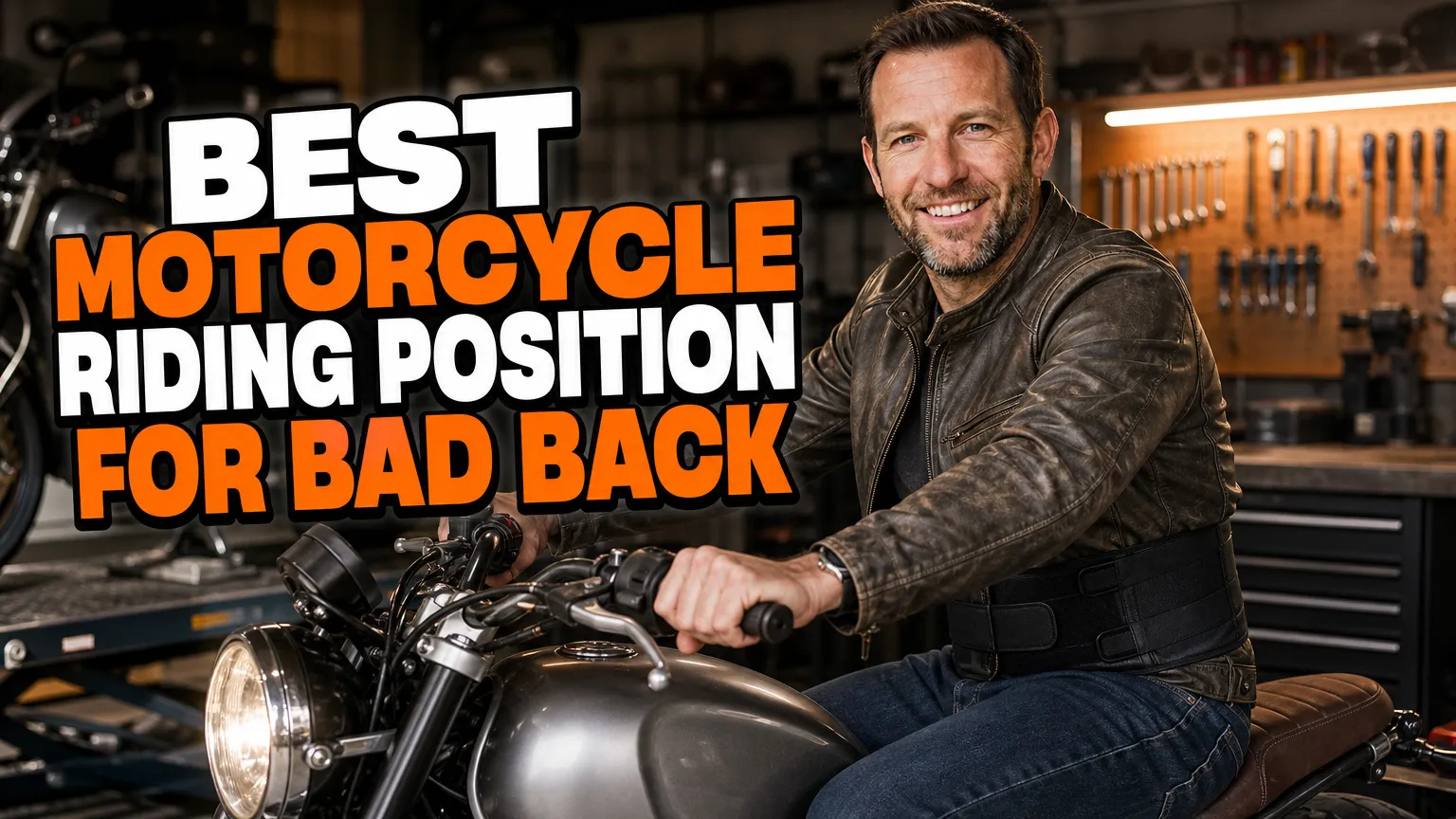
When my back starts to complain on a ride, I pay attention to more than the seat. My reach to the bars, knee bend, foot position, suspension, and even how much wind pushes against my chest can all affect how comfortable I feel. For me, the best motorcycle riding position for a bad back is one that lets me stay relaxed and supported without forcing me to hold a rigid pose.
I can’t promise that a certain motorcycle will solve back pain, and a comfortable posture for one rider may not fit another. I use the eight bikes below as practical starting points because they offer relatively upright ergonomics or touring-focused comfort, then I recommend checking the fit in person. Prices are broad new-bike estimates in the U.S.; model year, trim, options, and local market can change them.
- I aim for a neutral spine, relaxed shoulders, slightly bent elbows, and comfortable knee bend.
- I shortlist upright touring and adventure-touring motorcycles, but I test the actual fit rather than trusting the category label.
- I adjust one thing at a time, take breaks, and stop riding if symptoms become concerning.
- I treat persistent or worsening back pain as a health issue and get advice from a medical professional.
What I Look For in a Back-Friendly Riding Position
I try to sit with my pelvis supported and my spine in a natural, neutral curve rather than rounded or dramatically arched. I keep my shoulders loose, elbows slightly bent, and hands resting on the grips without reaching. If I have to lock my arms, shrug, or scoot forward to reach the controls, I take that as a sign that the setup needs attention.
I also check what happens when I put both feet on the pegs. A very tight knee angle can make me fidget, while bars that are too far away can pull my torso forward. I want to be able to shift my weight and stand briefly over bumps, if the motorcycle allows it, instead of bracing my whole back against every jolt.
“Upright” is not a guarantee of comfort. A straight-backed pose can still feel tiring if I’m holding my body rigidly, and too much wind pressure can make me tense my shoulders or lean on my arms. I consider my own proportions, the route, luggage, and speed along with the bike’s brochure specifications. Riders comparing styles can also browse my guide to the best motorcycle for upright riding position.
1. Honda NC750X — My Practical, Easygoing Commuter-Tourer
I’d put the Honda NC750X on a shortlist for riders who want an approachable road bike with a relaxed, upright posture. Its 745cc parallel-twin engine, relatively low seat height of about 31.6 inches on recent versions, and standard riding position make it feel less towering than many adventure-styled motorcycles. Recent versions also offer Honda’s Dual Clutch Transmission as an option, which can reduce the work of shifting in slow traffic.
One feature I appreciate is the storage compartment where a conventional fuel tank would usually sit. It gives me a handy place for everyday items, although the exact capacity and equipment can vary by model year. New-bike prices are generally in the roughly $9,000–$10,000 range before regional charges, but I’d check the current local listing.
When I sit on an NC750X, I’d still check whether the bars feel close enough and whether my knees are comfortable at the pegs. I wouldn’t assume its moderate seat height guarantees a perfect back fit. For town trips, I’d compare it with my guide to the best motorcycle for town riding, especially if stop-and-go traffic is part of my daily routine.
2. Kawasaki Versys 650 — My Upright Middleweight for Mixed Roads
The Kawasaki Versys 650 gives me an upright, touring-oriented alternative with a 649cc parallel-twin engine and a protective fairing. Its seat is around 33 inches high on recent versions, so I’d take time to check whether I can manage stops comfortably. The higher perch may suit some riders’ leg angles, but it can feel less confidence-inspiring for anyone who struggles to reach the ground.
I’d consider the Versys for someone who wants a versatile road bike for commuting and longer rides, rather than a machine intended mainly for aggressive cornering. Depending on model year and market, it includes features such as adjustable windscreen positions and passenger-friendly equipment. New prices often land around $9,000–$10,000, with trim and dealer costs affecting the final figure.
On a test sit, I’d focus on whether I can keep my elbows soft and my shoulders down. If I’m reaching or sliding toward the tank, I’d ask a dealer about the fit before treating the Versys as a back-friendly choice. I also wouldn’t confuse a tall, upright stance with automatic support: I want to sit comfortably, not brace myself against the bars.
3. Suzuki V-Strom 800RE — My Street-Focused Adventure-Tourer Pick
The Suzuki V-Strom 800RE is a useful model for me to consider when I want adventure-bike styling with a more road-focused setup. It uses a 776cc parallel-twin engine and cast wheels, and its seat height is about 32.5 inches. Compared with a taller, more off-road-oriented configuration, that can make the RE worth trying for riders who mostly travel on pavement.
I’d pay attention to the bars, tank shape, and footpeg position rather than judging comfort from the seat height alone. The V-Strom 800RE’s upright layout can give me a less forward-leaning posture than a sport bike, while its fairing helps with wind protection. New pricing is broadly around the $10,000–$11,000 range in the U.S., though the exact figure depends on year and market.
If I regularly carry a passenger, I’d test the bike with the expected luggage and load instead of relying on a quick solo test ride. I’d also look at the route and engine size I actually need; riders comparing smaller options can check my guide to the best 300cc motorcycle for 2 up riding.
4. Yamaha Tracer 9 GT+ — My Feature-Rich Choice for Longer Road Days
The Yamaha Tracer 9 GT+ appeals to me as a sport-tourer that aims to balance upright comfort with lively road manners. Its 890cc CP3 triple, touring bodywork, and electronically controlled suspension on the GT+ give it a different feel from a basic naked bike. Recent versions have a relatively tall seat, often listed in the 33-inch range, so I’d check reach to the ground and the bend in my knees before deciding.
I’d consider the Tracer if I want touring features such as wind protection and rider aids, and I’m comfortable with a more expensive, technology-rich motorcycle. Depending on model year, its equipment may include cruise control, an adjustable windscreen, and advanced electronic systems. New GT+ prices are typically in the high-teens to low-$20,000 range in the U.S., so I’d compare the exact year and package carefully.
For back comfort, I’d pay special attention to how the seat and bar reach feel after more than a few minutes. A sporty engine does not rule out a relaxed posture, but it also doesn’t make this bike the right fit for every body. I’d use a test ride on familiar roads to see whether the wind protection helps me relax or encourages me to brace.
5. BMW F 900 XR — My Road-Focused Option with a Slightly Sportier Feel
I’d look at the BMW F 900 XR if I want an upright road position but still enjoy a more energetic, sport-touring character. It has an 895cc parallel-twin engine and a standard seat height around 32 inches, with different seat options available in some markets. Its fairing and windscreen offer more coverage than I’d expect from a naked roadster, which may help reduce fatigue on faster roads.
The F 900 XR’s equipment and price depend heavily on options and trim. New examples are broadly in the $12,000–$15,000 range before add-ons, and I’d verify the current build sheet rather than assume every bike includes the same electronics. I’d also ask whether an alternate seat height is available locally, since a seat that changes my hip and knee angle can affect comfort as much as reaching the ground.
For me, the deciding test is whether I can hold the bars lightly while sitting naturally. If the forward reach makes me lean on my hands, I’d compare other bikes or ask a qualified shop about ergonomic adjustments. I wouldn’t use handlebar changes to mask a poor overall fit without checking cables, brake lines, and steering movement.
6. Triumph Tiger 900 GT Pro — My Touring-Oriented Adventure Pick
The Triumph Tiger 900 GT Pro is a road-touring adventure motorcycle I’d want to sit on before buying. Its 888cc triple, road-focused GT setup, and upright bars make it a plausible fit for riders who want touring comfort with room for varied roads. Recent specifications list a seat height around 31.9 to 32.7 inches, depending on adjustment, which gives me a useful chance to compare positions.
I’d check the exact model-year equipment because features can change. The GT Pro has been offered with touring-oriented amenities such as heated rider and passenger seats, heated grips, and electronic suspension settings, depending on market and year. New prices are generally in the mid-to-high teens in U.S. dollars, and optional accessories can raise the total.
I’d avoid assuming that an adjustable seat alone will fix discomfort. I’d check whether the bars let me keep a soft bend in my elbows and whether I can move around naturally on the seat. For a primarily urban commute, I’d weigh its size and weight against the alternatives in my guide to the best motorcycle for urban riding.
7. Honda Gold Wing — My Comfort-First Choice for Big Touring Miles
If I’m planning long-distance touring and have the budget and space for a large motorcycle, I’d consider the Honda Gold Wing. Its 1,833cc flat-six engine, broad seat, and touring-focused design are built around covering distance. The seat height is relatively low, around 29 inches on recent versions, but I’d remember that the bike itself is large and heavy; a low seat does not make every part of ownership effortless.
Depending on trim, the Gold Wing can include substantial weather protection, storage, passenger comforts, and an optional or standard DCT transmission. Those features can make long road days more convenient, but I’d check the specific trim and model year because equipment varies. New prices are commonly in the mid-$20,000s and can climb considerably for higher trims.
I’d test the Gold Wing at a standstill as well as on the road, because low-speed handling matters to my confidence and comfort. I’d also check how the seat supports my pelvis and whether the bars put my hands in a relaxed position. For me, a luxurious touring package is only a good back-comfort choice if I can manage its size and the fit suits my body.
8. BMW R 1300 GS — My Premium Adventure-Touring Fit to Try
The BMW R 1300 GS is a premium adventure-tourer I’d include for riders who want an upright cockpit, substantial touring capability, and extensive configuration choices. Its 1,300cc boxer engine and electronically managed suspension options are part of its appeal, while seat heights and equipment depend on the selected configuration. I’d compare the actual bike in front of me rather than assume every GS has the same ergonomics.
On a fit check, I’d pay close attention to the relationship between the seat, bars, and pegs. A large adventure motorcycle can give me room to move, but the width and weight may be challenging at low speeds or when parking. New prices often begin around the low-$20,000s in the U.S. and can rise with packages and accessories, so I’d budget for the exact version I want.
I’d see the R 1300 GS as a serious touring option, not a shortcut to pain-free riding. I’d take a test ride that includes slow turns, rough pavement, and highway speed if possible. Riders comparing street-oriented alternatives can also explore my guide to the best motorcycle for street riding.
How I Fine-Tune My Position Before a Long Ride
I Adjust One Contact Point at a Time
I start with the seat and basic cockpit fit before buying accessories. I check whether I can sit with my hips supported, reach the controls without stretching, and bend my knees without feeling cramped. Then I change only one thing at a time, such as seat height or lever angle, so I can tell whether that change actually helps.
If I’m considering bar risers, a different seat, or altered footpegs, I ask a qualified motorcycle shop to check fitment and safe operation. A change in bar position can affect cables, brake hoses, wiring, and steering lock. I never want an ergonomic tweak to interfere with throttle return, braking, or full movement of the handlebars.
I Keep Moving and Take Breaks
Even a well-fitted motorcycle can leave me stiff if I hold one position for too long. I plan breaks, change my posture when the road and traffic allow, and avoid gripping the bars tightly. On uneven roads, I try to let my legs and arms absorb some movement instead of locking my joints and taking every bump through my back.
I also pay attention to luggage and wind. A heavy pack can pull my shoulders backward or make me hunch forward, while excessive wind pressure can make me brace with my arms. I keep frequently used items secure and balanced, then reassess comfort after a short ride before committing to a full day.
I Treat Pain as Useful Feedback
I don’t push through worsening pain just to finish a ride. If I notice sharp pain, numbness, weakness, pain radiating down a leg, or symptoms that persist after riding, I stop and seek appropriate medical advice. A motorcycle setup can influence comfort, but it cannot diagnose or treat the cause of back pain.
My final rule is simple: I choose the bike that lets me relax, move naturally, and control the motorcycle with confidence. I use seat height, engine size, and feature lists to narrow the search, but my body’s response during a careful test ride makes the final call. That is the most useful way I know to find a riding position I can live with comfortably.
Frequently Asked Questions
What motorcycle riding position is easiest on a bad back?
I look for a neutral, relaxed posture with a slight bend in the elbows, a comfortable knee angle, and no need to reach or hunch. The best position depends on your body and the cause of your back pain.
Are upright motorcycles always better for back pain?
Not always. I find upright bikes can reduce the forward lean of sport bikes, but a rigid posture, poor seat fit, vibration, or too much wind pressure can still aggravate a sore back.
Can handlebar risers help with back discomfort?
They may help if you are reaching too far, but I would check cable and brake-line clearance and have a qualified shop confirm safe installation.
Should I keep riding if my back hurts?
I would stop if pain worsens, becomes severe, or comes with numbness, weakness, or pain radiating down a leg, and seek advice from a medical professional.

Related Articles

7 Best Motorcycle Hair Solutions for Women With Long, Straight Hair
I compare seven practical hair and riding accessories for long, straight hair, with tips for helmet fit, low-bulk styles, comfort,…
 Jake Miller
11 min read
Jake Miller
11 min read

7 Adjustable Motorcycle Levers That Make Reaching Easier for Small Hands
I compare seven adjustable motorcycle levers for smaller hands, explain fitment and safety checks, and share how I choose a…
Jake Miller
12 min read

8 Back-Friendly Motorcycles and Riding Adjustments for More Comfortable Miles
Find a back-friendlier motorcycle setup with eight bike picks, posture tips, fit adjustments, and ride habits that may ease strain…
Jake Miller
12 min read