
8 Back-Friendly Motorcycles and Riding Adjustments for More Comfortable Miles
 Jake Miller
12 min read
Jake Miller
12 min read
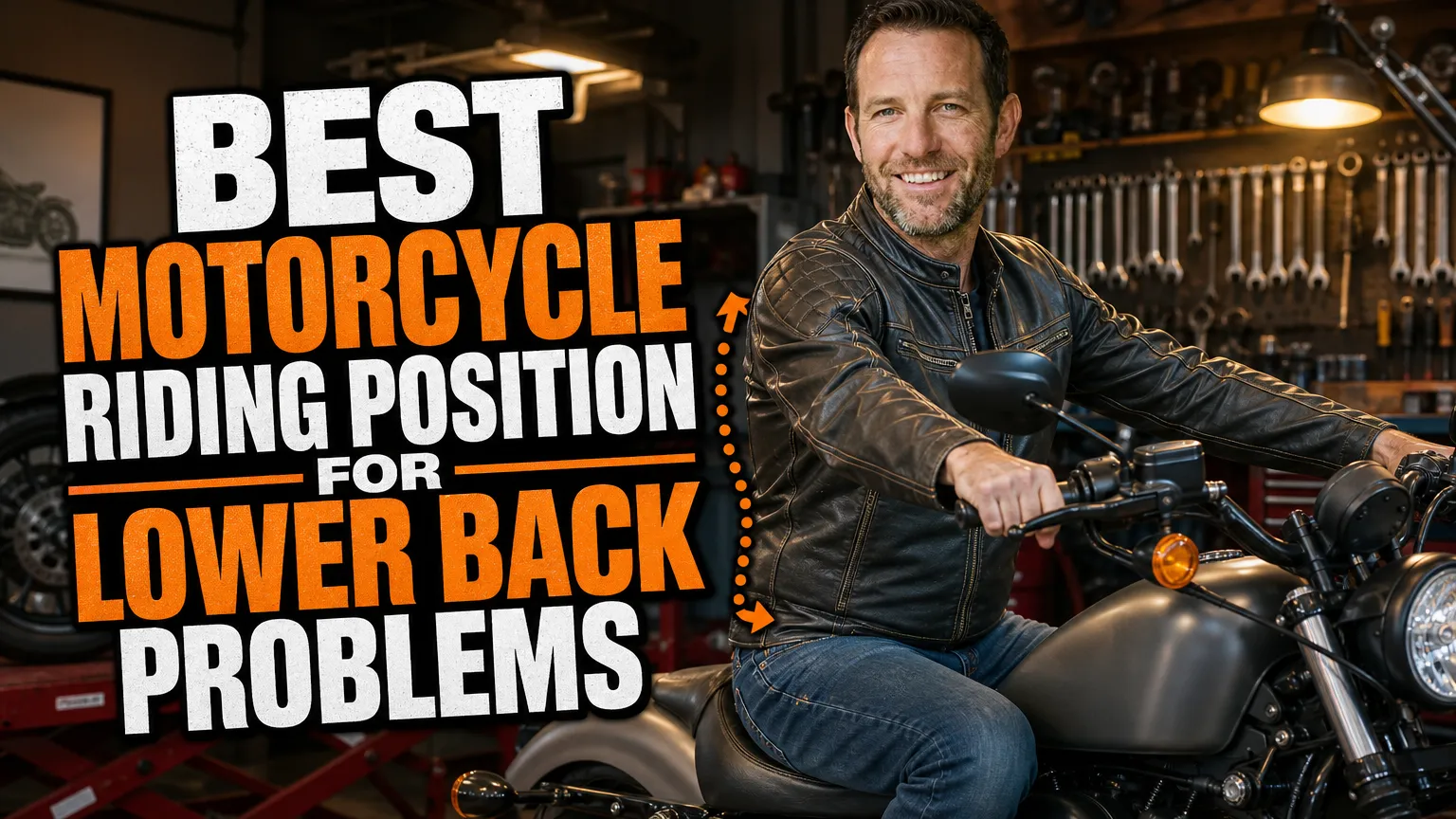
When lower-back discomfort starts cutting a ride short, I look beyond the seat and ask how the whole bike fits me. My best motorcycle riding position for lower back problems is usually relaxed and neutral: I can reach the bars and pegs without straining, and I’m not forced to hold my torso in a tense or sharply bent posture.
That doesn’t mean there’s one magic bike or position that works for every back. I’ve found that small differences in seat shape, handlebar reach, footpeg placement, suspension, and how long I ride can matter as much as a bike’s general style. Here are eight real motorcycles I’d consider for different needs, along with the ergonomic details I’d check before buying.
- I aim for a relaxed, neutral spine and easy reach to the bars and footpegs.
- I compare real bikes by fit, seat support, controls, and suspension rather than style alone.
- I test changes one at a time and take breaks before discomfort builds.
- Persistent or worsening back pain is a reason to stop riding and seek professional advice.
1. Honda NC750X — My Practical Choice for a Relaxed Commuting Posture
When I want a sensible road bike that doesn’t encourage an aggressive crouch, I put the Honda NC750X on my test-ride list. Its 745cc parallel-twin engine, relatively approachable 31.6-inch seat height, and upright adventure-style layout make it a promising fit for everyday riding, though I still check the reach against my own proportions.
I also appreciate the NC750X’s built-in storage compartment where a fuel tank would normally sit. That practical feature doesn’t directly help my back, but it makes the bike convenient for errands without needing a bulky bag that could affect how I sit. Depending on model year and market, the NC750X is offered with a manual transmission or Honda’s DCT automatic; I’d test the version I planned to buy.
What I check for fit
I sit on the NC750X with my feet on the pegs and hands on the bars, then check whether I can keep my shoulders loose. If I have to reach forward or lock my elbows, I know I need to consider a different fit, bar adjustment, or another model. For comparisons across other upright models, I’d start with this guide to the best motorcycle for upright riding position.
2. Kawasaki Versys 650 — My Pick for an Upright Middleweight
The Kawasaki Versys 650 gives me a tall, upright riding layout with a 649cc parallel-twin engine and a seat height of roughly 33.3 inches. Its wide handlebar and touring-oriented stance can make it easier to sit upright than on a sportbike, but the seat height and bar reach may not suit every rider, so I wouldn’t buy one without sitting on it first.
On longer outings, I like that the Versys 650 is designed for road travel and can be equipped with touring accessories such as luggage. I pay particular attention to whether the seat supports my pelvis evenly and whether I can bend my elbows slightly. If the saddle slopes me toward the tank or makes me perch on one spot, I’d investigate an alternate seat before assuming I need a different motorcycle.
Why I’d test it carefully
An upright position is only helpful if I can maintain it without bracing through my lower back. I’d take the Versys 650 on a short, familiar route and notice whether bumps, engine vibration, or wind pressure make me tense up. I’d also compare it with options in my guide to the best motorcycle for street riding, especially if most of my miles are on paved roads.
3. Honda XL750 Transalp — My Choice for a Flexible Adventure-Touring Stance
The Honda XL750 Transalp pairs a 755cc parallel-twin engine with a tall, adventure-oriented riding position. Its standard seat is around 33.7 inches high on recent versions, with lower-seat options available in some markets. I’d check the current specification and accessories where I live because equipment and pricing can vary by model year.
What interests me is the balance between upright road ergonomics and the ability to handle rougher surfaces. I can shift my weight more freely than on a sharply tucked-in sportbike, and a standing position over bumps may sometimes be useful on suitable terrain. Still, a tall seat or long reach can make a bike tiring if I’m constantly stretching or struggling at stops.
Where I see the fit working
I’d consider the Transalp if I wanted one bike for commuting, touring, and occasional gravel roads, then check that its seat-to-peg distance lets my knees rest comfortably. I’d also ask a dealer about lower-seat or suspension options before changing ride height, since poorly chosen changes can affect handling. For me, the goal is a stable, relaxed position—not simply sitting as high as possible.
4. BMW R 1300 GS — My Premium Option for Long-Distance Adjustability
The BMW R 1300 GS is a large adventure-touring motorcycle with a 1,300cc boxer engine and a broad range of factory equipment and accessories. Seat height depends on configuration, and BMW offers different seat and suspension options in some markets. I’d verify the exact version rather than assume every R 1300 GS has the same fit.
I’d consider this bike for longer-distance riding because its upright layout and touring equipment can support a variety of riding needs. But the R 1300 GS is also heavy, tall, and expensive compared with smaller motorcycles. If I’m uncomfortable managing it at low speeds or at a stop, the bike’s touring features won’t make it a good choice for my back or confidence.
My fit priorities on a large adventure bike
I’d check that I can support the motorcycle securely and that I don’t need to lean heavily on the bars. I’d also pay attention to how the suspension handles the roads I actually ride, because repeated harsh impacts can make me brace my torso. A test ride with the luggage and seat setup I expect to use is more useful to me than judging the bike from its appearance in a showroom.
5. Royal Enfield Himalayan 450 — My Smaller Adventure-Bike Option
The Royal Enfield Himalayan 450 uses a 452cc single-cylinder engine and an upright adventure-bike layout. Its seat height is adjustable on some versions, with specifications varying by configuration and market. I like that it’s a less intimidating size than a large touring bike, although the exact seat and handlebar fit still need to work for my body.
A lighter, more manageable motorcycle may make slow-speed riding and parking less stressful for me. The Himalayan 450 also has long-travel suspension intended for mixed surfaces, but that doesn’t guarantee a softer ride over every bump. I’d test it on the kind of pavement and trails I use, paying attention to vibration and whether the seat lets me move around.
What I’d keep in mind
A single-cylinder engine can feel different from a multi-cylinder engine, and the level of vibration I notice depends on speed, maintenance, and personal sensitivity. I’d ride the Himalayan 450 long enough to assess that sensation without pushing through discomfort. If my riding is mostly short urban trips, I’d also compare smaller, lower options in this guide to the best motorcycle for town riding.
6. Yamaha Tracer 9 GT+ — My Sport-Touring Pick When I Want More Wind Protection
The Yamaha Tracer 9 GT+ is powered by an 890cc three-cylinder engine and combines a relatively upright stance with sport-touring equipment. Features can vary by year and market, but recent versions include items such as electronic suspension, cruise control, and an adjustable windscreen. Those features can make a ride more convenient, although none replaces a good personal fit.
For me, wind protection matters because wind pushing my upper body around can make me grip the bars and tense my shoulders. A screen that reduces buffeting may help me stay more relaxed, but I’d check how it directs airflow at my height. The Tracer’s seat height is around 33 inches, so I’d also assess whether I can manage stops comfortably.
How I’d set it up
I’d adjust the screen, if possible, and ride at ordinary speeds to see whether the airflow encourages me to hunch or brace. I’d try the standard seat before paying for a comfort seat, because a thicker cushion can change my knee bend and reach to the ground. The Tracer 9 GT+ makes my shortlist when I want a sportier touring feel without committing to a forward-canted sportbike posture.
7. Honda Gold Wing Tour — My Long-Highway Comfort Choice
The Honda Gold Wing Tour is a full-size touring motorcycle with a 1,833cc flat-six engine, substantial wind protection, and touring amenities that can include a passenger seat, luggage, and audio equipment. Its seat height is relatively low for a large motorcycle, around 29.3 inches on recent models, but the bike itself is heavy and physically imposing.
I’d consider the Gold Wing Tour for long paved journeys where wind protection and a roomy touring layout matter to me. I’d still pay attention to the seat contour and whether I can shift position during a ride. A plush seat can feel comfortable at first yet create pressure points later, so I prefer to evaluate it over a realistic test ride.
Who I think should test it
I’d test the Gold Wing Tour if I regularly ride long distances and feel comfortable maneuvering a large touring motorcycle. I wouldn’t choose it based on seat height alone: weight, width, steering effort, and parking confidence are all part of the fit. I’d also compare passenger and luggage needs with the best 300cc motorcycle for 2 up riding guide if I’m shopping for a different kind of two-up setup.
8. Honda Rebel 1100 — My Low-Seat Option With an Important Caveat
The Honda Rebel 1100 has a 1,084cc parallel-twin engine and a low seat height of about 27.9 inches, depending on version and model year. That low seat can make it easier for me to put my feet down, and the bike is available with a manual transmission or DCT in some markets. However, a low seat does not automatically mean a back-friendly position.
On a cruiser-style motorcycle, the footpegs may sit farther forward than they do on an upright standard bike. That position can feel relaxed to some riders but may encourage others to round their lower back or brace over bumps. I’d sit on the Rebel 1100 for several minutes and check whether my legs and hips feel supported rather than choosing it just because I like its height.
My test-ride check
I’d pay attention to how the footpeg location affects my pelvis and spine, particularly over rough pavement. If I feel my lower back taking each impact, I’d compare a different seat or peg position where compatible parts are available. For city-focused comparisons, I’d also look at the best motorcycle for urban riding and choose based on the routes I actually ride.
How I Set Up My Position Before Blaming the Bike
I start with a neutral posture rather than forcing myself to sit perfectly straight. I keep my shoulders relaxed, my elbows slightly bent, and my hands light on the grips. I try to sit with my hips supported and my spine in a comfortable, natural curve instead of rounding forward or arching excessively.
Next, I check the reach to the controls. If I have to stretch for the handlebars, rotate my wrists awkwardly, or lock my elbows, I look into bar position or compatible risers. If my knees feel cramped or my hips are pushed forward, I assess the seat and footpeg relationship before making a purchase.
Changes I make one at a time
- Seat: I look for even support and a shape that lets me move, not just extra padding.
- Handlebars: I check reach and wrist angle, and use only compatible parts installed correctly.
- Footpegs: I consider whether the position allows my knees and hips to rest comfortably.
- Suspension: I set sag and damping for my weight and load according to the owner’s manual or a qualified technician’s advice.
- Riding gear: I choose layers that let me move freely and avoid bulky items that bunch at my waist.
I avoid changing several things at once because then I can’t tell what helped. After an adjustment, I take a short ride on familiar roads, note what I feel, and make another change only if needed. I also avoid improvising with suspension or steering parts, since incorrect changes can affect handling and safety.
Ride Habits I Use to Limit Lower-Back Strain
I plan breaks before I feel desperate for one, especially on longer trips. At stops, I get off the bike, walk gently, and change position rather than expecting one posture to feel comfortable for hours. I also try to avoid gripping the bars tightly, since tension in my arms and shoulders can travel into the rest of my body.
I build distance gradually when returning after time off or discomfort. If a particular road surface makes me tense, I slow down where appropriate and check whether my suspension, tire pressure, or route choice needs attention. I don’t treat pain as something I must simply push through to prove I can finish a ride.
When I Stop Riding and Ask for Help
Motorcycle ergonomics can improve comfort, but I don’t treat a new bike or accessory as medical care. If back pain is persistent, worsening, or limiting normal activities, I seek advice from a qualified healthcare professional. I’m especially cautious if symptoms include numbness, weakness, pain spreading into a leg, or changes in bladder or bowel control.
I stop riding if discomfort affects my concentration, movement, or ability to control the motorcycle. My shortlist is a starting point, not a guarantee: the right fit is the one that lets me ride safely and comfortably on my own routes. I always verify the current model specifications, sit on the bike, and arrange a careful test ride before making a decision.
Frequently Asked Questions
What motorcycle riding position is easiest on the lower back?
I aim for a relaxed, neutral posture with my spine supported, shoulders loose, elbows slightly bent, and hips positioned so I can reach the controls without stretching.
Are upright motorcycles always better for back pain?
Not always. An upright bike may reduce the need to lean forward, but seat shape, footpeg position, vibration, suspension, and your individual condition also affect comfort.
Can I keep riding with lower back pain?
I stop if pain worsens, becomes sharp, or affects my control. Persistent or severe symptoms deserve guidance from a qualified health professional before I ride again.
What should I adjust first to make a motorcycle more comfortable?
I start by checking reach to the bars, footpeg position, seat support, and suspension setup. I change one thing at a time and test the result on a short, familiar ride.

Related Articles

9 Best Beginner Motorcycles for Shorter Riders Who Want Confidence
Compare nine beginner-friendly motorcycles for shorter riders, with seat heights, weights, features, and my practical tips for choosing a bike…
Jake Miller
13 min read

8 Best Motorcycles for 5’4″ Riders, From Easygoing Cruisers to Agile Roadsters
Find the best motorcycle for a 5'4" woman with my picks, seat-height advice, real-world fit tips, and beginner-friendly options for…
Jake Miller
12 min read

8 Best Motorcycles for Short Riders: Comfortable Picks for a 5’1″ Rider
Compare eight approachable motorcycles for shorter riders, with seat heights, weight, handling notes, and practical tips for finding a confident…
Jake Miller
13 min read