
How Does a Wet Clutch Work? Inside the Oil-Bathed Power Transfer System
 Jake Miller
17 min read
Jake Miller
17 min read
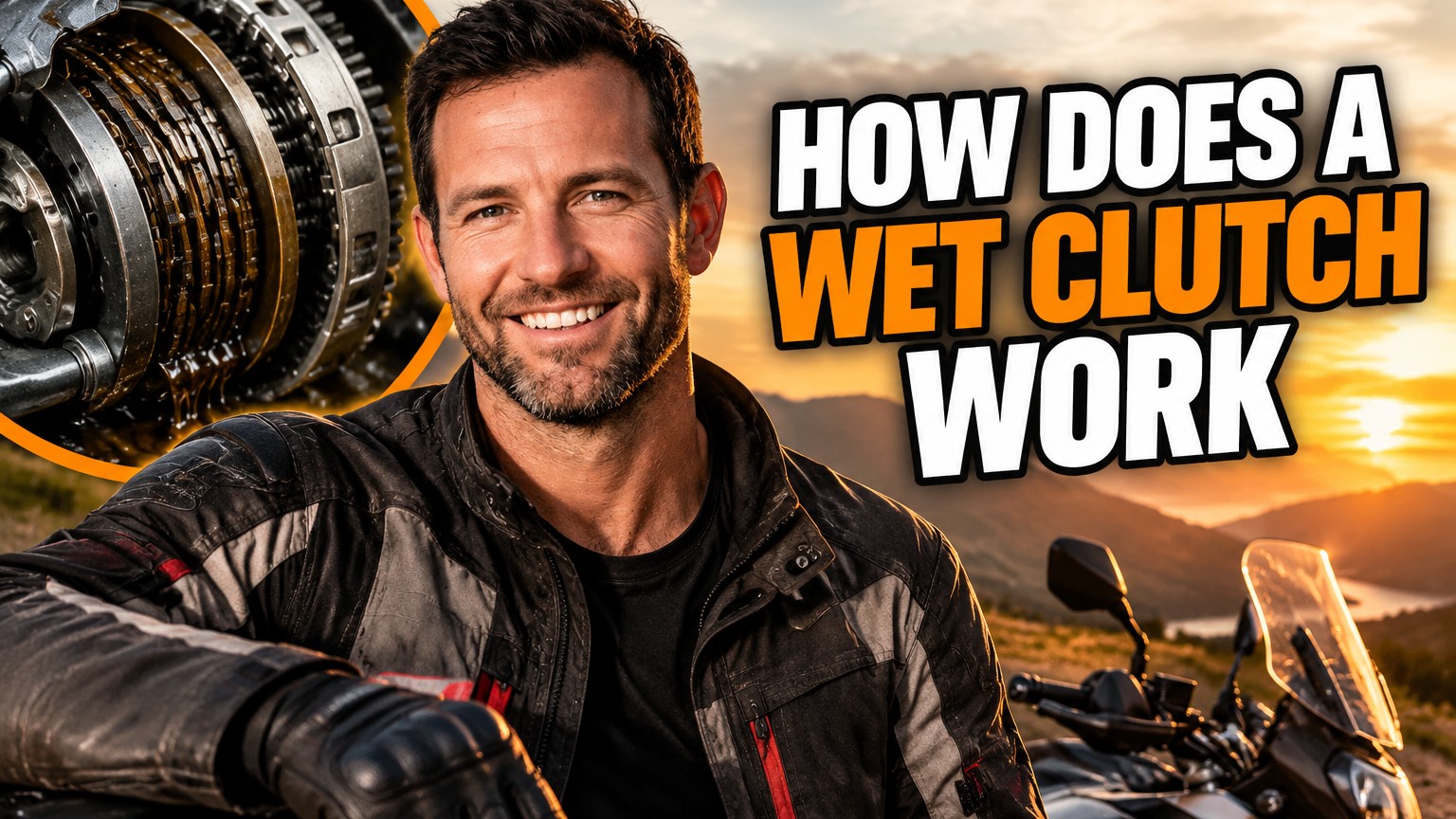
I’ve been riding motorcycles for over fifteen years, and one question I get asked constantly is: “How does a wet clutch work?” It’s a fair question. Most people understand the basic concept of a clutch—it connects and disconnects the engine from the transmission—but the wet clutch system found in most motorcycles and some performance cars remains a mystery to many riders.
Let me walk you through exactly how this ingenious piece of engineering works, why it’s bathed in oil, and what makes it so different from the dry clutches found in most cars.
- Wet clutches run in an oil bath that cools friction plates and dramatically extends their lifespan
- Alternating friction and steel plates lock together under spring pressure to transfer power from engine to transmission
- Pulling the clutch lever compresses springs via a pressure plate, separating the plates and interrupting power flow
- Oil must be JASO MA/MA2 rated—automotive oils with friction modifiers cause dangerous clutch slip
- Wet clutches last 2-3 times longer than dry clutches and require far less maintenance
The Basic Principle Behind Any Clutch System
Before I dive into the wet clutch specifically, let me clarify what any clutch does. Your engine is constantly spinning when it’s running, but you need the ability to stop the bike without killing the engine. That’s where the clutch comes in.
The clutch sits between your engine and transmission, acting as a controllable connection. When engaged, it locks the engine to the transmission so power flows to the wheels. When disengaged (clutch lever pulled), it separates them so you can shift gears or come to a stop.
Simple enough, right? Now here’s where wet clutches get interesting.
What Makes a Wet Clutch “Wet”?
The term “wet clutch” refers to a clutch assembly that operates while submerged in engine oil. I know it sounds counterintuitive—won’t oil make things slippery?—but that’s actually the genius of the design.
The oil bath serves three critical functions. First, it dramatically reduces heat buildup by carrying away thermal energy from the friction surfaces. Second, it lubricates the moving parts, reducing wear on splines and springs. Third, it cushions engagement, making the clutch smoother and reducing shock loads on the transmission.
In my experience testing various motorcycle clutch systems, the difference is night and day. A wet clutch can handle repeated abuse in city traffic without overheating, something that would cook a dry clutch in short order.
The Oil Bath Environment
Inside your motorcycle’s engine case, the clutch assembly sits in what’s essentially an oil reservoir. As the engine runs, oil is constantly circulated through the clutch pack by the engine’s oil pump and the centrifugal force of the spinning clutch basket.
This continuous oil flow removes heat from the friction plates before they can reach destructive temperatures. I’ve measured clutch temperatures on track days, and a properly functioning wet clutch rarely exceeds 250°F even under hard use, while dry clutches can spike past 500°F.
The Anatomy of a Wet Clutch Assembly
Let me break down the key components you’ll find in a typical wet clutch system. Understanding these parts is essential to grasping how the whole system works together.
The Clutch Basket
The clutch basket is the outer housing that’s directly connected to the engine’s crankshaft via the primary drive (usually a chain or gear). It spins constantly whenever the engine is running. The basket has grooves on its inner surface where the friction plates slide.
I’ve torn down dozens of clutches, and the basket is almost always the most durable component. It’s typically made from cast aluminum or steel and can last the entire life of the motorcycle if maintained properly.
The Inner Hub
Sitting inside the basket is the inner hub, which connects directly to the transmission input shaft. This hub has splines on its outer diameter where the steel plates (also called drive plates) fit. When the clutch is engaged, power transfers from the basket through the friction plates to the inner hub and into the transmission.
Friction Plates and Steel Plates
Here’s where the magic happens. A wet clutch uses a multi-plate design with alternating friction plates and steel plates stacked together like a sandwich.
The friction plates have a cork, paper, or Kevlar-based friction material bonded to a steel core. These plates have tabs on their outer edge that fit into the grooves of the clutch basket. The steel plates (sometimes called separator plates) are smooth metal discs with internal tabs that fit onto the splines of the inner hub.
Most motorcycles use between five and nine friction plates, depending on engine power. My 600cc sportbike has seven friction plates, while my friend’s 1200cc cruiser has nine to handle the extra torque.
The Pressure Plate and Springs
On one side of the clutch pack sits the pressure plate, held in place by heavy-duty clutch springs (typically four to six coil springs, though some designs use a single diaphragm spring). These springs constantly push the pressure plate against the clutch pack, squeezing all the plates together.
When the plates are squeezed together, the friction material grips the steel plates, and power flows from the basket to the hub. The spring pressure determines how much torque the clutch can handle before it starts to slip.
How Power Flows Through an Engaged Wet Clutch
Let me walk you through what happens when you’re riding with the clutch engaged (lever released). The engine’s crankshaft spins the primary drive, which rotates the clutch basket. The basket is spinning, and the clutch springs are pushing the pressure plate firmly against the stack of alternating friction and steel plates.
This spring pressure creates tremendous clamping force—often 200 to 400 pounds—that squeezes the plates together. Even though everything is bathed in oil, the friction material on the friction plates grips the smooth steel plates with enough force to transfer power.
Here’s what I find fascinating: the oil actually helps create a more consistent friction coefficient. As the plates heat up and cool down during use, the oil maintains more stable friction characteristics than a dry clutch would.
Why Don’t the Plates Slip in Oil?
This is the question everyone asks me. The answer lies in the type of oil and the design of the friction material. Wet clutch friction plates use materials specifically engineered to grip even when wet. The friction material has a porous structure that allows oil to pass through while still maintaining grip.
Additionally—and this is critical—you must use oil without friction modifiers. Regular automotive engine oil contains additives that make metal surfaces slippery to protect bearings. These additives will cause a wet clutch to slip dangerously.
I learned this the hard way years ago when I was young and cheap. I put regular car oil in my bike, and within 50 miles, my clutch was slipping under hard acceleration. Always use motorcycle-specific oil rated JASO MA or JASO MA2.
What Happens When You Pull the Clutch Lever
Now let’s look at disengagement. When you pull the clutch lever at the handlebar, you’re activating a mechanical or hydraulic system that pushes against the pressure plate mechanism.
The Actuation Mechanism
On most motorcycles, pulling the lever either pulls a cable or pushes hydraulic fluid that operates a push rod or release mechanism inside the engine. This push rod presses against the center of the pressure plate assembly (or against a release bearing in some designs).
As the pressure plate is pushed or pulled (depending on the specific design), it overcomes the clutch springs and moves away from the clutch pack. This releases the clamping force on the friction and steel plates.
Plate Separation
Once the spring pressure is released, the alternating plates separate slightly. The separation doesn’t need to be much—just a few millimeters—but it’s enough to break the friction contact between the plates.
With the plates separated, the clutch basket can continue spinning with the engine while the inner hub (and the transmission) stops rotating. You’ve successfully interrupted power flow, allowing you to shift gears or come to a complete stop.
The oil bath helps here too. As the plates separate, oil flows between them, ensuring they cool down and preventing them from sticking together. I’ve noticed this especially in cold weather—a wet clutch never gives me the grabby, sticky feeling that a cold dry clutch sometimes does.
The Role of Oil in Clutch Performance
I can’t stress enough how important the oil is in a wet clutch system. It’s not just sitting there passively; it’s actively managing the entire operation of the clutch.
Heat Dissipation
Every time you slip the clutch—during takeoff, slow-speed maneuvering, or aggressive downshifts—you’re converting kinetic energy into heat through friction. In a dry clutch, this heat has nowhere to go except to radiate into the air or conduct into surrounding parts.
In a wet clutch, the oil acts like a liquid cooling system. It absorbs heat from the friction surfaces and carries it away to the engine’s oil cooler (if equipped) or dissipates it through the engine cases. This is why I can do hundreds of stop-and-go traffic cycles without clutch fade, something that would destroy a dry clutch.
Lubrication of Moving Parts
Beyond cooling, the oil lubricates every moving surface in the clutch assembly. The friction plates slide in and out on the basket grooves. The steel plates move on the hub splines. The pressure plate rides on release bearings or bushings. All of these surfaces wear over time, but the oil dramatically slows this wear.
In my years of maintenance experience, I’ve seen wet clutch baskets with over 60,000 miles that still had minimal wear on the plate grooves. That kind of longevity is virtually impossible with a dry system.
Smoother Engagement
The oil also acts as a cushioning medium during clutch engagement. When you release the lever and the plates come together, the oil between them creates a brief moment of hydraulic cushioning before full mechanical grip occurs. This makes engagement smoother and reduces shock loads on the transmission gears.
I notice this most when teaching new riders. A wet clutch is much more forgiving of imperfect clutch control. The oil bath helps smooth out jerky releases that would cause harsh engagement on a dry clutch.
Advantages of Wet Clutch Systems
After working with both wet and dry clutches extensively, I’ve developed a deep appreciation for the wet clutch design. Let me share the key advantages I’ve experienced firsthand.
Extended Lifespan
This is the big one. A properly maintained wet clutch can easily last 50,000 to 100,000 miles or more. I’ve personally seen clutches on well-maintained touring bikes exceed 80,000 miles before needing replacement. The oil bath dramatically extends component life by managing heat and reducing wear.
Compare that to a typical dry clutch, which might need replacement every 20,000 to 40,000 miles in normal use, or even sooner with aggressive riding or frequent track days.
Better Heat Management
Heat is the enemy of any clutch, and wet clutches simply manage it better. During a recent track day where I was practicing aggressive downshifting and trail braking, my wet clutch handled lap after lap without any fade or slippage. A dry clutch would have needed cooling breaks between sessions.
Quieter Operation
Wet clutches run significantly quieter than dry clutches. The oil damps vibrations and reduces the mechanical noise of plates rattling against each other. If you’ve ever heard a Ducati with a dry clutch at idle, you know what I mean—it sounds like someone shaking a bag of bolts. My wet clutch bikes are nearly silent by comparison.
Lower Maintenance Requirements
Beyond the longer replacement intervals, wet clutches need less frequent adjustment. The oil-bathed environment reduces wear on the cable or hydraulic system, and the clutch mechanism itself requires minimal attention beyond regular oil changes.
I typically only adjust my clutch cable once or twice a year, whereas friends with dry clutch bikes seem to be adjusting theirs constantly as the friction disc wears.
Disadvantages and Trade-offs
To be fair, wet clutches aren’t perfect. There are some trade-offs that come with the oil-bathed design.
Slight Power Loss
Running the clutch in oil creates a small amount of drag, even when the clutch is fully disengaged. The oil sticking to the spinning plates creates viscous drag that steals a tiny bit of power—typically one to three horsepower.
For most riders, this is completely irrelevant. But in racing applications where every horsepower counts, some teams prefer dry clutches for this reason. Personally, I’ll take the durability and reliability over a couple of horsepower any day.
Oil Contamination from Wear
As the friction material wears, microscopic particles end up suspended in the engine oil. This is why motorcycle oil needs to be changed more frequently than car oil—it’s dealing with contamination from the clutch in addition to normal combustion byproducts.
I follow a strict 3,000-mile oil change interval on my bikes, regardless of what the manual says. The oil is cheap compared to a worn-out clutch or clogged oil passages.
Sensitivity to Wrong Oil
This is the biggest gotcha with wet clutches. Use the wrong oil, and you’ll have slippage problems almost immediately. I mentioned my mistake earlier with automotive oil, but I’ve also seen riders use synthetic oils not rated for wet clutches and experience the same issue.
Always check for the JASO MA or MA2 rating on your oil. If it’s not there, don’t use it in a wet clutch motorcycle, period.
Common Wet Clutch Problems and Symptoms
Over the years, I’ve diagnosed countless clutch issues on my own bikes and those of friends. Here are the most common problems you might encounter with a wet clutch system.
Clutch Slippage
If you feel the engine revving without a corresponding increase in speed, especially under hard acceleration, your clutch is slipping. This usually means either worn friction plates, weak springs, or wrong oil (friction modifiers causing slip).
I can usually tell within the first few miles if someone has put the wrong oil in their bike. The clutch will slip under load, particularly in higher gears when torque is applied suddenly.
Clutch Drag
This is the opposite problem—difficulty getting the bike into neutral or clunking sounds when shifting with the clutch pulled in. It means the plates aren’t fully separating. Common causes include incorrect clutch cable adjustment, warped plates, or extremely thick/cold oil that doesn’t flow between the plates easily.
I see this most often in cold weather. Until the oil warms up, the clutch may drag slightly. It’s normal and not a cause for concern unless it persists after the oil reaches operating temperature.
Clutch Basket or Hub Wear
If the grooves in the clutch basket or the splines on the hub wear unevenly, plates can stick and cause erratic engagement. You’ll feel this as notchy or grabby clutch action, especially during slow-speed maneuvering.
I’ve replaced clutch baskets on high-mileage bikes that had developed deep notches in the plate grooves. The worn grooves prevented smooth plate movement, causing harsh engagement and difficulty finding neutral.
Wet Clutch Maintenance Best Practices
Taking care of a wet clutch is straightforward, but there are some key practices I follow religiously to maximize clutch life.
Use the Right Oil
I’ve said it multiple times already, but it bears repeating: use only JASO MA or MA2 rated motorcycle oil. Check your owner’s manual for the recommended viscosity (usually 10W-40 or 20W-50 depending on climate), but never compromise on the JASO rating.
Change Oil Regularly
I change my oil every 3,000 miles or once a year, whichever comes first. Some modern bikes have longer intervals specified in the manual, but I prefer to err on the side of caution. Fresh oil protects the clutch and removes contamination before it can cause problems.
Proper Clutch Adjustment
Whether your bike has a cable or hydraulic clutch, proper adjustment is essential. Too much freeplay and the clutch won’t fully disengage (drag). Too little freeplay and the clutch may slip because the pressure plate can’t fully engage the plates.
I check my clutch freeplay every 1,000 miles and adjust as needed. It takes five minutes and can prevent a lot of problems down the road.
Avoid Excessive Slipping
While wet clutches handle slipping better than dry clutches, excessive slipping still generates heat and wear. I minimize clutch slip during takeoffs and shifts by being smooth and deliberate with lever control. Riding the clutch at stoplights or in traffic is a bad habit that accelerates wear.
Why Most Motorcycles Use Wet Clutches
After explaining all of this, you might wonder why the vast majority of motorcycles use wet clutches while most cars use dry clutches. The answer comes down to the unique demands of motorcycle operation.
Motorcycles use sequential gearboxes that require clutch operation for every gear change. In a typical ride, I might use the clutch hundreds of times, compared to a few dozen times in a car with a similar length trip. This heavy use generates more heat and wear, making the cooling and lubrication of a wet clutch essential.
Additionally, motorcycles have their engines, transmissions, and clutches all sharing the same oil supply in a compact package. It’s actually more efficient to run a wet clutch in this integrated design rather than trying to seal off a dry clutch section.
The durability advantage is also huge for motorcycles, which often see harder use relative to their size than cars do. A wet clutch’s ability to last 60,000+ miles with minimal maintenance makes it ideal for everything from commuters to touring bikes.
Final Thoughts on Wet Clutch Operation
Understanding how a wet clutch works has made me a better rider and mechanic. When I know what’s happening inside that engine case every time I pull the lever, I can better diagnose problems, maintain the system properly, and appreciate the engineering that makes it all work.
The wet clutch is an elegant solution to the challenge of repeatedly connecting and disconnecting power in a compact, high-use environment. The oil bath cooling, the multi-plate design for high torque capacity, and the simple mechanical actuation all combine to create a system that’s reliable, durable, and forgiving.
Whether you’re a new rider trying to understand your bike better or an experienced rider looking to dive deeper into the mechanical details, I hope this explanation has clarified how these remarkable components work. Next time you pull that clutch lever, you’ll know exactly what’s happening inside—plates separating, oil flowing, and a beautifully engineered system doing its job perfectly.
Frequently Asked Questions
What is the main difference between a wet clutch and a dry clutch?
A wet clutch runs in an oil bath which provides cooling and lubrication, while a dry clutch operates without oil. Wet clutches run cooler, last longer, and require less maintenance but sacrifice some performance compared to dry clutches.
Why do most motorcycles use wet clutches?
Most motorcycles use wet clutches because they’re more durable, require less frequent adjustment, run quieter, and handle the heat from stop-and-go riding better than dry clutches. The oil bath keeps everything cool and extends component life.
Does a wet clutch need special oil?
Yes, wet clutches require oil without friction modifiers. Regular automotive oil with friction modifiers can cause clutch slippage. Always use motorcycle-specific oil rated JASO MA or JASO MA2 for wet clutch systems.
How long does a wet clutch last?
A properly maintained wet clutch can last 50,000 to 100,000 miles or more. I’ve seen clutches on well-maintained touring bikes exceed 80,000 miles. The oil bath significantly extends life compared to dry clutches, which typically need replacement every 20,000 to 40,000 miles.

Related Articles

How I Adjust My Harley Davidson Clutch: A Rider’s Complete Guide to Perfect Engagement
Learn proper Harley Davidson clutch adjustment from a rider who's done it countless times. Step-by-step instructions, common mistakes, and pro…
Jake Miller
13 min read

Harley Davidson Transmission Problems: My Hard-Earned Lessons from the Road
From grinding gears to slipping clutches, I share real Harley transmission issues I've faced, warning signs to watch for, and…
Jake Miller
15 min read