
Motorcycle Clutch Problems Symptoms: 9 Warning Signs I Wish I’d Caught Sooner
 Jake Miller
10 min read
Jake Miller
10 min read
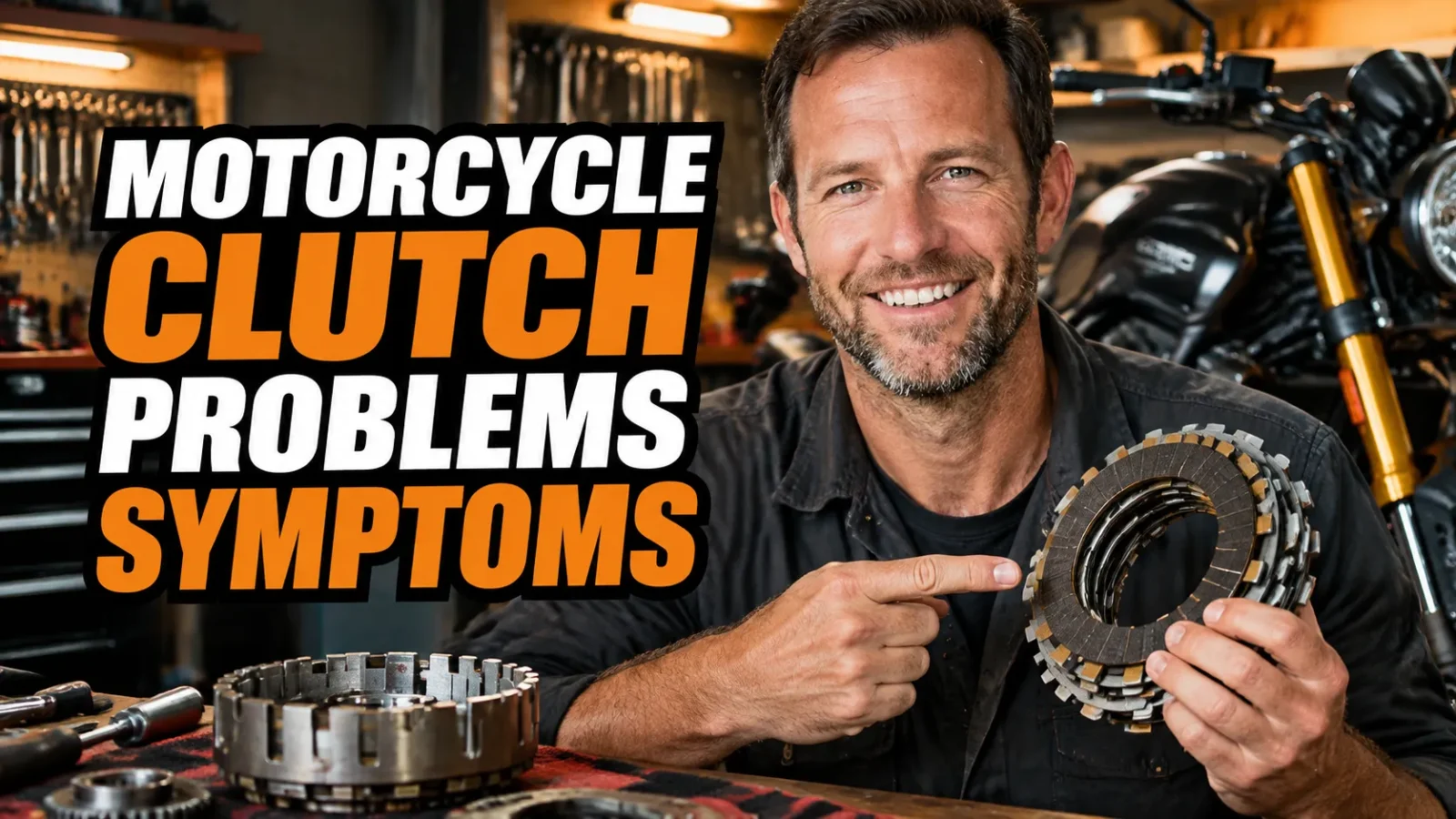
I still remember the first time a clutch let go on me. I was merging onto a highway on my old twin, rolled on the throttle, and watched the tach climb toward redline while the speedometer just… sat there. No drama, no bang, just a bike that suddenly forgot how to convert engine into motion. I limped it home in fourth gear and spent the next weekend learning everything I could about motorcycle clutch problems symptoms.
That was years and a lot of miles ago. Since then I’ve owned air-cooled twins, inline fours, and a couple of thumpers, and I’ve diagnosed slipping clutches, dragging clutches, chattering clutches, and one clutch that was perfectly fine while the transmission underneath it was quietly eating itself.
Here’s the thing nobody tells you when you’re new: your clutch almost never fails without warning. It gives you symptoms first. Little ones. The trick is knowing which ones mean “adjust it this weekend” and which ones mean “park it right now before you destroy something expensive.”
This is the list I wish someone had handed me at the start.
- Slipping under acceleration is the most common early symptom — revs rise, speed doesn’t.
- A dragging clutch (hard neutral, creeping at stops) is usually an adjustment or fluid problem, not a worn pack.
- Burning smells, metal glitter in the oil, and grinding noises mean stop riding immediately.
- Check free play and fluid before you buy parts — I’ve “fixed” more clutches with a wrench than with a credit card.
The Symptoms I Now Treat as Early Warnings
These are the ones that creep in slowly. They’re easy to ignore because the bike still rides. That’s exactly why they’re dangerous.
1. Slipping Under Hard Acceleration
This is the classic. You’re in third or fourth gear, you crack the throttle open, and the engine note rises faster than your actual speed. On a tach-equipped bike it’s obvious: revs climb, speed lags.
I test for this deliberately now. Find a quiet road, get into a tall gear at low RPM, then roll on hard. A healthy clutch hooks up and pulls. A slipping one lets the engine flare.
Early on, you’ll only notice it in the upper gears or under full load — two-up, uphill, or with luggage. That’s because that’s when the clutch has the most torque to transmit. By the time it slips in first and second, you’re well into replacement territory.
2. A Lever That Feels Wrong
Your clutch lever is a diagnostic tool. I check it every time I do a pre-ride walkaround, and I’ve caught problems weeks before they became roadside problems.
What I’m feeling for: excessive free play at the tip of the lever, a lever that goes soft and spongy, or the opposite — a lever that feels rock hard with almost no travel. Any of those can produce slipping or dragging even with a perfectly good clutch pack.
On hydraulic systems, a lever that slowly sinks toward the grip while you hold it usually means air in the line or a failing master cylinder seal. That’s not a clutch wear issue at all. It’s a bleeding issue.
3. Chattering and Jerking Off the Line
If your bike shudders, grabs, or hops when you release the lever from a stop, that’s chatter. I’ve had it from three different causes: glazed friction plates, warped steel plates, and worn clutch basket fingers that let the plates rattle side to side.
Chatter is miserable in traffic because you can’t slip the clutch smoothly. You either bog the engine or lurch forward. If your bike does this cold but smooths out when warm, that’s a strong hint about oil viscosity and plate condition.
4. A Friction Zone That’s Moved or Disappeared
Every clutch has a sweet spot in the lever travel where it engages progressively. I know exactly where mine is on each bike. When that zone migrates toward the bar or vanishes entirely, something changed.
Either the cable stretched, the hydraulic fluid is old, or the plates are getting thin. A friction zone that’s suddenly narrow and grabby is one of those motorcycle clutch problems symptoms that riders dismiss right up until they stall in an intersection.
The Symptoms That Mean Stop Riding Right Now
These aren’t “schedule it” symptoms. These are “pull over” symptoms.
5. Dragging Clutch and Impossible Neutrals
A dragging clutch doesn’t fully disengage. You’ll notice the bike creeps forward at a stop with the lever pulled all the way in. Finding neutral becomes a hunt. Shifting into first from a standstill produces a loud clunk and a lurch.
This one wears your transmission, not just your clutch. Every hard shift with a dragging clutch hammers the shift forks and dogs. I’ve seen riders turn a cheap clutch fix into an expensive gearbox repair this way.
6. That Acrid Burning Smell
You’ll know it when you smell it. It’s a hot, sharp, slightly oily stink that lingers. If you catch that odor, shut the bike down and let it cool.
Continuing to ride can warp steel plates, glaze friction plates beyond saving, and dump clutch material into your engine oil. On a wet clutch bike, that contaminated oil circulates everywhere. It’s a bad day that gets worse.
7. Metal in the Oil and Glitter on the Drain Plug
When I change oil, I look at the drain plug magnet. Fine grey paste is normal. Actual metallic glitter or chunks are not.
On a wet clutch bike, your clutch shares oil with the engine and gearbox. That means clutch debris shows up in your oil, and it also means a clutch problem can be a symptom of something bigger. If you’re seeing chunks, it’s worth reading up on harley davidson transmission problems as well, because the failure modes overlap far more than people expect.
8. Grinding, Rattling, or Whining
A rattle at idle that disappears when you pull the lever in often points to a loose clutch basket or worn damper springs. A whine that changes with engine speed can be a bearing. A grind is never good.
I use a cheap mechanic’s stethoscope on the clutch cover to localize noises. It’s saved me from tearing into the wrong part more than once.
9. The Clutch That Won’t Fully Release at All
If you pull the lever and the bike still lurches forward in gear, do not ride it. That’s a fully failed release mechanism — broken cable, seized slave cylinder, or a collapsed throwout bearing. It’s a tow-truck situation, not a limping-home situation.
Wet vs Dry: Why Your Symptoms Point Different Directions
Before you diagnose anything, you need to know which type you have, because the symptoms read differently.
A dry clutch — think older BMWs and most Ducatis — runs in open air, rattles loudly at idle, and has a distinct, metallic engagement. It doesn’t contaminate your oil, but it wears faster and dusts everywhere.
A wet clutch sits in the same oil as your engine and gearbox. It’s smoother, quieter, and lasts longer, but its failure modes bleed into everything else. If you want the full picture of how the plates, basket, and oil interact, this explainer on how does a wet clutch work is worth ten minutes of your time.
The practical difference for diagnosis: with a wet clutch, the wrong oil or a worn-out oil can absolutely cause slipping and dragging. I’ve seen fresh friction plates slip because someone filled the crankcase with an energy-conserving car oil full of friction modifiers. That’s a real and expensive mistake.
What Usually Causes These Symptoms
I keep a mental list, ordered from cheapest to most painful:
Adjustment out of spec. Too much free play means the clutch never fully disengages. Too little means it never fully engages and slips. This is free to fix and accounts for a huge share of complaints.
Old or wrong oil. Friction modifiers, wrong viscosity, or simply oil that’s been in there way too long. Cheap fix, big payoff.
Air in a hydraulic line. Spongy lever, inconsistent engagement, sinking lever at a stop.
Worn friction plates. The real wear item. Slipping under load is the signature.
Warped steel plates. Chatter and grabby engagement, especially when hot.
Notched clutch basket. The tangs on the basket get grooves worn into them by the plate tabs, which prevents smooth plate movement. This one feels like chatter plus inconsistent engagement.
Weak springs. Usually shows up as slipping under heavy load on an otherwise healthy pack. Cheap to replace, and I usually do it whenever I’m in there anyway.
My Roadside Diagnostic Checklist
When something feels off, here’s the order I work through. It’s saved me from buying parts I didn’t need more times than I can count.
First, check free play at the lever. Spec is usually a few millimeters. If it’s way off, adjust it and go ride. You might be done.
Second, check fluid level and color on hydraulic systems. Dark, gritty fluid or a low reservoir tells you a lot.
Third, do a loaded slip test. Tall gear, low RPM, hard throttle. Note exactly where and when it slips.
Fourth, listen. Idle rattle, lever-in versus lever-out. It narrows the suspect list fast.
Fifth, pull the dipstick or drain plug and look. Smell it too. Burnt oil is unmistakable.
Only after all five do I start shopping for parts.
When It’s Just an Adjustment
I want to be clear about this because it’s the most common outcome: most clutch complaints I’ve dealt with were adjustment or fluid issues, not worn parts. Riders jump straight to “I need a new clutch” and skip the twenty-minute fix.
If your lever free play is out of spec, correct it first and ride. If the problem disappears, you’re done. If you’re on a Harley and want the step-by-step, this guide to clutch adjustment on harley davidson walks through the process properly, including the pushrod and cable settings most people get wrong.
The general rule I follow: adjust cold, then verify hot. Heat changes cable tension and hydraulic behavior, so a setting that feels perfect in the garage can be wrong after twenty minutes of riding.
How I Make My Clutches Last
None of this is exotic, but it works. I’ve gotten well past 50,000 miles on a couple of clutch packs by sticking to a few habits.
I use the correct oil and I change it on schedule, not “when I get around to it.” I don’t sit at stoplights holding the lever in gear when I can slip into neutral. I match revs on downshifts instead of using the clutch as a brake.
I also don’t rest my hand on the lever while riding. Even a couple of millimeters of pressure can keep the clutch from fully engaging, and that’s a slow, invisible burn over thousands of miles.
And I do a two-minute check before long rides: lever feel, free play, and a listen at idle. That tiny ritual has caught two problems early enough to fix cheaply.
My Honest Take
Clutch problems are almost never sudden. They announce themselves with a slipping tach, a mushy lever, a chattering launch, or a smell you can’t forget. The riders who catch them early are the ones who pay attention to small changes instead of waiting for a failure.
If you take one thing from my experience, make it this: check the free play first. It’s free, it takes five minutes, and it resolves a huge percentage of the complaints I’ve ever heard. Then work outward from there — fluid, plates, basket, springs.
And if you smell burning or hear grinding, stop. There’s no ride worth a warped clutch pack and a contaminated engine. Trust me, I learned that one the expensive way.
Frequently Asked Questions
What is the most common symptom of a failing motorcycle clutch?
In my experience, slipping under hard acceleration is the number one tell. The engine revs climb but the bike doesn’t pull any harder, especially in the upper gears. It usually starts subtle and gets worse fast.
Can a clutch problem be fixed with just an adjustment?
Often, yes. If your cable or hydraulic free play is out of spec, you can get dragging or slipping with a perfectly healthy clutch pack. I always check clutch adjustment before I spend a dime on parts.
How long should a motorcycle clutch last?
I’ve gotten anywhere from 25,000 to 70,000 miles out of a clutch depending on the bike, how much city traffic I ride, and how hard I launch it. Aggressive stop and go riding and wheelies will shorten that significantly.
Is a burnt clutch smell an emergency?
Yes, treat it that way. If you smell that acrid, hot metal and burnt oil odor, stop riding and let it cool. Continuing to ride can warp steels, glaze the friction plates, and contaminate your oil with clutch material.

Related Articles

Motorcycle Chain Keeps Getting Loose? Why It Happens and How I Finally Fixed It
Motorcycle chain keeps getting loose no matter how often you adjust it? I break down the causes, from worn sprockets…
Jake Miller
10 min read

Loose Motorcycle Chain Symptoms: 9 Warning Signs I Learned the Hard Way
Loose motorcycle chain? I walk through the symptoms I've felt and heard, how to measure slack in 5 minutes, and…
Jake Miller
11 min read

8 Best Motorcycle Chain Cleaners for X-Ring Chains That Actually Protect Your Seals
I've tested the best motorcycle chain cleaners for X-ring chains, from Motul C1 to Muc-Off Bio. Here's what actually protects…
Jake Miller
12 min read