
8 Best H7 LED Headlight Bulbs for Motorcycles: Rider-Tested Picks for Real Roads
 Jake Miller
12 min read
Jake Miller
12 min read
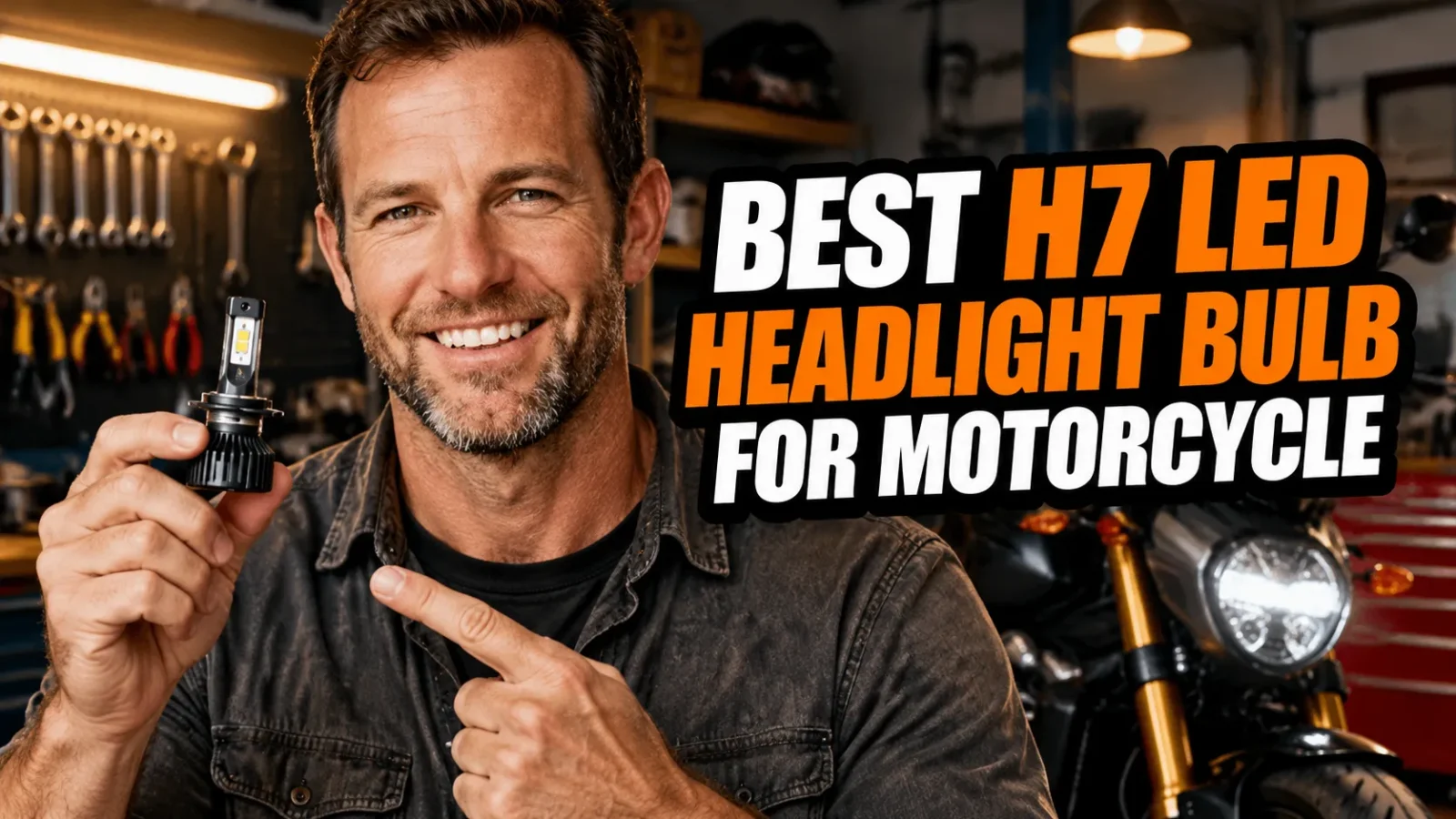
I’ve burned through more cheap H7 LEDs than I care to admit. Melted dust caps, flickering drivers, and a beam pattern that lit up treetops instead of the road — I’ve made every one of those mistakes on my own bikes so you don’t have to.
Swapping to an H7 LED is one of the best upgrades you can make to a motorcycle, especially if your stock halogen throws that dim, yellow puddle that seems to stop ten feet in front of the front wheel. But motorcycles are far harder on LEDs than cars are. There’s less airflow, tighter housings, more vibration, and often a weaker charging system feeding the whole thing.
That last part matters more than most riders realize. Before you bolt in a 60 watt pair of bulbs, it’s worth understanding what are the different types of motorcycle batteries ultimate guide — because a tired battery and an over-taxed stator will turn a bright headlight into a dim one fast.
- My overall pick: Morimoto 2Stroke 3.0 — the best balance of beam pattern, size, and build quality for a motorcycle.
- Best for ADV and dual-sport: Cyclops Adventure Sports H7 LED 10.0, built specifically for bikes that get beaten up.
- Best budget: Auxito H7 LED — shockingly good for the money, but check your dust cover clearance.
- Beam pattern beats lumens. A well aimed 3,000 lumen bulb beats a scattered 12,000 lumen one every time.
- Never buy a no-name bulb with a mystery driver. Electrical gremlins from cheap LEDs are a nightmare to diagnose.
What I Actually Look For in an H7 LED for a Motorcycle
After ruining a few perfectly good headlight housings, I built a mental checklist. Every bulb on this list passes it, and everything I’ve rejected over the years failed it.
Beam pattern beats lumen claims
The single biggest lie in the LED world is the lumen number on the box. I’ve tested “12,000 lumen” bulbs that put less usable light on the road than a decent 3,000 lumen unit, because all that extra output was sprayed into the trees and oncoming traffic.
What matters is that the LED chips sit in exactly the same place as the original halogen filament. Get that right and your stock reflector or projector does its job. Get it wrong and you get glare, dark spots, and a very unhappy oncoming driver.
Heat and dust cover clearance
Halogens are hot, but they’re hot in a way housings are designed for. LEDs push their heat backward into the bulb base, right where your rubber dust cover lives. I’ve seen covers go brittle and crack after a summer of cheap LED use.
On my bikes I measure the depth from the bulb seat to the back of the housing before I buy anything. A bulb that’s 5mm too long either won’t fit, or it’ll force you to run without a dust cover — and that’s how you get water in your reflector.
Electrical load and your charging system
Here’s the good news: a good H7 LED usually draws less than the 55 watt halogen it replaces, typically 20 to 35 watts per bulb. That’s a real win for older bikes with marginal charging systems.
The bad news is cheap drivers. I once spent an entire weekend chasing a no-start on a friend’s bike, convinced it was the charging system, only to find a failed aftermarket LED driver. If you’ve ever dealt with a bike that harley lost all electrical power symptoms, you know how quickly a small electrical fault snowballs into a full weekend of diagnostics.
And while you’re in there, think about the whole system — not just the bulb. Whether your bike uses a kickstart vs electric start setup doesn’t change the math much, but a healthy battery does. I keep a tender on my bikes all winter, and if you’re not sure why that helps, this explainer on how does a battery tender work is worth five minutes.
1. Morimoto 2Stroke 3.0 H7 — Best Overall
If I had to put one bulb in every motorcycle I own, it would be the Morimoto 2Stroke 3.0. Morimoto is a lighting company that actually cares about beam pattern, and it shows the moment you turn the key.
Instead of chasing an absurd lumen number, Morimoto quotes a realistic figure and focuses on chip placement. In my experience the cutoff stays crisp, the hot spot lands where it should, and I’m not fight oncoming traffic for visibility.
It’s also genuinely compact for what it does. That matters on a motorcycle, where the headlight bucket is often a tight little cave with a wiring loom crammed in beside it. Price is typically in the $120 to $180 range for a pair, which is real money — but it’s the difference between a proper upgrade and a science experiment.
Where it falls short
Honestly? The price. If you’re lighting a beater commuter, this is hard to justify. And if your heart is set on the absolute maximum raw output, a couple of the bulbs below will beat it on paper — though probably not on the road.
2. Cyclops Adventure Sports H7 LED 10.0 — Best for ADV and Dual-Sport Bikes
Cyclops Adventure Sports builds lighting for motorcycles, snowmobiles, and ATVs — not for generic cars with a motorcycle sticker slapped on the box. That difference shows up in the details.
The Cyclops H7 LED 10.0 is designed around the reality of a bike that gets dropped in the dirt, vibrated to death on washboard gravel, and rained on for six hours straight. It comes with longer leads and a remote driver so you can tuck the bulky electronics away from the headlight bucket, which is a huge deal on dual-sports with barely any room up front.
On my ADV bike, that remote driver made the difference between a clean install and a nightmare of zip-tied confusion. It’s not cheap — expect somewhere in the $140 to $190 range depending on where you buy — but it’s built for abuse rather than spec-sheet bragging.
3. Diode Dynamics SL1 H7 — Best Honest Beam Pattern
I love Diode Dynamics for one reason: they tell the truth about output. The SL1 is rated at around 780 lumens per bulb, which sounds pathetic next to “12,000 lumen” boxes — until you actually ride behind one.
That 780 lumen figure is measured the way it should be, and the SL1 makes every one of those lumens count. The beam is tightly controlled, the color is a clean 6000K white, and there’s virtually no glare. If you ride in traffic a lot, that lack of glare matters as much as the brightness.
It’s a passively cooled design with no fan, so there’s nothing to buzz, seize, or rattle loose on a vibrating single. Diode Dynamics is US-based and backs the SL1 with a multi-year warranty. Expect roughly $130 to $200 a pair.
Who should skip it
If you do a lot of unlit backroad riding and want maximum throw, the SL1’s conservative output might leave you wanting. It’s brilliant in traffic and terrible weather. It’s not the brightest thing here.
4. Hikari UltraFocus H7 — Brightest Raw Output
When I want the most light on the road and I’m willing to accept a little more fuss, I reach for the Hikari UltraFocus. Hikari uses Philips Luxeon ZES chips, which are genuinely good emitters, and the result is a wall of white light that feels almost unfair at night.
Hikari advertises around 12,000 lumens per set, and while I’d take that with a grain of salt, it’s noticeably brighter than the Diode Dynamics SL1 in a dark-backroad comparison. The color temperature sits around 6000K, which is clean without being that horrible blue tint.
Pricing is usually in the $70 to $100 range for a pair, which makes it one of the better value picks here. Build quality is solid but not on the same level as a Morimoto or Cyclops unit.
5. Auxito H7 LED — Best Budget Pick
I’ll be honest: I expected to hate the Auxito H7. It’s cheap, it’s everywhere, and it’s sold with the kind of marketing copy that usually means “please glare at everyone.”
Then I actually installed a pair on a commuter and came away impressed. The Auxito uses a fanless aluminum body, no external driver to hide, and a 6000K color that looks far more expensive than the $30 to $45 a pair it typically costs. The install took me about ten minutes per side.
Beam pattern isn’t as tight as the premium options, and I wouldn’t put Auxito in a projector housing without re-aiming carefully. But for a budget commuter or a second bike you only ride occasionally, it’s genuinely hard to beat.
Watch your battery health
Cheap LEDs are where I see electrical problems start. If you’re running a budget bulb and your bike starts cranking slowly, don’t ignore it. A weak battery plus a marginal driver is a bad combination, and if you ever need to pull the battery to check things over, this guide on how to remove harley street 750 battery walks through the kind of access puzzle you’ll run into on a lot of modern bikes.
6. Philips Ultinon Pro6000 LED H7 — Best for Street-Legal European Riders
If you ride in Europe, the rules are the whole ballgame. Philips is the brand that actually went through the approval process, and the Ultinon Pro6000 is the one you’ll see referenced in discussions about legal LED retrofits.
The catch is that the approval is vehicle-specific. You can’t just buy the Philips bulb, jam it in any housing, and declare yourself legal. You need to check whether your exact bike appears on the approved list for your country.
Where it’s approved, this is a fantastic option. The build quality is exactly what you’d expect from Philips, the color is a clean white, and the beam pattern is engineered to work with the reflector rather than against it. Pricing tends to sit around $100 to $150 a pair.
For US riders, note that DOT doesn’t certify LED retrofits in halogen housings at all, so the legal landscape is completely different. Philips also sells the Ultinon Essential LED for markets where approval isn’t the priority.
7. Lasfit LS Plus H7 — Best Plug-and-Play Fitment
Some bikes just don’t have room for a bulb with a hanging driver and a bundle of extra wiring. That’s where the Lasfit LS Plus earns its place on this list. The driver is integrated into the body, so what you pull out of the box is basically what goes into the housing.
Lasfit quotes a lumen figure up in the several-thousand range per set, and the color temperature is a standard 6000K. I found it noticeably brighter than the Auxito but not quite as punchy as the Hikari. The trade-off is worth it if fitment has been your problem.
Pricing typically lands in the $60 to $85 range for a pair. It’s a good middle ground between the bargain bin and the premium stuff, and the install is about as foolproof as it gets.
8. GTR Lighting Ultra 2 H7 — Best Premium Build
The GTR Lighting Ultra 2 is the “I want the best and I’m not apologizing for it” option. GTR uses high-end chips and a copper-based thermal design, and the whole thing feels like it was over-engineered on purpose.
In practice, that means consistent output even after an hour of riding, no color shift, and a beam that stays stable instead of drifting as the bulb warms up. Cheap LEDs often dim and shift color once they heat soak. The Ultra 2 doesn’t.
The downside is price and size. You’re looking at roughly $200 to $280 a pair, and the heatsink is bulky enough that you should measure your housing before ordering. On a naked bike with an exposed headlight bucket it fits fine. On a fully faired sportbike with a cramped nose, do your homework first.
Getting the Install Right (This Is Where Most People Fail)
I’ve seen more good bulbs ruined by bad installs than by defects. Here’s what I do every time.
First, I disconnect the battery. It’s a two-minute job that prevents a very expensive mistake, and it’s a good excuse to inspect your terminals while you’re in there. Second, I always check the clocking of the bulb — the alignment tab matters, and rotating the collar to match the original filament is the single biggest factor in beam quality.
Third, I re-aim the headlight afterward. Every time. Even a well-designed LED shifts the pattern slightly, and twenty minutes with the bike parked against a garage wall at night saves you from blinding every driver you meet.
And if you do flatten the battery during a long install session, don’t panic. A slow charge is better than a fast one, and if you’ve ever wondered how long to charge a car battery at 10 amps, the short answer is that a motorcycle battery will usually be topped up well before a car battery would be, because the capacity is so much smaller.
My Final Verdict
If I’m spending my own money and I only get one pick, it’s the Morimoto 2Stroke 3.0. It does the thing that actually matters — putting light on the road where I need it — better than anything else I’ve ridden behind.
For dual-sport and ADV riders who treat their bikes badly, the Cyclops Adventure Sports H7 LED 10.0 is the one I’d trust on a long trip. For value, the Hikari UltraFocus gets you serious output for under a hundred bucks, and if money is genuinely tight, the Auxito H7 is a shockingly competent budget option.
Whatever you choose, buy from a brand that publishes honest specs, re-aim your headlight, and pay attention to your bike’s electrical system as a whole. A great headlight on a dying battery is still a bad night ride.
Frequently Asked Questions
Are H7 LED bulbs legal on motorcycles?
It depends entirely on where you ride. In most of the United States, federal rules do not certify LED retrofits in halogen housings, so legality is enforced state by state. In Europe, you need bulbs like the Philips Ultinon Pro6000 that carry an ECE approval for your specific vehicle. Always check your local rules before buying.
Will an H7 LED bulb drain my motorcycle battery?
Usually no. Most H7 LED bulbs draw less power than the 55 watt halogen they replace, typically 20 to 35 watts per bulb. The real risk is cheap bulbs with failing drivers, which is why I stick to brands with proper heat management and clean wiring.
Why does my LED headlight have a scattered beam?
The LED chips are almost certainly not aligned with your reflector or projector. The light source has to sit in the same spot the halogen filament did. Look for a bulb with an adjustable or clockable collar, and always re aim the headlight after install.
Do H7 LED bulbs need a fan?
Not always, but they need something. Passive copper or aluminum heatsinks work well and are quieter, while fans move more heat in tight housings but can be noisy and are one more part to fail. On a motorcycle with limited airflow I lean toward a well designed passive design.

Related Articles

Harley Davidson Headlight Problems: What I Learned Fixing Mine in the Dark
Chasing a dead, dim, or flickering Harley headlight? I walk through the real causes, my own diagnostic steps, and the…
Jake Miller
9 min read

Red Oil Light on Your Bike: How Many Seconds Do You Actually Have?
Is it too late when the oil light comes on? After nearly losing an engine to a 30-second delay, here's…
Jake Miller
10 min read

Best HID Kits for Motorcycles: How I Choose the Right One for Night Riding
Wondering which HID kit suits your bike? I break down wattage, color temperature, ballasts, legality, and wiring so you can…
Jake Miller
9 min read