
7 Best All-Around Motorcycles for Short Riders (Low Seats, Easy Handling)
 Jake Miller
8 min read
Jake Miller
8 min read
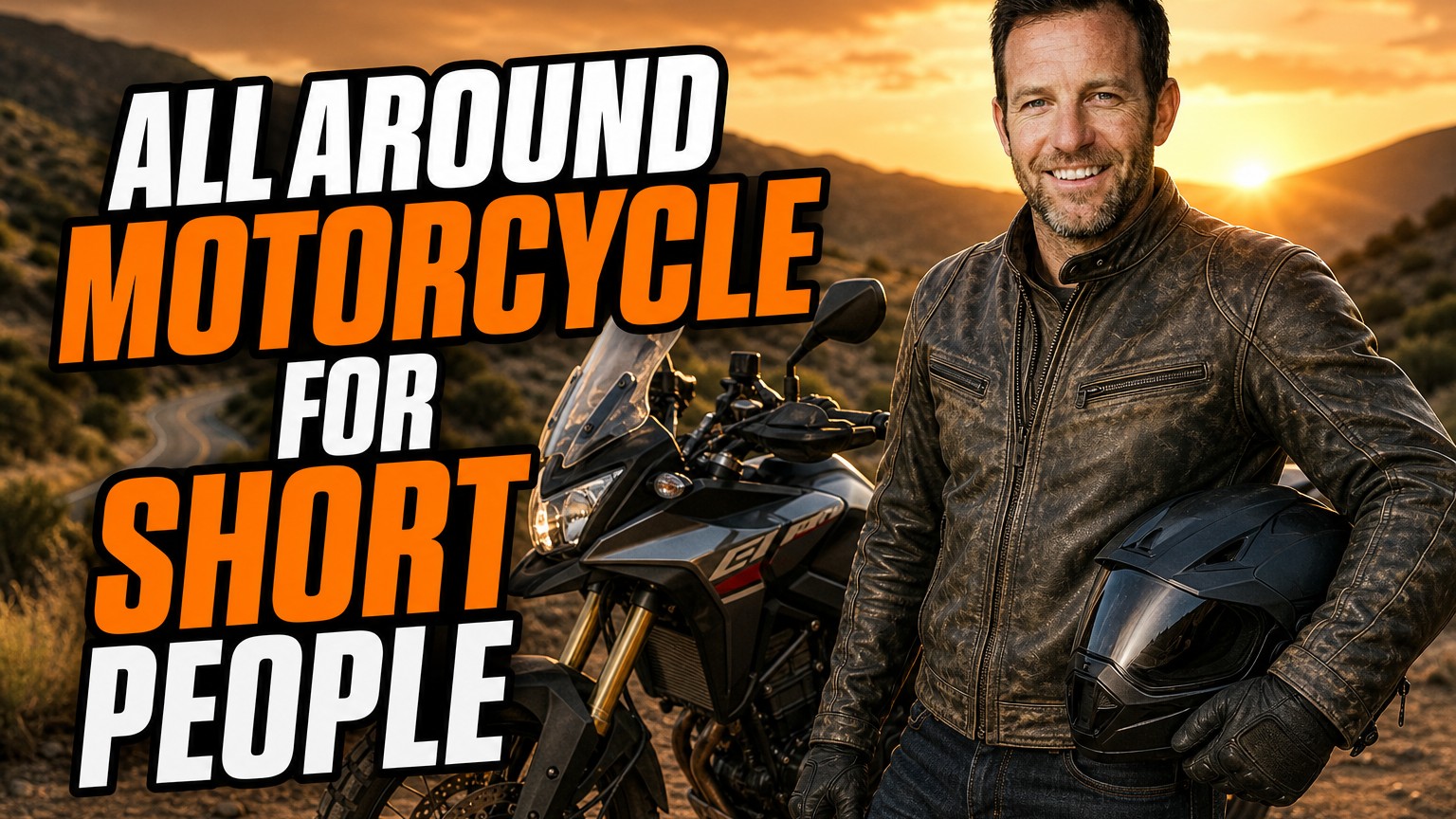
I’m not tall. At roughly 5’4″, I’ve spent years tiptoeing at stoplights, second-guessing gravel parking lots, and politely declining test rides on bikes that looked amazing but felt like climbing a ladder. If that sounds familiar, you’re in the right place.
Finding the best all around motorcycle for short people isn’t only about a low seat number on a spec sheet. It’s about weight, balance, handlebar reach, and how a bike feels when you’re crawling through a U-turn. I’ve sat on, ridden, or closely compared every bike below with those things in mind.
- My top overall pick is the Honda Rebel 500: low, light, affordable, and capable of nearly everything.
- Beginners on a tight budget should look at the Honda Rebel 300 or Kawasaki Eliminator.
- Seat height matters, but weight, seat width, and balance matter just as much.
- Basic upkeep, like using quality oil, keeps any of these bikes reliable for years.
How I Chose These Bikes
I didn’t just sort by seat height. A 26-inch seat on a 700-pound cruiser can still feel scary if you can’t hold it upright at a walking pace.
My Criteria
I looked at five things: seat height, curb weight, seat width at the front, handlebar reach, and versatility. A bike that only works for a 10-minute cruise doesn’t earn “all around” status in my book.
I also considered price and parts availability. Short riders often start on their first bike, and nobody wants a surprise repair bill on top of a big purchase.
A Quick Note on Seat Height
Numbers vary slightly by model year and market, so always confirm with your local dealer. I also recommend sitting on a bike with your riding boots on. Thick soles can add a full inch.
1. Honda Rebel 500: Best All-Around Pick
The Honda Rebel 500 is the bike I recommend most often, and it’s not close. The seat sits at about 27.2 inches, and the bike carries its weight low, so it feels lighter than its roughly 415-pound curb weight suggests.
Power comes from a 471cc parallel twin making around 45 horsepower. That’s enough to merge onto a highway without drama, yet mellow enough that you won’t be overwhelmed on your first week.
Why It Works for Short Riders
The Rebel 500’s seat is slim up front, which lets your legs drop straight down. The handlebar reach is relaxed, and the mid-set pegs keep your knees from feeling cramped.
I’ve used it for commuting, backroad rides, and a weekend trip with soft luggage. It never felt out of its depth. Expect to pay roughly $6,500 to $7,000 new, and used examples hold their value well.
Downsides
The stock suspension is on the basic side, and the rear shocks can feel harsh over bad pavement. A passenger won’t be thrilled either. Still, for a one-bike solution, the Rebel 500 is hard to beat.
2. Honda Rebel 300: Best for Beginners
If you’re brand new to riding, the Honda Rebel 300 is a friendly place to start. It shares the Rebel 500’s 27.2-inch seat but weighs less, at about 365 pounds ready to ride.
The 286cc single-cylinder engine delivers smooth, predictable power. It’s happiest around town and on moderate highways, and I found it very forgiving in slow-speed practice.
Real-World Impressions
What I love about the Rebel 300 is how little it intimidates you. Dropping it in a parking lot is less likely, and picking it back up is far easier than with heavier cruisers.
Pricing sits around $4,600 to $5,000, which makes it one of the most affordable options here. If you plan to ride long highway stretches regularly, though, you may outgrow it faster than the Rebel 500.
3. Kawasaki Eliminator: Best Modern Style on a Budget
The Kawasaki Eliminator brought a classic nameplate back with a modern 451cc parallel twin. Its seat height is around 28.1 inches, slightly taller than the Rebels, but the bike is slim and well balanced.
It makes roughly 45 horsepower, and Kawasaki includes ABS and a slip-and-assist clutch. That clutch makes stop-and-go traffic much less tiring for your left hand.
Who Should Buy It
I’d point the Eliminator at riders who want a bit more attitude than the Rebel. The low-slung profile looks great, and the weight is manageable at around 400 pounds.
Prices start around $6,000, and an upgraded model adds features like a fork cowl. If you’re 5’2″ or under, test the seat first. That extra inch over the Rebel can matter.
4. Kawasaki Vulcan S: Best for Fit Adjustability
The Kawasaki Vulcan S is my pick for riders who struggle with the “one size fits all” feel of most cruisers. Its Ergo-Fit system lets you adjust the pegs and handlebar reach, and there are three seat options.
The seat height is about 27.8 inches, and the 649cc parallel twin is torquey and smooth. It uses the same engine family as the Ninja 650, so there’s plenty of power on tap.
The Trade-Offs
It’s heavier than the Rebel 500, at around 500 pounds. You feel that at parking-lot speeds, but the weight sits low enough that it stays manageable.
New prices run roughly $7,500 to $8,000. If you value a custom fit, I think the Vulcan S is one of the most underrated bikes for shorter riders.
5. Honda Rebel 1100: Best for Touring and Highway Riding
Want something bigger? The Honda Rebel 1100 delivers a 1,084cc parallel twin, 27.5-inch seat height, and an optional dual-clutch transmission (DCT). It’s the Rebel’s big brother, and it feels substantially more planted at highway speeds.
The DCT is a real advantage for short riders, in my experience. With no clutch lever to manage, you can focus on balance and foot placement when stopping.
Weight and Price
The Rebel 1100 weighs about 490 pounds in manual form and a bit more with DCT. Honda prices it roughly in the $9,500 to $10,500 range, depending on the configuration.
It’s not a first bike for most people. But if you’re a confident rider wanting long-distance comfort without a tall seat, it’s an excellent all-rounder.
6. Suzuki SV650: Best Naked Bike for Shorter Riders
Not everyone wants a cruiser. The Suzuki SV650 has a seat height of roughly 30.9 inches, which is taller than the others here, but the seat and frame are remarkably narrow.
That slimness lets many shorter riders get both feet closer to the ground than the number suggests. At about 430 pounds, the V-twin feels light and nimble.
Why I Still Recommend It
The SV650’s 645cc V-twin has a smooth, linear pull and a great exhaust note. It handles commuting, canyons, and even light touring with a simple windscreen.
It sells for about $7,700 to $8,000. If you’re under 5’3″, I’d suggest trying a lowered seat or lowering link, and sitting on one before you commit.
7. Indian Scout Bobber: Best Premium Low-Slung Cruiser
The Indian Scout Bobber is the lowest bike in my lineup, with a seat height around 25.5 inches. That’s rare for a bike with a 1,133cc V-twin and well over 100 horsepower.
It feels planted and powerful, and the riding position is relaxed with forward controls. I find it perfect for riders who want serious character in a small-frame-friendly package.
Considerations
At around 550 pounds, it’s the heaviest bike here, and it’s also the most expensive, typically $13,000 or more depending on year and trim. Lean angle is limited too.
But if budget isn’t your main concern and you love cruiser style, the Scout Bobber is a stunning choice. It’s the bike that made me reconsider what “low” could feel like.
Keeping Your Bike Running Right
Whichever bike you pick, maintenance is what turns a good purchase into a great one. Fresh oil, correct tire pressure, and a clean chain or belt go a long way.
If you’re researching lubricants, I found a helpful guide on the best motor oil for 4 stroke motorcycle engines. Another useful read covers the top engine oil for 4 stroke motorcycle use.
If you ride in warmer climates or want market-specific advice, check out this breakdown of the best engine oil for 4 stroke motorcycle in India. For one more perspective, here’s a post on what is the best engine oil for 4 stroke motorcycle owners should choose.
Cables, Controls, and Small Upgrades
Many short riders tweak lever reach, bars, or seats. If you change handlebars, you may need longer or shorter cables, so it helps to know are all motorcycle throttle cables the same before ordering parts.
I’d also suggest adjustable levers, which are cheap and make a huge difference for smaller hands. Good boots with a slightly thicker sole can help too.
Tips for Test Sitting and Buying
Do the Parking-Lot Test
Sit on the bike, then walk it backward off the side stand. If you can do that comfortably, you’ll probably handle it in daily life.
Also check whether you can reach the ground with a slight knee bend. Flat-footed isn’t mandatory, but confident control is.
Take a Rider Course
I can’t recommend a basic rider course enough. You’ll learn techniques for tilting the bike, shifting your weight, and stopping smoothly, all of which help short riders more than any lowering kit.
Final Thoughts
If I had to pick just one, the Honda Rebel 500 would be my answer. It’s affordable, easy to ride, and genuinely capable in nearly every situation I’ve put it in.
But the best bike is the one that makes you feel confident the moment you swing a leg over it. Sit on a few, take a test ride if you can, and trust how it feels. Being short doesn’t limit your riding. It just changes which bikes you shortlist.
Frequently Asked Questions
What seat height is best for short riders?
For most riders under 5’5″, I recommend a seat height between 25.5 and 28 inches. That range usually lets you get one foot flat, or close to it, and stay planted at stops. Narrow seat and frame design matters too, because it lets your feet reach the ground more easily.
Is the Honda Rebel 500 good for short riders?
Yes. The Honda Rebel 500 has a seat height of about 27.2 inches, a low center of gravity, and friendly power delivery. It is one of the most popular choices for shorter riders because it works for commuting, weekend rides, and light touring.
Can I lower a motorcycle if the seat is too tall?
Often you can, using a lower seat, lowering links, or adjusted fork height. These changes can affect ground clearance, suspension travel, and handling, so I always suggest choosing a naturally low bike first and modifying second.
Should short riders start with a smaller engine?
Not always, but a 250cc to 500cc bike is a smart place to begin. Lighter weight and gentler power make low-speed control easier, which is where most short riders feel the most pressure.

Related Articles
7 Best Batteries for Motorcycles I’ve Tested and Trust in 2026
I've tested dozens of motorcycle batteries to find the best performers. From AGM to lithium, here are my top picks…
Jake Miller
15 min read

The Perfect Battery for Your Harley Davidson Softail: A Rider’s Complete Guide
Discover the perfect battery for your Harley Davidson Softail. I've tested multiple options and share real-world performance data, maintenance tips,…
Jake Miller
14 min read

The Best Battery for Your Harley Davidson: My Complete Guide After Years of Testing
Discover which battery truly performs best for Harley Davidson motorcycles. Real rider experience with AGM, lithium, and OEM options to…
Jake Miller
12 min read