
8 Best Engine Oils for Motorcycles in 2026: My Real-World Picks for Every Rider
 Jake Miller
7 min read
Jake Miller
7 min read
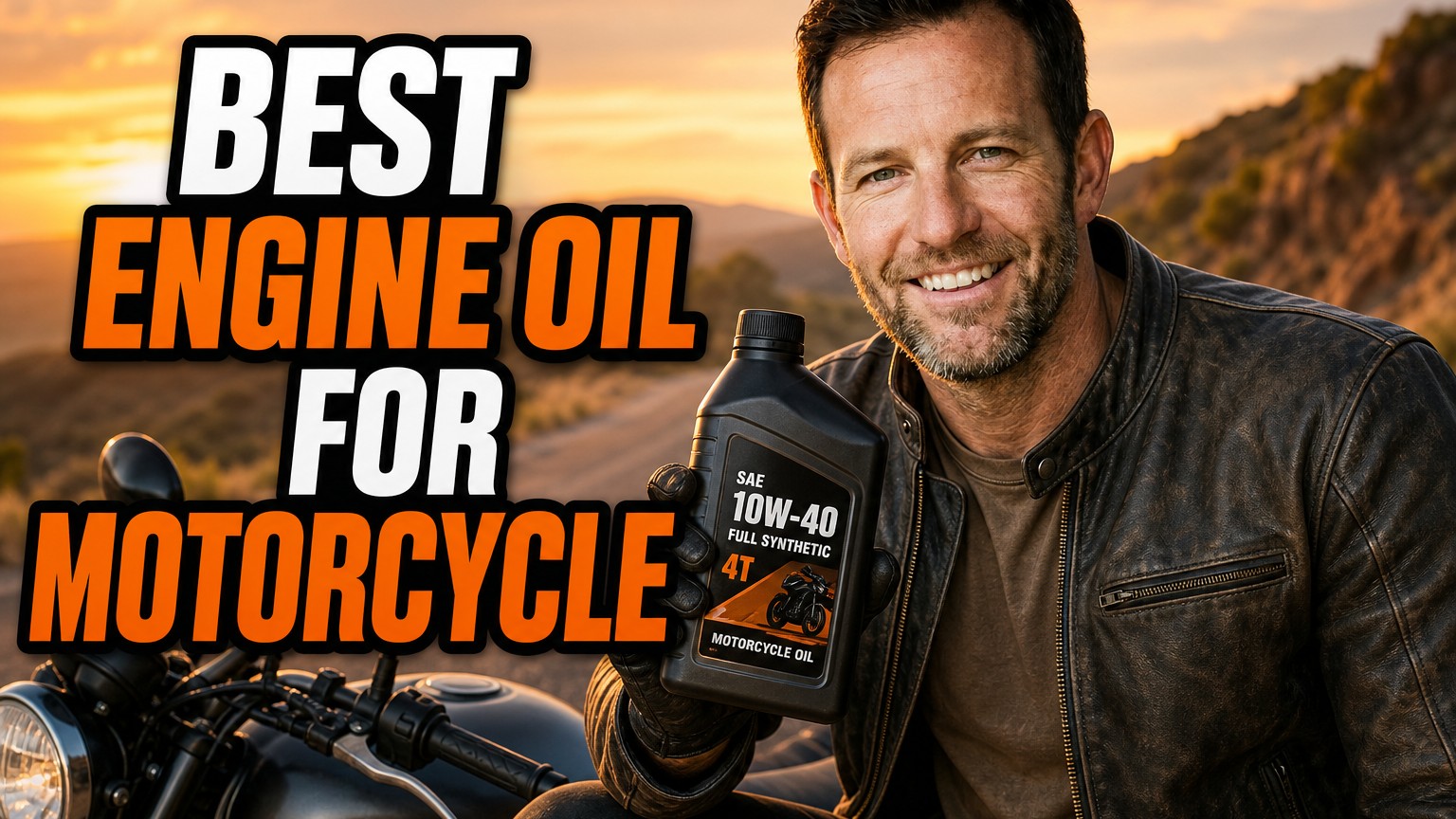
I’ve been riding for well over a decade, and I’ve learned one lesson the hard way: oil is the cheapest insurance your engine will ever get. I’ve seen a clutch start slipping after one careless fill-up with the wrong bottle. I’ve also seen a tired old commuter run happily past 60,000 miles on regular, quality changes.
Over the years I’ve run most of the big names through my own bikes, from a daily 150cc commuter to a thumping V-twin cruiser. Below are the eight oils I trust and recommend. I’ve included real specs, rough prices and who each one suits best.
- My overall favorite is Motul 7100 4T, a full ester synthetic that suits almost any modern bike.
- Always check for a JASO MA or MA2 rating so your wet clutch doesn’t slip.
- Budget riders get great protection from Castrol Power1 4T or Motul 3000 4T.
- Match viscosity to your owner’s manual and your climate, not to hype.
How I Choose a Motorcycle Oil Before Buying
Before I get to the list, here is the checklist I use. It takes two minutes and saves a lot of headaches. If you want a deeper dive afterwards, I’ve also written up which engine oil is best for motorcycle riders in different situations.
JASO Rating Comes First
Most bikes share one oil between the engine, gearbox and wet clutch. That’s why JASO MA or MA2 matters so much. It certifies the oil has the right friction characteristics for a clutch that needs to grip.
Scooters with automatic transmissions often want JASO MB instead. Check your manual before you buy.
Viscosity and Base Oil Type
I always start with the grade my manufacturer recommends, usually 10W-30, 10W-40 or 20W-50. Then I choose between mineral, semi-synthetic and full synthetic based on how hard I ride. Full synthetic gives the best heat resistance, but a good semi-synthetic is plenty for relaxed commuting.
1. Motul 7100 4T 10W-40 — Best Overall Motorcycle Oil
If a friend asked me for one bottle to buy without overthinking it, it would be the Motul 7100 4T 10W-40. It’s a 100% synthetic ester-based oil, and it’s meant for high-revving four-stroke engines.
It meets JASO MA2 and API SN, and it’s available in several grades from 5W-40 up to 20W-50. In my own bikes, gear changes felt smoother and the engine ran noticeably quieter after switching to Motul 7100.
Expect to pay roughly $14 to $18 per liter. That’s not cheap, but the shear stability and film strength are worth it for sport bikes, adventure bikes and anything ridden hard. For more on this category, see my guide to the top engine oil for 4 stroke motorcycle engines.
2. Castrol Power1 4T 10W-40 — Best Value for Everyday Riding
The Castrol Power1 4T 10W-40 is the oil I reach for when I want solid protection without a boutique price. It’s a part-synthetic formula that’s JASO MA2 certified. Castrol designed it for quick throttle response and smooth clutch engagement.
I’ve used Castrol Power1 in a mid-size naked bike for several service intervals. The oil stayed in good condition and the clutch never complained.
It usually costs about $8 to $12 per liter, and it’s easy to find almost anywhere. If you ride a commuter or a weekend roadster, this is the sweet spot between price and performance.
3. Mobil 1 V-Twin 20W-50 — Best for Cruisers and Hot Climates
Air-cooled V-twins run hot, and the Mobil 1 V-Twin 20W-50 was built for exactly that. It’s a full synthetic that holds its viscosity when the cylinders are cooking in stop-and-go traffic. It’s also JASO MA2 and API SN rated.
I ran Mobil 1 V-Twin in a cruiser through a brutal summer, and oil temperatures stayed predictable. The engine felt calmer and less clattery on hot afternoons.
It typically costs $12 to $15 per quart. If you live somewhere steamy, my notes on the best motorcycle motor oil for florida explain why heavier grades like this one make sense.
4. Shell Advance Ultra 4T 10W-40 — Best for Everyday Commuters in Warm Regions
The Shell Advance Ultra 4T 10W-40 is a fully synthetic oil aimed at modern four-stroke bikes. It carries a JASO MA2 rating, so it plays nicely with wet clutches. It’s also widely sold across Asia and Europe.
What I like most is how consistent it feels in heavy stop-start riding. My clutch lever stayed predictable, and the engine didn’t get that tired, buzzy feel late in the interval.
It generally costs around $12 to $16 per liter. If you’re shopping in South Asia, check my breakdown of the best engine oil for 4 stroke motorcycle in india. Shell Advance Ultra is a regular in that conversation.
5. Liqui Moly Motorbike 4T 10W-40 Street — Best European Pick
German brand Liqui Moly makes the Motorbike 4T 10W-40 Street, a synthetic-technology oil for road bikes. It’s JASO MA2 approved and made for engines that share oil with the clutch. It has a reputation for strong wear protection.
I used it in a middleweight tourer on long highway runs. Oil consumption stayed minimal, and the gearbox felt crisp even after a few thousand miles.
Expect around $13 to $17 per liter. It’s a great choice if you own a European machine and want an oil that feels at home with it.
6. Honda GN4 10W-30 — Best OEM Oil for Honda Owners
Sometimes the simplest answer is the best. Honda GN4 10W-30 is Honda’s own four-stroke oil, and it’s formulated to match the clutch and gearbox materials Honda uses. It’s a JASO MA-rated, mineral-based oil.
I used Honda GN4 on a small commuter that I didn’t want to fuss over. It did the job at every service, with no clutch drama and no mystery noises.
It typically costs just $7 to $10 per quart. If your bike is under warranty, using the manufacturer’s own oil also removes any doubt about compatibility.
7. Amsoil 10W-40 Synthetic Motorcycle Oil — Best for High-Mileage Longevity
I recommend the Amsoil 10W-40 Synthetic Motorcycle Oil to riders who care about long-term wear protection. It’s a full synthetic that is JASO MA2 and API SN rated. It’s designed to be shared among the engine, transmission and clutch.
Amsoil’s selling point is strong film strength and resistance to shear, which matters when your gearbox is chewing through the oil. I noticed cleaner drain oil after a few thousand miles compared with some budget options.
It usually runs $14 to $17 per quart. That’s a premium price, but riders who keep their bikes for years often find it pays off.
8. Motul 3000 4T 10W-40 — Best Budget Mineral Oil
Not every bike needs a full synthetic. The Motul 3000 4T 10W-40 is a mineral-based oil that’s JASO MA2 and API SL rated. It suits older engines and low-stress commuting.
I put it in a rugged older single-cylinder bike, and it was perfect. It kept the engine happy and the clutch grippy, and it cost me very little.
It typically costs $8 to $10 per liter. If you change your oil often and ride gently, this is a smart, honest choice. For more options in this price bracket, take a look at my picks for the best motor oil for 4 stroke motorcycle riders on a budget.
Mistakes I See Riders Make With Oil
After years of garage chats, the same errors keep coming up. Here are the big ones I’d urge you to avoid.
Using Car Oil Because It’s Cheaper
Many car oils carry friction modifiers that can make a wet clutch slip. A few dollars saved isn’t worth a clutch replacement. Stick with JASO-rated motorcycle oil.
Ignoring Change Intervals
Even the best synthetic breaks down over time. I change mine every 3,000 to 6,000 miles, and sooner if I’ve been riding in heavy heat or traffic. Fresh oil is cheap. Engines are not.
Mixing Random Oils
Topping up with a different brand in an emergency is fine. But I wouldn’t make a habit of it. Stick to one oil per interval so you know exactly what’s in the sump.
My Final Thoughts
If I had to pick just one, I’d go with the Motul 7100 4T for most modern bikes. For a tighter budget, Castrol Power1 4T and Motul 3000 4T are hard to beat. Cruiser riders should look hard at Mobil 1 V-Twin, and Honda owners can happily stay with GN4.
Whatever you choose, read your manual, match the JASO rating and change it on time. Do that, and your engine will repay you with thousands of happy miles. Ride safe, and keep that oil fresh.
Frequently Asked Questions
Can I use car engine oil in my motorcycle?
In most cases, no. Many car oils contain friction modifiers that can make a wet clutch slip. Look for a JASO MA or MA2 rating on the bottle to be sure the oil is safe for a shared engine, clutch and gearbox.
How often should I change my motorcycle engine oil?
Most riders change oil every 3,000 to 6,000 miles (roughly 5,000 to 10,000 km), or once a year. Always follow your owner’s manual first. Track days, heavy city traffic and very hot weather all call for shorter intervals.
Is synthetic oil really worth it for a motorcycle?
For most modern bikes, yes. Full synthetics resist heat and shear better, which protects the gearbox and clutch. A good semi-synthetic is still a sensible choice for older or lower-output commuter bikes.
What does 10W-40 actually mean?
The first number (10W) is how the oil flows when cold, and the W stands for winter. The second number (40) is its thickness at operating temperature. Always use the viscosity grade your manufacturer recommends for your climate.

Related Articles

7 Best Batteries for Motorcycles I’ve Tested and Trust in 2026
I've tested dozens of motorcycle batteries to find the best performers. From AGM to lithium, here are my top picks…
Jake Miller
15 min read

7 Best Motorcycle Batteries for Honda Magna (V30, V45, V65)
I've tested the best motorcycle batteries for Honda Magna models. From AGM to lithium options, find the perfect power source…
Jake Miller
14 min read

7 Best Battery Brands for Motorcycles That Actually Start Every Time
I've tested dozens of motorcycle batteries over the years. These 7 brands deliver reliable starts, long life, and real value—from…
Jake Miller
15 min read