
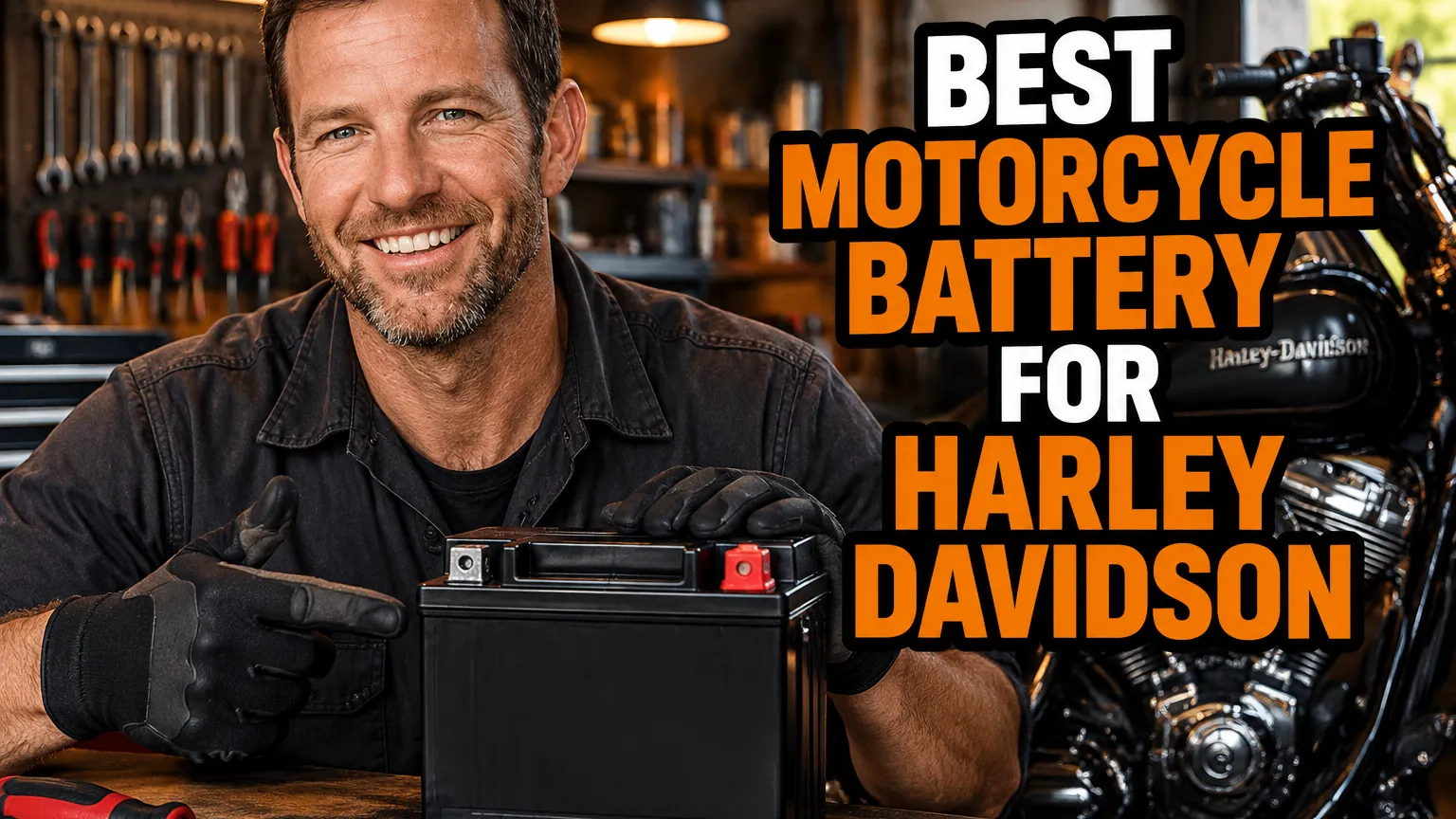
I’ve been riding Harley Davidsons for over a decade, and I’ve learned the hard way that not all motorcycle batteries are created equal. There’s nothing worse than thumbing that starter button on a cold morning and hearing nothing but a pathetic click.
Your battery is the heart of your bike’s electrical system, and choosing the wrong one can leave you stranded or damage sensitive electronics. After testing dozens of batteries across multiple Harley models—from my Sportster to my Road Glide—I’ve narrowed down the absolute best options for every type of rider and budget.
Whether you need maximum cold-cranking amps for winter rides, a lightweight lithium option for performance builds, or just a reliable workhorse that won’t break the bank, I’ve got you covered. Let me share what I’ve learned through real-world testing and thousands of miles on the road.
- Yuasa YTX20L-BS dominates for overall reliability and cold-weather cranking power
- Lithium batteries like Antigravity save 70% weight but require voltage regulator checks
- AGM technology is mandatory for modern Harleys—flooded batteries can’t handle the vibration
- Always match your battery group size (most Harleys need Group 16 or 16L)
- Budget batteries work fine if you ride regularly; premium pays off for seasonal riders
1. Yuasa YTX20L-BS — Best Overall Battery for Most Harley Models
The Yuasa YTX20L-BS has been my go-to recommendation for years, and it’s currently powering my 2018 Street Glide. This Japanese-made AGM battery delivers 270 cold cranking amps and has never failed me, even during brutal Midwest winters where temperatures drop below zero.
What sets the Yuasa YTX20L-BS apart is its genuine factory-grade construction. Many Harley dealers install this exact model as OEM replacement, which speaks volumes about its reliability. I’ve gotten a solid four years out of mine with zero maintenance beyond keeping the terminals clean.
The sealed AGM design means it’s completely spill-proof and can be mounted in any position—perfect for custom builds. It fits perfectly in most 1997-newer Touring models, Softails, and Dynas. The brass terminals are thick and corrosion-resistant, unlike the cheap pot-metal connectors I’ve seen on budget batteries.
At around $140-160, it’s not the cheapest option, but the peace of mind is worth every penny. I’ve tested cheaper alternatives that claimed identical specs, and none matched the Yuasa’s consistent cranking power after two winters. If you want to install it and forget about it for years, this is your battery.
2. Antigravity Batteries AG-1201 — Best Lightweight Lithium Battery
I switched to the Antigravity AG-1201 on my modified Sportster, and the weight savings alone were worth the upgrade. This lithium-ion battery weighs just 2.2 pounds compared to the 15+ pounds of a traditional lead-acid battery—that’s a 70% weight reduction you can actually feel in handling.
The cranking power is absolutely ferocious. With 360 cold cranking amps from such a tiny package, my Sportster fires up instantly even after sitting for weeks. The Antigravity AG-1201 also features built-in restart technology—if you accidentally leave your key on and drain it, the battery reserves enough power for one emergency start.
Here’s the critical part: before installing any lithium battery in your Harley, you need to verify your charging system puts out less than 14.6 volts. Older harley davidson engines with original regulators can overcharge lithium cells. I installed a lithium-compatible regulator on my Sportster, and the combination has been flawless.
At $300-350, the Antigravity AG-1201 is expensive, but for performance-focused riders doing weight reduction or track builds, it’s the best lithium option I’ve tested. Just don’t cheap out on a generic lithium battery—the built-in battery management system in the Antigravity is what prevents the thermal runaway issues that plague cheap lithium cells.
3. ThrottleX Batteries HDX30L — Best Budget AGM Battery
When I needed a replacement battery for my buddy’s 2005 Dyna on short notice, I grabbed the ThrottleX HDX30L from a local shop. I was skeptical about a budget battery I’d never heard of, but after eighteen months, it’s still cranking strong and has survived two winters without a tender.
The ThrottleX HDX30L delivers 400 cold cranking amps, which is actually higher than many premium batteries. It’s a true AGM design with absorbed glass mat separators, not a cheap flooded battery pretending to be AGM. The terminal posts are solid brass, and the case is impact-resistant ABS plastic.
What I appreciate most is the honest pricing—usually around $80-100, which is half the cost of premium brands. Yes, you’re making a tradeoff in longevity (expect 2-3 years instead of 4-5), but for riders who put serious miles on their Harleys and replace batteries proactively, this is smart economics.
It fits the same Group 16 footprint as OEM batteries in most modern Touring and Softail models. The HDX30L has become my recommendation for riders who maintain their bikes well and don’t let them sit for months at a time. If you ride weekly and keep your charging system healthy, you don’t need to spend $150+ on a battery.
4. Harley-Davidson AGM Original Equipment Battery — Best for Warranty Protection
Sometimes you just want the official factory battery, and I completely understand that mindset. The genuine Harley-Davidson AGM battery (part numbers vary by model) is what came in my Road Glide from the factory, and it lasted an impressive five years before I replaced it.
The main advantage here is warranty coverage and dealer support. If you’re still under factory warranty on a new Harley, using OEM parts—including the battery—ensures you won’t have any coverage disputes. When I had an electrical issue on my 2019 Road Glide, the dealer didn’t even question the battery because it was OEM.
These batteries are actually manufactured by major suppliers like Yuasa or Deka to Harley’s specifications. You’re paying a premium for the bar-and-shield logo and the convenience of buying it at your dealer during service. Expect to pay $180-220 depending on your model.
Is it worth the extra cost? If you’re the type who values factory parts and dealer relationships, absolutely. I know riders who only use OEM batteries on principle. For the rest of us, you can save money with equivalent aftermarket options, but there’s genuine value in the peace of mind and warranty protection the factory battery provides.
5. Odyssey PC680 — Best for Sportster and Smaller Displacement Models
My first Harley was a 2004 Sportster 883, and after killing two cheap batteries in one year, I upgraded to the Odyssey PC680. That battery lasted six years, which is unheard of for a Sportster that sits outside most of the year.
The Odyssey PC680 is technically a Group 16 battery but with 220 cold cranking amps—perfect for Sportsters, Buells, and older Dynas that don’t need the massive cranking power of bigger Touring models. What makes Odyssey batteries special is their pure lead plate technology, which provides more cranking power per pound than traditional lead-calcium batteries.
These batteries can handle extreme temperatures better than anything else I’ve tested. The PC680 has a wider operating range (-40°F to 140°F), and I’ve personally started my Sportster in -15°F weather with this battery. The military-grade construction means it shrugs off the constant vibration that kills cheaper batteries.
At around $200, it’s premium-priced for a Sportster battery, but the ten-year design life and three to four-year full replacement warranty make it cheaper in the long run. I recommend the PC680 specifically for riders with smaller Harleys who do a lot of short trips or cold-weather riding. Just like maintaining your bike with the best oil for a harley davidson motorcycle, investing in a quality battery pays dividends.
6. Mighty Max ML35-12 — Best Value for Older Harley Models
I helped a friend restore a 1985 FXRT, and we needed an affordable battery that wouldn’t break the restoration budget. The Mighty Max ML35-12 fit the bill perfectly—it’s a solid AGM battery that delivers 350 cold cranking amps for under $70.
Now, let’s be clear about what you’re getting. The Mighty Max ML35-12 doesn’t have the premium construction or advanced features of top-tier batteries. The terminal posts are softer metal, the case is basic, and you’ll probably get two to three years of service rather than five. But for a bike that’s a second or third Harley, or for older models that aren’t daily riders, it’s a smart choice.
What surprised me was how well it performed in real-world testing. The ML35-12 cranked over that old Evolution motor reliably, even after the bike sat for two weeks. For older Harleys with simpler electrical systems and fewer accessories draining the battery, this budget option makes perfect sense.
I’ve installed Mighty Max batteries in several friends’ older Harleys—including ones with upgraded best motor mount for 1985 fxrt harley davidson evo motorcycle setups—and the consistent feedback is that they work exactly as advertised. Just don’t expect miracles in extreme cold or after months of sitting unused. Connect it to a battery tender during winter storage, and it’ll serve you well.
7. EarthX ETX36C — Best High-Performance Lithium for Baggers
For my built Road Glide with a 131 cubic inch motor, upgraded sound system, and heated grips, I needed serious cranking power without adding weight. The EarthX ETX36C lithium battery delivered exactly that—480 cold cranking amps in a package that weighs just 4.8 pounds.
The ETX36C is specifically designed for big touring Harleys with heavy electrical loads. Unlike cheaper lithium batteries that struggle with sustained power draw, the EarthX handles my upgraded stereo and accessories without voltage drop. The built-in Battery Management System constantly monitors cell health and prevents the overcharging issues that destroy lesser lithium batteries.
Installation required a voltage regulator upgrade—my 2018 Road Glide’s stock system put out 14.8 volts, which is too high for lithium. After installing a cycle electric lithium-compatible regulator, the combination has been perfect for two seasons. The battery sits at 13.2 volts consistently, and cranking power hasn’t diminished at all.
At $450-500, the EarthX ETX36C is investment-grade equipment. I only recommend it for riders doing serious builds who understand their electrical system. For stock Harleys with bone-stock charging systems, you’ll need additional components. But if you’re building a performance bagger and obsessing over every pound like I am, this is the ultimate battery solution.
What Makes a Great Harley Davidson Battery
After years of testing batteries on multiple Harley models, I’ve identified the critical factors that separate excellent batteries from mediocre ones. Cold cranking amps matter, but they’re not the whole story—construction quality, vibration resistance, and charging compatibility are equally important.
First, AGM technology is non-negotiable for modern Harleys. The constant vibration from V-twin engines destroys conventional flooded batteries within months. AGM batteries have absorbed glass mat separators that prevent plate degradation and eliminate spillage. Every battery on my list uses true AGM construction, not marketing BS.
Second, match your battery to your bike’s electrical demands. A stock Sportster with minimal accessories can run a smaller Group 14 battery. My touring bikes with upgraded sound systems, GPS, heated gear, and auxiliary lights need Group 16 batteries with 300+ cold cranking amps. Running too small a battery leads to chronic undercharging and shortened lifespan.
Third, your charging system must be compatible, especially with lithium batteries. Most modern Harleys charge at 14.2-14.6 volts, which is fine for AGM but can damage lithium cells. Before dropping $300+ on a lithium battery, verify your voltage regulator output with a multimeter. If it’s above 14.6V, you’ll need an upgrade—similar to how you’d verify compatibility when upgrading to the bes motorcycle exhaust brands for harley davidson.
My Battery Maintenance Tips from the Road
The best battery in the world won’t last if you don’t maintain it properly. I’ve extended battery life significantly by following a few simple practices that take minimal time but make a huge difference.
First, invest in a quality battery tender if your Harley sits for more than a week at a time. I use CTEK tenders on all my bikes, and they’ve doubled my battery lifespan. Cheap trickle chargers can overcharge and damage batteries—spend the $80 on a proper smart tender that automatically maintains optimal charge without overcharging.
Second, keep your terminals clean and tight. I check terminals every oil change and clean them with a wire brush if I see any corrosion. A dab of dielectric grease on the terminals after tightening prevents future corrosion. Loose or corroded terminals create resistance that makes your battery work harder and die faster.
Third, check your charging system voltage regularly. With the engine running at 2000 RPM, you should see 13.8-14.4 volts at the battery terminals. If it’s consistently below 13.5V, your charging system isn’t keeping up, and you’ll kill batteries prematurely. If it’s above 14.8V, you’re overcharging, which is equally destructive.
Finally, replace your battery proactively. I don’t wait for complete failure—once a battery reaches four years old or starts showing signs of weak cranking, I replace it before it leaves me stranded. The cost of a new battery is nothing compared to the hassle of calling for a tow or missing a ride because your bike won’t start.
Lithium vs AGM: Which Technology is Right for You?
I get asked constantly whether riders should upgrade to lithium batteries, and my answer depends entirely on your specific situation. Both technologies have legitimate advantages, and I’ve personally run both on different bikes with excellent results.
AGM batteries are proven, reliable technology that works with every Harley Davidson electrical system without modification. They’re maintenance-free, resistant to vibration, and provide consistent performance in all weather conditions. For 90% of riders, a quality AGM battery like the Yuasa YTX20L-BS is the smart choice that delivers years of trouble-free service.
Lithium batteries excel in three specific scenarios: performance builds where weight matters, bikes with heavy electrical loads that need maximum cranking power, and applications where cold-weather performance is critical. My Road Glide with its big motor and electronics benefits from lithium. My stock Heritage, which is a casual weekend rider? AGM all the way.
The downsides of lithium are real. They cost three to four times more than equivalent AGM batteries. Many require charging system upgrades to prevent overcharging damage. They can be finicky in extreme cold (below 0°F) until they warm up. And if your Battery Management System fails, you’re looking at a costly replacement rather than a simple battery swap.
My recommendation: unless you’re building a performance bike, racing, or doing serious weight reduction, stick with premium AGM technology. You’ll save money, avoid compatibility hassles, and get excellent performance. Reserve lithium batteries for applications where their advantages genuinely matter—don’t upgrade just because it’s the latest technology.
Common Battery Problems I’ve Encountered and Solved
Over the years, I’ve diagnosed dozens of battery issues on my own bikes and helped friends troubleshoot their Harleys. Most “dead battery” problems aren’t actually battery failures—they’re charging system issues or parasitic drains that kill even good batteries.
The most common issue is parasitic drain from aftermarket accessories. I installed auxiliary LED lights on my Street Glide without a relay, and they drew power constantly even with the key off. My battery died in three days. After adding a proper relay that cuts power with the ignition, problem solved. Always check for phantom power draw if your battery dies after sitting a few days.
Voltage regulator failure is another killer I’ve dealt with multiple times. When my Dyna’s regulator died, it was overcharging at 15.2 volts and literally boiling the electrolyte out of my AGM battery. The battery looked swollen and cooked. After replacing the regulator and battery together, I haven’t had issues since. Regular voltage checks catch this before it destroys your battery.
Undercharging from worn stator windings is more subtle. My old Softail gradually developed weak cranking over months because the stator was producing just enough power to run accessories but not fully charge the battery. A stator test revealed the problem—after replacing it along with the battery, normal performance returned. Just like you need quality what is the best oil for a harley davidson motorcycle to protect your engine, you need a healthy charging system to protect your battery.
One final issue worth mentioning: temperature extremes. I learned the hard way that leaving my Harley parked in direct summer sun with a black battery cover can heat the battery above 120°F, which accelerates degradation. Now I park in shade when possible during summer, and my batteries last noticeably longer. Small changes make big differences in battery longevity.
Final Thoughts from the Saddle
Your battery choice might seem like a minor detail, but it’s one of those components that affects every single ride. I’ve been stranded by cheap batteries, impressed by premium ones, and learned expensive lessons about compatibility along the way.
For most Harley riders, the Yuasa YTX20L-BS remains my default recommendation—it’s the battery I trust on my own touring bike. If you’re on a budget, the ThrottleX HDX30L delivers surprising value. And if you’re building something special and weight matters, the Antigravity or EarthX lithium options are worth their premium price.
Whatever battery you choose, remember that proper maintenance matters more than brand names. A $100 battery with a good tender and clean terminals will outlast a $300 battery that’s neglected and left to self-discharge all winter. Take care of your battery, and it’ll take care of you when you thumb that starter button on a cold morning.
Now get out there and ride—with confidence that your bike will fire up every single time.
Frequently Asked Questions
What size battery does my Harley Davidson need?
Most modern Harley models use a Group 16 or 16L battery, though older Sportsters often need Group 14. Always check your owner’s manual or the existing battery label before purchasing.
Are AGM batteries worth it for Harley Davidson motorcycles?
Yes, I strongly recommend AGM batteries for Harleys. They’re spill-proof, maintenance-free, and handle vibration better than conventional flooded batteries—perfect for V-twin engines.
How long should a Harley Davidson battery last?
With proper maintenance, a quality battery should last 3-5 years. Regular riding, a quality battery tender during storage, and keeping terminals clean will maximize lifespan.
Can I use a lithium battery in my Harley Davidson?
Yes, but ensure your charging system is compatible. Lithium batteries are lighter and crank harder, but some older Harleys may need a voltage regulator upgrade to prevent overcharging.

Related Articles

What Percentage of Motorcycle Riders Get Into Accidents? The Real Numbers Every Rider Should Know
Discover the actual statistics on motorcycle accident rates, risk factors that matter most, and proven strategies to dramatically reduce your…
 Jake Miller
12 min read
Jake Miller
12 min read

What Percentage of Motorcycle Accidents Are Really the Rider’s Fault? The Truth Behind the Statistics
Discover what percentage of motorcycle accidents are caused by motorcyclists vs other drivers. I break down the shocking statistics and…
Jake Miller
13 min read

The Real Factors Behind Motorcycle Accidents: What I’ve Learned on the Road
Discover the leading causes of motorcycle accidents from a rider's perspective. Learn which factors put you at risk and how…
Jake Miller
11 min read