
6 Best Fuel Bladder and Spare Fuel Carrier Options for Motorcycle Touring
 Jake Miller
10 min read
Jake Miller
10 min read
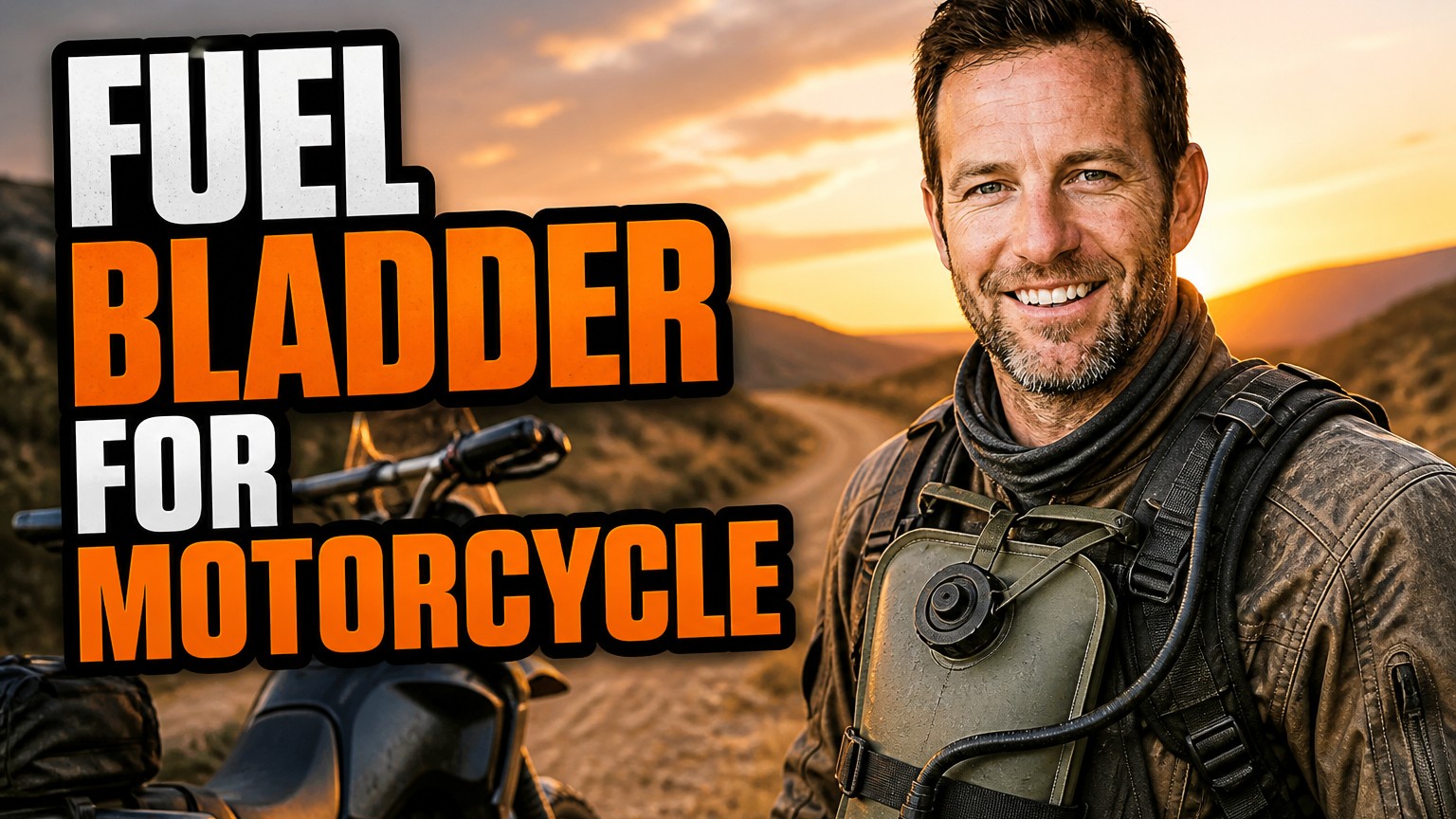
I still remember the first time I watched my fuel light flicker on in the middle of nowhere, with the next station an unknown distance away. That ride changed how I plan trips. Since then, I’ve carried spare fuel on almost every long ride, and I’ve tried plenty of containers along the way.
Here’s the honest truth up front: true collapsible rubber bladders are rare in the motorcycle world, and many of them aren’t fuel-rated. So when I talk about the best fuel bladder for motorcycle use, I mean the best compact, secure, fuel-safe carriers that do the same job. This guide covers what has actually worked for me.
- My top overall pick is the Rotopax 1 Gallon Gasoline Pack for its secure mounting and rugged build.
- For minimalist riders, the MSR 30 oz Fuel Bottle is the lightest, easiest emergency reserve.
- Never use water bladders or random bottles for gasoline. Only carry fuel in containers rated for it.
- Mount low, away from heat, and never fill to the brim.
Why I Carry Extra Fuel (and When You Should Too)
Most street bikes never need spare fuel. But once you start riding remote highways, desert tracks, or mountain passes, station gaps can stretch well past your tank range. That’s where a backup container earns its keep.
Before you buy anything, know your real range. If you ride a small commuter, check the 125cc motorcycle fuel consumption per km figures to see how far a tank actually takes you. Small engines sip fuel, so a pint or two may be all you need.
If your range is shorter than it should be, look into the causes of high fuel consumption in motorcycle engines first. Dirty filters, bad tuning, and tired oil can all drain your range before spare fuel becomes the answer.
What I Look For in a Motorcycle Fuel Carrier
Fuel-Rated Materials
Gasoline attacks the wrong plastics and rubbers. I only trust containers made from fuel-safe HDPE or aluminum with gasoline-compatible seals. If a product doesn’t say it’s rated for gasoline, I leave it on the shelf.
Leak-Proof Closure
A bike vibrates constantly. A cap that’s fine on a car’s trunk floor can weep fuel after 200 miles of washboard road. I look for gasketed caps and positive locking mechanisms.
Secure Mounting and Weight
Fuel is heavy, roughly 6 pounds per gallon. That much weight high and far back makes a bike feel twitchy. I always mount low and as close to the bike’s center as possible.
1. Rotopax 1 Gallon Gasoline Pack — Best Overall Fuel Carrier
If you made me pick one container for most riders, it would be the Rotopax 1 Gallon Gasoline Pack. It’s the closest thing to a go-to standard in the adventure world, and I’ve seen it bolted to everything from KTM 500s to Africa Twins.
Why I Like It
The Rotopax is made from rugged, UV-resistant HDPE and is built to meet DOT and UN requirements for gasoline. The red color coding means I never mix up gas with water. The flat, rectangular profile also makes it much easier to strap down than a round can.
The real magic is the Loc-Pack mounting system. The pack twists into a mount that bolts to a rack or plate, so it stays put over rough terrain. The built-in gasket seals well, and the included spout makes pouring far less messy.
Things to Consider
- Price: Usually about $40 to $55 for the pack, plus another $20 to $40 for a mount.
- Capacity: 1 gallon is plenty for most bikes, adding roughly 40 to 60 extra miles on many mid-size machines.
- Downside: It’s rigid, so it takes up the same space whether full or empty.
For me, the Rotopax 1 Gallon Gasoline Pack hits the sweet spot between capacity, security, and weight.
2. Rotopax 2 Gallon Gasoline Pack — Best for Long Range Adventure
When I’m riding somewhere truly remote on a big bike, the Rotopax 2 Gallon Gasoline Pack is what I reach for. It uses the same tough HDPE construction and Loc-Pack mounting system as the smaller pack, just in a taller package.
Where It Shines
Two extra gallons can nearly double the range of a small-tank dual sport. On a bike like a DR650 or a KLR, that’s a game changer for trips through places like Nevada or Patagonia. The same gasketed lid and spout design keeps things sealed and pourable.
Where It Falls Short
Around 12 pounds of fuel behind the rear axle is no joke. I noticed my bike getting light in the front on climbs. Plan for it by packing heavy gear low and forward.
Expect to pay about $55 to $75, plus a mount. It’s not for casual weekend riders, but for serious expeditions the Rotopax 2 Gallon Gasoline Pack is hard to beat.
3. MSR 30 oz Fuel Bottle — Best Lightweight Emergency Reserve
Not everyone wants a big plastic box bolted to their bike. The MSR 30 oz Fuel Bottle is what I toss in a pannier when I want insurance without the bulk. It was designed for backpacking stoves, but it works brilliantly as a motorcycle reserve.
Specs That Matter
It’s a seamless, aluminum bottle with a leak-resistant cap and gasket. Its 30-ounce capacity equals about 0.9 liters, which is enough to nudge many bikes 15 to 30 miles down the road. Empty, it weighs only about 5 ounces.
The red bottle is clearly marked and tough enough to survive a tumble. It’s also easy to refill from a pump without much spillage.
Tips From My Experience
- Fill it about 80 percent to leave room for expansion.
- Wrap it in a sock or small dry bag to prevent rattling.
- Keep it in a pannier, never against a hot exhaust.
Typically priced around $25 to $30, the MSR 30 oz Fuel Bottle is the best value insurance policy I know.
4. SIGG 1.0 L Aluminum Fuel Bottle — Best for Style and Durability
The SIGG 1.0 L Aluminum Fuel Bottle is another strong option that feels more like a piece of gear than a utilitarian can. It’s made from lightweight aluminum with a fuel-resistant lining and a screw cap that seals with a gasket.
What Stands Out
The one-liter capacity gives you slightly more reserve than the MSR 30 oz bottle. The slim cylinder slides into pannier side pockets or bar-end gaps that a square pack would never fit. It’s also easy to spot thanks to its bright color and clear fuel labeling.
I like that the finish resists dents and scratches. Prices run about $25 to $35, depending on where you shop.
Limitations
As with any metal bottle, you can’t squeeze out the last drop and the neck is narrow. A small funnel is a must in my kit. Still, the SIGG 1.0 L Aluminum Fuel Bottle is a quality, long-lasting choice.
5. Primus 1.0 L Fuel Bottle — Best Budget-Friendly Backup
When a rider on a budget asks me what to buy, I point to the Primus 1.0 L Fuel Bottle. Like the MSR and SIGG, it’s made from aluminum and built for liquid fuel. It’s simple, tough, and affordable.
Why It Works
The bottle has a safety-minded cap with a sealing ring and a clear fuel-use design. It’s easy to find at outdoor retailers and often costs about $20 to $30. That makes it a smart choice for beginners trying out the idea of carrying backup fuel.
I like to pair one with a compact funnel and keep it strapped inside a tail bag. It’s not as sleek as a mounted Rotopax, but it gets the job done.
Quick Note on Fuel Type
Fuel bottles like this are fine for gasoline, but make sure you label them. I’ve seen riders mix up stove fuel and pump gas in similar bottles. A strip of colored tape fixes that in two seconds.
6. Rotopax 1.75 Gallon Gasoline Pack — Best Balance of Range and Shape
The Rotopax 1.75 Gallon Gasoline Pack sits between the 1-gallon and 2-gallon models. It’s the one I recommend to riders who want a bit more range without a big jump in bulk.
Why I Considered It
It uses the same rugged HDPE construction and Loc-Pack system. The slimmer profile can sit nicely on a rear rack or a side-mounted plate, and the extra three-quarters of a gallon over the 1-gallon model is meaningful on a long gap.
Prices usually land around $50 to $70 before the mount. It fits best on mid-size and larger bikes, so smaller commuters will probably prefer a bottle.
My Take
For bikes with a 3 to 4 gallon main tank, the Rotopax 1.75 Gallon Gasoline Pack gives a meaningful range boost while staying manageable on the trail.
A Word on True Collapsible Bladders
You might be wondering why I haven’t recommended a roll-up, squishy bladder. The reason is simple: most collapsible bladders sold for camping are made for water, not fuel. Gasoline can degrade their seals and walls, and the result is a leak onto a hot engine.
Purpose-built fuel bladders do exist in aviation and racing, but they’re specialized and expensive, and they aren’t designed for pannier life. Unless a product is explicitly rated for gasoline, I won’t trust it. Safety comes first on every ride.
How to Carry Extra Fuel Safely on a Motorcycle
Mount It Smartly
Keep the container low and as close to the bike’s center as possible. Avoid mounting it near the exhaust or under any heat shield. Heat plus gasoline vapor is the last thing you want.
Leave Room to Expand
Fuel expands as it warms. I fill containers to about 80 to 90 percent to avoid pressure buildup and weeping caps. This is especially important in hot climates.
Know How to Use Your Reserve
Spare fuel is a backup, not a primary plan. If you’re not sure how your bike’s reserve works, read up on the motorcycle fuel switch on off reserve positions. Knowing when to flip to reserve helps you decide when to pour in extra fuel.
Check It Regularly
At every stop, I look for wet spots, loose straps, or a smell of gas. A quick 10-second check has saved me from several messy surprises.
Don’t Forget the Rest of Your Range Plan
Spare fuel is just one part of the equation. Healthy engines use less gas, and that includes the right lubricant. If you’re due for an oil change, I suggest reading about the best motor oil for 4 stroke motorcycle engines.
For a deeper dive into viscosity and ratings, check out this guide on the top engine oil for 4 stroke motorcycle options. Fresh oil, clean filters, and correct tire pressure help me squeeze extra miles from every tank.
Which Fuel Carrier Should You Choose?
Here’s how I’d match riders to products:
- Weekend rider wanting insurance: MSR 30 oz Fuel Bottle or Primus 1.0 L Fuel Bottle.
- Mid-size adventure bike: Rotopax 1 Gallon or 1.75 Gallon Gasoline Pack.
- Remote expedition on a large tank-limited bike: Rotopax 2 Gallon Gasoline Pack.
- Style and compact storage: SIGG 1.0 L Aluminum Fuel Bottle.
Think honestly about your longest fuel gap and add a modest buffer. Carrying more than you need only adds weight and risk.
Final Thoughts
After years of riding with different setups, I’ve learned that the right fuel carrier is the one you can mount securely and trust completely. For most riders, the Rotopax 1 Gallon Gasoline Pack is my pick, and the MSR 30 oz Fuel Bottle is the best minimalist backup.
Whichever you choose, buy fuel-rated gear, mount it carefully, and check it often. Then you can enjoy the ride instead of worrying about that flickering fuel light.
Frequently Asked Questions
Is a fuel bladder safe to carry on a motorcycle?
It can be, if the container is made and rated for gasoline, is mounted securely away from the exhaust, and is never filled to the brim. I always leave expansion room and check the cap seal before every ride. Never use a water bladder for fuel, because the material and seals can degrade quickly.
How much spare fuel should I carry on a motorcycle?
Enough to cover the longest gap between fuel stops plus a small buffer. For most bikes, that means 0.25 to 1 gallon. Larger adventure setups may carry 2 gallons, but the extra weight changes handling noticeably.
Can I use a plastic water bottle or soda bottle for emergency fuel?
No. Standard bottles are not designed for gasoline, can build up static, and may soften or leak. Use a purpose-built fuel container such as an aluminum fuel bottle or a certified gas pack.
Where is the safest place to mount extra fuel on a motorcycle?
Low and close to the bike’s center of gravity, away from the exhaust and any hot engine parts. Rear racks, pannier-mounted frames, and crash bar mounts are popular choices. Always use a mount designed for your container and check it for movement regularly.

Related Articles
7 Best Batteries for Motorcycles I’ve Tested and Trust in 2026
I've tested dozens of motorcycle batteries to find the best performers. From AGM to lithium, here are my top picks…
Jake Miller
15 min read

The Perfect Battery for Your Harley Davidson Softail: A Rider’s Complete Guide
Discover the perfect battery for your Harley Davidson Softail. I've tested multiple options and share real-world performance data, maintenance tips,…
Jake Miller
14 min read

The Best Battery for Your Harley Davidson: My Complete Guide After Years of Testing
Discover which battery truly performs best for Harley Davidson motorcycles. Real rider experience with AGM, lithium, and OEM options to…
Jake Miller
12 min read