
8 Best Adventure Bikes for Riding Across South America (Tested Picks)
 Jake Miller
9 min read
Jake Miller
9 min read
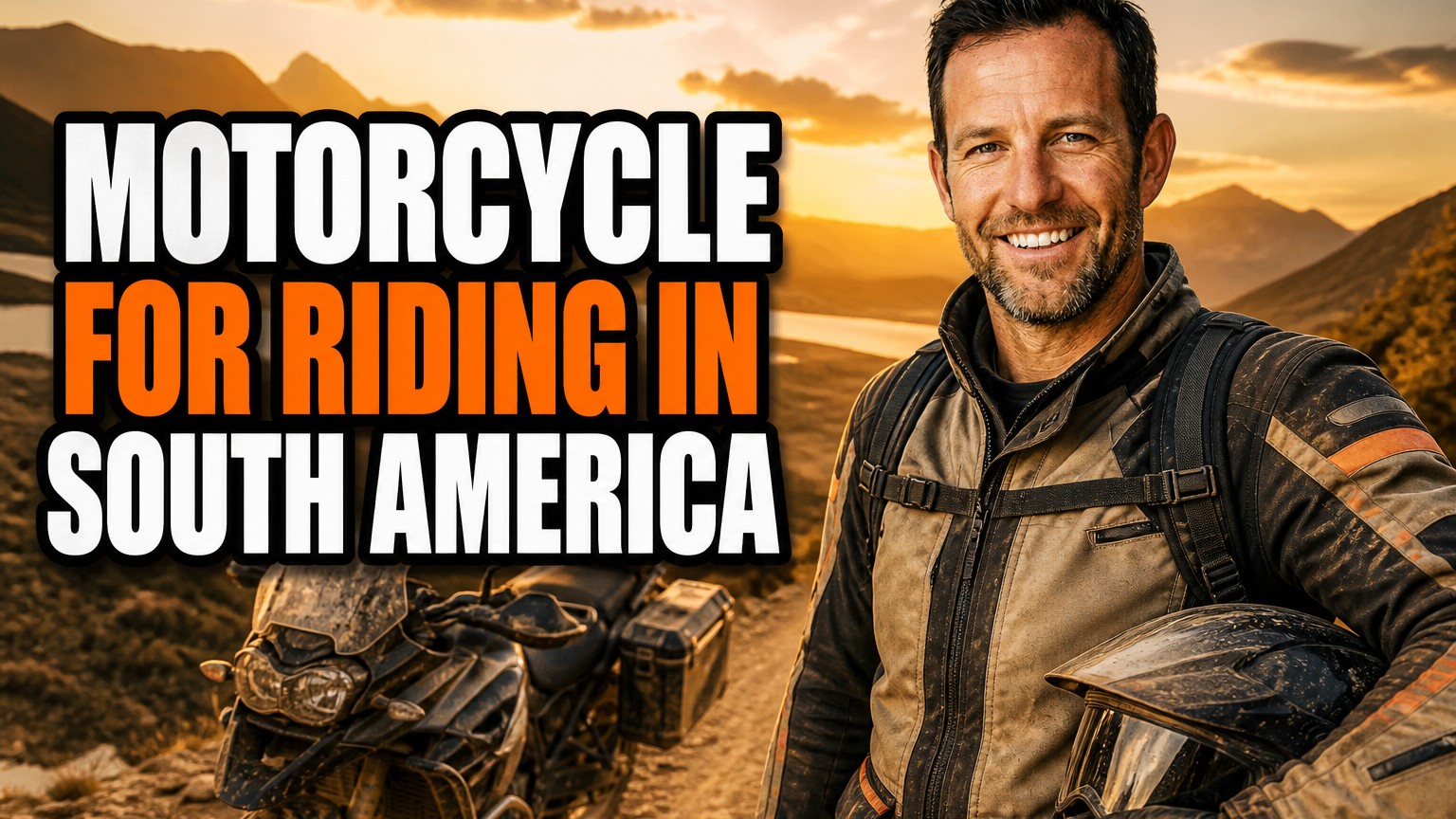
I still remember the first time I crested a pass above 4,500 meters in the Andes. My bike was gasping, my fingers were numb, and I had never felt more alive. South America is one of the most rewarding riding destinations on the planet, but it punishes the wrong machine.
Over the years I’ve ridden everything from sealed Chilean highways to washboard gravel in Bolivia and muddy tracks in Colombia. Along the way I’ve learned what really matters: reliability, weight, parts availability and how easy a bike is to fix in a small-town garage. Here are the eight bikes I’d confidently point you toward.
- My overall pick is the Yamaha Ténéré 700, thanks to its mix of reliability, power and off-road ability.
- For a tight budget, the Honda XRE 300 and Honda CRF300L are easy to fix and cheap to run.
- Big-bore riders should look at the BMW R 1300 GS or Honda Africa Twin Adventure Sports.
- Fuel injection, parts support and manageable weight matter more than raw horsepower.
What I Look for in a South America Touring Bike
Before the list, here’s the checklist I use. It applies whether you’re shipping a bike from Europe, buying locally in Buenos Aires or Lima, or renting for a month.
Altitude, Fuel and Terrain
Fuel injection is a big advantage. Carbureted bikes struggle above 3,500 meters unless you re-jet them. Fuel quality also varies, especially in rural Bolivia, Peru and parts of Argentina, so a bike that tolerates lower-octane fuel is a blessing.
Terrain swings wildly. You might cover smooth tarmac on Ruta 40 in the morning and sand, rock and river crossings by afternoon. I always favor a bike with at least 200 mm of suspension travel and a 21-inch or 19-inch front wheel.
Weight and Serviceability
Lighter is almost always better. When you drop a fully loaded bike at 4,000 meters, you’ll be glad it weighs 200 kg rather than 280 kg.
Parts availability matters just as much. Honda and Yamaha dealers are everywhere, and local mechanics know these engines inside out.
1. Yamaha Ténéré 700 — Best Overall for South America
If I could only own one bike for this continent, the Yamaha Ténéré 700 would be it. Its 689cc CP2 parallel twin makes roughly 72 hp and feels stronger than the number suggests, with a flexible, torquey delivery that handles thin air well.
At about 205 kg wet, it’s far lighter than the big GS-style bikes. The 21/18-inch wheels, long-travel KYB suspension and 16-liter tank give you a realistic range of around 330 km, which is enough for most remote stretches with a spare fuel bladder.
Why I Trust It
The engine is proven and simple. Yamaha has a presence in nearly every South American country, and the CP2 motor is shared with the MT-07, so mechanics recognize it.
Expect to pay roughly $10,500 to $11,500 new in the US. My only complaint is the stock seat, which I replace on every long trip.
2. Royal Enfield Himalayan 450 — Best Value Adventure Bike
I was skeptical of the old Himalayan, but the new Royal Enfield Himalayan 450 won me over. Its liquid-cooled 452cc Sherpa engine makes about 40 hp and 40 Nm, and it’s fuel injected with ride-by-wire.
The Himalayan 450 weighs around 196 kg ready to ride and sits on a 21-inch front and 17-inch rear wheel. It also has a 17-liter tank, a TFT display with Google Maps integration and switchable ABS, all at roughly $6,000 in the US.
Where It Shines and Where It Doesn’t
It’s unintimidating on gravel and a joy on technical trails. Highway cruising is fine at 100 to 110 km/h, but you’ll feel the engine working harder beyond that.
Royal Enfield’s dealer network is growing in Colombia, Argentina and Brazil, though it remains thin in remote areas. Carry a good toolkit and basic spares.
3. Honda XRE 300 — Best for Local Parts Availability
The Honda XRE 300 is the unsung hero of South American roads. Built in Brazil, it’s everywhere in the region, and any Honda mechanic can work on it.
Its 291cc single-cylinder engine makes about 25 hp and is fuel injected. The bike weighs roughly 150 kg, which makes picking it up after a tumble much easier. ABS is available, and a basic service costs next to nothing.
The Trade-Offs
It’s not a highway rocket. At a loaded 100 km/h you’ll be flat out on long climbs, and two-up riding stretches it. If you want to carry a passenger, take a look at my guide to the best 300cc motorcycle for 2 up riding before committing.
But for a budget traveler who wants to buy locally and sell at the end of the trip, I can’t think of a smarter choice.
4. Suzuki V-Strom 650 XT — Best Road-Biased All-Rounder
When most of my route is paved but I still want the freedom to hit gravel, the Suzuki V-Strom 650 XT is my pick. Its 645cc V-twin makes about 70 hp and is famously bulletproof, with owners racking up well over 100,000 km.
The XT version adds spoked wheels, which handle rough roads better than cast ones. It carries a 20-liter tank for a range north of 400 km, and it weighs around 213 kg wet. Expect to pay about $9,500 to $10,500.
Limits to Know
The 19-inch front wheel limits serious off-road ability. I’d skip it for the Salar de Uyuni crossing or technical trails in Peru, but for the Carretera Austral, Ruta 40 pavement sections and Atlantic coast roads it’s superb.
5. BMW R 1300 GS — Best Premium Pick
If money is no object, the BMW R 1300 GS is hard to beat. Its 1,300cc boxer twin makes 145 hp, and the bike weighs about 237 kg ready to ride, which is impressively light for its class.
Electronic suspension, radar cruise options, a 19-liter tank and superb wind protection make multi-week trips effortless. Pricing starts around $20,000 and climbs fast with options.
Is It Too Much Bike?
Sometimes, yes. Dropping one on a muddy trail in Bolivia is a nightmare, and electronic faults are tough to diagnose far from a dealer. BMW has dealers in Brazil, Argentina, Chile, Colombia and Peru, but not in the remote places you’ll cross.
I’d choose it for fast-paced, mostly paved journeys where comfort is the priority.
6. KTM 390 Adventure — Best Lightweight Performer
The KTM 390 Adventure surprised me with how capable it is. Its 399cc single makes about 45 hp, and the bike weighs around 172 kg wet, with a 14.5-liter tank.
The X variant adds spoked wheels and longer-travel WP suspension, and both versions have a 19-inch front wheel. It costs roughly $6,000 and feels quick, nimble and modern.
Reliability Considerations
KTM’s single-cylinder engines need disciplined maintenance, with service intervals around 7,500 km. KTM’s South American dealer presence is decent in big cities but patchy elsewhere.
I’d recommend it for experienced riders who enjoy tinkering and want a more athletic ride than the Honda options.
7. Honda CRF300L — Best Lightweight Off-Road Option
For dirt-focused riders, the Honda CRF300L is a fantastic tool. Its 286cc liquid-cooled single makes about 27 hp, and the bike weighs just 144 kg wet, with a 21-inch front and 18-inch rear wheel.
The standard tank is small at around 7.8 liters, so I’d choose the CRF300L Rally with its 12.8-liter tank. Prices run about $5,500 to $6,500.
Perfect for Technical Terrain
This bike makes muddy tracks in Colombia, sand in Peru and rocky Bolivian passes feel manageable. It’s a bike you can drop, pick up and laugh about.
The seat is tall at about 880 mm, and highway cruising is modest. If you plan to carry a partner, my guide to the best adventure motorcycle for 2up riding covers bigger alternatives.
8. Honda Africa Twin Adventure Sports — Best for Two-Up Long Hauls
The Honda Africa Twin Adventure Sports is my choice for couples crossing the continent together. Its 1,084cc parallel twin makes about 100 hp, and it’s available with Honda’s excellent DCT automatic gearbox.
The huge 24.8-liter tank delivers a range above 450 km, and the bike’s comfortable ergonomics, tall windscreen and solid luggage options make it a superb long-distance machine. It weighs about 250 kg and costs around $16,000 to $18,000.
The Weight Penalty
It’s heavy off-road, and I’ve seen riders struggle on loose sand. Still, Honda’s service network in South America is excellent, and the engine is famously durable.
For mixed pavement and gravel journeys with a passenger, I think it’s the most relaxed way to cover big distances.
Maintenance and Oil Tips for the Road
Whichever bike you pick, keep up with oil changes. High altitude, dust and heavy loads are tough on engines, and I change oil more often than the manual says, roughly every 5,000 km.
If you’re researching lubricants, my article on the best motor oil for 4 stroke motorcycle engines is a good start. I also compare options in the top engine oil for 4 stroke motorcycle guide.
For readers shopping in warmer, dustier climates, the breakdown of the best engine oil for 4 stroke motorcycle in india offers useful insight into oils that perform in heat and heavy traffic, which also applies to northern South America.
Spares I Always Carry
- Spare tubes and a compact tire repair kit
- Extra clutch and brake levers
- Air filter and spare spark plug
- A small bottle of oil and a spare oil filter
- Zip ties, duct tape and a multi-tool
Final Thoughts: Which Bike Should You Choose?
My honest recommendation: pick the lightest bike that still fits your riding style. For most riders that’s the Yamaha Ténéré 700, with the Honda CRF300L or Himalayan 450 as smart, cheaper alternatives.
If you’re covering enormous distances with a passenger, the Africa Twin Adventure Sports or BMW R 1300 GS make sense. And if you want to buy locally and keep repair costs low, the Honda XRE 300 is hard to beat.
Whatever you choose, the best South American bike is the one you’re comfortable picking up. Pack light, ride smart and enjoy one of the greatest riding adventures on Earth.
Frequently Asked Questions
What is the best motorcycle for riding in South America overall?
For most riders I recommend the Yamaha Ténéré 700. It balances power, weight, reliability and off-road ability, and it handles everything from Patagonian gravel to Andean passes.
Is a small-displacement bike enough for South America?
Yes. A 250cc to 450cc bike like the Honda CRF300L or Royal Enfield Himalayan 450 is easier to pick up, cheaper to fuel and simpler to repair, which matters a lot on remote roads.
Which brands have the best dealer and parts support in South America?
Honda and Yamaha have the widest networks, especially in Brazil, Argentina, Chile, Peru and Colombia. Suzuki, KTM and BMW are present in major cities but thinner in remote regions.
How high-altitude friendly are fuel-injected bikes?
Fuel-injected bikes adjust automatically to thin air at altitudes above 4,000 meters, so they run far better than carbureted bikes on passes like those in Bolivia, Peru and northern Chile.

Related Articles
7 Best Batteries for Motorcycles I’ve Tested and Trust in 2026
I've tested dozens of motorcycle batteries to find the best performers. From AGM to lithium, here are my top picks…
Jake Miller
15 min read

The Perfect Battery for Your Harley Davidson Softail: A Rider’s Complete Guide
Discover the perfect battery for your Harley Davidson Softail. I've tested multiple options and share real-world performance data, maintenance tips,…
Jake Miller
14 min read

The Best Battery for Your Harley Davidson: My Complete Guide After Years of Testing
Discover which battery truly performs best for Harley Davidson motorcycles. Real rider experience with AGM, lithium, and OEM options to…
Jake Miller
12 min read