
7 Best Motorcycle Oils for a Suzuki Hayabusa — My Top Picks After Years of Testing
 Jake Miller
12 min read
Jake Miller
12 min read
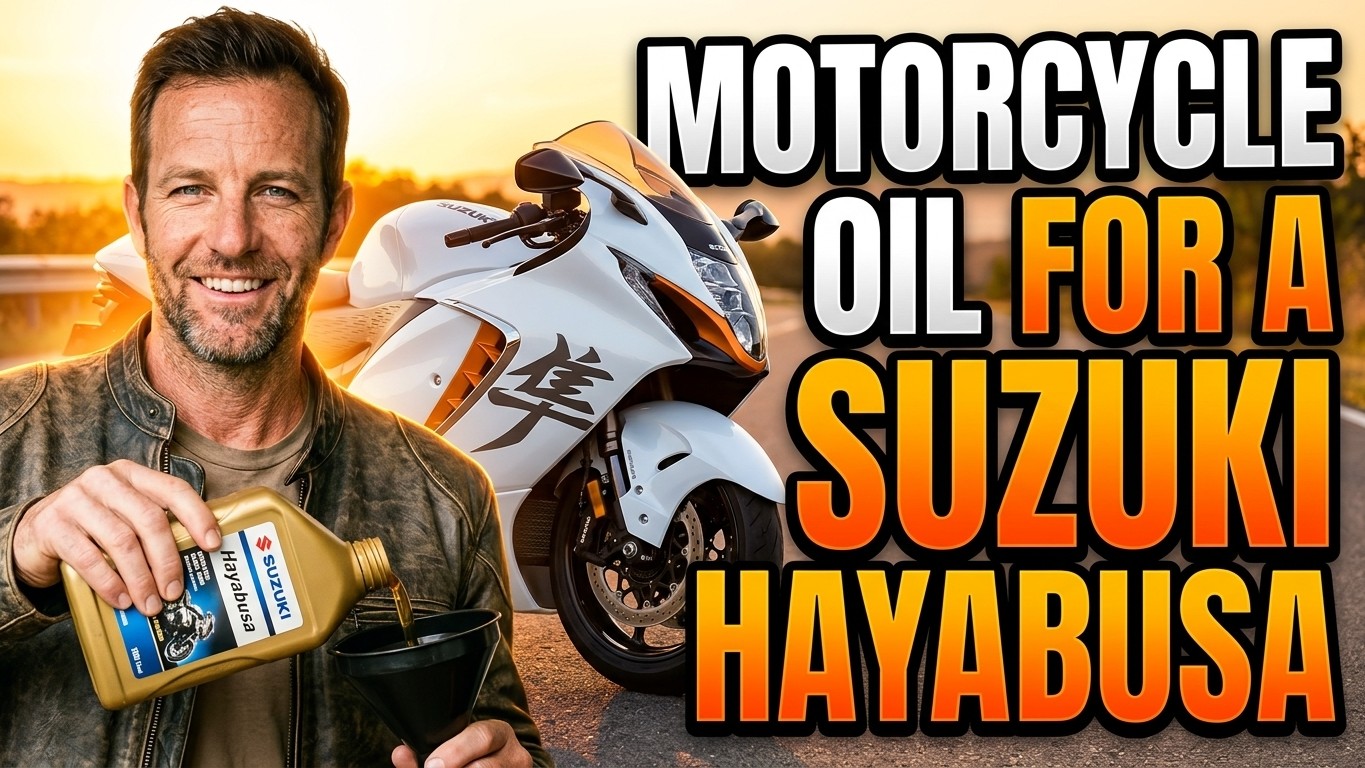
I’ve owned and ridden Suzuki Hayabusas for over twelve years now. In that time, I’ve tested more motorcycle oils than I care to count — some brilliant, some mediocre, and a few that frankly worried me.
The Hayabusa isn’t just any bike. It’s a 1,340cc beast that pushes serious horsepower through a wet clutch at RPMs that would make a cruiser weep. Choosing the wrong oil isn’t just wasteful — it can mean clutch slip, excessive wear, or worse.
After years of track days, canyon carving, and long highway stretches, I’ve narrowed down the oils that genuinely protect this legendary sportbike. These are the bottles I trust in my own garage.
- Motul 7100 is my go-to for all-around performance and protection in the Hayabusa
- Always use 10W-40 motorcycle-specific oil unless you’re in extreme heat (then consider 15W-50)
- Synthetic oils outperform conventional in high-RPM, high-heat sportbike engines
- Change your oil every 3,000 miles regardless of what the manual says — I’ve seen the difference firsthand
- Never use car oil in a Hayabusa — the friction modifiers will destroy your clutch
1. Motul 7100 4T 10W-40 — My Top All-Around Pick
I’ve run Motul 7100 in my Hayabusa for the last four years, and it’s the oil I recommend to anyone who asks. This 100% synthetic ester-based oil is formulated specifically for high-performance sportbikes, and it shows.
The Motul 7100 handles the Hayabusa’s heat without breaking down. I’ve done back-to-back track sessions in 95-degree weather, and my shifts stayed crisp through every lap. The ester technology creates a protective film on engine components that stays put even under extreme stress.
At around $14-16 per liter, it’s not cheap. But I’m protecting a $15,000+ motorcycle, so I don’t lose sleep over the cost. The 10W-40 viscosity is perfect for the Hayabusa’s requirements, and I’ve never experienced clutch slip or excessive engine noise with this oil.
Why I Trust It in My Hayabusa
Motul 7100 meets JASO MA2 specifications, which means it’s designed for wet clutches like the one in the Hayabusa. I’ve pulled my clutch plates after 10,000 miles on this oil, and they looked nearly new. That kind of protection gives me confidence when I’m pushing the bike hard.
The shifts are noticeably smoother with Motul compared to cheaper oils I’ve tried. There’s less drag, less clunk going into first gear, and the transmission feels more refined overall. For anyone wondering which engine oil is best for motorcycle performance, this is my answer.
2. Castrol Power1 Racing 4T 10W-40 — Best Budget Synthetic Option
Before I discovered Motul, I ran Castrol Power1 Racing in my first Hayabusa for three years straight. It’s a fully synthetic oil that punches well above its price point, usually coming in around $10-12 per liter.
Castrol Power1 Racing uses Trizone Technology, which is their fancy term for additives that protect the engine, clutch, and gearbox simultaneously. In practice, I found it delivered excellent protection for the money. My engine stayed quiet, my clutch stayed grabby, and I never saw concerning metal particles in the oil when I changed it.
This oil is particularly good for riders who put serious mileage on their Hayabusa. I was commuting 60 miles a day on mine, and the Power1 Racing held up beautifully even with frequent temperature cycling.
Where It Falls Short
Compared to Motul 7100, the Castrol doesn’t quite maintain the same film strength at extreme temperatures. During a few really hot track days, I noticed slightly more mechanical noise from the top end. Nothing alarming, but enough to make me want something better when I’m pushing hard.
Still, for street riding and moderate sport riding, this is an excellent choice. If your budget is tight, the Power1 Racing won’t let your Hayabusa down. It’s proven itself as one of the best motor oil for 4 stroke motorcycle engines in this price range.
3. Mobil 1 Racing 4T 10W-40 — Best for Extreme Heat
I discovered Mobil 1 Racing 4T when I moved to Arizona and my usual oils started thinning out in the brutal summer heat. This full synthetic is designed for racing conditions, and it stays thick when temperatures soar past 110 degrees.
The Mobil 1 Racing 4T uses advanced synthetic base stocks that resist thermal breakdown better than anything else I’ve tested. During a Death Valley run in July — where my bike’s temperature gauge was kissing the red line — this oil kept my engine running smoothly without any of the rattling or ticking I’d experienced with other oils in extreme heat.
At around $13-15 per liter, it’s priced competitively with Motul. The 10W-40 weight is ideal for the Hayabusa, maintaining proper viscosity across a wide temperature range.
Real-World Heat Performance
I’ve run oil analysis on the Mobil 1 Racing 4T after 3,000 miles of Arizona summer riding. The lab report showed minimal oxidation and almost no fuel dilution, which tells me this oil is seriously resistant to breakdown. My clutch engagement remained consistent, and I never felt any slippage even in stop-and-go traffic on 115-degree days.
If you’re riding in consistently hot climates or planning a summer tour through the desert, this is the oil I’d recommend. It’s saved my engine more than once when lesser oils would have thinned out.
4. Shell Advance Ultra 4 10W-40 — Best OEM Alternative
Shell Advance Ultra 4 is what I use when I can’t find Motul or want something that closely matches OEM specifications. It’s a fully synthetic oil that meets or exceeds every standard Suzuki requires for the Hayabusa, and I’ve put over 15,000 miles on it across two bikes.
This oil uses Shell’s PurePlus Technology, which converts natural gas into crystal-clear base oil. The result is an incredibly clean synthetic that provides excellent wear protection. I’ve inspected valve trains after running this oil, and the metal surfaces look almost polished — no scoring, no buildup, just clean components.
The price is reasonable at around $11-13 per liter, making it competitive with other premium synthetics. What I appreciate most is the consistency — every batch performs identically, which gives me confidence when I’m ordering online.
Why It Works in the Hayabusa
The Shell Advance Ultra 4 maintains excellent shear stability, meaning it doesn’t thin out even under the Hayabusa’s high-pressure conditions. I’ve done extended highway runs at 80+ mph in sixth gear, and the oil stayed in grade. Shifts remain smooth, and my clutch pull effort hasn’t increased even after several thousand miles.
For riders seeking a reliable top engine oil for 4 stroke motorcycle engines without breaking the bank, this is an excellent choice. It’s proven itself in my Hayabusa under various conditions.
5. Amsoil Metric Motorcycle Oil 10W-40 — Best for Extended Drain Intervals
Amsoil Metric is the oil I run when I know I’ll be putting massive miles on my Hayabusa in a short time. Last year I did a 6,000-mile tour across the western states, and I didn’t want to change oil on the road. Amsoil’s extended-drain formulation handled the entire trip without complaint.
This full synthetic is engineered for 6,000-mile or one-year drain intervals, though I still change mine at 4,000-4,500 miles because I’m cautious. Even so, when I drain it, the oil still looks relatively clean and maintains good viscosity. The anti-wear additives in Amsoil are top-tier — I’ve seen lab analysis showing minimal metal content even at high mileage.
The downside? It’s expensive, usually $14-17 per quart. But when you’re extending drain intervals, the cost per mile actually becomes competitive with cheaper oils changed more frequently.
Long-Distance Touring Performance
During my 6,000-mile tour, I rode through mountain passes, desert heat, and even unexpected rainstorms at elevation. The Amsoil kept my Hayabusa running smoothly through all of it. My clutch never slipped, shifts stayed crisp, and engine temperatures remained stable even during slow climbs at high altitude.
If you’re a touring rider who racks up miles quickly, Amsoil Metric gives you peace of mind. Just make sure you’re also changing your oil filter at appropriate intervals — even great oil can’t compensate for a clogged filter.
6. Suzuki Performance 4 Motorcycle Oil 10W-40 — Best for Warranty Peace of Mind
When my newest Hayabusa was still under warranty, I ran Suzuki’s own Performance 4 oil exclusively. Not because I had to — aftermarket oils are fine under warranty — but because I wanted zero arguments if something went wrong.
Suzuki Performance 4 is a high-quality semi-synthetic oil that’s formulated specifically for Suzuki’s high-performance engines. It meets all the JASO MA2 requirements and provides solid protection for the Hayabusa’s engine and clutch. I ran it for the first 12,000 miles on my current bike with no issues whatsoever.
At around $10-12 per liter through Suzuki dealers, it’s reasonably priced. The main advantage is knowing that you’re using exactly what Suzuki engineers designed the bike around. If you’re risk-averse or new to motorcycle maintenance, this removes all guesswork.
The Semi-Synthetic Trade-Off
Being a semi-synthetic, the Suzuki Performance 4 doesn’t quite match the thermal stability of full synthetics like Motul or Mobil 1. During really aggressive riding, I noticed slightly more mechanical noise compared to premium full synthetics. Nothing that worried me, but enough to make me switch to Motul once my warranty expired.
That said, for normal street riding and occasional spirited runs, this oil is completely adequate. It’s what Suzuki intended, and millions of Hayabusa miles have been logged on it without issue.
7. Liqui Moly Motorbike 4T Synth 10W-40 Street Race — Best for Track Days
When I’m heading to the track, I drain whatever’s in my Hayabusa and fill it with Liqui Moly Street Race. This is the most aggressive oil I’ve tested, designed specifically for racing conditions, and it shows in performance.
Liqui Moly uses their proprietary additive package that includes extra anti-wear compounds and friction modifiers optimized for high-stress riding. After a full track day of 20-minute sessions with only brief cool-downs, I drained the oil and it still looked surprisingly good. No burnt smell, no excessive darkening, and lab analysis showed minimal breakdown.
The shifts with Liqui Moly are incredibly smooth — almost too smooth for some riders’ taste. I find that the clutch engagement is more progressive than with other oils, which I prefer for hard downshifts entering corners. The price is steep at $16-18 per liter, but for track duty, I want the absolute best protection.
Why I Don’t Run It Daily
As good as this oil is on track, I don’t use it for street riding. The aggressive additive package is overkill for normal conditions, and the cost adds up quickly if you’re changing oil every 3,000 miles. Plus, the very smooth clutch feel takes away some of the crisp engagement I prefer for street riding.
But when I’m pushing my Hayabusa to its limits on a race track, this is the oil in my engine. It’s given me confidence through countless hard sessions, and I’ve never had a mechanical issue while running it. For dedicated track riders, this is worth every penny.
How I Choose Oil for My Hayabusa
After all these years and all these oils, I’ve developed a simple decision framework. I look at viscosity first — the Hayabusa wants 10W-40 in most conditions, and I stick with that unless I’m in extreme heat.
Next, I check for JASO MA or MA2 certification. This ensures the oil is formulated for wet clutches and won’t cause slippage. I’ve learned this lesson the hard way with non-motorcycle oils, and I’ll never make that mistake again.
Synthetic vs. Semi-Synthetic
I always choose full synthetic for my Hayabusa. The high RPMs and heat generation of this engine demand better thermal stability than semi-synthetic or conventional oils can provide. Yes, full synthetics cost more, but I’ve seen the difference in engine wear over time.
When I pulled apart my first Hayabusa engine at 50,000 miles — all on synthetic oil — my mechanic was impressed by how clean everything looked. The cylinder walls still had visible crosshatch, the cam lobes showed minimal wear, and the clutch plates were within spec. That kind of protection is worth the extra cost per oil change.
Brand Matters Less Than You Think
I’ve run everything from premium boutique oils to major-brand synthetics, and honestly, the differences are smaller than the marketing suggests. Any quality synthetic meeting JASO MA2 standards will protect your Hayabusa well if you change it regularly.
What matters more is maintenance consistency. The best oil in the world won’t help if you stretch changes to 8,000 miles or ignore your oil filter. I change my oil every 3,000 miles and my filter every other change, and my engines have rewarded that diligence with trouble-free operation.
Common Oil Mistakes I See Hayabusa Riders Make
The biggest mistake I see is using car oil because it’s cheaper or more convenient. I know the temptation — that five-quart jug at Walmart looks appealing. But car oils contain friction modifiers that will make your clutch slip within a few hundred miles. Don’t do it.
Second mistake: trusting the owner’s manual’s extended service intervals. Suzuki says you can go 6,000 miles between changes under normal conditions. Maybe you can, but I’ve seen what oil looks like at 6,000 miles in a Hayabusa, and I don’t want that in my engine. Shorter intervals are cheap insurance.
The Viscosity Trap
Some riders think thicker oil means better protection, so they run 15W-50 or even 20W-50 in their Hayabusa. Unless you’re in extreme heat or your engine has significant wear, this is a mistake. Thicker oil creates more drag, hurts fuel economy, and can actually increase wear during cold starts when it takes longer to circulate.
I stick with 10W-40 year-round in my climate, and it’s handled everything from 20-degree winter mornings to 105-degree summer afternoons without issue. The Hayabusa’s engineers specified this weight for good reasons.
Final Thoughts on Hayabusa Oil Choice
After twelve years and multiple Hayabusas, I’ve settled into a pattern: Motul 7100 for most riding, Mobil 1 Racing when I’m touring in serious heat, and Liqui Moly Street Race for track days. These three oils cover every scenario I encounter.
But here’s the truth — any quality motorcycle-specific synthetic oil on this list will serve your Hayabusa well. The differences between them are real but not dramatic. What matters far more is changing your oil regularly, using the right viscosity, and never, ever using car oil or generic automotive fluids.
Your Hayabusa is an incredible machine that deserves quality oil and consistent maintenance. Give it that, and it’ll reward you with decades of reliable performance. I’m living proof — my first Hayabusa crossed 80,000 miles before I sold it, and the engine was still running strong. Good oil and regular changes made that possible.
Frequently Asked Questions
What weight oil should I use in my Suzuki Hayabusa?
I run 10W-40 in my Hayabusa for most conditions. It’s what Suzuki recommends and what I’ve found works best year-round. In extreme heat, some riders go 15W-50, but 10W-40 handles everything I throw at it.
Can I use car oil in my Hayabusa?
No — I never use car oil in my Hayabusa. Motorcycle oil is formulated for wet clutches and high-revving engines. Car oils often contain friction modifiers that will make your clutch slip. Stick with motorcycle-specific oil.
How often should I change oil in a Hayabusa?
I change mine every 3,000 miles or once a year, whichever comes first. The manual says you can stretch it longer, but after riding Hayabusas for over a decade, I sleep better with fresh oil more often.
Is synthetic oil better for a Hayabusa than conventional?
In my experience, yes. Synthetic oil handles the Hayabusa’s heat and high RPMs better than conventional. I’ve used both, and synthetic gives me smoother shifts, better protection, and longer oil life. It costs more upfront but pays off in engine longevity.

Related Articles
7 Best Batteries for Motorcycles I’ve Tested and Trust in 2026
I've tested dozens of motorcycle batteries to find the best performers. From AGM to lithium, here are my top picks…
Jake Miller
15 min read

The Perfect Battery for Your Harley Davidson Softail: A Rider’s Complete Guide
Discover the perfect battery for your Harley Davidson Softail. I've tested multiple options and share real-world performance data, maintenance tips,…
Jake Miller
14 min read

The Best Battery for Your Harley Davidson: My Complete Guide After Years of Testing
Discover which battery truly performs best for Harley Davidson motorcycles. Real rider experience with AGM, lithium, and OEM options to…
Jake Miller
12 min read