
8 Best Synthetic Oils for Motorcycles: My Real-World Picks for Every Ride
 Jake Miller
9 min read
Jake Miller
9 min read
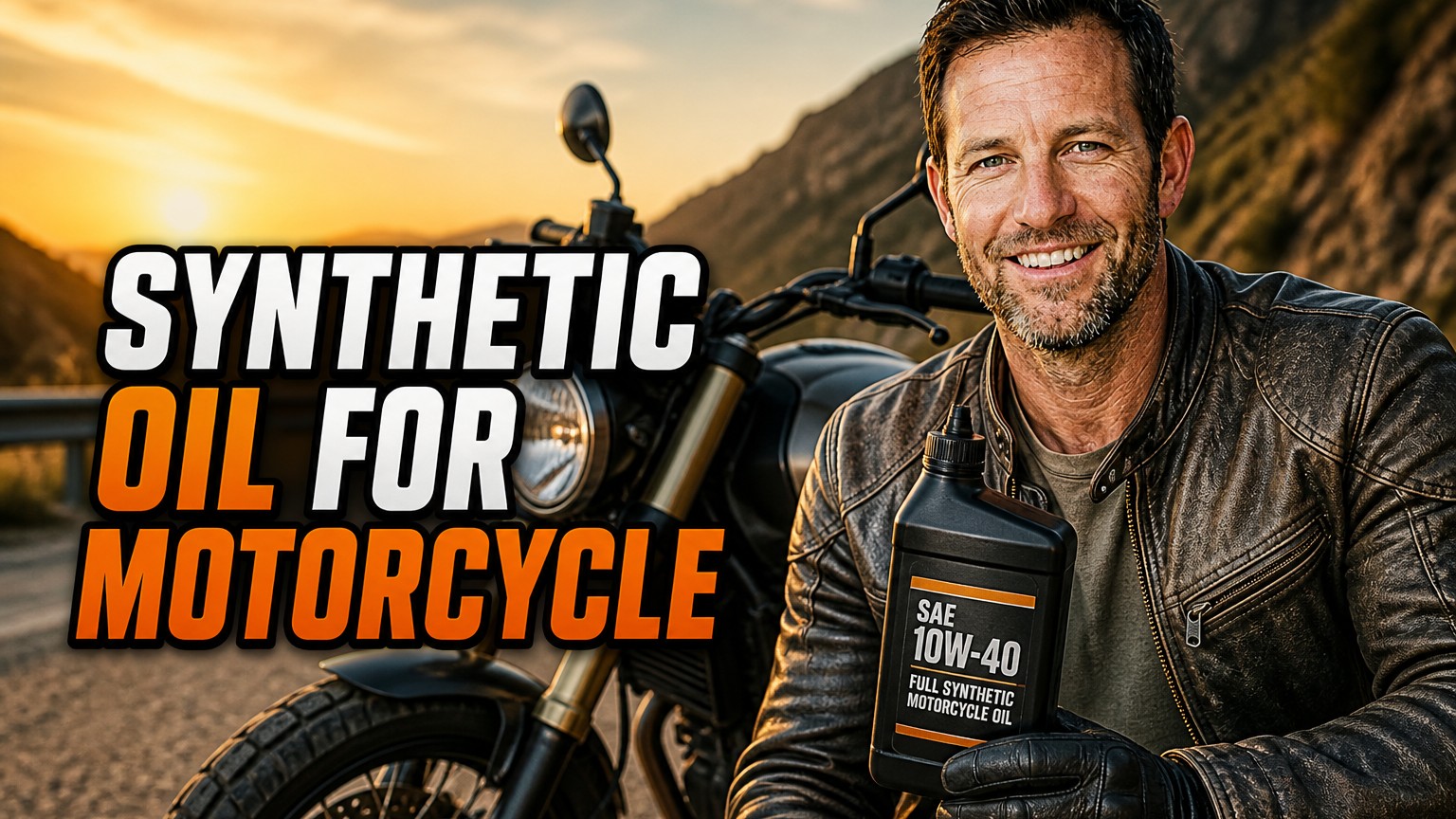
I’ve been wrenching on my own bikes for years, and I’ll say it plainly: oil is the cheapest insurance you can buy. Your engine, transmission and clutch all share the same fluid, so a bad choice affects the whole bike.
Over the years I’ve run everything from a commuter single to a big air-cooled twin and a high-revving inline-four. Below are the eight synthetic oils I trust most, along with who each one suits and where I think it falls short.
- My overall favorite is Motul 7100 4T 10W-40, an ester-based full synthetic that works in almost any modern bike.
- Always choose an oil with a JASO MA or MA2 rating if your bike has a wet clutch.
- V-twin riders should look at Mobil1 V-Twin, and budget riders at Valvoline’s full synthetic.
- Match the viscosity in your owner’s manual before you chase any brand claim.
How I Chose These Oils
I didn’t pick these from a spec sheet alone. I looked at JASO ratings, base oil type, availability and what the oil actually feels like in the bike: shift quality, clutch bite, and how the engine sounds at operating temperature.
I also looked at drain-interval appearance. If an oil comes out dark and thin after 3,000 miles, it doesn’t make my list.
Why JASO ratings matter
Most motorcycles use a wet clutch bathed in engine oil. Car oils often include friction modifiers that make the plates slip. JASO MA and MA2 certify that the oil gives the clutch the grip it needs.
If you ride a clutch-heavy bike, my guide to the best synthetic motorcycle oil for wet clutch goes deeper on this. Every oil below carries a JASO MA or MA2 rating.
1. Motul 7100 4T 10W-40 — Best Overall Synthetic
The Motul 7100 4T 10W-40 is the oil I reach for when someone asks me for one safe recommendation. It’s a 100% synthetic ester-based formula that meets JASO MA2 and API SN.
Esters bond to metal surfaces, so there’s a protective film even at startup. I notice that on my bikes: shifts feel crisp, and neutral is easy to find at a stoplight.
What I like
The 7100 handles heat well. I’ve run it through summer traffic and on spirited mountain days without any clutch fade. It also comes in 5W-40, 10W-30, 10W-50, 15W-50 and 20W-50, so you can match almost any manual.
What I don’t
It costs roughly $14 to $20 per liter, which is more than mainstream options. For a bike I ride hard, I consider that fair. For a basic commuter, it may be more than you need.
2. Mobil1 V-Twin 20W-50 — Best for Air-Cooled V-Twins
If you ride a Harley-Davidson, an Indian or a big cruiser, Mobil1 V-Twin 20W-50 deserves a spot on your shortlist. It’s a full synthetic built specifically for the heat of air-cooled V-twins.
I ran it in a big-bore cruiser through a hot summer, and the engine felt noticeably smoother. Oil temps in traffic were easier to live with, and the gearbox was less clunky when cold.
Why it works
The thicker 20W-50 grade holds film strength when cylinder heads get hot. It’s JASO MA2 rated, so it’s friendly to wet clutches. Expect to pay around $12 to $16 per quart.
If you ride in cold climates, check your manual. A 15W-50 grade is sometimes a better fit for winter starts.
3. Castrol Power1 Racing 4T 10W-40 — Best for Sportbikes
The Castrol Power1 Racing 4T 10W-40 is a full synthetic designed for high-revving engines. I’ve used it in a 600cc inline-four that spends a lot of time north of 10,000 rpm.
Castrol markets it with a focus on shear stability, and I’ve found that it holds up well. The oil came out looking healthy after a long weekend of spirited riding.
Who should buy it
Sportbike and naked-bike riders who like the feel of a lighter, quicker-revving engine will appreciate it. It’s JASO MA2 rated and widely sold, so you can find it nearly anywhere. Typical pricing sits around $12 to $18 per liter.
4. Red Line 10W-40 Motorcycle Oil — Best for High-Performance Use
Red Line 10W-40 Motorcycle Oil is a favorite among riders who track their bikes or push them hard. It uses a synthetic ester base stock and a strong additive package.
I tried it in a bike that ran hot, and I saw steadier oil pressure and a firmer feel through the gearbox. Red Line oils tend to have a slightly thicker feel, which some riders love.
Things to know
It runs about $13 to $17 per quart. It’s JASO MA2 compatible, but make sure the viscosity suits your manual. For a stock daily rider, it’s a bit of a luxury. For a track-day bike, I think it’s money well spent.
5. AMSOIL Synthetic Motorcycle Oil 10W-40 — Best for Long Intervals
The AMSOIL Synthetic Motorcycle Oil 10W-40 is what I choose when I want extended protection and fewer worries on long trips. It’s a true full synthetic with a strong detergent package.
On a cross-country tour, I ran it near the top of my manual’s recommended interval. The oil stayed in grade and the clutch never complained.
Strengths and trade-offs
AMSOIL holds up well in heat and heavy loads, and it’s JASO MA2 rated. Pricing is roughly $14 to $18 per quart. The downside is availability, since it’s mostly sold through dealers and online rather than at every local shop.
6. Liqui Moly Motorbike 4T Synthetic 10W-40 Street Race — Best European-Style Performance Pick
The Liqui Moly Motorbike 4T Synthetic 10W-40 Street Race is an ester-based full synthetic made for demanding street and sport riding. It’s popular among riders of European machines, and it has a good reputation for clean running.
I used it in a naked bike during a long, hot riding season. Gear changes were smooth, and the oil showed little breakdown at the end of the interval.
BMW riders, take note
Many BMW riders ask me about oil choices. BMW’s own recommendations can differ by model, so I always say to check the manual first. If you want more detail, see my guide on the best synthetic oil for BMW motorcycle owners.
Expect to pay about $14 to $20 per liter for the Street Race.
7. Shell Advance Ultra 4T 10W-40 — Best for Everyday Riding
The Shell Advance Ultra 4T 10W-40 is a fully synthetic oil made from Shell’s gas-to-liquid technology (PurePlus). It’s clean, consistent and made for everyday street bikes.
I ran it in a mid-weight standard bike used for commuting. The engine felt quiet, and the oil stayed clean over a full interval.
Why I recommend it
It’s JASO MA2 rated and widely available. It also tends to cost around $12 to $16 per liter, making it a good middle ground. If you want quality without going boutique, this is a safe choice.
8. Valvoline 4-Stroke Motorcycle Full Synthetic 10W-40 — Best Budget Pick
The Valvoline 4-Stroke Motorcycle Full Synthetic 10W-40 proves you don’t need to spend a fortune. It’s a full synthetic formulated for motorcycle wet clutches and meets JASO MA2.
I put it in a secondhand commuter bike, and it performed without drama. Shifts stayed smooth and the engine ran cool in stop-and-go traffic.
Value for money
Prices run about $10 to $14 per quart, and it’s easy to find at big-box stores and auto parts chains. It’s not the most exotic oil on my list. But for the cost, I think it’s one of the smartest buys.
Synthetic vs. Semi-Synthetic vs. Conventional: My Take
Not every rider needs full synthetic. If you’re curious about your options, I’ve covered the best fully synthetic oil for motorcycle choices in more detail, as well as the best semi synthetic oil for motorcycle picks.
Older bikes with leaky seals or simple air-cooled engines sometimes do fine on mineral oil. For that scenario, check the best non synthetic oil for motorcycle options.
When I choose full synthetic
I go full synthetic when the bike is high-revving, ridden hard, or exposed to heat. It’s also my choice for long trips and when I want longer intervals. The extra cost is small compared to the price of an engine rebuild.
How to Pick the Right Oil for Your Bike
Start with the manual
Your owner’s manual is the final authority. It lists the viscosity grade, the required JASO rating and the oil capacity. Never ignore it just because a bottle looks impressive.
Match viscosity to climate and engine
10W-40 suits most modern bikes in moderate climates. Air-cooled twins and hot-weather riders often do better with 20W-50 or 15W-50. In cold regions, a lower first number helps with startup.
Check for JASO MA or MA2
This is the single most important label on the bottle for wet-clutch bikes. If you see “energy conserving” on the label, put it back on the shelf. That wording usually signals friction modifiers that don’t suit a motorcycle clutch.
Don’t skip the filter
Great oil in a bad filter is a waste. I always replace the filter at every oil change. It’s cheap, and it keeps your fresh oil clean.
My Oil Change Tips
Warm the engine for a few minutes before draining so the oil flows out fully. Replace the crush washer on the drain plug, and torque it to spec. I’ve seen too many stripped plugs from guesswork.
After refilling, run the bike briefly and check the level on a level surface. Top up slowly. Overfilling can cause foaming and clutch drag.
Final Thoughts
If you want my single recommendation, go with the Motul 7100 4T 10W-40. It’s a superb all-rounder. For V-twins, I’d choose Mobil1 V-Twin, and for tight budgets, Valvoline’s full synthetic.
Whatever you choose, follow your manual, stick to a JASO-rated oil and change it on schedule. Your bike will thank you with smoother miles and a longer life.
Frequently Asked Questions
Is synthetic oil really better for a motorcycle?
In most cases, yes. Synthetic oil resists heat and shear better than mineral oil, which matters because your engine, gearbox and clutch all share the same oil. It also holds its viscosity longer, so it protects well through hard riding and long intervals.
Can I use car synthetic oil in my motorcycle?
I wouldn’t. Many car oils contain friction modifiers that can make a wet clutch slip. Look for a bottle with a JASO MA or MA2 rating to stay safe.
How often should I change synthetic motorcycle oil?
Follow your owner’s manual first. Most bikes call for a change every 4,000 to 8,000 miles, or once a year. Hard track use or lots of short trips means changing sooner.
What viscosity is best for my motorcycle?
Use the grade your manufacturer lists. 10W-40 is the most common for modern bikes, while air-cooled V-twins often call for 20W-50 or 15W-50. Check the manual before you buy.

Related Articles
7 Best Batteries for Motorcycles I’ve Tested and Trust in 2026
I've tested dozens of motorcycle batteries to find the best performers. From AGM to lithium, here are my top picks…
Jake Miller
15 min read

The Perfect Battery for Your Harley Davidson Softail: A Rider’s Complete Guide
Discover the perfect battery for your Harley Davidson Softail. I've tested multiple options and share real-world performance data, maintenance tips,…
Jake Miller
14 min read

The Best Battery for Your Harley Davidson: My Complete Guide After Years of Testing
Discover which battery truly performs best for Harley Davidson motorcycles. Real rider experience with AGM, lithium, and OEM options to…
Jake Miller
12 min read