
What Percentage of Motorcycle Riders Get Into Accidents? The Real Numbers Every Rider Should Know
 Jake Miller
12 min read
Jake Miller
12 min read
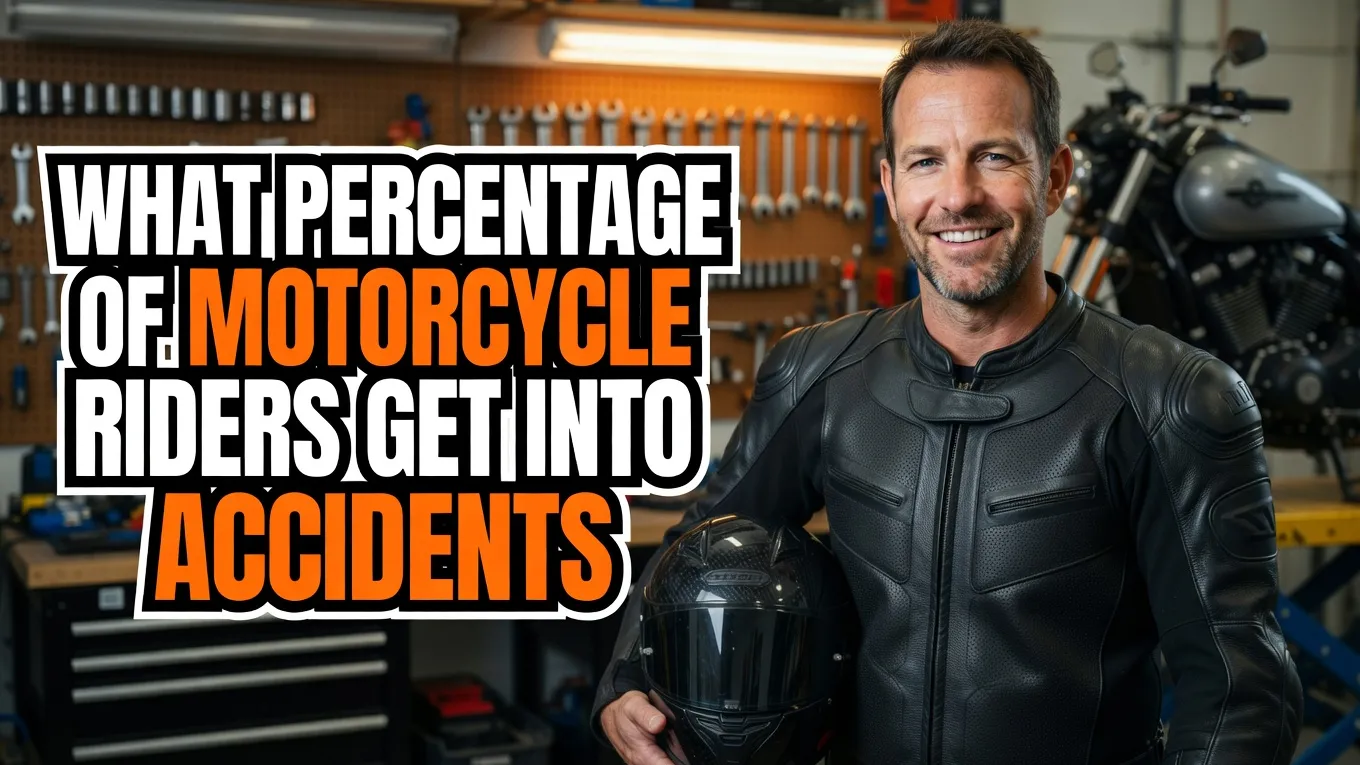
I’ve been riding motorcycles for over a decade, and the question I hear most from non-riders and new riders alike is always about the danger. Everyone wants to know the real numbers behind motorcycle accidents. After researching the statistics and reflecting on my own experiences on two wheels, I’m here to break down exactly what percentage of motorcycle riders get into accidents—and what those numbers actually mean for you.
The truth is more nuanced than the sensational headlines suggest. Yes, riding carries inherent risks, but understanding the data helps separate fear from reality and empowers you to make informed decisions about your safety.
- Approximately 30-50% of riders experience some accident during their riding lifetime, though most are minor
- Per mile traveled, motorcyclists face about 28 times higher fatality risk than car occupants
- Proper training, protective gear, and defensive riding can reduce your accident risk by 40-60%
- Other drivers cause roughly 60-70% of multi-vehicle motorcycle crashes
- The first year of riding presents the highest accident risk, decreasing significantly with experience
The Hard Numbers: Accident Rates Among Motorcycle Riders
Let me start with the statistic that matters most to anyone considering riding: research suggests that 30 to 50 percent of motorcycle riders will experience some form of accident during their riding career. Before you close this tab and swear off two wheels forever, let me add the crucial context.
This percentage includes everything from a low-speed parking lot tip-over to serious highway collisions. In my own riding circle, I’d say about half of my fellow riders have had at least one incident—most were minor drops or low-speed slides that resulted in nothing more than bruised egos and scraped fairings.
When I look at what is the percentage of motorcycle accidents in the broader traffic context, the data becomes even more informative. According to the National Highway Traffic Safety Administration (NHTSA), motorcyclists accounted for approximately 14% of all traffic fatalities in recent years, despite representing only about 3% of registered vehicles.
Per-Mile Risk: The 28-Times Factor
I won’t sugarcoat this one. Per vehicle mile traveled, motorcyclists are approximately 28 times more likely to die in a crash than passenger car occupants. That’s the statistic that makes everyone’s mom worry, and honestly, it’s sobering even for experienced riders like myself.
But here’s what that number doesn’t tell you: it doesn’t account for rider training, experience level, protective gear usage, alcohol consumption, or riding conditions. It’s an average that includes everyone from the weekend warrior who took a safety course to the unlicensed rider weaving through traffic without a helmet.
When I compare what is the percentage of motorcycle accidents to car accidents, I’m always careful to consider these variables. The riders who invest in training and gear face dramatically different odds than those who don’t.
Breaking Down Accident Severity
Not all accidents are created equal, and this distinction matters enormously when evaluating risk. In my experience and according to insurance data, motorcycle accidents break down roughly like this:
Minor incidents (40-50% of all accidents): These include parking lot drops, low-speed slides, and tip-overs that result in minor or no injuries. I’ve had two of these myself—once when my kickstand wasn’t fully deployed, and once on gravel in a parking area. Embarrassing? Absolutely. Life-threatening? Not even close.
Moderate accidents (30-40%): These involve some injury requiring medical attention but typically not hospitalization. Road rash, broken bones, or sprains fall into this category. Proper gear makes an enormous difference here—the difference between road rash and perfectly fine skin is often just a good jacket.
Severe or fatal accidents (10-20%): These are the crashes that make headlines and keep loved ones awake at night. While they represent the minority of accidents, they’re still far too common and demand our respect and attention to prevention.
The First-Year Risk Factor
Here’s something that doesn’t get discussed enough: your accident risk isn’t static throughout your riding career. Studies consistently show that new riders face the highest accident rates, particularly in their first six months to one year of riding.
I’ve observed this pattern firsthand. The riders I know who crashed in their first year often made predictable mistakes—overcooking a corner, panic-braking, or misjudging their bike’s capabilities. Those who made it through that critical first year with proper training became exponentially safer riders.
Research suggests that riders with less than six months of experience have accident rates three to five times higher than those with several years under their belt. This data reinforces something I always tell new riders: invest heavily in training and take it slow during that vulnerable first year.
Who’s Really at Fault? Other Drivers and Risk Factors
One of the most frustrating aspects of motorcycle safety is that the majority of multi-vehicle motorcycle accidents aren’t the rider’s fault. When I examine what percent of motorcycle accidents are caused by other drivers, the numbers are eye-opening.
According to the landmark Hurt Report (still cited today despite being from the 1980s) and confirmed by subsequent studies, approximately 60-70% of multi-vehicle motorcycle accidents are caused by other drivers violating the motorcyclist’s right-of-way. The most common scenario? A left-turning vehicle cutting across the path of an oncoming motorcycle.
I’ve had this nearly happen to me more times than I can count. The driver simply doesn’t see you, misjudges your speed, or isn’t looking properly. Understanding what is the number one cause of motorcycle accidents helps me ride defensively and anticipate these situations before they become accidents.
Key Risk Factors That Increase Your Odds
Alcohol involvement: Roughly 25-30% of fatal motorcycle crashes involve a rider with a blood alcohol concentration above the legal limit. In my years of riding, I’ve adopted a zero-tolerance policy for myself—not a single drink before or during riding. The statistics speak for themselves.
Lack of licensing or training: Approximately 30% of riders involved in fatal crashes don’t have a valid motorcycle license. Proper training through courses like the MSF (Motorcycle Safety Foundation) program can reduce accident risk by up to 40%.
Speed: Excessive speed is a factor in about one-third of fatal motorcycle crashes. I enjoy the thrill of acceleration as much as any rider, but I save it for the track or wide-open roads where I have visibility and control.
Not wearing a helmet: Unhelmeted riders are three times more likely to suffer traumatic brain injuries in a crash. In states without helmet laws, fatality rates are consistently higher. I wouldn’t even roll my bike out of the driveway without full gear.
How Modern Technology Changes the Risk Profile
The motorcycles we ride today are dramatically safer than those from even a decade ago. Anti-lock braking systems (ABS), traction control, and advanced electronics have revolutionized motorcycle safety in ways that accident statistics are only beginning to reflect.
Bikes equipped with ABS have been shown to reduce fatal crash rates by approximately 31%. I personally won’t buy a motorcycle without ABS anymore—I’ve felt it engage during emergency braking situations, and I’m convinced it’s saved me from a crash at least once.
Features like throttle by wire on a motorcycle enable sophisticated traction control and rider aids that previous generations could only dream of. These systems help prevent loss-of-control accidents before they happen.
The Protective Gear Advantage
I mentioned gear earlier, but let me emphasize this with data: wearing proper protective equipment can reduce injury severity by 50-60% in an accident. The difference between a hospital stay and walking away is often determined by what you’re wearing.
My personal gear philosophy is simple: dress for the slide, not the ride. That means full-face helmet, armored jacket, gloves, riding pants, and boots on every single ride, regardless of temperature or distance. Yes, even the five-minute trip to the store.
Helmets reduce the risk of death by 37% and head injury by 69%. Motorcycle jackets with CE-rated armor can prevent broken bones and severe abrasions. Proper gloves protect your hands—your first instinct during a fall is to catch yourself, and unprotected hands suffer accordingly.
Regional and Situational Variations in Accident Rates
Accident percentages vary significantly based on where and how you ride. Urban riding presents different challenges than rural highways. In my experience riding in multiple environments, I’ve noticed distinct risk patterns.
Urban environments: Higher density of vehicles means more potential conflict points, but speeds are generally lower. I’ve had more close calls in city traffic than anywhere else, but most would have resulted in low-speed impacts had they occurred.
Rural roads: Lower traffic density but higher speeds, wildlife hazards, and potentially longer emergency response times. Fatal accident rates tend to be higher in rural areas despite fewer total crashes.
Interstate highways: High speeds and distracted drivers create serious risks. However, the predictable traffic patterns and lack of intersections eliminate some of the most common accident scenarios like left-turning vehicles.
Weather and Road Conditions
I’ve learned to dramatically adjust my risk assessment based on conditions. Wet roads reduce traction and visibility, increasing accident likelihood. Cold temperatures affect both tire performance and rider reaction time.
Statistics show that approximately 80% of motorcycle accidents occur in clear weather with dry roads. At first, this seems counterintuitive—but it reflects exposure more than risk. Most riders avoid bad weather, so fewer total miles are logged in challenging conditions.
When I do ride in rain or cold, I assume my accident risk has doubled or tripled, and I adjust my speed, following distance, and route accordingly.
What You Can Actually Control: Reducing Your Personal Risk
Here’s the empowering part: while you can’t control other drivers or eliminate all risk, you have enormous influence over your personal accident probability. The difference between the 50th percentile rider and the safest riders isn’t luck—it’s decisions.
Take professional training: An MSF Basic RiderCourse or equivalent reduces your crash risk by an estimated 40%. I took the basic course before getting my license and returned for advanced courses years later. Each time, I learned techniques that have helped me avoid accidents.
Wear full protective gear always: This won’t prevent an accident, but it dramatically affects outcomes. Every rider I know who religiously wears gear and has crashed has said the same thing: “My gear saved me.”
Ride sober, always: Zero tolerance for alcohol or impairing substances. This single decision eliminates approximately 25-30% of fatal accident risk factors immediately.
Practice defensive riding: Assume you’re invisible, assume other drivers will do the wrong thing, maintain escape routes, and position yourself to maximize visibility. This mindset has saved me countless times.
The Experience Curve
Getting through that first year safely is crucial. I recommend new riders focus on low-risk environments initially: practice in parking lots, start with quiet roads, and gradually build skills before tackling highways or challenging traffic.
Consider taking additional training courses after you’ve gained some experience. I found that the intermediate and advanced courses were more valuable than the basic course because I could actually apply the techniques to real scenarios I’d encountered.
Continuous skill development matters. I periodically practice emergency braking, swerving, and slow-speed maneuvers. These aren’t fun like carving canyons, but they’re the skills that prevent accidents when things go wrong.
Putting the Statistics in Perspective
So what percentage of motorcycle riders get into accidents? The data suggests somewhere between 30-50% will experience some form of accident over their riding lifetime. But that number encompasses everything from inconsequential parking lot drops to fatal collisions.
Is motorcycling risky? Yes. Per mile traveled, it’s significantly more dangerous than driving a car. But it’s not Russian roulette. The risks can be understood, managed, and dramatically reduced through proper training, gear, and decision-making.
I’ve chosen to continue riding despite understanding these statistics because the experience brings me joy that outweighs the managed risk. But it’s a personal decision that each potential rider must make with full awareness of what the numbers mean.
My Personal Risk Management Philosophy
After years of riding and studying accident statistics, I’ve developed a framework that keeps me riding while minimizing risk:
Never compromise on gear: Full protective equipment, every ride, no exceptions. This includes quality helmets replaced according to manufacturer recommendations.
Continuous learning: Regular refresher courses, track days to practice advanced techniques, and honest self-assessment of skills and limitations.
Defensive riding always: I ride as if I’m invisible and expect other drivers to violate my right-of-way. This mental approach has prevented more accidents than any other single factor.
Environmental awareness: I adjust my riding style and risk tolerance based on conditions, traffic, visibility, and road surface. If conditions are sketchy, I either don’t ride or dramatically reduce speed and increase caution.
The Bottom Line for Current and Prospective Riders
The percentage of motorcycle riders who experience accidents is significant—likely close to half over a lifetime of riding. But this statistic includes riders who take no training, wear no gear, ride impaired, and make poor decisions. It also includes circumstances entirely beyond rider control.
For the rider who invests in proper training, wears quality protective gear, rides sober, practices defensive techniques, and continuously develops skills, the risk profile looks dramatically different. You may never eliminate all risk, but you can reduce it to levels many of us find acceptable given the rewards riding provides.
I’ve accepted that riding motorcycles carries inherent risks higher than driving a car. But I’ve also committed to doing everything within my control to minimize those risks. The statistics inform my decisions—they don’t make them for me.
If you’re considering riding, approach it with respect for the risks, commitment to proper training and gear, and realistic assessment of your personal risk tolerance. If you’re already riding, use these statistics as motivation to continuously improve your skills and safety practices.
The roads are waiting, and they can be navigated safely by those who take the responsibility seriously. Ride smart, ride trained, ride protected—and dramatically improve your odds of being among the riders who log hundreds of thousands of safe miles.
Frequently Asked Questions
What percentage of motorcycle riders will experience an accident?
Studies suggest that approximately 30-50% of motorcycle riders will experience some form of accident during their riding lifetime, though severity varies widely from minor tip-overs to serious collisions.
Are motorcycles really 27 times more dangerous than cars?
Per mile traveled, motorcyclists are about 28 times more likely to die in a crash than car occupants, according to NHTSA data. However, this doesn’t account for rider experience, training, or protective gear usage.
What is the number one cause of motorcycle accidents?
The most common cause is left-turning vehicles that fail to yield to oncoming motorcycles. Other drivers contribute to the majority of multi-vehicle motorcycle crashes. Learn more about what is the number one cause of motorcycle accidents.
Can safety gear really reduce accident injury severity?
Absolutely. Wearing a helmet reduces the risk of death by 37% and head injury by 69%. Full protective gear including jackets, gloves, and boots can reduce injury severity by up to 60% in crashes.

Related Articles
7 Best Batteries for Motorcycles I’ve Tested and Trust in 2026
I've tested dozens of motorcycle batteries to find the best performers. From AGM to lithium, here are my top picks…
Jake Miller
15 min read

The Perfect Battery for Your Harley Davidson Softail: A Rider’s Complete Guide
Discover the perfect battery for your Harley Davidson Softail. I've tested multiple options and share real-world performance data, maintenance tips,…
Jake Miller
14 min read

The Best Battery for Your Harley Davidson: My Complete Guide After Years of Testing
Discover which battery truly performs best for Harley Davidson motorcycles. Real rider experience with AGM, lithium, and OEM options to…
Jake Miller
12 min read