
Best Motorcycle Oil Grade for Touring: My Real-World Picks for Long Rides
 Jake Miller
10 min read
Jake Miller
10 min read
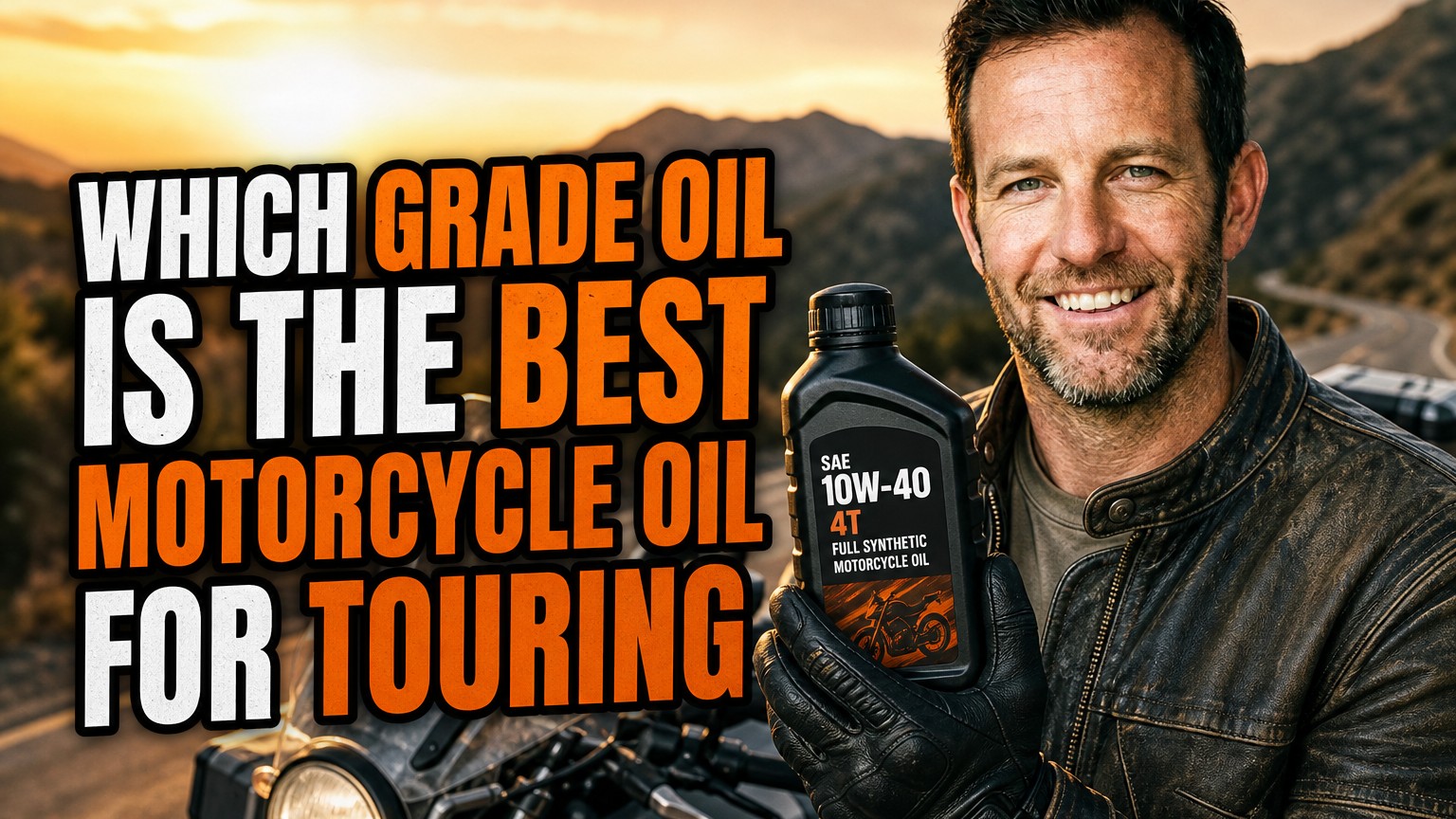
I still remember the first time I took a fully loaded bike on a 3,000-mile trip. The luggage was packed, the playlist was ready, and the oil was an afterthought. By day three, with the engine cooking in 38°C heat, I wished I had given that bottle far more thought.
Since then, I’ve tested a lot of oils across mountain passes, desert highways, and endless stop-and-go city entries. In my experience, picking the right viscosity grade is the single most important oil decision a touring rider makes.
So in this guide, I’ll share what I’ve learned about grades, ratings, and the oils I trust when the odometer starts climbing. No jargon overload, just practical advice from the saddle.
- For most touring bikes, my go-to is a 10W-40 full synthetic with a JASO MA2 rating.
- Air-cooled engines in hot weather often prefer 20W-50, while many modern liquid-cooled bikes run happily on 10W-30 or 5W-40.
- Always match your owner’s manual first, then adjust for climate, load, and riding style.
- Full synthetic is worth the extra money on long, hot, heavily loaded rides.
Why Touring Is Harder on Your Oil Than Daily Riding
Touring puts your engine in a different world from the daily commute. You’re riding for hours at steady highway speeds, often with a passenger and a fully loaded bike. Heat builds up and stays there.
Oil has several jobs: lubricating, cooling, cleaning, and protecting against corrosion. On a long ride, the oil is doing all of that while sitting at high temperatures for hours at a stretch.
Heat Is the Real Enemy
When oil gets too hot, it thins out and can lose its protective film. It also oxidizes faster, which leads to sludge and varnish. That’s why a bottle that’s fine for a Sunday spin can struggle on a summer tour.
I’ve seen oil temperatures climb well beyond what I expected on bikes with fairings that trap engine heat. That’s the moment you realize that grade and quality matter a great deal.
Load, Altitude, and Mixed Conditions
Two-up riding with luggage means the engine works harder just to maintain speed. Add mountain climbs, headwinds, and traffic crawls, and your oil sees a wide range of stress in a single day.
A good touring oil needs to stay stable through all of it. That’s where viscosity grade and base oil type come in.
Decoding Viscosity Grades Without the Headache
Those numbers on the bottle, like 10W-40, look cryptic at first. Once you understand them, choosing oil becomes much easier.
What the Numbers Actually Mean
The first number with the “W” (for winter) tells you how the oil flows when cold. A lower number means it flows more easily at startup. The second number tells you how thick the oil stays at operating temperature.
So 10W-40 flows like a 10-weight oil when cold and protects like a 40-weight oil when hot. That wide range is exactly why multigrade oils dominate the touring world.
Why Thicker Isn’t Always Better
I used to think a thicker oil was automatically safer. It isn’t. Oil that’s too thick can slow circulation, especially on startup, and that’s when most engine wear happens.
The goal is the right viscosity for your engine’s tolerances, not the highest number you can find.
So, Which Grade Do I Recommend for Touring?
Here’s the honest answer: it depends on your engine, your climate, and your manual. But I can give you a clear framework based on what has worked for me and the riders I’ve talked to.
10W-40: My All-Round Touring Pick
If you ask me for one grade to cover the widest range of touring bikes, it’s 10W-40. It protects well at high temperatures, flows quickly enough in the morning, and is approved for a huge number of Japanese, European, and adventure-touring models.
On my own long trips, a 10W-40 full synthetic has been the most consistent performer. It handles hot highways and cool mountain mornings without any drama.
20W-50: For Air-Cooled Engines and Hot Climates
Big air-cooled V-twins and some older touring machines run hotter and have looser tolerances. For those, 20W-50 is often the recommended grade, especially in warm weather.
I’ve found it gives a reassuring cushion of protection on scorching days. The trade-off is slower flow on cold starts, so I’d avoid it in freezing temperatures unless the manufacturer specifically calls for it.
10W-30 and 5W-40: Modern Liquid-Cooled Bikes
Many newer liquid-cooled touring and adventure bikes call for 10W-30 or 5W-40. These engines are built with tighter tolerances and efficient cooling, so they don’t always need heavier oil.
If your manual specifies one of these, I’d stick with it. A 5W-40 full synthetic is a favorite of mine for riders who tour in colder regions, because of its excellent cold-start behavior combined with strong hot protection.
What About 15W-50 and Other Options?
Some high-performance and heavy-duty engines list 15W-50 as an option, particularly in hot regions. It’s a solid choice when the manufacturer approves it, but I wouldn’t use it as a default.
When in doubt, the manual wins every time.
Base Oil Matters: Mineral, Semi-Synthetic, or Full Synthetic
Grade is only half the story. The type of base oil determines how well that grade holds up over time.
Full Synthetic: My Choice for Long Hauls
For touring, I almost always choose full synthetic. It resists thermal breakdown, shears less under the stress of a wet clutch gearbox, and stays stable for longer.
Yes, it costs more. But when I’m hundreds of miles from home, I’d rather pay a little extra than gamble on cheaper oil.
Semi-Synthetic: A Balanced Compromise
Semi-synthetic blends offer a decent step up from mineral oil at a friendlier price. For shorter tours or lightly loaded bikes, they can work nicely.
I’d consider them if your bike’s manual allows it and your trip isn’t extreme. Just keep an eye on your change intervals.
Mineral Oil: Fine for Some, Not Ideal for Touring
Mineral oil is perfectly fine for older, low-stress engines and short rides. But for long-distance touring with heavy loads, I find it breaks down sooner than I’d like.
Don’t Ignore the Ratings: JASO and API
I’ve seen riders spend ages choosing a grade, then grab the wrong specification. That’s a costly mistake.
JASO MA and MA2 for Wet Clutches
Most motorcycles share oil between the engine, gearbox, and clutch. That means the oil must let the clutch grip properly. Look for JASO MA or MA2 on the label.
MA2 is the higher friction standard and is what I look for on most modern bikes. Oils meant for cars can contain friction modifiers that cause clutch slip, so I avoid them.
API Service Ratings
You’ll also see API ratings like SL, SN, or SP. Higher letters generally mean more modern formulations. I look for a current rating that meets or exceeds what my manufacturer specifies.
If you want to compare specific products, I’ve found it helpful to read broader guides, like this one on which engine oil is best for motorcycle models and riding styles.
Matching Oil to Your Touring Conditions
Once you know the basics, you can fine-tune your choice. Here’s how I think about it before a big trip.
Hot Climates and Desert Rides
In extreme heat, I lean toward the higher end of what my manual allows. For many bikes, that means a quality full synthetic 10W-40 or, for air-cooled engines, a 20W-50.
I also check my oil level more often in hot weather, since higher temperatures can increase consumption.
Cold Mornings and Mountain Passes
Cooler regions favor lower “W” numbers, like 5W-40 or 10W-40. Cold oil that flows quickly protects the engine in those first critical seconds after startup.
I always let the bike idle briefly in the cold before loading up the throttle. It’s a small habit that has served me well.
Riding in India and Similar Mixed Climates
Riders in India face a tough mix of heat, traffic, dust, and long highway stretches. If that’s you, it’s worth reading up on the best engine oil for 4 stroke motorcycle in india for local product availability and conditions.
In general, I’d prioritize a good synthetic or semi-synthetic that meets JASO MA2 and suits the bike’s manual-specified grade.
Oil Change Intervals for Long Tours
Even the best oil doesn’t last forever. Touring is demanding, so I treat the manufacturer’s interval as a ceiling, not a target.
My Pre-Trip Routine
Before any big trip, I change the oil and filter. Starting fresh removes the guesswork and gives me the full interval to work with.
I also carry a small bottle of the same oil for top-ups. Mixing different brands in an emergency is better than running low, but matching is ideal.
Daily Checks on the Road
Every morning, I check the oil level on a level surface after the engine has settled. It takes a minute and can save a trip. I also glance under the bike for leaks.
If the oil looks very dark or smells burnt long before the interval, I take it as a sign to change it sooner.
Common Mistakes I See Touring Riders Make
I’ve made a few of these myself, so no judgment here. But avoiding them will save you money and stress.
- Ignoring the manual: Your manufacturer’s spec is the starting point, always.
- Using car oil: Friction modifiers can wreck wet clutch performance.
- Stretching intervals: Heavy loads and heat shorten oil life.
- Skipping the filter: Fresh oil in a clogged filter defeats the purpose.
- Buying on price alone: The cheapest bottle isn’t a bargain if it costs an engine.
Finding the Right Product for Your Bike
Once you’ve nailed down the grade, the next step is choosing a reputable brand. There are plenty of excellent options, and the right one depends on your bike and budget.
For a deeper dive, I recommend browsing this guide on the best motor oil for 4 stroke motorcycle engines. It helps narrow down choices by riding style.
If you want another perspective, this breakdown of the top engine oil for 4 stroke motorcycle options is a handy companion read.
And if you like seeing everything laid out step by step, there’s also a useful article answering what is the best engine oil for 4 stroke motorcycle riders ask most often.
My Personal Touring Oil Checklist
Before every long ride, I run through a simple mental list. It keeps me from overthinking and ensures nothing gets missed.
- Check the owner’s manual for the recommended grade and specification.
- Choose a full synthetic with JASO MA2 and a current API rating.
- Adjust within the approved range for climate and load.
- Change the oil and filter before departure.
- Carry a small top-up bottle and check the level daily.
It isn’t complicated, but following it consistently has kept my engines healthy through thousands of miles.
Final Thoughts: Ride Far, Ride Confident
If you’re still wondering what to pour in, here’s my bottom line. For most touring bikes, I trust a 10W-40 full synthetic that meets JASO MA2. For hot-running air-cooled engines, 20W-50 is a strong alternative, and for modern liquid-cooled bikes, follow the manual’s call for 10W-30 or 5W-40.
Oil is one of the cheapest forms of insurance you can buy for your bike. Spend a little time choosing wisely, and you can focus on the road ahead instead of the engine beneath you.
Safe travels, and may your tours be long and your oil stay golden.
Frequently Asked Questions
What is the best oil grade for motorcycle touring?
For most modern touring bikes, a 10W-40 full synthetic that meets JASO MA2 is the safest all-round choice. Air-cooled V-twins in hot climates often do better on 20W-50, and some liquid-cooled bikes specify 5W-40 or 10W-30. Always start with what your owner’s manual says.
Is synthetic oil worth it for long-distance riding?
Yes. Full synthetic oil resists heat breakdown and shearing better than mineral oil, which matters on long, hot days with heavy loads. It also tends to keep its viscosity longer between changes, giving you extra peace of mind on the road.
Can I use car oil in my touring motorcycle?
Usually not. Many car oils contain friction modifiers that can cause a wet clutch to slip. Look for JASO MA or MA2 on the bottle, and avoid oils labeled Energy Conserving unless your bike has a separate clutch and gearbox lubrication system.
How often should I change oil on a long tour?
Follow your manual’s interval, but on a big trip I change oil before I leave and check the level every morning. If you ride more than the interval distance during the trip, carry a spare liter and plan a change at a service stop.

Related Articles
7 Best Batteries for Motorcycles I’ve Tested and Trust in 2026
I've tested dozens of motorcycle batteries to find the best performers. From AGM to lithium, here are my top picks…
Jake Miller
15 min read

The Perfect Battery for Your Harley Davidson Softail: A Rider’s Complete Guide
Discover the perfect battery for your Harley Davidson Softail. I've tested multiple options and share real-world performance data, maintenance tips,…
Jake Miller
14 min read

The Best Battery for Your Harley Davidson: My Complete Guide After Years of Testing
Discover which battery truly performs best for Harley Davidson motorcycles. Real rider experience with AGM, lithium, and OEM options to…
Jake Miller
12 min read