
7 Best Winter Fuel Stabilizers to Keep Your Motorcycle Starting Every Spring
 Jake Miller
10 min read
Jake Miller
10 min read
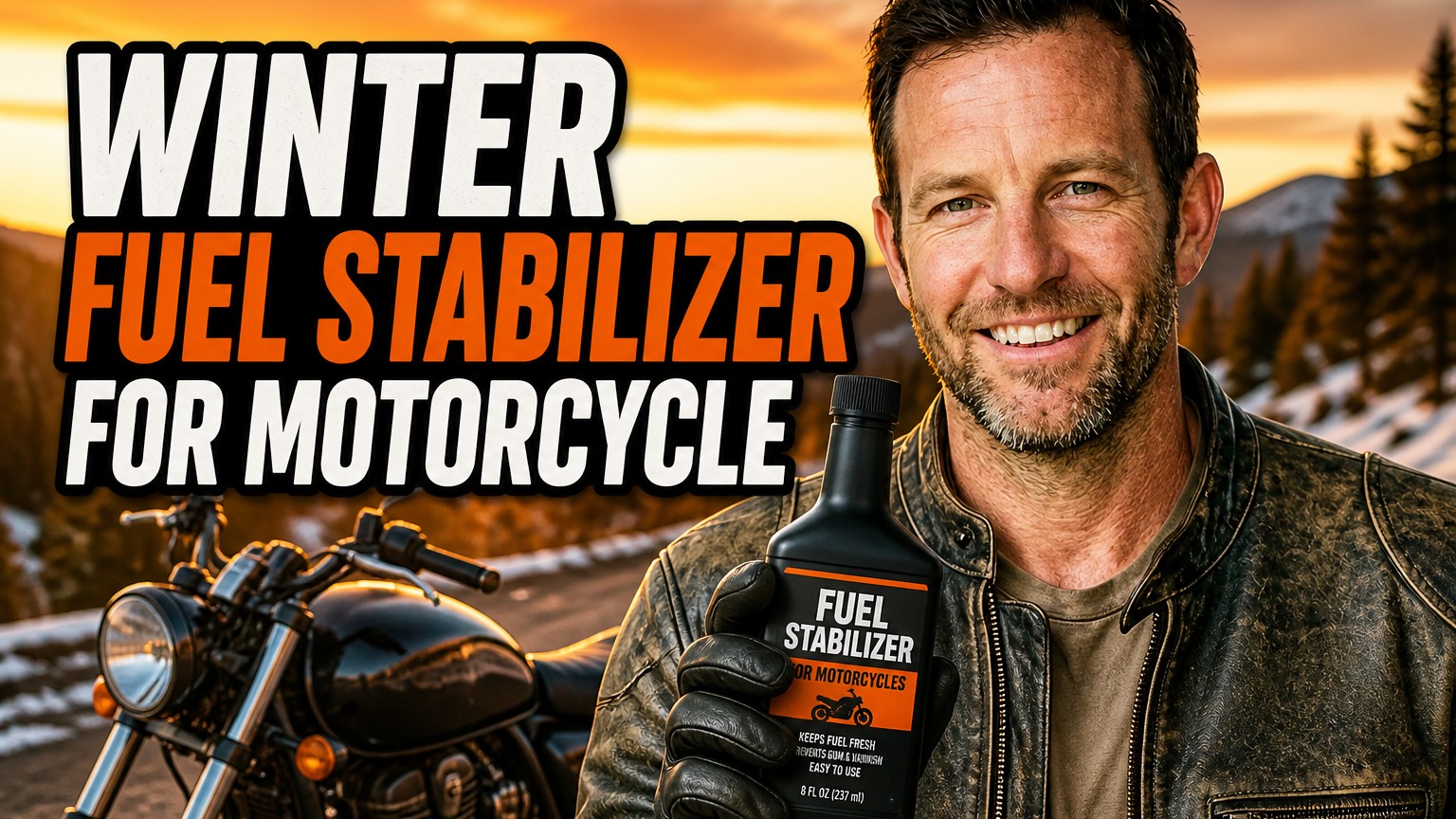
Every spring I’ve seen the same thing at the local meetup: someone rolls out a bike that sat all winter, hits the starter, and gets nothing but a cough and a sad whir. Nine times out of ten, the culprit is stale fuel. Ethanol-blended gas starts breaking down in as little as 30 days.
I’ve stored bikes through some brutally cold winters, carbureted and fuel-injected alike. I’ve also made my share of mistakes, including a clogged pilot jet that cost me a weekend. Below are the seven stabilizers I trust, plus the tips I wish I’d known earlier.
- My overall pick is STA-BIL Storage Fuel Stabilizer. It’s affordable, easy to find, and reliable for 12-month storage.
- For ethanol-heavy fuel and a bit of cleaning power, Sea Foam Motor Treatment and Star Tron are excellent.
- Always fill the tank, add stabilizer first, then run the engine for 5 to 10 minutes so treated fuel reaches the carbs or injectors.
- Stabilizer can’t fix old gas, so treat fresh fuel before the bike goes to sleep.
Why Fuel Stabilizer Matters for Winter Storage
Modern pump gas is a short-lived product. Ethanol attracts moisture, and as it breaks down it leaves gummy varnish behind. That varnish clogs jets, injectors, and petcock screens.
Cold weather makes things worse. Temperature swings create condensation inside a partly empty tank, and water can sit at the bottom and start rust. A good stabilizer slows oxidation and protects metal surfaces from moisture.
What I Look for in a Stabilizer
I judge every product on a few things. Does it have proven oxidation resistance? Does it handle ethanol blends such as E10? Does it protect against corrosion? And is it easy to dose in a small motorcycle tank?
Price matters too, but a $12 bottle is a bargain next to a $400 carburetor rebuild. I’d rather overpay a little than pull a gummy float bowl in April.
1. STA-BIL Storage Fuel Stabilizer — Best Overall
This is the bottle sitting on my garage shelf right now. STA-BIL Storage Fuel Stabilizer is the one I recommend to anyone who just wants the job done without overthinking it.
Why I Like It
The label calls for roughly 1 oz per 2.5 gallons of fuel, so even a small bottle goes a long way on a motorcycle. STA-BIL Storage is formulated to keep gasoline fresh for up to 12 months and works with ethanol-blended fuel. I’ve used it in everything from a carbureted Honda Nighthawk to a fuel-injected Triumph.
It also has corrosion inhibitors that coat the inside of the tank. The blue-green color makes it easy to see that it’s mixed in.
Things to Know
It isn’t a cleaner, so it won’t dissolve existing deposits. Start with fresh gas and it does exactly what it promises. Expect to pay roughly $8 to $15 for an 8 oz bottle.
2. STA-BIL 360 Protection — Best Upgrade for Ethanol Fuel
When I’m storing a bike in a damp garage or near the coast, I reach for STA-BIL 360 Protection. It’s the brand’s more complete formula, built to address the whole fuel system rather than just the fuel.
What Sets It Apart
STA-BIL 360 Protection combines stabilization with ethanol-specific protection and corrosion control. It also contains cleaning agents to help keep fuel system components tidy. That makes it a good middle ground if you want more than basic storage protection.
I like it for bikes that see occasional winter rides. If you fire up the engine every few weeks, this one handles the in-and-out cycle better than a pure storage formula.
Downsides
It costs a few dollars more than the standard Storage formula. For a bike parked for a short, dry winter, the regular STA-BIL Storage is enough. Check the label for exact dosing, as it differs from the basic product.
3. Sea Foam Motor Treatment — Best Multi-Purpose Pick
I’ve been using Sea Foam Motor Treatment for years, and it’s a bit of a legend in garages. It’s a petroleum-based formula that stabilizes fuel, lubricates, and helps clean deposits.
My Experience
For storage, the common guidance is up to about 1 oz per gallon of gas, though you should always check the current label. Sea Foam is slower-acting than some alternatives, but it’s gentle and widely trusted. I like that it also helps keep carb passages and injectors clean.
On an older bike with questionable fuel history, I find this one reassuring. It’s also sold in handy 16 oz cans, usually priced around $10 to $15.
Caveats
Because the dose is higher per gallon, you’ll go through it faster than a concentrated stabilizer. It also has a distinctive smell. Neither bothers me, but your garage might notice.
4. Star Tron Enzyme Fuel Treatment — Best for Ethanol-Heavy Fuel
If I can only get E10 or worse near me, Star Tron Enzyme Fuel Treatment is one of my first choices. It uses an enzyme-based formula that breaks fuel into smaller, more uniform molecules.
Why It Works for Me
Star Tron is known for tackling ethanol-related issues like phase separation and moisture. It’s highly concentrated, so a small amount treats a lot of fuel. The label gives a ratio of roughly 1 oz per 16 gallons for regular use, with a heavier dose for storage, so check the bottle.
That concentration makes it great for a motorcycle tank. One 8 oz bottle can last me multiple winters across a couple of bikes.
Things to Consider
The price per bottle is a bit higher, typically in the $10 to $20 range. Measure carefully, since the concentration makes it easy to over- or under-dose.
5. Lucas Oil Safeguard Ethanol Fuel Conditioner — Best for Older Bikes
On vintage and classic bikes, I lean toward Lucas Oil Safeguard Ethanol Fuel Conditioner. Older rubber lines and gaskets don’t love modern ethanol blends.
Highlights
Safeguard is formulated to condition fuel, protect against ethanol moisture, and lubricate upper-cylinder components. That extra lubrication is a nice bonus on an older engine. I’ve used it on a carbureted classic that lives in an unheated shed.
It’s a solid mid-priced product, usually around $10 to $15. Dosing is straightforward, but follow the current label.
Who It Isn’t For
If you want a pure “set it and forget it” storage product with long-term claims, STA-BIL is more explicit about its 12-month protection. Safeguard is better thought of as a conditioner with storage benefits.
6. Amsoil Gasoline Stabilizer — Best Premium Option
When I want maximum peace of mind on a bike I really care about, I spend a bit more on Amsoil Gasoline Stabilizer. It’s a high-end additive designed for long-term storage and stressed fuel.
What I Appreciate
Amsoil positions this as protection against fuel oxidation, corrosion, and ethanol-related problems. It’s marketed as effective for extended periods, and I’ve found carburetors on bikes I’ve treated with it to be clean after months of sitting. It’s also a concentrated formula, so a bottle lasts.
If you already use Amsoil products, it fits right into your routine. It typically runs in the $15 to $25 range, though availability depends on dealers or online ordering.
Drawbacks
It’s pricier and harder to grab at a local big-box store. For many riders, STA-BIL gets you 90 percent of the benefit at a lower cost.
7. Yamalube Fuel Stabilizer and Conditioner — Best Dealer-Backed Option
If you ride a Yamaha, or just like OEM-brand peace of mind, check out Yamalube Fuel Stabilizer and Conditioner. It’s formulated for powersports engines and available at dealers and online.
Why It Made My List
It’s designed to prevent fuel breakdown, resist ethanol-related corrosion, and keep injectors and carbs clean. I like that it’s made with small engines like motorcycle, ATV, and snowmobile in mind. Usually priced around $10 to $15 for a bottle.
It works on any brand of bike, not just Yamaha. Just double-check the label for the right ratio.
A Small Note
Availability can vary, and big-box shelves won’t always carry it. Plan ahead and buy it in the fall, not the first cold weekend.
How I Prep My Bike for Winter Storage
A stabilizer is only one part of a good storage routine. Here’s the exact process I follow every year.
Step-by-Step Routine
- Fill the tank with fresh fuel, ideally close to full, to reduce condensation.
- Add the stabilizer in the correct dose. I pour it in before the fuel so it mixes as the tank fills.
- Run the engine for 5 to 10 minutes so treated fuel reaches the whole system.
- Change the oil if it’s due, since old oil holds acids and moisture.
- Connect a battery tender and cover the bike with a breathable cover.
On that oil change, I always pick my fluid before the cold arrives. If you’re curious, I’ve put together notes on the best motorcycle oil for winter and the best weight motorcycle oil for winter to help you choose.
Don’t Forget the Fuel Valve
If your bike has a petcock, learn how it works. I wrote about the motorcycle fuel switch on off reserve positions because mixing them up can leave you with a dry carb or a drained tank.
For storage, I usually turn the petcock to off on carbureted bikes. This keeps fuel from seeping past a worn needle valve into the engine over the winter.
Common Winter Storage Mistakes I See
Adding Stabilizer to Old Gas
This is the big one. Stabilizer preserves fresh fuel, but it can’t reverse existing degradation. If the gas has been in the tank since last summer, drain it first.
Skipping the Run Cycle
Pouring stabilizer in and parking the bike right away is a trap. The treated fuel never reaches the carb bowls or injectors. Always run the engine before shutting down for the season.
Ignoring Fuel Economy Clues
Sometimes a fuel system is already struggling before storage. If your bike has been guzzling gas, look into the causes of high fuel consumption in motorcycle before you park it. Fixing a leaky injector or dirty jet in autumn beats finding it in spring.
If you ride a small bike, it also helps to know your baseline. This guide to 125cc motorcycle fuel consumption per km is a useful reference for judging whether things look normal.
How to Choose the Right Stabilizer for Your Bike
Match the product to your situation rather than buying the most expensive bottle. Here’s how I think about it.
- Short, simple winter: STA-BIL Storage is plenty.
- Ethanol-heavy fuel or damp garage: Star Tron or STA-BIL 360 Protection.
- Older carbureted bike: Sea Foam or Lucas Safeguard.
- Long storage or prized bike: Amsoil Gasoline Stabilizer.
- Powersports-specific formula: Yamalube Fuel Stabilizer and Conditioner.
Ethanol-Free Fuel Helps
If you have access to ethanol-free gas, use it for storage and still add stabilizer. It’s the best combination I know of. Ethanol-free fuel lasts longer and avoids moisture issues, but it still oxidizes over time.
My Final Verdict
If you only buy one, make it STA-BIL Storage Fuel Stabilizer. It’s affordable, easy to find, and I’ve had consistent results for years. For tougher conditions, step up to Star Tron, Sea Foam, or Amsoil.
Whatever you choose, use it correctly and use it early. Fresh fuel, the right dose, a good run cycle, and a full tank are the real secret. Do that, and your bike will fire up on the first push of the button when the snow finally melts.
Frequently Asked Questions
How much fuel stabilizer should I put in my motorcycle for winter?
Always follow the label on your specific product. As a rule, STA-BIL Storage is dosed at about 1 oz per 2.5 gallons, so most motorcycle tanks need well under an ounce. Mixing slightly heavy is safer than mixing light.
Do I need to run the engine after adding stabilizer?
Yes. Run the bike for 5 to 10 minutes so treated fuel reaches the fuel lines, pump, and carburetor bowls or injectors. Skipping this step leaves untreated fuel in the system, which is where varnish forms.
Should I fill the tank or leave it empty for winter storage?
Fill it close to full with treated fuel. A full tank leaves less air inside, which reduces condensation and rust. An empty or half-empty tank invites moisture and corrosion.
How long does fuel stabilizer last?
Most quality stabilizers protect fuel for about 12 months, and some claim up to 24 months. For best results, treat fresh fuel and don’t rely on a stabilizer to rescue old gas that has already gone bad.

Related Articles

7 Best Lithium Motorcycle Batteries for Harley Davidson in 2026
I've tested lithium batteries on multiple Harleys. Here are the 7 best lithium motorcycle batteries for Harley Davidson that deliver…
Jake Miller
16 min read

7 Best Motorcycle Batteries for Harley Sportster That Won’t Let You Down
Looking for the best motorcycle battery for Harley Sportster? I've tested top AGM and lithium options to find which batteries…
Jake Miller
11 min read

7 Best Batteries for Motorcycles I’ve Tested and Trust in 2026
I've tested dozens of motorcycle batteries to find the best performers. From AGM to lithium, here are my top picks…
Jake Miller
15 min read