
8 Best Weight Motorcycle Oils for Winter Riding: My Cold-Weather Picks
 Jake Miller
10 min read
Jake Miller
10 min read
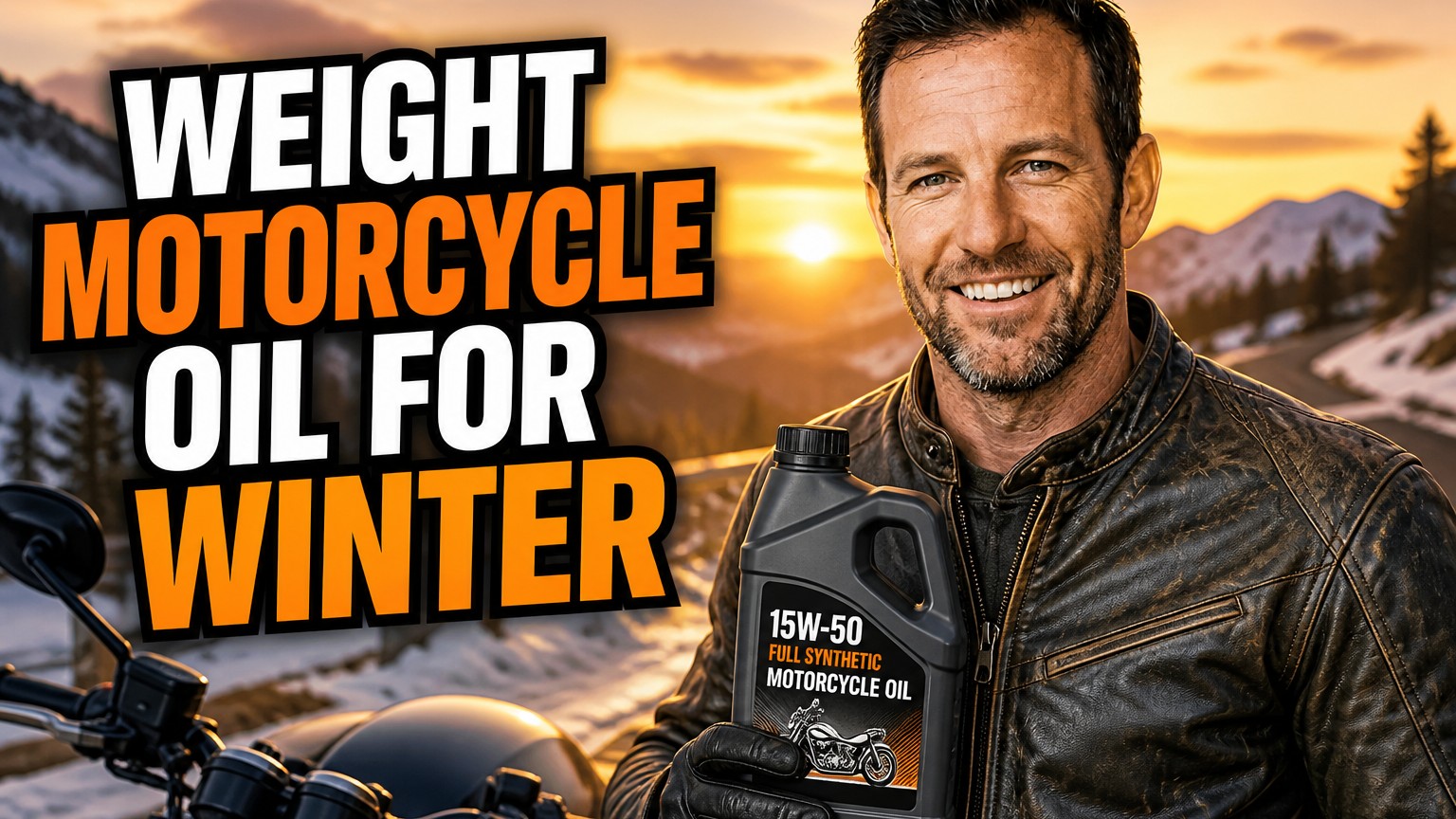
I’ve ridden through more cold mornings than I’d like to admit. I’ve watched my breath fog up my visor while my bike coughed through its first few seconds of life. That’s when I became obsessed with oil weight.
Cold weather thickens oil, and thick oil means slower lubrication at the moment your engine needs it most. Over the years I’ve tried a lot of bottles in a lot of bikes, and I’ve settled on a short list I trust. Here’s what I run, why I run it, and how to choose the right viscosity for your own winter riding.
- For most bikes in winter, I recommend a 10W-30 or 10W-40 full synthetic. Go to 5W-40 only if your manual allows it and you ride in deep cold.
- Always choose oil with a JASO MA2 rating if your engine shares oil with a wet clutch.
- My overall pick is Motul 7100 10W-40. My budget pick is Castrol Power1 4T 10W-40.
- Fresh oil, a good battery, and a proper warm-up matter as much as the bottle itself.
How I Think About Oil Weight When It’s Freezing
Before the list, a quick refresher on what those numbers mean. Take a 10W-40 oil. The “10W” describes how the oil behaves when cold (the W stands for winter). The “40” describes how thick it is at normal operating temperature.
The lower the first number, the easier the oil flows on a cold start. A 5W oil pumps through a frozen engine faster than a 15W or 20W oil. That’s why I steer clear of 20W-50 in winter, even though I love it in July.
Why Cold Starts Cause Most Engine Wear
Most engine wear happens in the first few seconds after startup. Oil has drained off the metal surfaces, and the pump has to push cold, sluggish fluid up to the cams and valvetrain. Thicker oil takes longer to get there.
That’s the whole reason I pay attention to winter viscosity. A good synthetic in the right weight can noticeably reduce that dry-start window.
My Simple Winter Viscosity Rules
- Above 20°F (about -7°C): a 10W-30 or 10W-40 synthetic works great.
- Below 20°F regularly: I consider a 5W-40 or 5W-30, if the manufacturer approves.
- Mild winters (above 40°F): whatever grade your manual specifies is usually fine.
One more thing: your owner’s manual always wins. I use it as the boundary, then pick the best product inside that boundary. If you want a broader overview, I also put together a guide to the best motorcycle oil for winter.
1. Motul 7100 10W-40 — Best Overall Winter Oil
If I could only keep one oil on my shelf, it would be Motul 7100 10W-40. It’s a 100% synthetic, ester-based oil that meets JASO MA2 and API SN standards. That makes it safe for wet clutches and compatible with just about any modern four-stroke.
What I notice most in cold weather is how quickly the engine settles after startup. Idle smooths out faster, and the clutch feels consistent from the first pull. The ester base gives it good cold flow without sacrificing film strength once things heat up.
It typically costs about $14 to $20 per quart or liter, depending on where you buy. That’s more than a basic oil, but I think it’s worth it. If your bike calls for a thinner grade, the Motul 7100 10W-30 is the one I’d look at.
Who It’s Best For
Riders with sport, naked, or adventure bikes who commute or ride hard through the cold months. If you want one dependable answer, this is mine.
2. Castrol Power1 4T 10W-40 — Best Budget Pick
I don’t believe winter riding should require a premium budget. Castrol Power1 4T 10W-40 is a widely available, reasonably priced oil that has served me well in older commuters and secondary bikes. It’s JASO MA2 certified, which is what you need for wet-clutch bikes.
It’s a synthetic-blend style formula (the exact formulation varies by region). In my experience it handles cold starts well when temperatures hover around freezing. It won’t match a full ester synthetic in extreme cold or hard use, but it’s solid.
Pricing is usually in the $8 to $13 range per liter. That makes frequent winter oil changes easy on the wallet. Worldwide availability is a bonus, and I’ve found it on shelves from small-town shops to big-box stores.
If you’re shopping in South Asia, my write-up of the best engine oil for 4 stroke motorcycle in india covers how Castrol and similar brands stack up there.
3. Shell Advance Ultra 4T 10W-40 — Best Fully Synthetic Value
Shell Advance Ultra 4T 10W-40 is a fully synthetic oil built around Shell’s PurePlus technology (gas-to-liquid base oil). It carries a JASO MA2 rating and is aimed squarely at modern, high-revving engines.
Where it shines for me is cleanliness. After a long cold season of short trips, I’ve found the oil holds up well against fuel dilution and condensation. Those are the two enemies of winter oil life.
It usually sits between $12 and $20 per liter, which I consider a fair price for a full synthetic. It’s a great middle ground if the Motul feels like a stretch.
4. Liqui Moly Motorbike 4T Synth 10W-40 Street Race — Best for Performance Riders
I’ve used Liqui Moly Motorbike 4T Synth 10W-40 Street Race on a few spirited bikes, and it’s become a favorite of mine. It’s a fully synthetic, ester-based oil with JASO MA2 certification. The Street Race name tells you who it’s designed for.
On cold mornings, I like how it flows without feeling thin once the bike is up to temperature. The clutch feel stays predictable, which matters when I’m riding in gloves that already dull my sense of feedback.
Expect to pay roughly $15 to $22 per liter. If your bike lives for twisty roads, even in winter, it’s worth the premium.
5. Amsoil Synthetic Motorcycle Oil 10W-40 — Best for Extended Drain Intervals
Amsoil Synthetic Motorcycle Oil 10W-40 is one I recommend to riders who log serious winter miles. It’s a full synthetic with JASO MA2 certification, and Amsoil has a strong reputation for durability.
I like it for long-haul cold riding, where a bike might not warm up quickly. The oil resists shear and breakdown well. That means the “40” stays a “40” for longer, which protects your engine between changes.
It tends to cost about $14 to $20 per quart, and it’s sold mainly through Amsoil dealers and online. I still change it at the manufacturer’s interval, but I appreciate the extra margin of safety during harsh months.
6. Mobil 1 Racing 4T 10W-40 — Best for High-Revving Engines
Everyone knows the Mobil 1 name, and Mobil 1 Racing 4T 10W-40 brings that reliability to motorcycles. It’s a fully synthetic oil designed for high-performance four-stroke engines and carries JASO MA2 approval.
I’ve run it in a high-revving sportbike through a cold, damp season. It handled repeated cold starts without any odd clutch behavior. Shifting stayed crisp, which I always notice first when an oil isn’t right.
It’s generally priced in the $13 to $20 range per quart. For anyone with a screaming inline-four, I think it’s a smart choice. If you want to compare it with other options, my guide to the best motor oil for 4 stroke motorcycle goes deeper on that.
7. Red Line 10W-30 Motorcycle Oil — Best Thinner Grade for Cold Climates
When a manual calls for 10W-30, or I know I’ll be starting in near-freezing temperatures daily, I reach for Red Line 10W-30 Motorcycle Oil. It’s a fully synthetic, ester-based formula designed for motorcycles that share oil with the clutch and gearbox.
The thinner 30-weight hot rating means less drag, and the oil flows readily when cold. I’ve noticed the engine feels a touch freer on frosty starts. That’s subtle, but I feel it, especially on smaller-displacement engines.
It usually runs about $13 to $18 per quart. Check your manual first, because not every engine is designed for a thinner hot viscosity, especially in hot-running air-cooled designs.
8. Motul 300V Factory Line Road Racing 5W-40 — Best for Extreme Cold
This is my pick for the coldest days. Motul 300V Factory Line Road Racing 5W-40 is an ester core synthetic with Motul’s Ester Core technology. It’s built for racing, but I find its low-temperature flow exceptional for harsh winters.
A 5W oil gets to the top end noticeably faster on a deep-freeze morning. I’ve used it in sub-zero temperatures and appreciated the confidence it gave me. It’s also JASO MA2 certified, so wet clutches are fine.
The downside is price, often $20 to $30 per liter. I save it for demanding situations or high-performance engines. If your manual approves a 5W-40 and you live somewhere truly cold, it’s a premium option I can happily stand behind.
How I Choose the Right Oil Weight for My Bike
Start With the Manual
Your owner’s manual lists the approved viscosity grades and temperature ranges. I treat that as the rulebook. Engines are designed around specific clearances, and going far outside the range can cause problems.
Match the Spec, Not Just the Weight
Weight is only half the story. For bikes with a wet clutch, I always look for JASO MA or MA2 on the label. Avoid oils marked “Energy Conserving,” since those friction modifiers can cause clutch slip.
If you’re building your general knowledge, my list of the top engine oil for 4 stroke motorcycle options covers the spec basics in more detail. For a more beginner-friendly explainer, see what is the best engine oil for 4 stroke motorcycle.
Think About Your Real Riding Conditions
I ask myself a few honest questions:
- How cold does it get when I start the bike?
- Do I take short trips that never fully warm the engine?
- Is my bike air-cooled or liquid-cooled?
- Do I ride hard, or mostly commute?
Short trips are rough on oil because moisture and fuel never burn off. If that’s you, I suggest changing oil more often during winter.
My Winter Oil Care Tips
Warm It Up Gently
Even the best oil needs a minute. I let the bike idle for 30 to 60 seconds, then ride gently until it reaches normal temperature. Don’t rev a cold engine hard, no matter how good the oil is.
Check Your Battery
Thin oil helps, but cold also saps battery power. A weak battery turns the engine slowly, which means oil pressure builds slowly too. I test my battery before every winter.
Change Oil Before the Cold Hits
I like to do a fresh oil and filter change in late fall. New oil resists sludge and moisture better, and I go into winter with peace of mind. It’s one of the cheapest bits of engine insurance I know.
Don’t Mix Random Oils
Topping off with whatever’s on the shelf is tempting. In an emergency it’s fine, but I try to stay with one brand and grade. That keeps the additive package working the way it was designed.
Final Thoughts: My Winter Oil Recommendation
If you want one answer, I’d run Motul 7100 10W-40 for most bikes through winter, or step down to a 10W-30 if your manual calls for it. On a tighter budget, Castrol Power1 4T 10W-40 is a dependable choice. For brutal cold, Motul 300V 5W-40 is my premium pick.
The biggest takeaway from my years of riding is simple. Pick the right weight, choose a JASO MA2 oil, and keep it fresh. Do that, and your bike will start happily on frosty mornings and carry you safely through the season.
Frequently Asked Questions
What is the best weight motorcycle oil for winter?
For most air-cooled and liquid-cooled four-stroke bikes, I recommend 10W-40 or 10W-30 synthetic in cold weather. If your manual allows it and you ride in temperatures well below freezing, a 5W-40 flows faster on startup. Always follow the grades listed in your owner’s manual.
Is 5W-40 better than 10W-40 for winter motorcycle riding?
In very cold conditions, yes. The lower first number means the oil flows more easily at startup, so it reaches the top end faster. In mild winters, a quality 10W-40 is perfectly fine and is often the factory-approved grade.
Can I use car oil in my motorcycle in winter?
I wouldn’t. Most motorcycles share oil between the engine, gearbox, and wet clutch, so you need oil with a JASO MA or MA2 rating. Many car oils contain friction modifiers that can make a wet clutch slip.
Should I change my motorcycle oil before winter?
If you’re close to your service interval, or the oil has absorbed moisture and fuel from short trips, a fresh change before winter is cheap insurance. Fresh oil resists sludge and cold-start wear better than tired oil.

Related Articles
7 Best Batteries for Motorcycles I’ve Tested and Trust in 2026
I've tested dozens of motorcycle batteries to find the best performers. From AGM to lithium, here are my top picks…
Jake Miller
15 min read

The Perfect Battery for Your Harley Davidson Softail: A Rider’s Complete Guide
Discover the perfect battery for your Harley Davidson Softail. I've tested multiple options and share real-world performance data, maintenance tips,…
Jake Miller
14 min read

The Best Battery for Your Harley Davidson: My Complete Guide After Years of Testing
Discover which battery truly performs best for Harley Davidson motorcycles. Real rider experience with AGM, lithium, and OEM options to…
Jake Miller
12 min read