
7 Best Motorcycle Oils for Cold-Weather Riding: Winter Picks From My Garage
 Jake Miller
10 min read
Jake Miller
10 min read
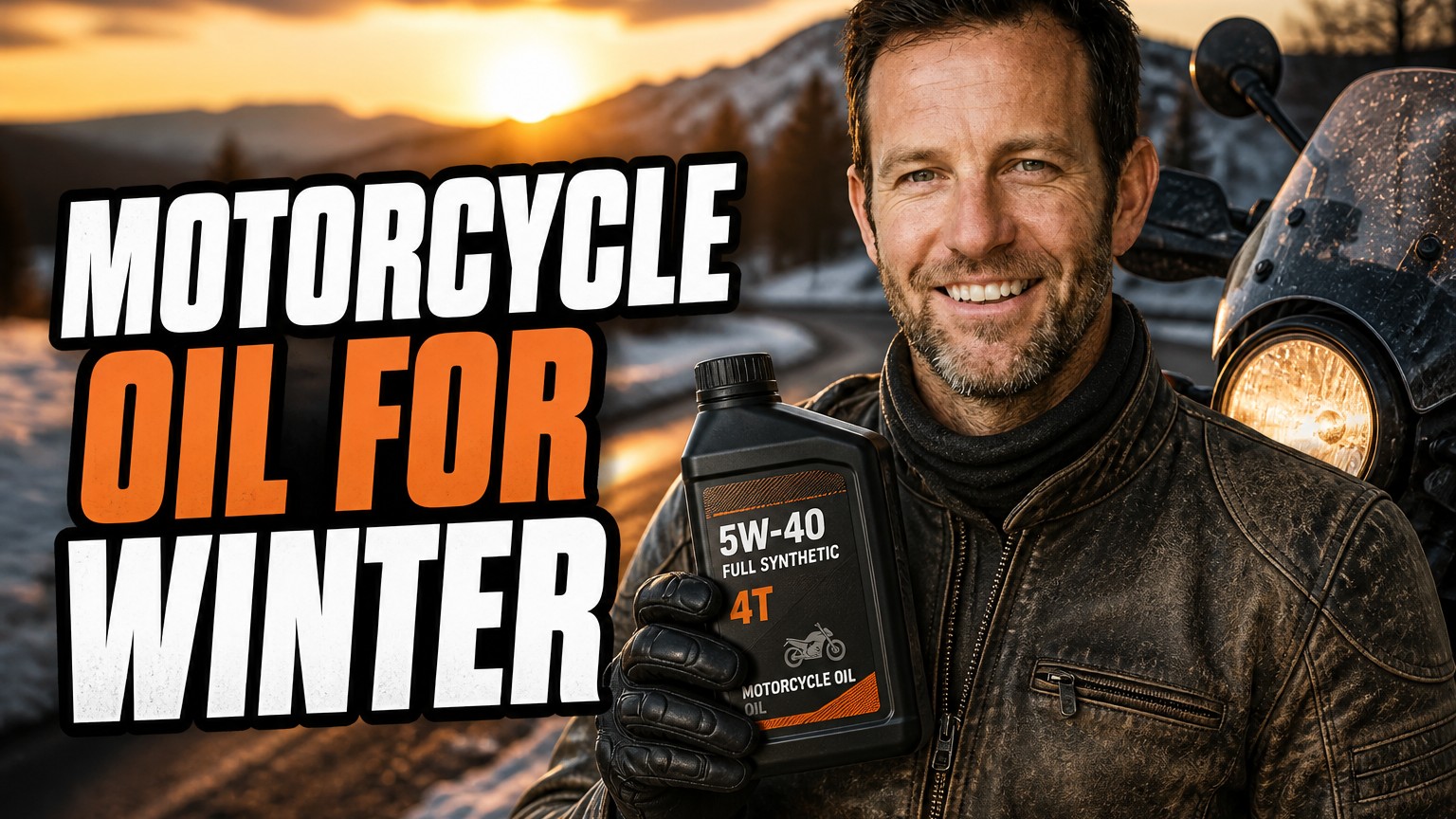
I’ve been riding through winter for well over a decade, and I can tell you the engine oil you choose matters more in January than in July. Cold mornings thicken the oil, slow its flow to the top end, and make every start a little harder on your engine. I learned that lesson the hard way, with a grumbling, sluggish bike on a frosty commute.
Since then I’ve tried plenty of oils in cold garages, on frosty back roads, and on short, stop-start winter commutes. Some made cold starts noticeably smoother. Others left my bike sounding rough until it warmed up.
In this guide I’m sharing the seven oils I trust most for cold-weather riding. I’ll explain why each one earns its place, who it suits, and what to watch out for. If you want broader background first, my guide to the best engine oil for motorcycle engines covers the year-round basics.
- Choose a full synthetic 5W-40 or 10W-40 with a JASO MA2 rating for most winter riding.
- Motul 7100 is my overall favorite, while Castrol Power1 4T is the best value pick.
- Always follow your owner’s manual for viscosity limits before going thinner.
- Fresh oil and a proper warm-up routine matter as much as the brand you choose.
What I Look for in a Winter Motorcycle Oil
Before the list, here is the checklist I use. It keeps me honest when a flashy label tries to sell me something I don’t need.
Cold-Flow Performance (the “W” Number)
The number before the “W” tells you how the oil behaves when cold. A 5W oil flows more easily at low temperatures than a 10W or 20W oil. On a frosty morning, that means oil reaches your cam lobes and bearings faster.
Most engine wear happens in the first few seconds after startup, so this matters a lot. That is why I lean toward lower W ratings in winter, as long as my manual approves them.
Synthetic Base and Shear Stability
Full synthetics and ester-based blends resist thickening in the cold and stay stable under heat. Winter riding often means short trips where the engine never fully warms up, and a quality synthetic handles that better than mineral oil.
JASO MA2 for Wet Clutches
Most motorcycles share oil between the engine, gearbox, and clutch. I only buy oils rated JASO MA or MA2 so the clutch grips properly. Skipping this check is one of the most common mistakes I see.
1. Motul 7100 4T 10W-40 — Best Overall Winter Oil
The Motul 7100 4T is the oil I reach for first when the temperature drops. It is a 100% synthetic, ester-based formula, and I notice the difference right at startup. The engine turns over smoothly, and the shifting stays crisp even on a cold gearbox.
Why I Love It
Motul 7100 is JASO MA2 rated and meets API SN standards, so it is safe for wet clutches. Esters cling to metal surfaces, which gives extra protection in those first seconds before everything warms up. It is available in several grades, including 5W-40, which I prefer for properly cold climates.
Things to Consider
It costs more than the supermarket options, usually around $14 to $18 per liter. Still, I think it’s worth it for bikes I ride hard or keep for the long haul. If you’re comparing options, it also shows up on most lists of the best motorcycle engine oil brand choices for good reason.
2. Castrol Power1 4T 10W-40 — Best Value for Daily Winter Commuting
If I had to recommend one oil to a friend on a budget, it would be Castrol Power1 4T 10W-40. It is a synthetic-blend formula that costs noticeably less than the premium full synthetics. It has been a reliable commuter oil for me over several cold seasons.
Real-World Performance
Castrol’s “Trizone” technology is designed to protect the engine, clutch, and gearbox together, and it carries a JASO MA2 rating. On my commuter bike, cold starts were consistent, and I never noticed clutch slip. It is easy to find at most auto and motorcycle shops, which is handy when your oil change can’t wait.
Who Should Skip It
If you ride a high-performance sportbike in sub-freezing temperatures, I’d step up to a full synthetic. For everyday commuting, though, Power1 is hard to beat at its price, usually $9 to $13 per liter.
3. Mobil 1 Racing 4T 10W-40 — Best for Sportbikes in the Cold
I ran Mobil 1 Racing 4T 10W-40 through a very cold winter on a high-revving inline-four, and it impressed me. It is a full synthetic designed for high-performance engines. It protects well when you are pushing hard, even on cold mornings.
What Stands Out
Mobil 1 Racing 4T meets JASO MA2 and holds up well against shear, which keeps viscosity stable on spirited rides. Engines with tight tolerances tend to reward this kind of oil. Gear shifts felt positive, and I noticed no clutch drag once everything warmed up.
The Trade-Off
It is a premium product, typically $12 to $17 per liter, and the 10W-40 grade isn’t the thinnest cold-flow option. In truly harsh climates, I’d compare it against a 5W-40 from another brand. Otherwise, it is a superb choice for sportbike riders.
4. Shell Advance Ultra 4 10W-40 — Best for Smooth Cold Starts on Everyday Bikes
The Shell Advance Ultra 4 10W-40 is a fully synthetic oil made with Shell’s PurePlus technology. I like it for mid-size standards, naked bikes, and tourers. It is smooth, quiet, and very consistent.
My Experience
On a crisp morning, my bike settled into a steady idle faster with Shell Advance Ultra 4 than with several mineral-based oils I’ve tried. It carries JASO MA2 approval, so wet clutches are fine. The engine also felt a bit quieter once warm, which I appreciated on long winter rides.
Availability Bonus
Shell products are easy to find worldwide. If you live in a region where shopping options are limited, see my notes on the best engine oil for 4 stroke motorcycle in india, where Shell and Castrol are common picks.
5. Liqui Moly Motorbike 4T Synth 10W-40 Street Race — Best European Option
The Liqui Moly Motorbike 4T Synth 10W-40 Street Race is a favorite among riders who like European engineering. It is a fully synthetic oil made with an ester-containing base. I’ve used it on a naked bike during cold, damp months.
Why It Works
This oil is JASO MA2 rated and designed for both high-performance street bikes and daily riders. It flows well from cold, and I’ve found it holds its performance over long intervals. Gear changes stayed light even on freezing days.
Price and Availability
It usually costs about $13 to $18 per liter. That puts it in the premium bracket, so I save it for bikes I really care about. It can be harder to find in some local shops, but online orders are easy.
6. AMSOIL 10W-40 Synthetic Motorcycle Oil — Best for Long-Distance Winter Touring
When I plan a long winter tour, I think about AMSOIL 10W-40 Synthetic Motorcycle Oil. It is a fully synthetic oil built for extended protection, and it handles repeated temperature swings well. That’s useful when you start in freezing temperatures and climb into warmer valleys.
What I Like
AMSOIL’s formula is JASO MA2 certified and resists breakdown under heat and stress. On a cold trip, the engine started cleanly each morning and ran without fuss. It is also well regarded for protection against wear and corrosion, which helps if you ride on salted roads.
Downsides
It is typically sold online or through dealers rather than at every shop. Prices are around $14 to $19 per liter. If you ride lots of miles in winter, I think the extra protection justifies the cost.
7. Royal Purple Max-Cycle 10W-40 — Best for Protection in Stop-and-Go Cold Riding
I use Royal Purple Max-Cycle 10W-40 when my winter riding involves lots of short trips and traffic. It is a synthetic oil with Royal Purple’s Synerlec additive technology. That formula clings to metal surfaces, which helps when the engine hasn’t fully warmed up.
My Take
Royal Purple Max-Cycle is JASO MA2 rated, and I never had clutch issues with it. Some riders say it feels smoother at idle and under load, and I agree. It is an excellent choice for cruisers and air-cooled engines that run hotter.
The Catch
It costs roughly $13 to $18 per liter and isn’t the thinnest option for deep-freeze climates. For moderate winters, though, it gives strong protection without drama.
How to Choose the Right Winter Oil for Your Bike
The best oil on paper isn’t always the best oil for your motorcycle. Here are the questions I ask myself before I buy.
Check Your Owner’s Manual First
Your manufacturer lists approved viscosity grades for different temperature ranges. I treat this chart as the final word. Going outside it can hurt performance or even void a warranty.
Match the Oil to Your Climate
- Mild winters (above 32°F / 0°C): a 10W-40 synthetic is fine for most bikes.
- Cold winters (around 14°F to 32°F / -10°C to 0°C): consider a 5W-40 or 10W-30 if approved.
- Severe cold (below 14°F / -10°C): a 5W-grade full synthetic is the safest choice.
Match the Oil to How You Ride
Short commutes are harder on oil than long rides because moisture and fuel don’t burn off. If that’s you, change your oil more often. For more depth on picking the right grade, my breakdown of the best motor oil for 4 stroke motorcycle engines walks through each option.
My Winter Oil Care Tips
Good oil only works if you treat it right. These habits have saved me a lot of grief over the years.
Warm Up Gently
I let the bike idle for 30 to 60 seconds, then ride gently for the first few miles. Don’t rev hard until the temperature gauge starts moving. This gives the oil time to circulate fully.
Change Oil More Often
Winter riding means more condensation in the crankcase. I shorten my change interval by about 20 to 30 percent if most of my rides are short. Fresh oil is cheap insurance.
Always Change the Filter
A new filter helps new oil do its job. I swap it every time. It costs a few dollars and protects an engine worth thousands.
Consider Pre-Winter Service
Before the cold sets in, I check my battery, chain, and fluids as well. A weak battery makes cold starts harder, and no oil can fix that. If you’re still comparing options, this list of the top engine oil for 4 stroke motorcycle engines is a useful reference.
Common Winter Oil Mistakes I See
- Using car oil in a wet-clutch bike. It can cause clutch slip.
- Going too thin. Ignoring your manual’s limits can reduce protection at operating temperature.
- Stretching oil changes. Cold, short rides contaminate oil faster than you’d think.
- Mixing random oils. It’s better to stick to one quality product.
Final Thoughts
If I had to pick just one, Motul 7100 4T is the oil I’d put in my own bike for the coldest months. For tight budgets, Castrol Power1 4T delivers real value. Every oil on this list is a solid, reliable choice when matched to the right bike and climate.
Check your manual, pick a good synthetic with JASO MA2 approval, and keep up with your changes. Do that, and your bike will start easier, run smoother, and last longer through every cold season. Ride safe out there, and stay warm.
Frequently Asked Questions
What viscosity is best for a motorcycle in winter?
For most modern 4-stroke bikes, a 5W-40 or 10W-40 synthetic is a great winter choice. The first number (the W number) tells you how well the oil flows when cold, so lower is better for freezing mornings. Always stay within the grades listed in your owner’s manual.
Can I use car oil in my motorcycle during winter?
I don’t recommend it for bikes with a wet clutch. Many car oils contain friction modifiers that can cause clutch slip. Look for a JASO MA or MA2 rating on the bottle instead.
Should I switch to a thinner oil in winter?
Only if your manual allows it. Many riders move from 20W-50 or 10W-40 to a 5W-40 or 10W-30 in very cold climates, but you should never go outside the manufacturer’s approved viscosity range.
Is synthetic oil better than mineral oil for cold weather?
Yes, in my experience. Full synthetic oils flow faster at low temperatures, protect better during cold starts, and resist thickening, which makes them the safest option for winter.

Related Articles
7 Best Batteries for Motorcycles I’ve Tested and Trust in 2026
I've tested dozens of motorcycle batteries to find the best performers. From AGM to lithium, here are my top picks…
Jake Miller
15 min read

The Perfect Battery for Your Harley Davidson Softail: A Rider’s Complete Guide
Discover the perfect battery for your Harley Davidson Softail. I've tested multiple options and share real-world performance data, maintenance tips,…
Jake Miller
14 min read

The Best Battery for Your Harley Davidson: My Complete Guide After Years of Testing
Discover which battery truly performs best for Harley Davidson motorcycles. Real rider experience with AGM, lithium, and OEM options to…
Jake Miller
12 min read