
6 Best Zero Motorcycles for City Riding: My Real-World Picks
 Jake Miller
10 min read
Jake Miller
10 min read
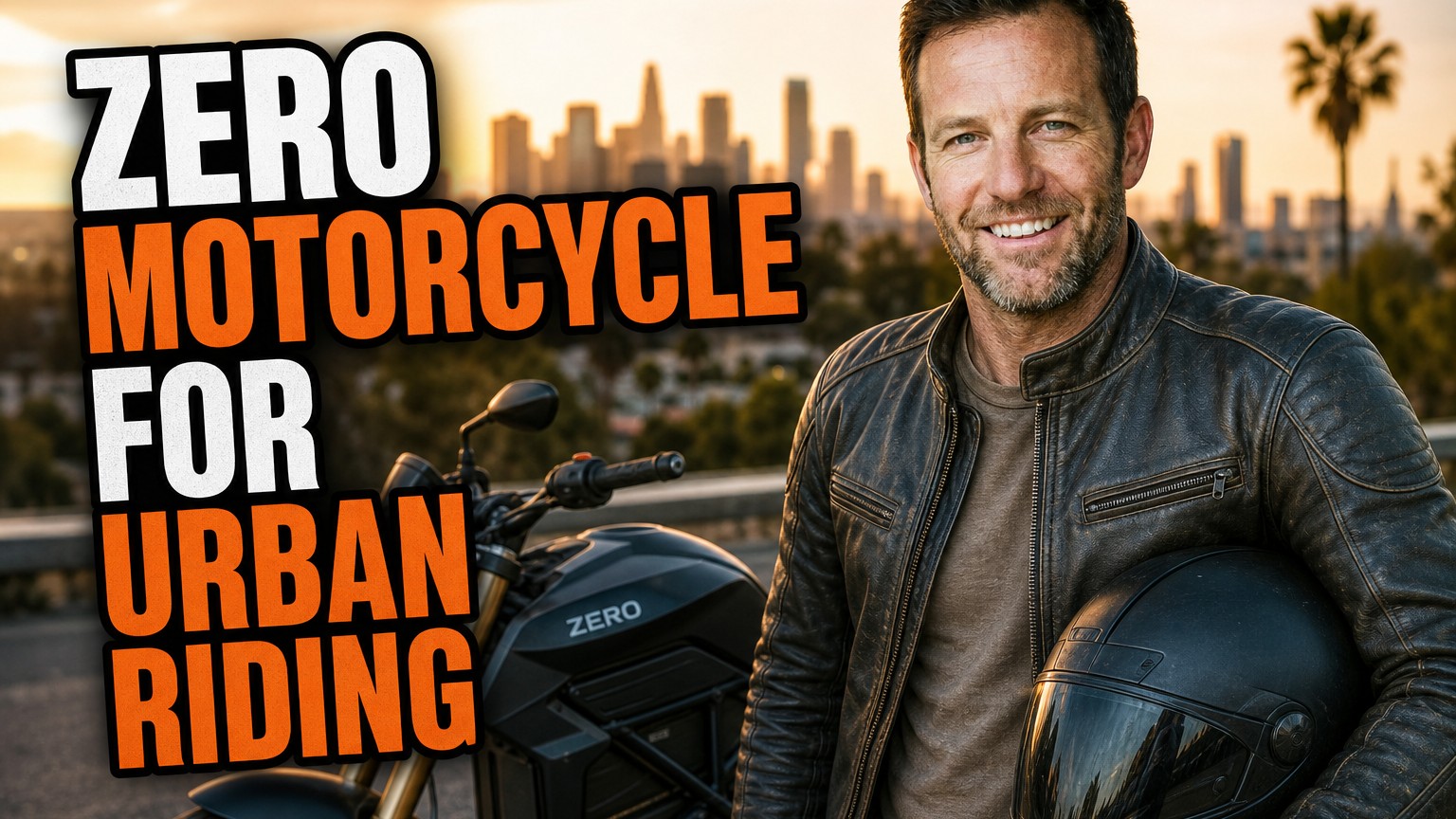
I’ve spent a lot of time threading electric motorcycles through stop-and-go traffic, tight parking garages and potholed side streets. Nothing has changed how I feel about my commute as much as swapping a gas bike for a Zero. There’s no clutch to feather, no heat on my legs, and no engine noise bouncing off the buildings.
Zero has a wide lineup, though, and not every model suits the city. In this guide I’ll share which ones I’d actually park in my garage for urban riding, and why. If you’re still comparing categories, my broader guide to the best motorcycle for urban riding is a good companion read.
- My top overall city pick is the Zero FXE: light, playful, and easy to park.
- The Zero DS is my choice for rough streets, and the Zero S is the most balanced all-rounder.
- If you have a long commute or ride on the highway, step up to the Zero SR or SR/F.
- Weight, seat height and real-world range matter more than top speed in town.
What I Look for in a City-Ready Electric Motorcycle
Before the list, here is how I judged each bike. City riding rewards different traits than canyon carving or highway touring. A bike that’s thrilling at 120 mph can be a headache at 5 mph in traffic.
Weight and Maneuverability
Low weight is the biggest deal for me. A light bike is easier to push out of a tight parking spot, easier to catch at a stoplight, and less intimidating when a delivery truck blocks the lane. I weighed this more heavily than almost anything else.
Real-World Range, Not Brochure Range
Zero’s claimed city range numbers are measured under ideal conditions. In my experience, expect about 70 to 80 percent of the claimed figure if you ride briskly or in cold weather. I always pick a bike with a comfortable buffer beyond my daily mileage.
Charging and Ownership Cost
I also considered how easy each bike is to charge at home or at work. Every Zero here plugs into a standard outlet. Maintenance is also minimal, with no oil changes, no valve checks, and no chain lubing on most models.
1. Zero FXE — Best Overall for Urban Riding
If I could only recommend one Zero for the city, it would be the Zero FXE. It’s a supermoto-style naked bike with upright ergonomics and a very low weight of roughly 300 lb. It feels more like a big bicycle than a motorcycle when you’re filtering through traffic.
Why I Love It
The FXE uses a 7.2 kWh battery and makes around 46 hp and 78 lb-ft of torque. That instant torque launches you away from stoplights before most cars react. Top speed is about 85 mph, which is more than enough for city arterials and short highway hops.
The seat is low and the handlebars are wide, so I felt in control from the first ride. The claimed city range is about 100 miles. In my real-world riding, that translates to a couple of days of commuting for me.
Things to Consider
The FXE is not a highway bike. Wind buffets you above 70 mph, and range drops quickly at those speeds. Pricing sits roughly in the low-to-mid $11,000 range, so it isn’t cheap. But for pure urban fun, I think it’s the best in the lineup.
2. Zero S — Best All-Rounder for Mixed City and Commuter Roads
The Zero S is the bike I recommend to riders who want a more conventional street-bike feel. It has a sporty-but-upright seating position, and the frame is very light for an electric. In traffic it feels agile and calm at the same time.
Performance and Comfort
With the 7.2 kWh battery, the Zero S makes around 60 hp and has a top speed of roughly 98 mph. That gives you the headroom to merge onto a freeway without sweating. The suspension is also more street-oriented than the FXE, so it feels settled on smooth pavement.
I like that it feels like a “normal” motorcycle while still being nearly silent and vibration-free. If you commute from the suburbs into town, the S covers both worlds well.
Things to Consider
Range varies depending on the battery and options you choose. The base 7.2 kWh pack has a claimed city range around 100 miles. If your ride is longer, look at configurations with extra capacity. Price lands in the low-to-mid teens, depending on the year and options.
3. Zero DS — Best for Rough Streets and Potholes
Every city has terrible pavement, and the Zero DS was built for exactly that. It’s a dual-sport with longer-travel suspension, a taller stance, and a more relaxed seating position. I find it easy to ride over speed bumps, tram tracks and broken asphalt without wincing.
Why It Works in Town
The DS has the same 7.2 kWh battery architecture as other Zeros in its class, with torque around 78 lb-ft. The tall seating position gives you a great view over traffic. That matters in cities where visibility is a safety tool.
The trade-off is seat height. The DS is noticeably taller than the FXE, so shorter riders may find it harder at stoplights. If that’s you, I’d test-sit one before buying.
Things to Consider
Price is in the low-to-mid $12,000 range for recent models. It’s a bit heavier than the FXE as well. Still, I think it’s the best Zero if your city looks more like a construction zone than a boulevard.
4. Zero FX — Best for Lighter, Simpler City Fun
The Zero FX is the FXE’s slightly more dirt-oriented sibling. It shares the basic lightweight chassis and punchy motor. I think of it as a quick, simple urban tool that can also handle a gravel path on the weekend.
Why I Like It
It feels nimble, and the controls are straightforward. The torque is strong enough to dart through gaps, and the weight is very manageable. If you want an electric bike that doesn’t take itself too seriously, the FX is a blast.
Compared with the FXE, the suspension setup is more trail-friendly and the riding position is a little different. For strictly paved commuting, I’d still lean toward the FXE. But the FX is an excellent choice if you value versatility.
Things to Consider
Like the FXE, range is limited at higher speeds. Availability and pricing vary by model year, so check current listings and dealer inventory before you commit.
5. Zero SR — Best for Long Commutes and Highway Stretches
Some of us live in sprawling metro areas where “city riding” means 40 miles of mixed freeway and surface streets. For that, I’d choose the Zero SR. It’s a serious bike with a much larger battery, making around 110 hp and 140 lb-ft of torque.
Range and Power
The SR’s larger pack (14.4 kWh) pushes claimed city range up to around 180 miles. That’s the kind of range that removes any anxiety about charging every night. It also has strong highway performance, with a top speed of roughly 120 mph.
The bike is heavier than the FXE, and I notice it when maneuvering at parking speeds. But once you’re moving, it’s smooth, planted and very confident in traffic.
Things to Consider
Price is a big step up, generally in the high teens. If you mostly ride short trips, I think that’s more bike than you need. But for a long mixed commute, the SR is exceptional.
If you ever need to carry someone, remember that passengers will reduce range. For that scenario, my guide to the best motorcycle for riding with a passenger has some useful pointers.
6. Zero SR/F — Best Premium Pick for Style and Tech
The Zero SR/F is the flagship naked bike in the lineup, and it’s the one that turns heads at every stoplight. It uses a large battery of roughly 15.6 kWh and pairs it with a powerful motor. It also gets the latest Cypher OS connected features, which let you tune ride modes and check the bike on your phone.
Why It’s Special
The SR/F makes around 110 hp and 140 lb-ft of torque, so acceleration is ferocious. Its claimed city range is roughly 160 to 200 miles, depending on model year and configuration. It also has a more premium suspension and brake package than the cheaper models.
In traffic, I love the customizable regen and ride modes. I can dial things back to be smooth in congestion, then open it up when the road clears.
Things to Consider
It’s the most expensive bike here, typically in the low-to-mid $20,000 range. It’s also the heaviest, at around 500 lb. If you want pure urban practicality, the FXE gives you 80 percent of the fun for about half the price.
How to Choose the Right Zero for Your City
My advice is to start with your daily mileage and your street conditions. Be honest about how far you ride, and add a safety buffer of at least 30 percent. Then think about weight and seat height, because those affect confidence more than horsepower does.
Quick Matching Guide
- Short, tight, congested commute: Zero FXE or Zero FX.
- Mixed city and freeway: Zero S.
- Rough roads and potholes: Zero DS.
- Long commute with highway miles: Zero SR.
- Premium tech and performance: Zero SR/F.
Think About Weather
Electric bikes handle wet roads fine, but your tires, gear and riding style matter more than the powertrain. If your city gets frequent downpours, read my take on the best motorcycle for riding in the rain. Cold weather also cuts battery range noticeably, so plan for that.
If you ride in real winter conditions, my guide to the best motorcycle for riding in snow is worth a look. Honestly, I’d park any street-focused Zero when there is ice on the road.
Charging and Ownership Tips From My Garage
Most of my charging happens at home overnight on a regular outlet. It’s slow but effortless, and I never need a gas station. If your workplace has an outlet, topping up during the day can double your effective range.
Habits That Stretch Range
- Keep tires properly inflated.
- Use the eco or lower-power ride modes in dense traffic.
- Use regen braking to recapture energy at stop-and-go speeds.
- Avoid sustained high speeds when possible.
These small habits made a real difference for me. Together, they can add 10 to 15 percent more range without slowing your commute much.
Security and Parking
Lightweight electrics are easier to steal, so I always use a quality disc lock and a ground anchor. I also keep the bike’s app alerts turned on where available. A few minutes of precaution beats a lot of regret.
Final Thoughts: My Pick for the City
After riding and comparing these bikes, my top recommendation remains the Zero FXE. It’s light, quick, fun and perfectly sized for urban life. If your needs differ, one of the other five will almost certainly fit.
If you’re considering something smaller and gas-powered for two-person trips, I also put together a guide to the best 300cc motorcycle for 2 up riding. And if you can, always test ride before you buy. Specs on paper never replace the feel of a bike in your own city traffic.
Note: prices, range figures and specs change by model year and market, so confirm current details with a Zero dealer before purchasing.
Frequently Asked Questions
Which Zero motorcycle is best for city commuting?
For most riders I recommend the Zero FXE. It is light, nimble, has a low seat, and its roughly 100-mile claimed city range covers most daily commutes. If you want more range and a lower price, the Zero S and Zero DS are strong alternatives.
How far can a Zero motorcycle go in city riding?
It depends on the battery. The 7.2 kWh models, such as the FXE, FX, S and DS, claim around 100 miles of city range. Models with the larger 14.4 kWh or 15.6 kWh packs, such as the SR and SR/F, claim well over 150 miles. Real-world range is lower if you ride fast, carry a passenger, or ride in the cold.
Can I charge a Zero motorcycle at home?
Yes. Every Zero can charge from a standard household outlet using the onboard charger. A full charge on the smaller battery usually takes several hours, and an optional accessory charger or Charge Tank speeds it up. Check the current spec for your model and year.
Are Zero motorcycles expensive to maintain?
No. They have no oil changes, spark plugs, clutch or valve adjustments. Most upkeep is tires, brake pads and fluid, and a belt on most models. That is one reason I find them so appealing for daily city use.

Related Articles
7 Best Batteries for Motorcycles I’ve Tested and Trust in 2026
I've tested dozens of motorcycle batteries to find the best performers. From AGM to lithium, here are my top picks…
Jake Miller
15 min read

The Perfect Battery for Your Harley Davidson Softail: A Rider’s Complete Guide
Discover the perfect battery for your Harley Davidson Softail. I've tested multiple options and share real-world performance data, maintenance tips,…
Jake Miller
14 min read

The Best Battery for Your Harley Davidson: My Complete Guide After Years of Testing
Discover which battery truly performs best for Harley Davidson motorcycles. Real rider experience with AGM, lithium, and OEM options to…
Jake Miller
12 min read