
7 Best Motorcycles for Wet Weather Riding: Rain-Tested Picks I’d Actually Buy
 Jake Miller
10 min read
Jake Miller
10 min read
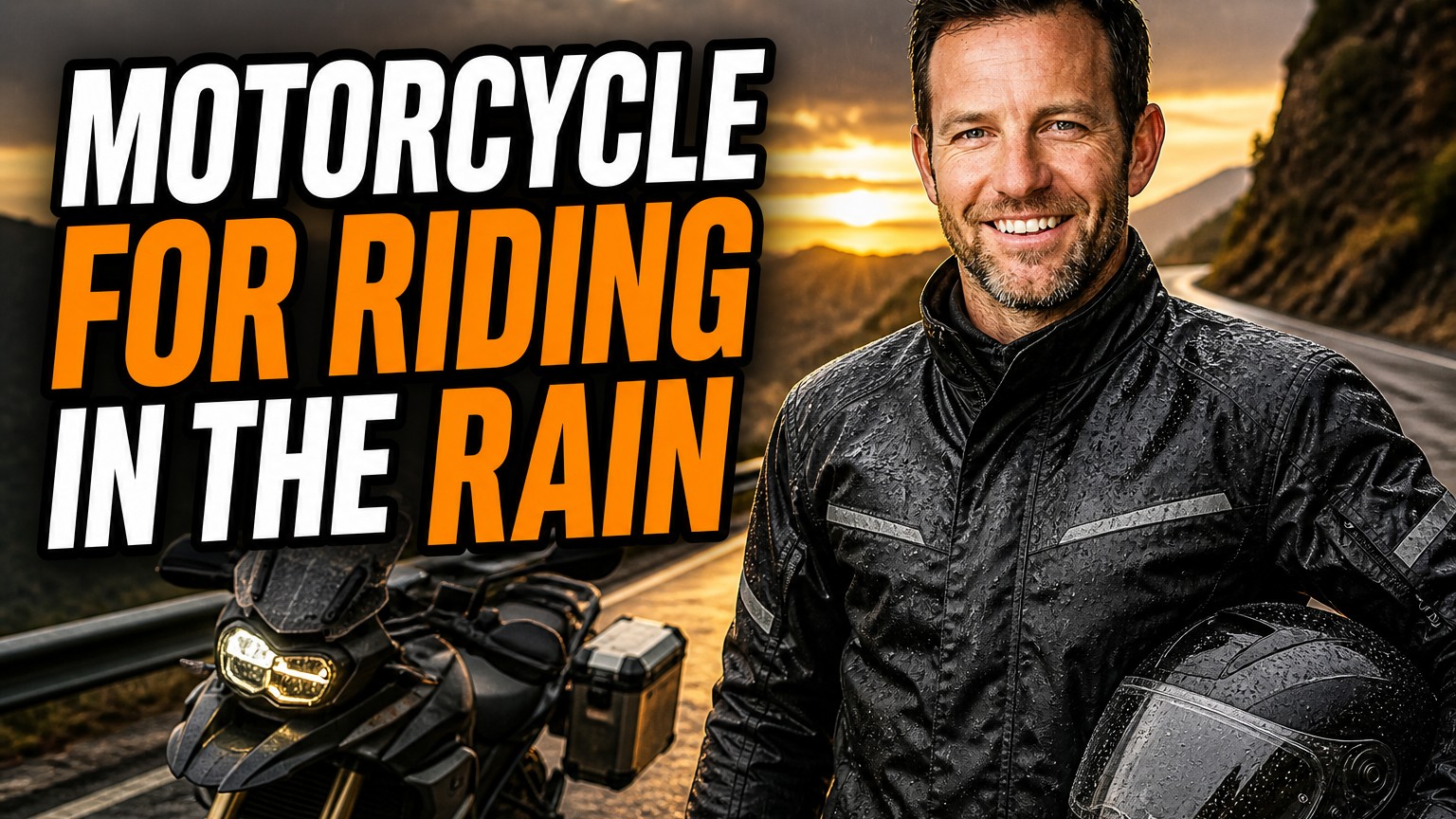
I’ve been caught out in downpours more times than I can count. Some of those rides were miserable, and a few were weirdly wonderful. The difference almost always came down to the bike underneath me.
A good rain bike keeps the water off your chest, tells you what the tires are doing, and quietly corrects your mistakes. A bad one leaves you cold, wet, and white-knuckled. After years of commuting, touring, and getting soaked on purpose, I’ve narrowed down the machines I trust most when the sky opens up.
Here are seven bikes I’d happily ride in a storm, plus the features that matter and the habits that keep you upright.
- Rain-friendly bikes combine wind protection, traction control, cornering ABS, and a planted chassis.
- My top overall pick is the BMW R 1300 GS. The Honda Gold Wing Tour is the most comfortable, and the Honda NT1100 is the best value.
- On a tighter budget, the Suzuki V-Strom 650 XT offers great wet-weather confidence for around $10,000.
- Tires, waterproof gear, and smooth riding matter as much as the bike itself.
What Makes a Motorcycle Good in the Rain?
Before the list, let me explain how I judge a bike in the wet. It’s not about horsepower or looks. It’s about how much stress the bike removes from the ride.
Electronics That Actually Help
Traction control and cornering ABS are the biggest safety upgrades for wet roads. Rain riding modes soften throttle response so a twitchy wrist doesn’t spin the rear tire on a painted crosswalk.
I won’t buy a dedicated rain bike without at least switchable traction control. A six-axis IMU is even better, because it reads lean angle and adjusts accordingly.
Weather Protection
Staying dry keeps you alert. An adjustable windscreen, hand guards, and a decent fairing keep the worst of the spray off you. Heated grips and a heated seat are a huge bonus when the temperature drops with the clouds.
Stability and Weight
Heavier, longer-wheelbase bikes tend to feel calm in the wet, with fewer nervous wiggles over wet steel plates and grooved pavement. But I’m not just chasing weight. A bike that’s too heavy becomes a handful in a slippery parking lot, so I look for balance.
1. BMW R 1300 GS: Best Overall Rain Machine
If I could only own one bike for year-round weather, the BMW R 1300 GS would be near the top of my list. It uses a 1,300cc boxer twin with a smooth, tractable torque curve. That matters when the road is slick and you don’t want surprises.
The R 1300 GS carries a full electronics suite, including Dynamic Traction Control, ABS Pro for cornering, and selectable riding modes with a dedicated Rain mode. At roughly 237 kg (about 523 lb) ready to ride, it feels planted rather than nervous.
Why I Love It in the Wet
The tall, adjustable windscreen and upright seating put me in a pocket of calm air. Optional heated grips and seat make cold rain far more tolerable. Add the semi-active suspension, and the bike glides over rough, wet pavement.
Expect to pay around $20,000 and up, depending on packages. It’s not cheap, but it’s the most complete wet-weather tool I’ve ridden. If you’re planning to carry a passenger, my guide to the best adventure motorcycle for 2up riding covers similar bikes in more detail.
2. Honda Gold Wing Tour: Best for Pure Comfort
The Honda Gold Wing Tour is a rolling living room, and I mean that as a compliment. Its 1,833cc flat-six is silky and quiet, and the big fairing deflects rain better than anything else here.
Honda’s Selectable Torque Control gives you traction management, and the riding modes include a Rain setting. The electrically adjustable windscreen, heated grips, heated seat, and cruise control make long wet days feel easy.
The Trade-Offs
It weighs over 800 lb, and you feel that in tight parking lots. Once rolling, though, the low center of gravity makes it shockingly stable. The Tour trim with the DCT automatic also means one less thing to think about in traffic.
Pricing starts around $30,000 and climbs from there. It’s a luxury choice, but if you ride hundreds of miles in all conditions, it’s hard to beat.
3. Honda NT1100: Best Value for Rainy Commutes
The Honda NT1100 is my favorite sleeper pick. It takes the 1,084cc parallel twin from the Africa Twin and wraps it in a proper touring fairing with standard panniers, hand guards, and cruise control.
It includes Honda Selectable Torque Control and multiple riding modes, including Rain. The optional DCT gearbox is brilliant on wet commutes, because shifts are seamless and you never fumble a clutch with cold, soggy gloves.
Real-World Notes
At about 238 kg with DCT, the NT1100 is manageable and confidence-inspiring. The manual windscreen is easy to adjust, and heated grips are standard. Prices run roughly $11,000 to $13,000 depending on transmission.
If you want to go smaller, I put together a list of the best 300cc motorcycle for 2 up riding. Those lighter bikes can be easier to live with in town, though they offer less protection.
4. Yamaha Tracer 9 GT+: Best Sport-Touring Option
Want your rain bike to still be fun? The Yamaha Tracer 9 GT+ is my answer. Its 890cc triple is torquey and lively, but the electronics keep it civil when the road turns greasy.
A six-axis IMU powers traction control, slide control, and cornering ABS. The GT+ adds radar-based adaptive cruise control and semi-active KYB suspension. Adaptive cruise is surprisingly useful in rain, because it helps maintain following distance in spray.
Where It Shines
The bike is relatively light at around 485 lb, so it flicks through wet corners without drama. Hard luggage is included, and the fairing handles spray well. Expect to pay about $17,000 to $18,000.
My only gripe is that the windscreen could offer more coverage for taller riders. A taller aftermarket screen fixes that easily.
5. Triumph Tiger 900 GT Pro: Best for Confident Handling
The Triumph Tiger 900 GT Pro has one of the best-sorted chassis I’ve ridden in slippery conditions. The 888cc T-plane triple has a linear, friendly power delivery that makes rolling on the throttle in a wet corner feel natural.
The Pro trim includes Showa semi-active suspension, cornering ABS, switchable traction control, and multiple riding modes, including a dedicated Rain mode. A quickshifter and heated grips and seat come standard on the Pro.
My Experience
I once rode a Tiger 900 through three hours of steady rain in the mountains. What stuck with me was how calm it felt. The steering was predictable, and the traction control stayed quietly in the background.
Pricing is roughly $16,000 to $17,000. It’s a great middle ground between a heavy tourer and a sporty roadster.
6. Suzuki V-Strom 650 XT: Best Budget Wet-Weather Bike
Not everyone has $20,000 to spend, and you shouldn’t need to. The Suzuki V-Strom 650 XT is one of the best bargains in motorcycling, usually priced around $9,000 to $10,000.
Its 645cc V-twin is smooth and reliable, and it comes with three-level traction control and ABS. The adjustable windscreen, upright ergonomics, and approximate 470 lb weight make it forgiving and easy to live with.
What It Lacks
You won’t get a rain mode, semi-active suspension, or a cornering IMU. But the basics are solid, and the bike encourages smooth riding. Add handguards and heated grips, and you have a very capable all-weather machine for a fraction of the cost.
7. Honda Africa Twin Adventure Sports ES: Best for Rough, Wet Roads
Rain often means mud, gravel, and broken pavement, and that’s where the Honda Africa Twin Adventure Sports ES comes in. The 1,084cc parallel twin has loads of torque, and the long-travel Showa EERA electronic suspension soaks up bad surfaces.
It has a six-axis IMU, cornering ABS, wheelie control, and selectable torque control, with riding modes tailored to wet conditions. The big tank and tall windscreen also make it a superb long-distance bike.
Things to Consider
The seat is tall, and the bike is hefty at roughly 520 lb or more depending on spec. If you’re shorter, test the fit carefully. For taller riders who want a wet-weather bike that can leave the pavement, though, it’s superb. Prices start around $16,000 and climb for the Adventure Sports ES.
How I Keep a Rain Bike Ready for Wet Rides
Even the best bike can let you down if you neglect it. Water is brutal on chains, brakes, and electrical connections, so I follow a few habits after wet rides.
Maintenance Basics
I wash off road grime, dry the bike, and lube the chain promptly. Brake pads, tires, and fluid levels get frequent checks, since wet weather accelerates wear. I also keep a close eye on engine oil, because short, wet commutes can cause condensation in the crankcase.
Choosing the right lubricant matters here. If you want a deep dive, check my breakdown of the best motor oil for 4 stroke motorcycle engines. I also compared options in my guide to the top engine oil for 4 stroke motorcycle riders.
If you ride in humid, monsoon-heavy climates, my article on the best engine oil for 4 stroke motorcycle in india covers conditions that really test an engine.
Tires Are Non-Negotiable
I can’t overstate this. A mediocre tire on an amazing bike is a bad rain bike. I choose sport-touring or adventure-touring rubber with a high-silica compound, and I check pressures weekly.
Replace tires early. Tread depth and compound age both affect wet grip, and old tires harden even if they still look fine.
My Rain-Riding Tips for Staying Safe
Be Smooth With Everything
Brake, lean, and accelerate gently. Sudden inputs are what break traction. I treat the controls as if I’m carrying a cup of coffee on the tank.
Watch the Slippery Spots
Painted lines, manhole covers, tar snakes, and metal bridge grates are the usual villains. The first 15 minutes of rain are the worst, when oil lifts to the surface. I slow down and increase my following distance during that window.
Dress for the Ride
Quality waterproof gear changes everything. A dry rider thinks clearly and reacts faster. I carry spare gloves, because soaked gloves make it hard to feel the controls.
Use High-Visibility Gear
Rain cuts visibility for everyone. Bright jackets, reflective details, and a clean visor help drivers see me. I also use a pinlock visor or anti-fog insert so I can see clearly too.
Final Thoughts: Which One Should You Choose?
If money isn’t a concern, the BMW R 1300 GS is the most capable all-rounder I’ve used in bad weather. The Honda Gold Wing Tour wins for sheer comfort, and the Honda NT1100 is the smartest value.
For a sportier feel, I’d pick the Tracer 9 GT+ or Tiger 900 GT Pro. On a budget, the V-Strom 650 XT is hard to argue with. If your rainy roads turn rough, the Africa Twin Adventure Sports ES is the one.
Whichever you choose, test ride it, fit good tires, and dress properly. Rain doesn’t have to ruin a ride, and with the right bike it can become one of your favorite ways to travel.
Frequently Asked Questions
What type of motorcycle is best for riding in the rain?
Sport-touring and adventure-touring bikes are usually the best. Look for full fairings, adjustable windscreens, cornering ABS, traction control, a dedicated rain mode, and a stable chassis with a bit of weight.
Is it safe to ride a motorcycle in the rain?
Yes, if you adjust your riding. Smooth inputs, extra following distance, good tires, and waterproof gear matter most. Electronic aids like traction control and ABS add a real safety margin on slick pavement.
Do heavier motorcycles handle rain better?
Often, yes. Extra weight and a long wheelbase tend to feel planted and calm on wet roads. Weight only helps if the bike also has good electronics and tires, and it makes low-speed maneuvering harder.
Which tires are best for riding a motorcycle in the rain?
Choose a quality sport-touring or adventure-touring tire with a high silica compound and deep sipes, and keep it at the correct pressure. Replace worn tires early, because tread depth and compound age make a big difference in the wet.

Related Articles
7 Best Batteries for Motorcycles I’ve Tested and Trust in 2026
I've tested dozens of motorcycle batteries to find the best performers. From AGM to lithium, here are my top picks…
Jake Miller
15 min read

The Perfect Battery for Your Harley Davidson Softail: A Rider’s Complete Guide
Discover the perfect battery for your Harley Davidson Softail. I've tested multiple options and share real-world performance data, maintenance tips,…
Jake Miller
14 min read

The Best Battery for Your Harley Davidson: My Complete Guide After Years of Testing
Discover which battery truly performs best for Harley Davidson motorcycles. Real rider experience with AGM, lithium, and OEM options to…
Jake Miller
12 min read