
Exhaust Baffle Wrap: My Real-World Guide to a Quieter, Better-Flowing Muffler
 Jake Miller
11 min read
Jake Miller
11 min read
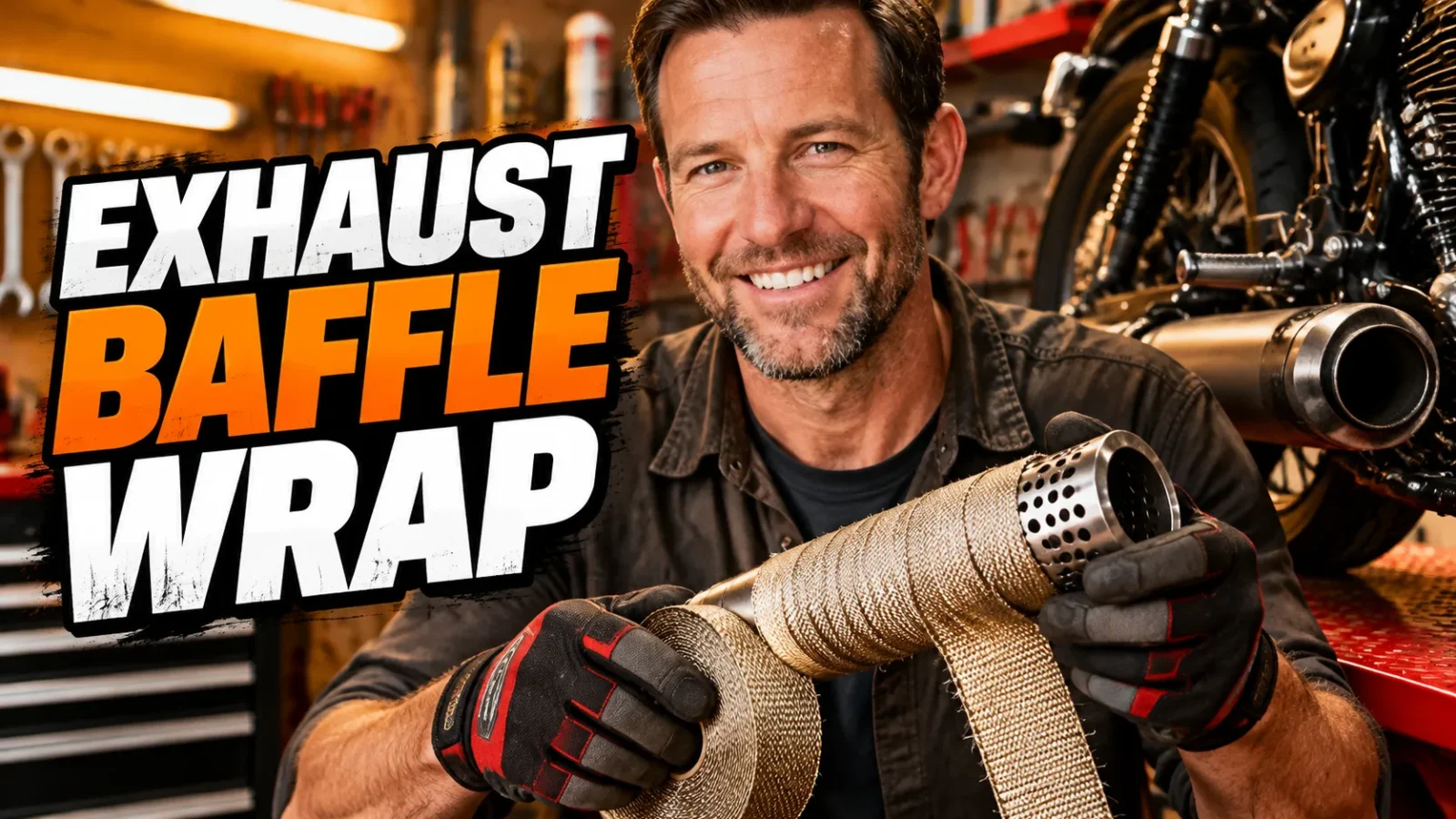
I still remember the first time I pulled the baffle out of my old twin-cylinder commuter. The muffler had gone from a deep thump to a raspy bark that woke up my neighbors. I figured I needed a new exhaust, but a mechanic friend handed me a roll of exhaust baffle wrap and said, “Try this first.” Two hours later, my bike sounded smoother, quieter, and somehow more alive. I’ve been repacking my own mufflers ever since.
That first repack taught me something important: exhaust baffle wrap is not just cheap stuffing. It is a tuning tool for sound, heat, and backpressure. Used correctly, it can save you hundreds of dollars and make any aftermarket can feel custom. Used badly, it can choke power, burn through in a week, or turn your exhaust note into a tinny mess.
In this guide, I’m sharing everything I’ve learned from wrapping baffles on street bikes, dual-sports, and a couple of track-only machines. I’ll cover materials, step-by-step wrapping, mistakes I made so you don’t have to, and how to decide when a repack is actually worth it.
- Exhaust baffle wrap absorbs sound and protects the muffler packing, but it must be heat-rated for exhaust use.
- Fiberglass, ceramic, basalt, and stainless steel wool are the main options, and each behaves differently.
- Wrap tightly and evenly, but do not pack so much that you block exhaust flow.
- Most riders need a repack every 10,000 to 20,000 miles, or whenever the exhaust gets suddenly louder.
- Done right, a repack keeps the tone deep and reduces heat without killing peak horsepower.
Why I Started Wrapping My Exhaust Baffles
My first repack was purely practical. I was broke, my exhaust was obnoxious, and I didn’t want to buy a whole new system. But once I opened the muffler, I realized how simple the inside really is. A perforated core, a chamber, and packing material. That’s it. The packing is what turns harsh noise into a tolerable rumble.
Over the years, I’ve repacked exhausts for friends who thought their cans were “blown.” In almost every case, the metal was fine. The packing had simply burned away, packed down, or been installed wrong from the factory. A fresh layer of exhaust baffle wrap brought the sound back to life.
The Moment I Realized Packing Matters
I once bought a used slip-on that sounded amazing for the first week. Then it got louder and raspier. I assumed the previous owner had abused it. When I opened it up, the old fiberglass had turned into a brittle, blackened sheet that crumbled in my hands. The core was fine, but there was nothing left to absorb sound.
After wrapping it with a quality ceramic blend, the difference was immediate. The sharp crackle disappeared. The low-end thump returned. I didn’t measure horsepower, but the bike felt smoother on part-throttle. That experience convinced me that packing condition is one of the most overlooked parts of exhaust maintenance.
What Exhaust Baffle Wrap Actually Does
People often call it “muffler packing,” “baffle wrap,” or “exhaust blanket.” They all describe the same basic idea: a heat-resistant material wrapped around the perforated core inside your muffler. But the job is more complex than just filling empty space.
Sound Absorption, Not Just Stuffing
Sound waves pass through the perforated core and hit the packing. The material’s fibers vibrate and convert some of that acoustic energy into tiny amounts of heat. That reduces the sharp, high-frequency noise that makes exhausts sound tinny and annoying.
The thickness and density of the wrap matter. Too thin, and it won’t absorb much. Too dense, and it can reflect sound or restrict flow. I’ve found that moderate density with an even wrap gives the best balance for street riding.
Heat Management and Baffle Life
Exhaust gases are hot. The packing acts as a thermal buffer between the hot core and the outer muffler can. Without it, the can gets hotter, the metal expands more, and nearby bodywork or luggage can suffer.
I ride in traffic a lot, so heat management matters to me. A good wrap keeps the outer shell cooler and reduces the chance of cooking my saddlebags or melting a plastic panel. It also protects the core from vibration damage by holding it more securely inside the can.
The Difference Between Packing and Wrapping
“Packing” often refers to loose strands or sheets stuffed into the muffler. “Wrapping” means winding a sheet or tape around the core. I prefer wrapping because it gives me control over thickness and density. Loose packing can shift, burn unevenly, or blow out the back. A tight wrap stays put.
Materials I’ve Tried and What I Recommend
Not all exhaust baffle wrap is created equal. I’ve experimented with several materials, and each has trade-offs. Here’s my honest take from real-world use.
Fiberglass Exhaust Wrap
Fiberglass is the most common and usually the cheapest. It handles high heat well and absorbs sound effectively when new. The downside is longevity. On a hot-running twin or a bike that sees track time, fiberglass can break down faster than I’d like.
I still use fiberglass for budget repacks, but I double-layer it and check it after a few thousand miles. If you ride gently and want a low-cost fix, it works. If you ride hard, save up for something better.
Ceramic and Basalt Blends
Ceramic and basalt fibers are my go-to for street bikes. They resist higher temperatures, hold their shape longer, and don’t itch as badly as raw fiberglass. The sound absorption is slightly different, often a bit deeper and less raspy.
I’ve had ceramic blends last over 20,000 miles on a daily rider. That’s impressive for a consumable part. They cost more upfront, but the labor is the same. I’d rather repack once than three times.
Stainless Steel Wool and Hybrid Wraps
Stainless steel wool is tough and won’t burn away, but it doesn’t absorb sound as well on its own. Some hybrid wraps combine steel wool with fiberglass or ceramic to get durability and noise reduction. I’ve used these on dual-sports that see mud, water, and constant abuse.
The steel wool layer protects the softer fibers from direct heat and debris. It’s heavier and can be scratchy to work with, but it lasts. If you ride in wet or dusty conditions, a hybrid wrap is worth considering.
My Top Pick for Most Riders
For a typical street bike, I recommend a ceramic fiber wrap with a stainless steel core wrap if available. It handles heat, lasts a long time, and gives a deep, controlled exhaust note. I’ve had the best luck with this combo on everything from 300cc singles to 1,200cc twins.
How I Wrap a Baffle Step by Step
Wrapping a baffle is not difficult, but patience pays off. I’ve rushed it before and ended up with a lumpy, uneven layer that burned through in one spot. Here’s the process I use now.
Step 1: Remove and Inspect
First, remove the muffler from the bike and take out the baffle or core. Inspect the perforated tube for cracks, warping, or clogged holes. If the core is damaged, no amount of wrap will fix it. Clean the inside of the can with a wire brush and brake cleaner.
I also check the end caps and rivets. Loose rivets can cause rattles that sound like packing failure. Tighten or replace them before you reassemble.
Step 2: Measure and Cut
Measure the length of the core and add a few inches of overlap. Cut a strip of exhaust baffle wrap that is wide enough to cover the core when wrapped. I usually cut mine about 1.5 times the core diameter to allow for overlap.
Wear gloves and a mask. Fiberglass and ceramic fibers are itchy and not great to breathe. I learned that the hard way after a sleepless night of scratching.
Step 3: Wrap Tight and Even
Start at one end and wrap spirally toward the other. Keep tension consistent. You want the wrap tight enough to stay in place, but not so tight that it compresses into a solid brick. Over-compression reduces sound absorption and can restrict flow.
I use stainless steel safety wire or high-temp tape every few inches to hold the wrap while I work. Don’t rely on the muffler can to hold it. It will shift when you slide it back in.
Step 4: Secure and Reinstall
Once wrapped, secure the ends with stainless steel wire or a metal clamp. Avoid plastic zip ties, even “high-temp” ones. They will melt and leave a mess. I then slide the core back into the can gently, twisting slightly to avoid tearing the wrap.
Reinstall the muffler and tighten all bolts to spec. Don’t overtighten, especially on aluminum flanges. I’ve stripped a few threads in my early days, and it’s a painful lesson.
Step 5: Heat Cycle and Re-Torque
Start the bike and let it idle for a few minutes, then cool completely. This heat cycle helps the wrap settle. After it cools, re-check the bolts and clamps. I usually re-torque after the first ride and again after 100 miles.
You may notice a slight smell or light smoke during the first heat cycle. That’s normal for new packing. If it persists or smells like burning plastic, stop and check for packaging or ties you forgot to remove.
Mistakes I Made So You Don’t Have To
I’ve made plenty of mistakes with exhaust baffle wrap. Some were cheap. Some cost me a whole weekend. Here are the ones I see most often, and how I avoid them now.
Over-Wrapping and Choking Flow
My worst mistake was packing a muffler too full. I thought more material meant quieter sound. Instead, I created backpressure, lost top-end power, and made the exhaust run hotter. The bike felt flat and sluggish.
Now I aim for a firm but breathable wrap. If I can’t slide the core back into the can with moderate effort, I remove a layer. Flow matters more than maximum quiet on a tuned engine.
Using the Wrong Tape or Zip Ties
I once used regular duct tape to hold the wrap during installation. It burned, smelled terrible, and left sticky residue inside the can. Never use anything that isn’t rated for high heat. Stainless wire is cheap and works perfectly.
Plastic zip ties are even worse. They melt into a gooey mess that can clog the core. I’ve spent an hour picking melted plastic out of a friend’s muffler. Learn from our pain.
Skipping the Heat Cycle
It’s tempting to ride immediately after a repack. But skipping the heat cycle means the wrap doesn’t settle evenly. I’ve had wraps shift and develop hot spots that burned through early. A few minutes of idling and cooling makes a big difference.
How Often Should You Repack?
There’s no single answer, but I use a simple rule: repack when the sound changes. If your exhaust suddenly gets louder, raspier, or starts popping more on decel, the packing is probably gone. On a street bike, I check every 10,000 miles and repack by 20,000 miles.
Track bikes and high-revving singles need more frequent attention. I’ve seen fiberglass packing fail in under 5,000 hard miles. Ceramic and hybrid wraps last longer, but they still wear out. Regular inspection is the only way to know for sure.
Does Exhaust Baffle Wrap Affect Performance?
Yes, but not always in the way people think. A proper repack can restore lost torque by maintaining correct backpressure. It can also reduce heat soak, which helps intake temps and overall consistency. But it won’t add peak horsepower like a tune or a full exhaust.
If you wrap too tightly or use too much material, you can lose power. The engine has to push exhaust gases through a restricted path. That’s why I always recommend a moderate, even wrap rather than cramming the can full. Balance is everything.
For most riders, the biggest gain is acoustic. The bike sounds better, runs cooler, and feels more refined. That’s worth the cost and effort alone.
My Final Take
Exhaust baffle wrap is one of those small maintenance jobs that punches above its weight. It’s cheap, satisfying, and teaches you a lot about how your bike breathes and sounds. I’ve saved old exhausts from the scrap pile with nothing more than a roll of quality wrap and an afternoon of patience.
If you’re chasing a deeper tone, less heat, or a quieter ride without losing character, start here. Choose a heat-rated material, wrap evenly, secure it properly, and don’t overdo it. Your ears, your neighbors, and your horsepower curve will thank you.
Frequently Asked Questions
What is exhaust baffle wrap?
It is a heat-resistant material, usually fiberglass or ceramic, that you wrap around the baffle or core inside a muffler to absorb sound and protect the packing.
How often should I replace exhaust baffle wrap?
Most riders I know repack every 10,000 to 20,000 miles, or sooner if the exhaust gets noticeably louder or starts rasping.
Can I use regular fiberglass insulation?
No. Hardware-store insulation is not made for exhaust heat. Use purpose-built muffler packing or a high-temperature wrap that can handle 1,200°F or more.
Does baffle wrap reduce horsepower?
If you wrap too tightly or use too much material, yes. A correct repack mainly changes sound and heat, not peak power.

Related Articles

White Smoke on Startup That Vanishes: What I’ve Learned After Years of Cold Mornings
White smoke from your exhaust on startup that vanishes? I explain when that puff is harmless condensation and when it…
Jake Miller
9 min read

Loss of Power and Black Smoke From a Diesel? Here’s How I Track Down the Real Cause
Black smoke plus power loss in a diesel almost always means too much fuel and not enough air. I share…
Jake Miller
9 min read

Black Smoke From Your Exhaust at Startup? What I Found After Years of Chasing It
Black smoke from the exhaust when starting usually means a rich fuel mixture. I'll walk through the real causes I've…
Jake Miller
8 min read