
7 Best Air Compressors for Motorcycle Tires I Trust on Every Ride
 Jake Miller
9 min read
Jake Miller
9 min read
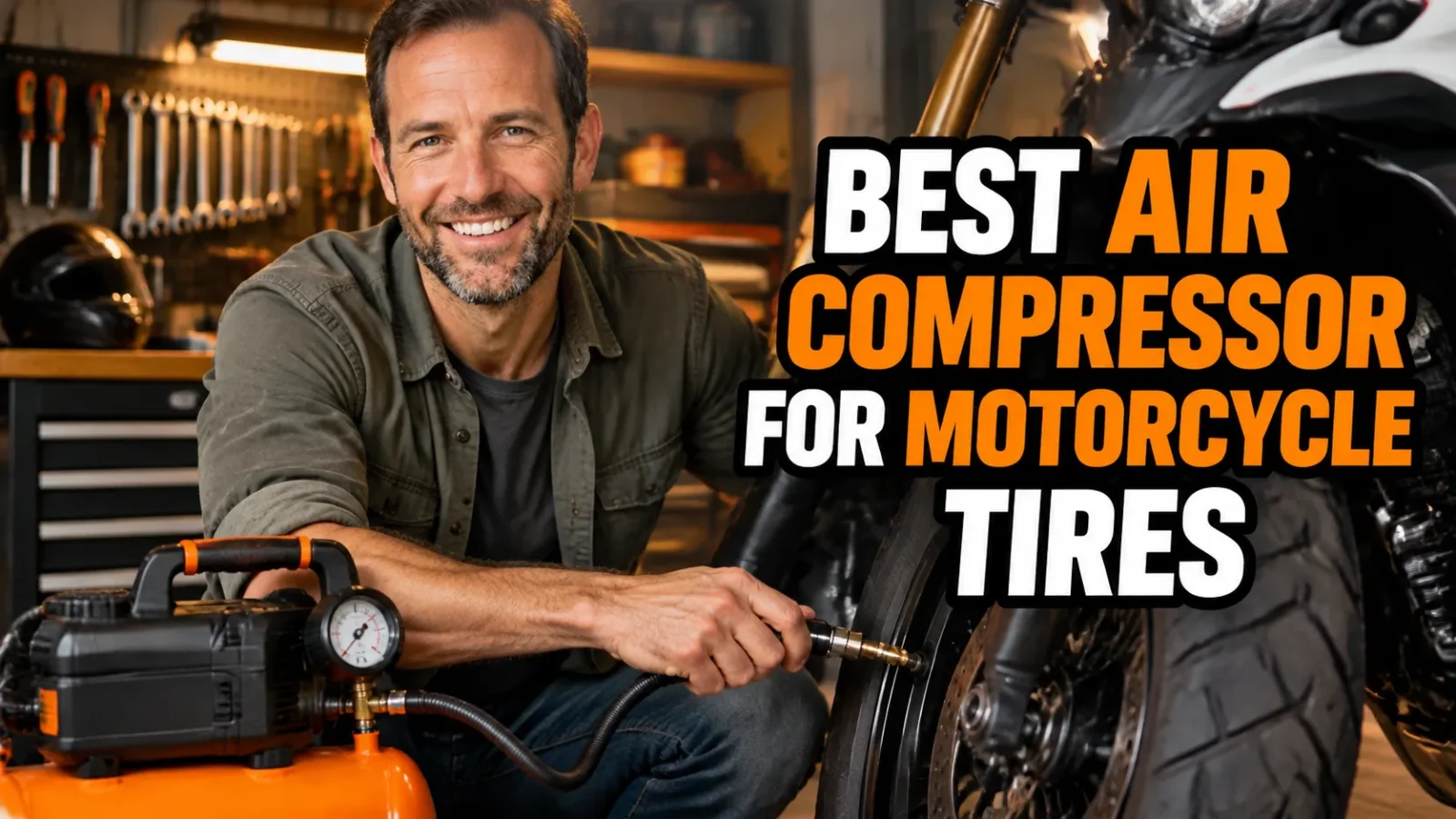
I’ve been checking my tire pressure by hand for years, and I’ll say it plainly: nothing improves how a bike feels as cheaply as the right pressure. Handling gets sharper, wear evens out, and the bike simply feels more planted in corners.
The problem is that gas station air machines are often broken, inaccurate, or miles away. That’s why I carry my own inflator, and why I’ve spent a lot of time with compact compressors that suit two wheels.
Motorcycle tires are small, so you don’t need a massive compressor. You need accuracy, portability, and an auto shutoff. Here are the seven I’d happily recommend, along with who each one suits best.
- The Milwaukee M12 2475-20 is my top pick for cordless convenience and accuracy.
- The Viair 88P is the best garage and trailer compressor for heavier-duty use.
- The Slime 40026 and EPAuto 12V models are the best budget picks.
- Auto shutoff and a readable digital gauge matter more than raw power.
- Always verify pressure with a separate quality gauge now and then.
1. Milwaukee M12 Compact Inflator 2475-20 — Best Overall Cordless Pick
If I could only own one inflator, the Milwaukee 2475-20 would be it. It runs on the M12 battery platform, tops out around 150 PSI, and has a digital readout with a preset auto shutoff. That last feature is what makes it so good on a bike.
Why I Like It
I set my target pressure, press the button, and walk away. The Milwaukee 2475-20 stops itself, so I’m not hovering over a small tire watching a needle. It’s compact enough that it fits in a saddlebag or top case without fuss.
The hose is a reasonable length for reaching valve stems behind brake calipers. Just be careful with wheels that have awkward valve positions, because you may want a right-angle chuck.
Drawbacks
The tool is typically sold bare, so you’ll need an M12 battery and charger if you don’t already own them. Expect to pay roughly $100 to $130 for the tool alone. If you’re already in the Milwaukee ecosystem, though, it’s a no-brainer.
2. Viair 88P Portable Compressor — Best for Garage and Trailer Use
The Viair 88P is a classic 12V compressor, and it’s the one I reach for when I’m airing up multiple vehicles. It’s rated up to 120 PSI and is built far tougher than the typical plastic cigarette-lighter inflators.
I like that the Viair 88P connects to a battery with clamps, so it delivers steady power without straining a small accessory socket. It also handles a motorcycle tire from low to full pressure quickly.
Things to Know
It’s bulkier than the cordless options, and it’s not something I’d pack on a lightweight ride. It also lacks the smart auto shutoff of the Milwaukee, so you’ll watch the gauge yourself. Street pricing usually lands around $70 to $100.
For a rider with a truck, van, or garage, the Viair 88P is a dependable workhorse. If you’re setting up a pit area or trailer kit, this is a smart foundation.
3. DeWalt 20V MAX Inflator DCC020IB — Best for DeWalt Battery Owners
The DeWalt DCC020IB is a 20V MAX tool that reaches up to about 160 PSI. It has a bright LED work light and a clear digital display, which I’ve found genuinely handy when airing up a bike at dusk.
In my experience, the DeWalt DCC020IB inflates faster than the 12V-class cordless units because it’s driven by a bigger battery. It’s also sturdy and feels like it was designed for a job site.
Is It Too Big?
It’s larger than the Milwaukee, so I wouldn’t tuck it into a tank bag. It’s better as a garage or support-vehicle tool. Pricing is typically about $80 to $120 for the bare tool, depending on sales.
4. Fanttik X8 APEX Tire Inflator — Best Compact Rechargeable Option
The Fanttik X8 APEX is a self-contained, rechargeable inflator, so there’s no tool battery platform required. It’s a slim, modern design with a digital display and preset modes, including one aimed at motorcycles.
I like that the Fanttik X8 APEX is small enough for a jacket pocket or tail bag. It charges over USB-C, which means I can top it up from the same power bank I use for my phone.
Trade-Offs
Built-in batteries limit how many tires you can fill on one charge. For a single bike, that’s rarely an issue. Expect to spend around $60 to $90, and double-check the gauge against a trusted manual one, as I do with every digital inflator.
5. Slime 40026 Digital Tire Inflator — Best Budget 12V Option
The Slime 40026 is the inflator I recommend to riders who want something simple and cheap. It plugs into a 12V outlet, has a digital gauge, and features an auto shutoff function so you can preset your PSI.
For the money, the Slime 40026 is hard to beat. It’s a good fit if you have a cage with a power socket, or a bike with a 12V accessory port. Prices are commonly around $30 to $45.
Limitations
Cheap compressors run hot and loud, and the duty cycle is limited. I’d use it for top-offs and the occasional full fill, not for continuous work. Still, as an emergency backup, it earns its spot.
6. EPAuto 12V DC Portable Air Compressor — Best Backup for the Road
The EPAuto 12V unit is one I keep as a backup because it’s inexpensive and compact. It typically reaches around 100 PSI, which is plenty for any motorcycle tire I’ve ever owned.
The EPAuto compressor has a straightforward analog or digital gauge depending on the version, and it comes with a few nozzle adapters. Look at current listings carefully, because variants differ. Most sell between $25 and $40.
Who It Suits
It’s best for riders who want a cheap spare in a car or van. It isn’t the most refined tool here, but it’s honest and functional. I’d pair it with a separate gauge for confidence.
7. Ryobi ONE+ 18V Digital Inflator P737D — Best for Ryobi Fans
The Ryobi P737D is a smart option if you already own Ryobi ONE+ batteries. It features a digital gauge, auto shutoff, and a solid hose, and it’s priced attractively for the tool class.
What I appreciate about the Ryobi P737D is its simplicity. You set the PSI, squeeze the trigger, and it stops at the target. It’s affordable at roughly $40 to $70 for the bare tool, which makes it a great garage companion.
Downsides
Like the DeWalt, it’s bulkier than I’d want on a long tour. You also need the battery system, so the real cost depends on what you already own. For ONE+ owners, though, the value is excellent.
How I Choose the Right Inflator for My Bike
After testing all of these, I’ve learned the best choice depends less on power and more on how you ride. Think about where you’ll store it and how often you’ll use it.
Accuracy Over Speed
Motorcycle tires hold small volumes of air, so speed isn’t a problem. What matters is hitting 36 or 38 PSI exactly. I always check a digital inflator’s reading against a quality manual gauge before trusting it.
Auto Shutoff Is Worth Paying For
An auto shutoff prevents overinflation, which can make a bike skittish and reduce grip. It also lets you multitask while the tire fills. That’s why the Milwaukee, DeWalt, and Ryobi models stand out for me.
Portability and Power Source
If you tour, go with something compact like the Fanttik X8 APEX or the Milwaukee M12. If you mostly work in a garage, the Viair 88P or a 20V tool is a better fit. Match the tool to your real habits.
Why Tire Pressure Matters as Much as the Tires Themselves
Even the best rubber performs poorly at the wrong pressure. Underinflation causes heat buildup and sluggish steering, while overinflation shrinks the contact patch. I’ve felt both on the road, and neither is fun.
Your tire choice matters too. If you’re shopping, I’d start with guides like the best motorcycle tires for street riding for daily commuters and weekend carvers.
Matching Pressure to Your Bike Type
Smaller bikes often run lower pressures, and the best tires for small motorcycle options benefit from a precise inflator. A few PSI makes a visible difference on a light machine.
Heavy cruisers are different. If you ride a big twin, check out the best motorcycle tires for harley davidson, and remember that loaded bikes need pressure adjusted for weight.
Touring and Adventure Considerations
On long trips, I check pressure every morning. The best motorcycle tires for touring bikes are built for mileage, but they still need correct pressure when you add luggage and a passenger.
For off-pavement riding, a portable inflator is essential. Many riders drop pressure on dirt and then re-inflate for the road. If that’s you, the best adventure motorcycle tires for gravel are worth pairing with a compact compressor like the Fanttik or Milwaukee.
Practical Tips From My Own Garage
A few habits have saved me time and headaches. They apply no matter which inflator you pick.
Check Pressure Cold
Measure pressure before you ride, when the tires are cold. Riding heats the air and raises the reading, which can trick you into letting air out. I follow the numbers on my swingarm sticker.
Use the Right Valve Accessories
Tight rotors and brake calipers can block access to the valve. A small right-angle or flexible chuck makes a huge difference. I keep one in my tool roll, and I’d suggest you do the same.
Store It Properly
Keep the inflator clean and dry, and don’t leave lithium batteries in extreme heat. I also keep a small manual gauge as a reference. A $15 gauge is a cheap way to verify an expensive tool.
My Final Verdict
For most riders, the Milwaukee M12 2475-20 is the best balance of accuracy, size, and ease of use. If you want a rugged garage compressor, the Viair 88P is my go-to. And if budget is tight, the Slime 40026 or EPAuto will get you home.
Whatever you choose, make checking your tires a habit. It takes two minutes and pays off in safety, grip, and tire life. Specs and prices change often, so confirm current details before you buy. Ride safe out there.
Frequently Asked Questions
What PSI do most motorcycle tires need?
Most street bikes run roughly 32 to 42 PSI, but the correct number is on your swingarm sticker, owner’s manual, or the tire sidewall guidance. Always check pressure cold.
Can I use a car tire inflator on a motorcycle?
Yes, as long as it is accurate at low pressures and has a pressure gauge you trust. Motorcycle tires are small, so a compressor with auto shutoff helps prevent overinflation.
Is a 12V compressor or a cordless battery inflator better for a bike?
A cordless inflator is easier to store under the seat and works anywhere. A 12V compressor with battery clamps is great for the garage or a trailer, and it never runs out of charge mid-job.
How often should I check my motorcycle tire pressure?
I check mine before every ride or at least weekly. Tires can lose 1 to 2 PSI per month, and temperature swings change pressure quickly.

Related Articles

8 Best Cruiser Motorcycle Tires for Street Riding: My Real-World Picks
I rank the 8 best cruiser motorcycle tires for street riding, from Michelin to Pirelli, with real notes on grip,…
Jake Miller
9 min read

8 Best Michelin Motorcycle Tires for Every Riding Style (Tested Picks)
Looking for the best Michelin motorcycle tires? I break down my 8 favorite models for sport, touring, adventure, cruiser, and…
Jake Miller
9 min read

Yamaha Tire Pressure Guide: The Right PSI for Safer, Smoother Rides
Learn the right tire pressure for your Yamaha, from sportbikes to cruisers and dirt bikes. Check, adjust and maintain PSI…
Jake Miller
9 min read