
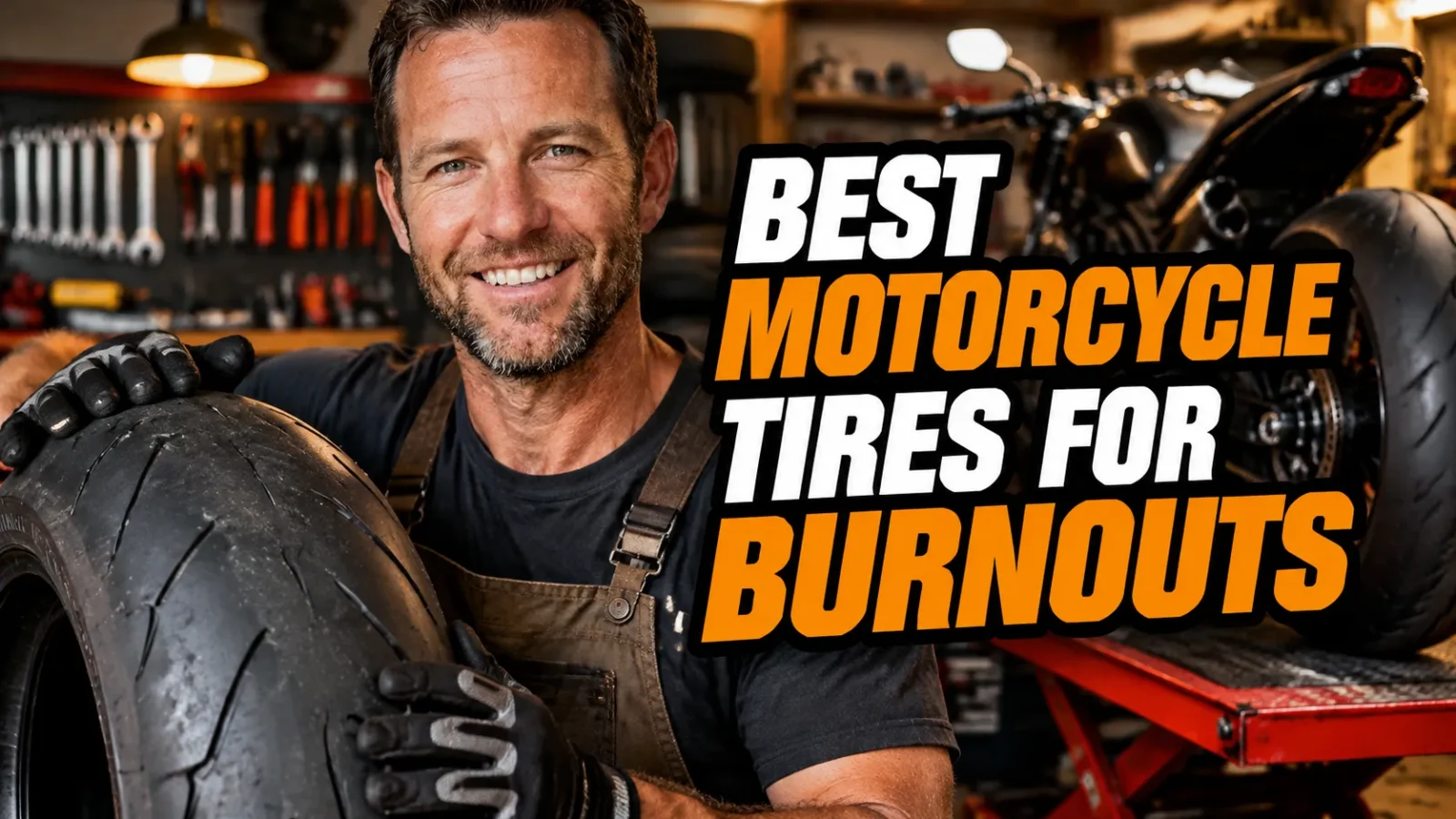
I’ll start with the honest truth: a burnout is the fastest way I know to turn expensive rubber into smoke. I’ve spent enough time around cruisers, tourers, and a few cranky old standards to know that some rear tires simply handle the abuse better than others. The difference comes down to compound, carcass construction, and how the tire sheds heat.
In this guide, I’m sharing the rear tires I’d put on a bike if smoky skids were part of the plan. I’m focusing on hard-compound, durable options that make sense on a real-world budget. Burnouts belong on private property or a closed course, never on public roads.
- Hard-compound cruiser and touring rear tires beat soft sport tires for smoky, long-lasting burnouts.
- My top overall pick is the Dunlop American Elite, and the Shinko 777 H.D. is my value pick.
- Burnouts wear a tire fast, so inspect it for cords, bulges, and flat spots afterward.
- Do burnouts only on private property or a closed course, and always wear full gear.
What I Look for in a Burnout Tire
Before the list, here is how I judge a rear tire for this job. A burnout is not a normal riding scenario, so the usual “grip is king” logic flips on its head. I want a tire that is predictable when it breaks traction and tough enough to survive the heat.
Compound Hardness
A harder compound resists melting and tearing under sustained wheelspin. Soft sport tires can chunk, overheat, and shed rubber in uneven strips. A firmer cruiser compound wears more evenly and gives you more smoke time per dollar.
Carcass and Tread Design
A stout carcass handles the heat cycles without delaminating. I also like a wide, continuous center section, because it gives the tire plenty of material to burn through before the structure is compromised.
Size and Fitment
Wider rear tires on heavy cruisers make smokier, more dramatic burnouts, but they also demand more power to spin. Match the tire to your bike’s rim and spec, and check the manufacturer’s recommended sizes before ordering.
1. Dunlop American Elite — Best Overall for Burnouts
The Dunlop American Elite is the tire I recommend first to cruiser riders. It’s a bias-ply-style cruiser design with a durable, long-wearing compound, and it’s built to handle the weight and torque of big V-twins. It’s also widely available in rear sizes like 180/65B16 and 150/80B16.
Why I Like It
On the American Elite, I find the transition into a slide smooth and predictable. The rubber lights up quickly, produces thick smoke, and doesn’t chunk apart the way softer compounds can. It’s also a tire I’d trust for ordinary riding afterward, provided it hasn’t been abused to the cords.
Things to Consider
Expect to pay a premium, often in the range of a couple hundred dollars for a rear. That’s the price of a quality carcass. If you burn through tires regularly, you’ll feel it in your wallet.
2. Michelin Commander III Cruiser — Best for Heavy Cruisers
The Michelin Commander III Cruiser is built for big, heavy touring and cruiser machines. It uses a robust construction and a mileage-focused compound, so it keeps its shape under the kind of heat that wrecks lesser tires. I’ve found it stable when it breaks loose.
Standout Features
The Commander III is designed for strong wet and dry grip in normal riding, with a long-wear mindset. That durability is exactly what I want when I’m intentionally destroying a rear tire. You get more burn time before the center is gone.
Who It’s For
If you ride a loaded bagger or a heavy cruiser, this is my pick. The weight on the rear wheel helps the Commander III hold a steady, controlled slide. If you’re comparing brand reputations, my guide to the best brand for motorcycle tires goes deeper on where Michelin stands.
3. Avon Cobra Chrome AV91 — Best for Stability in a Slide
The Avon Cobra Chrome AV91 is a British-made cruiser rear tire with a reputation for composed handling. It uses a dual-compound approach in some sizes, with a harder center and a grippier shoulder. For burnouts, that tough center is what matters.
My Experience
I like how the Cobra Chrome feels as it lets go. There’s a clear point where the slide begins, and it stays progressive instead of snapping sideways. For anyone nervous about their first controlled burnout, that predictability is a real confidence booster.
Trade-Offs
It’s not the cheapest option, and sizing is a bit more selective than the major Japanese or American brands. Check fitment for your specific bike first. If cornering confidence is also high on your list, take a look at my roundup of the best motorcycle tires for cornering.
4. Shinko 777 H.D. — Best Budget Pick
The Shinko 777 H.D. is the value champion in this category. It’s a heavy-duty cruiser and touring tire at a price that makes burning through one far less painful. Rear tires often come in at a fraction of what premium rivals cost.
Why It Works for Burnouts
The Shinko 777 H.D. uses a firm compound with a deep, durable tread. It smokes readily and lasts a respectable amount of time. I wouldn’t call it a premium tire, but it’s far from a throwaway.
The Catch
Shinko tires generally don’t match the refined feel of Michelin or Dunlop in wet or cornering conditions. For a dedicated burnout tire, that’s an acceptable compromise. If you plan to ride long distances on the same tire, think carefully first.
5. Metzeler ME 888 Marathon Ultra — Best for Mileage and Longevity
The Metzeler ME 888 Marathon Ultra is a touring-focused cruiser tire known for its mileage. It features a long-wearing compound and a strong carcass. That means it can often handle a few burnouts without losing its structural integrity.
What Stands Out
I appreciate how the Marathon Ultra manages heat. It resists the kind of uneven wear that can make a tire unpredictable. For riders who want one tire that serves both daily duty and the occasional skid, it’s a smart option.
Keep in Mind
Its long-wear compound can need a bit more throttle to light up on lighter bikes. On a modest-power machine, you’ll need to work it harder. Heavier, torquey cruisers get the best results.
6. Dunlop D404 — Best for Classic and Smaller Bikes
The Dunlop D404 is a classic-style tire with a long production history. Its traditional tread pattern and firm compound are well suited to vintage-looking cruisers, standards, and lighter machines. It’s available in smaller sizes that suit bikes with modest power.
Why It Earns a Spot
On a lighter bike, a tire with moderate width and a firm compound is easier to break loose. The D404 fits that profile nicely. It’s also affordable, which matters when you’re deliberately wearing it out.
Small-Bike Notes
If you ride a smaller machine, sizing is the main challenge. I’ve covered the broader topic in my guide to the best tires for small motorcycle setups. It’s worth reading before you buy.
7. Pirelli Night Dragon — Best for Wide, Dramatic Burnouts
The Pirelli Night Dragon is a cruiser tire with a wide, aggressive profile. It’s designed for bikes like Harley-Davidson models and other heavy cruisers. The broad contact patch produces dramatic, thick smoke clouds.
My Take
The Night Dragon blends sporty grip with cruiser durability. That grip is a double-edged sword. It can take more power to break loose, but the visual payoff is great when it does.
Grip Versus Smoke
If you want the maximum grip from the same tire on the street, this is a strong option. For more on that side of things, see my breakdown of the best grip tires for motorcycle choices. Just remember that high grip and easy burnouts often pull in opposite directions.
8. Shinko 230 Tour Master — Best for Sport-Touring and Standard Bikes
The Shinko 230 Tour Master is a dual-purpose, touring-oriented tire with a firm compound and a long tread life. It’s offered in a range of sizes, which is helpful for riders with less common wheel dimensions. The price is very friendly.
Why It Works
Its harder compound and affordable cost make it a sensible burnout tire for older standards and lighter touring bikes. I like that I don’t feel guilty turning it into smoke. It also holds together reasonably well under heat.
Heat Matters
Hot climates make tires softer, and extreme pavement temperatures add to the stress. If you ride in desert conditions, check my guide to the best motorcycle tires for az heat before you commit to a compound.
Safety and Common Sense Before You Light Up
I can’t write about burnouts without a serious word on safety. This is one of the riskiest things you can do on a bike. A tire can fail, the bike can step out, and a small mistake can become a crash.
My Rules
- Choose the right place. Use private property or a closed course with permission. Public-road burnouts can mean heavy fines or worse.
- Wear full gear. A helmet, jacket, gloves, riding pants, and boots are the minimum.
- Check the surface. Clean, dry, flat pavement is far more predictable than gravel or dust.
- Watch the heat. Do short bursts, not marathon smoke sessions, to protect the tire and the bike.
- Inspect afterward. Look for exposed cords, bulges, or flat spots, and replace a damaged tire immediately.
Protect the Bike Too
Burnouts are hard on clutches, drive belts, chains, and rear suspension. Heat can also soften nearby components and fluids. If your bike is a daily rider, think about whether the wear is worth it.
How I’d Choose Between These Tires
If you want a simple answer, here is how I’d narrow it down. Start with your bike’s weight and power, then match the tire to your budget and your riding after the smoke clears.
- Heavy cruiser, want the best overall: Dunlop American Elite or Michelin Commander III Cruiser.
- Tight budget: Shinko 777 H.D. or Shinko 230 Tour Master.
- Smaller or classic bike: Dunlop D404.
- Want stability and a progressive slide: Avon Cobra Chrome AV91.
- Mileage-minded rider: Metzeler ME 888 Marathon Ultra.
- Dramatic wide-tire looks: Pirelli Night Dragon.
Always Verify Fitment
Tire availability and sizes change often, so confirm the exact size, load rating, and price with a retailer before buying. I’d also check your owner’s manual and the recommended rim width. A tire that doesn’t fit properly is dangerous.
Final Thoughts
When I think about burnouts, I’m really thinking about trade-offs between smoke, longevity, and cost. The Dunlop American Elite is my overall favorite, while the Shinko 777 H.D. gives the best bang for the buck. Everything else on this list fills a specific niche.
Whatever you pick, treat burnouts as a controlled, occasional activity rather than a casual habit. Keep the rubber fresh, the pavement private, and the gear on. If you do that, you’ll get plenty of smoke and plenty more rides.
Frequently Asked Questions
What makes a tire good for burnouts?
A good burnout tire has a hard, long-wearing compound, a thick tread block or center rib, and a sturdy carcass that tolerates heat. Cruiser and touring rear tires usually fit this description better than soft sport tires.
Can I do burnouts on any motorcycle tire?
Technically yes, but soft sport and race tires wear through quickly and can overheat. Harder cruiser and touring compounds last longer and wear more predictably.
Are burnouts bad for motorcycle tires?
Yes. Burnouts generate extreme heat and remove rubber quickly, so expect rapid wear. Inspect the tire for cords, bulges, and flat spots before riding on the road again.
Should I use a new tire or an old one for burnouts?
Many riders save a worn but structurally sound rear tire for burnouts. Never ride on a tire with exposed cords, cracks, or bulges, and replace it before regular road use.

Related Articles

8 Best Cruiser Motorcycle Tires for Street Riding: My Real-World Picks
I rank the 8 best cruiser motorcycle tires for street riding, from Michelin to Pirelli, with real notes on grip,…
 Jake Miller
9 min read
Jake Miller
9 min read

8 Best Michelin Motorcycle Tires for Every Riding Style (Tested Picks)
Looking for the best Michelin motorcycle tires? I break down my 8 favorite models for sport, touring, adventure, cruiser, and…
Jake Miller
9 min read

Yamaha Tire Pressure Guide: The Right PSI for Safer, Smoother Rides
Learn the right tire pressure for your Yamaha, from sportbikes to cruisers and dirt bikes. Check, adjust and maintain PSI…
Jake Miller
9 min read